Human history is not a straight line of progress. It is a landscape filled with rise and collapse, brilliance and silence. Across continents and millennia, entire civilizations have flourished with astonishing creativity—building cities, carving monuments, mastering astronomy, inventing writing systems—only to fade, sometimes gradually, sometimes abruptly. Their temples crumble into dust. Their scripts fall silent. Their people scatter, assimilate, or vanish from the record.
When we say a civilization “disappeared without a trace,” we do not mean that it left absolutely nothing behind. Archaeology has uncovered ruins, inscriptions, skeletons, pottery shards, and even frozen bodies. What disappeared was their political structure, their centralized culture, their recognizable identity as a distinct society. Their decline often left behind mysteries that modern science continues to unravel with tools ranging from satellite imaging to climate modeling and DNA analysis.
Here are ten ancient civilizations that once stood powerful and vibrant—and then, for reasons still debated, fell into silence.
1. The Indus Valley Civilization
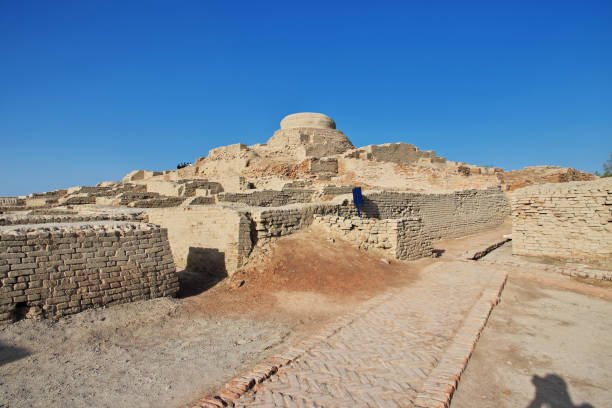
Around 2600 BCE, along the fertile plains of what is now Pakistan and northwest India, the Indus Valley Civilization emerged as one of the world’s earliest urban cultures. Cities like Harappa and Mohenjo-Daro were marvels of planning. They featured grid-patterned streets, sophisticated drainage systems, standardized brick sizes, and multi-story homes. Their sanitation infrastructure was so advanced that in some ways it rivaled cities built thousands of years later.
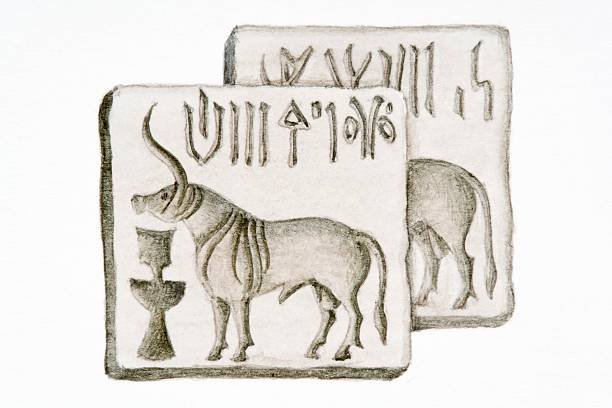
The Indus people engaged in long-distance trade with Mesopotamia. They developed a script, carved onto seals and tablets, that remains undeciphered to this day. Unlike ancient Egypt or Mesopotamia, they left no grand monuments celebrating kings or military conquests. Their cities suggest an organized, perhaps surprisingly egalitarian society.
Yet around 1900 BCE, the urban centers began to decline. By 1700 BCE, many major cities were abandoned. For decades, scholars speculated about invasion theories, suggesting outside groups overran the civilization. Modern research, however, paints a more complex picture. Geological evidence indicates shifting river systems, including the drying or redirection of major waterways that sustained agriculture. Climate studies suggest a weakening of the monsoon system, leading to prolonged drought.
Rather than a sudden annihilation, the Indus Valley Civilization appears to have gradually transformed. Urban life gave way to smaller rural communities. Trade networks shrank. Writing vanished from use. The civilization did not explode into catastrophe; it dissolved into the background of history, leaving behind one of archaeology’s most haunting questions: what did their undeciphered script say?
2. The Maya Classic Civilization
In the dense jungles of present-day Mexico, Guatemala, Belize, and Honduras, the Maya built magnificent cities between 250 and 900 CE. Towering pyramids pierced the canopy. Stone stelae recorded the lives of kings. Complex calendars tracked celestial cycles with astonishing accuracy. The Maya developed a fully functional writing system and sophisticated mathematics, including the concept of zero.
For centuries, city-states such as Tikal, Copán, and Palenque flourished. They engaged in trade, diplomacy, and warfare. Their art captured intricate scenes of ritual and power.
Then, during the 8th and 9th centuries, many of the great southern lowland cities were abandoned. Monument inscriptions ceased. Population levels plummeted. Entire urban centers were reclaimed by jungle.
Modern research suggests multiple overlapping causes. Paleoclimate data indicates severe and repeated droughts during the period of collapse. Deforestation for agriculture may have worsened water shortages. Warfare between rival city-states intensified. Political instability and social unrest likely compounded environmental stress.
The Maya people themselves did not disappear. Millions of Maya descendants live today, preserving languages and traditions. What vanished was the Classic-era political and urban system—a reminder that civilizations can fracture while cultures endure.
3. The Minoan Civilization
On the island of Crete in the Aegean Sea, the Minoan civilization thrived between approximately 2000 and 1450 BCE. Their palaces, such as Knossos, featured vibrant frescoes depicting dolphins, acrobats, and ritual ceremonies. They were skilled sailors and traders, connecting the Mediterranean world.
The Minoans developed a script known as Linear A, which remains undeciphered. They left no clear evidence of large-scale warfare in their early phases, leading some scholars to speculate about a relatively peaceful society.
Around 1600 BCE, a massive volcanic eruption occurred on the nearby island of Thera, now known as Santorini. This eruption was one of the most powerful in recorded history. It likely generated tsunamis and ash clouds that affected Minoan settlements.
Although the eruption caused damage, archaeological evidence suggests the Minoans initially recovered. However, by 1450 BCE, many Minoan palaces were destroyed. Mycenaean influence from mainland Greece became dominant.
The decline of the Minoans likely involved a combination of natural disaster and external pressures. Their identity gradually merged into the Mycenaean world. The brilliance of their art and architecture remains, but the voice of their script is silent.
4. The Hittite Empire
In Anatolia, modern-day Turkey, the Hittite Empire rose to prominence around 1600 BCE. They were formidable warriors and diplomats. Their capital, Hattusa, was a fortified city of impressive scale. The Hittites were among the first to use iron on a significant scale, giving them technological advantages.
They clashed with ancient Egypt and signed one of the earliest known peace treaties after the Battle of Kadesh. Their empire stretched across much of Anatolia and parts of Syria.
Then, around 1200 BCE, the Hittite Empire collapsed. Hattusa was abandoned. Written records cease. The broader region experienced widespread turmoil during what historians call the Late Bronze Age collapse.
Scholars suggest a combination of factors: climate change leading to drought, internal political instability, economic disruption, and invasions or migrations by groups referred to in Egyptian records as the “Sea Peoples.” Trade networks that had linked major civilizations across the Eastern Mediterranean disintegrated.
The Hittites did not vanish without leaving any trace; their archives were rediscovered in the 20th century. But their empire dissolved rapidly, reshaping the balance of power in the ancient Near East.
5. The Olmec Civilization
Often called the “mother culture” of Mesoamerica, the Olmec civilization flourished along the Gulf Coast of Mexico between roughly 1500 and 400 BCE. They are famous for colossal stone heads carved from basalt, some weighing dozens of tons. These monumental sculptures likely represented rulers.
The Olmecs developed early forms of writing and calendrical systems that influenced later civilizations such as the Maya. Their cities, including San Lorenzo and La Venta, featured ceremonial centers and complex layouts.
Around 900 BCE, San Lorenzo declined. Later, La Venta also faded. By 400 BCE, major Olmec centers were abandoned.
Archaeological evidence suggests environmental changes may have played a role. River courses shifted. Soil degradation and flooding may have affected agriculture. Political upheaval is also possible.
The Olmecs did not disappear entirely; their cultural influence persisted in later Mesoamerican societies. Yet their centralized civilization faded, leaving behind enigmatic stone faces staring silently across millennia.
6. The Nabataean Kingdom
In the deserts of present-day Jordan, the Nabataeans carved one of the ancient world’s most breathtaking cities into rose-colored cliffs: Petra. Emerging around the 4th century BCE, they controlled lucrative trade routes carrying spices, incense, and luxury goods between Arabia and the Mediterranean.
The Nabataeans were master water engineers. In a harsh desert environment, they constructed channels, cisterns, and dams to capture and store precious rainfall. Their architecture blended Hellenistic influences with local traditions.
In 106 CE, the Roman Empire annexed the Nabataean Kingdom. Petra continued to thrive for some time under Roman rule. However, shifting trade routes, economic changes, and possibly earthquakes gradually reduced the city’s prominence.
By the 7th century CE, Petra had largely fallen into obscurity. It was eventually “rediscovered” by Western explorers in the 19th century. The Nabataeans did not vanish as a people overnight, but their distinct kingdom dissolved into larger empires, and their once-thriving capital became a forgotten wonder carved into stone.
7. The Khmer Empire
Between the 9th and 15th centuries CE, the Khmer Empire dominated much of Southeast Asia. Its capital, Angkor, was one of the largest preindustrial cities in the world. Monumental temples like Angkor Wat stand as breathtaking achievements of engineering and devotion.
The Khmer developed sophisticated hydraulic systems, including vast reservoirs and canals, to manage seasonal monsoon rains. This infrastructure supported large populations and intensive rice agriculture.
By the 14th and 15th centuries, Angkor began to decline. Invasions from neighboring kingdoms, particularly Ayutthaya, played a role. However, recent studies suggest environmental factors were also crucial. Evidence from tree rings and sediment cores indicates prolonged droughts followed by intense monsoon floods. These extreme fluctuations may have damaged the intricate water management system on which Angkor depended.
The capital was eventually relocated. The temples remained, slowly enveloped by forest. The Khmer people continued under different political structures, but the great urban civilization of Angkor faded into memory.
8. The Ancestral Puebloans
In the American Southwest, the Ancestral Puebloans built remarkable cliff dwellings and stone communities between approximately 100 and 1300 CE. Sites such as Chaco Canyon and Mesa Verde demonstrate advanced architecture and astronomical alignment.
These communities thrived in a challenging environment, relying on maize agriculture and trade networks. They constructed multi-story buildings with hundreds of rooms and ceremonial kivas.
In the late 13th century, many major settlements were abandoned. Tree-ring data reveals a prolonged and severe drought during this period. Agricultural production likely suffered. Social tensions and resource competition may have intensified.
The people did not disappear. Descendants of the Ancestral Puebloans live today among Pueblo communities in the Southwest. What ended was the era of large, centralized settlements in places like Chaco Canyon. The stone walls remain, echoing with questions about resilience and adaptation.
9. The Aksumite Empire
In what is now Ethiopia and Eritrea, the Aksumite Empire flourished from around the 1st to the 7th century CE. It was a major trading power connecting Africa, Arabia, and the Mediterranean. Aksum minted its own coins and erected towering stone obelisks.
The empire adopted Christianity in the 4th century CE, becoming one of the earliest Christian states. Its strategic location allowed it to control important Red Sea trade routes.
By the 7th century, however, shifts in global trade patterns began to weaken Aksum. The rise of Islamic caliphates altered control over Red Sea commerce. Environmental factors, including soil degradation and possible climate shifts, may have affected agriculture.
Aksum did not vanish entirely; its cultural and religious legacy continues in Ethiopia. Yet its political and economic dominance faded, and its once-mighty capital declined.
10. The Cahokia Civilization
Near present-day St. Louis, along the Mississippi River, the city of Cahokia rose between 1050 and 1350 CE. At its peak, it may have housed tens of thousands of people, making it one of the largest urban centers north of Mexico at the time.
Cahokia’s most striking feature is Monk’s Mound, a massive earthen pyramid. The society demonstrated complex social organization, long-distance trade, and ceremonial life.
Around the 14th century, Cahokia was abandoned. The reasons remain debated. Environmental evidence suggests flooding and ecological strain. Deforestation for construction and fuel may have contributed to soil erosion. Social unrest or political fragmentation may have followed.
When European explorers arrived centuries later, Cahokia was long gone as a living city. Its mounds remained as silent witnesses to a sophisticated society that had once thrived in North America.
Echoes Across Time
The disappearance of these civilizations does not mean their people evaporated into nothingness. More often, their political systems collapsed, their cities were abandoned, their identities transformed. Climate shifts, environmental stress, warfare, trade disruptions, disease, and internal conflict frequently intertwined.
Scientific advances continue to shed light on their fates. Radiocarbon dating refines timelines. Satellite imagery reveals hidden ruins. Climate proxies reconstruct ancient weather patterns. Genetic studies trace population movements.
These lost civilizations remind us that complexity does not guarantee permanence. Sophisticated engineering, artistic brilliance, and economic power do not render societies immune to environmental change or social instability.
Yet there is also resilience. Cultural threads survive through language, tradition, and memory. The Maya, the Puebloans, the Khmer, and others live on in descendants who carry forward pieces of ancient worlds.
When we walk through ruins or gaze at weathered stones, we are not witnessing failure alone. We are witnessing the impermanence that defines all human endeavors. Civilizations rise from imagination and cooperation. They flourish through adaptation and innovation. And sometimes, through forces both understood and mysterious, they fade.
But they never disappear without a trace in the truest sense. They leave behind lessons, warnings, inspiration, and wonder—etched in stone, buried in soil, encoded in genes, and whispered across time.