Long before modern skylines pierced the horizon, humanity was already building monuments that defied imagination. Across deserts, mountains, river valleys, and coastlines, ancient civilizations shaped stone, metal, and earth into structures so vast and so meaningful that they outlived the societies that created them.
These landmarks were never merely buildings. They were declarations. They expressed faith, power, scientific knowledge, artistic ambition, and the human desire to leave a permanent mark on a fragile world. Some were temples dedicated to gods. Others were tombs built for rulers who sought immortality. Some were centers of knowledge, while others were triumphs of engineering that reshaped entire landscapes.
What makes ancient landmarks iconic is not only their size or beauty. It is their survival—physical or historical—through millennia of change. Empires collapsed. Languages vanished. Religions transformed. Yet these monuments endured as witnesses to humanity’s earliest achievements in architecture, mathematics, astronomy, and organized labor.
Scientific archaeology has revealed how these structures were built, how materials were transported, how workers were organized, and how environmental conditions shaped design. Geological analysis, structural engineering, and radiometric dating have transformed legend into measurable history. Each landmark is now understood not only as a cultural symbol but also as a technological accomplishment grounded in the physical realities of its time.
The following fifteen landmarks represent some of the most extraordinary creations of the ancient world—structures that still shape historical understanding and human imagination.
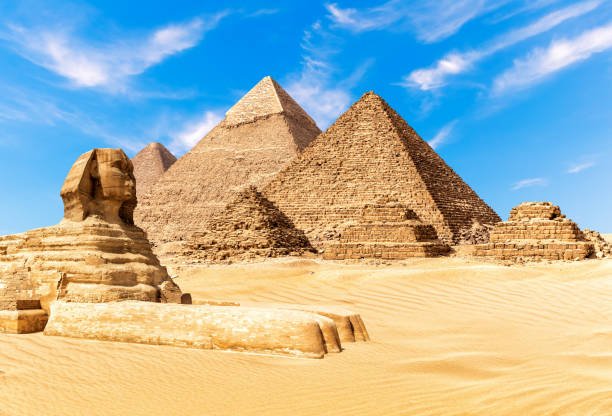
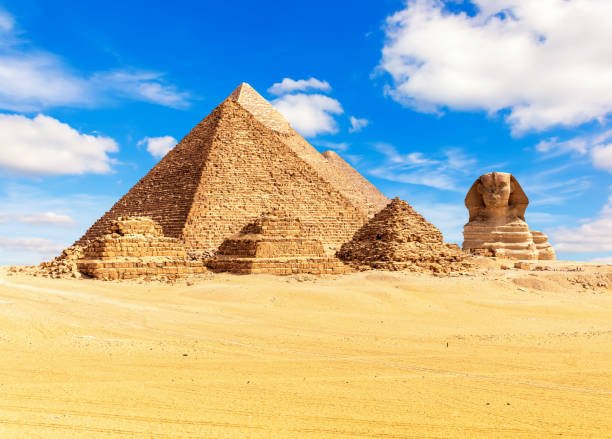
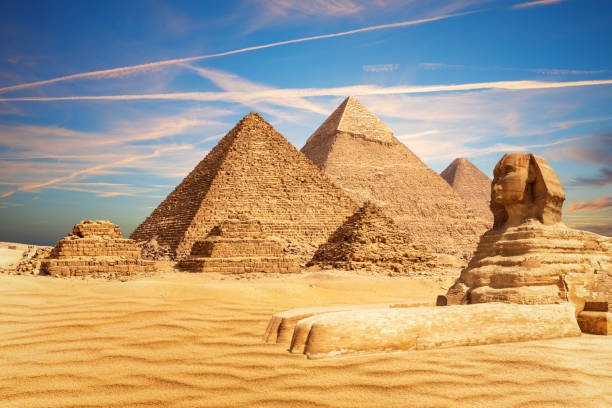
1. Great Pyramid of Giza
Rising from desert limestone with mathematical precision, this structure remains the only surviving monument of the classical Seven Wonders of the Ancient World. Built as a royal tomb during Egypt’s Fourth Dynasty, it represents one of the most ambitious construction projects ever completed without modern machinery.
Archaeological evidence shows that massive limestone blocks—some weighing several tons—were quarried, transported, and carefully positioned to create a structure aligned almost perfectly with the cardinal directions. The precision of its geometry reflects advanced surveying techniques and deep knowledge of celestial observation.
Internal chambers and passageways reveal complex planning. Engineering studies suggest carefully designed load distribution systems that have allowed the structure to endure for more than four thousand years.
The pyramid was not only a tomb. It was a cosmological statement, expressing beliefs about death, rebirth, and the divine nature of kingship. Its scale conveyed permanence—an architectural expression of eternity itself.
2. Hanging Gardens of Babylon
Few landmarks occupy the boundary between myth and archaeology as vividly as these legendary terraced gardens. Ancient accounts describe towering platforms layered with lush vegetation, irrigated by advanced hydraulic systems that lifted water from nearby rivers.
While their exact location remains debated, historical descriptions suggest sophisticated engineering capable of sustaining dense plant life in an arid environment. If they existed as described, the gardens would represent one of the earliest known examples of large-scale artificial landscape architecture.
Scholars analyze ancient texts, environmental conditions, and irrigation technologies to assess their plausibility. Whether literal or partly symbolic, the concept itself reveals the technological imagination of early urban societies—an attempt to create living mountains within city walls.
3. Statue of Zeus at Olympia
Once towering within a grand temple, this monumental statue represented divine authority through artistic mastery. Constructed using chryselephantine technique—combining gold and ivory over a wooden framework—it depicted Zeus seated in majestic calm.
Art historical analysis shows extraordinary craftsmanship in proportion, surface detailing, and symbolic composition. The statue was designed not merely to be seen but to overwhelm perception, reinforcing religious devotion through scale and material richness.
Though the statue no longer survives, written descriptions and comparative sculpture studies allow reconstruction of its likely appearance and construction methods. It remains one of antiquity’s most celebrated examples of monumental religious art.
4. Temple of Artemis at Ephesus
This temple was not only a place of worship but also a symbol of regional identity and economic strength. Constructed primarily of marble, it stood as one of the largest temples ever built in the ancient Mediterranean world.
Archaeological remains reveal elaborate sculptural decoration and structural innovations designed to support massive columns. The temple underwent multiple reconstructions after destruction, demonstrating both resilience and cultural importance.
Its scale reflected collective devotion, while its artistry showcased the sophistication of Greek architectural design. The temple’s repeated rebuilding illustrates how sacred spaces can transcend physical destruction through cultural continuity.
5. Mausoleum at Halicarnassus
This monumental tomb gave rise to the word “mausoleum,” forever linking its name with grand funerary architecture. Built for a regional ruler, it combined Greek, Egyptian, and local artistic traditions into a single unified structure.
Archaeological fragments show sculptural friezes of remarkable detail, depicting mythological scenes and ceremonial imagery. Structural analysis indicates layered terraces rising to a pyramidal roof crowned by statuary.
The mausoleum represented political power expressed through architecture. It also demonstrated how cultural exchange shapes artistic form, blending multiple traditions into one enduring monument.
6. Colossus of Rhodes
This immense bronze statue stood at a harbor entrance, symbolizing victory and protection. Engineering reconstructions suggest a complex internal support system designed to stabilize the structure against wind and seismic activity.
Though it stood for only a few decades before collapsing in an earthquake, its scale captured the imagination of the ancient world. Metalworking techniques required to cast such large components reflect advanced knowledge of material behavior and structural balance.
Its brief existence demonstrates how monumental ambition can exceed environmental limits—yet still achieve lasting symbolic impact.
7. Lighthouse of Alexandria
Built to guide ships safely into harbor, this structure was both practical infrastructure and architectural marvel. Rising in multiple tiers, it functioned as one of the tallest man-made structures of its time.
Optical engineering likely involved reflective surfaces to amplify firelight, creating a visible beacon across great distances. Geological and seismic evidence suggests repeated earthquake damage before its eventual destruction.
This lighthouse represents the fusion of science and architecture—an early example of engineering designed to solve navigational challenges in maritime trade.
8. Stonehenge
Composed of massive standing stones arranged in concentric patterns, this prehistoric monument continues to inspire scientific investigation. Archaeologists analyze its alignment with solar events, particularly solstices, suggesting astronomical observation played a central role in its design.
Geological studies reveal that some stones were transported from distant regions, indicating complex logistical organization. Radiocarbon dating shows construction phases spanning centuries, reflecting sustained cultural significance.
Stonehenge represents one of humanity’s earliest known efforts to integrate architecture with celestial cycles, demonstrating profound awareness of cosmic rhythms.
9. Parthenon
Built atop a rocky hill overlooking a major city, this temple embodies classical architectural harmony. Mathematical analysis reveals subtle curvature and proportional adjustments that create visual perfection when viewed from a distance.
Constructed primarily of marble, the structure reflects mastery of material shaping and structural balance. Sculptural programs once decorated its surfaces, depicting mythological narratives tied to civic identity.
The Parthenon represents the intersection of politics, religion, and aesthetics—architecture as a physical expression of cultural ideals.
10. Great Wall of China
Stretching across vast terrain, this immense defensive system reflects centuries of construction and reconstruction. Built from earth, stone, and brick depending on region and era, it demonstrates adaptation to diverse environmental conditions.
Engineering analysis reveals strategic placement along ridges and passes, maximizing defensive visibility. The wall functioned not merely as a barrier but as a communication network using watchtowers and signal systems.
It represents large-scale coordination of labor, logistics, and military planning across enormous geographic distances.
11. Petra
Carved directly into sandstone cliffs, this city integrates architecture with geology. Structures were not assembled but sculpted from living rock, requiring precise planning and advanced stoneworking techniques.
Hydrological systems captured seasonal rainfall and distributed water throughout the settlement. Geological studies show how natural rock layers influenced architectural form.
Petra demonstrates how human design can merge seamlessly with landscape, transforming natural formations into monumental space.
12. Machu Picchu
Perched high in mountainous terrain, this Inca settlement reflects extraordinary environmental adaptation. Agricultural terraces stabilized slopes while irrigation channels controlled water flow.
Stone construction techniques allowed buildings to withstand seismic activity without mortar. Astronomical alignments suggest integration of architecture with celestial observation.
The site reveals sophisticated planning within extreme geographic conditions, illustrating the Inca capacity to harmonize engineering and landscape.
13. Angkor Wat
This vast temple complex represents one of the largest religious monuments ever constructed. Its layout reflects cosmological symbolism, representing sacred geography through architectural design.
Hydraulic engineering supported surrounding urban populations through reservoirs and canals. Structural symmetry and sculptural detail demonstrate advanced planning and artistic achievement.
Angkor Wat stands as evidence of large-scale urban organization integrated with religious and environmental systems.
14. Teotihuacan
This immense planned city contains monumental pyramids aligned along a central axis. Urban design reflects precise orientation, suggesting astronomical or ceremonial significance.
Archaeological study reveals apartment complexes, markets, and ritual spaces supporting large populations. Construction materials include volcanic stone and lime plaster, shaped into massive geometric forms.
Teotihuacan demonstrates early large-scale urban planning in the Americas, combining social organization with monumental architecture.
15. Terracotta Army
Buried underground for millennia, this vast collection of life-sized clay soldiers was created to accompany a ruler into the afterlife. Each figure displays unique facial features, suggesting individualized craftsmanship.
Material analysis reveals complex firing techniques and pigment application. The scale of production indicates highly organized workshops and standardized manufacturing processes.
The Terracotta Army represents funerary art on an unprecedented scale, reflecting beliefs about power extending beyond death.
The Scientific Legacy of Ancient Monuments
These landmarks are more than relics of vanished civilizations. They are data-rich environments for scientific investigation. Engineers analyze structural stability. Geologists examine material composition. Archaeologists interpret cultural meaning through artifact distribution. Astronomers study alignments that reflect early sky observation.
Ancient builders worked without modern technology, yet many achieved precision and durability that continue to challenge contemporary understanding. Their work demonstrates empirical knowledge gained through observation, experimentation, and generational transmission of skills.
Why These Landmarks Still Matter
These structures endure because they represent universal human impulses—the desire to understand the cosmos, honor the sacred, commemorate power, and create beauty that outlives mortality.
They are reminders that civilization is not defined solely by survival, but by expression. Humanity does not simply inhabit the world. It reshapes it with intention, imagination, and meaning.
The Permanence of Human Aspiration
Stone erodes. Metal corrodes. Empires fall. Yet the impulse to build beyond one’s lifetime remains constant.
The most iconic landmarks of the ancient world stand not only as physical structures but as messages across time—evidence that thousands of years ago, human beings dreamed on a monumental scale and possessed the knowledge and determination to transform those dreams into reality.