Human history is often told as a steady progression. Stone tools give way to metal. Simple societies grow into complex civilizations. Technology advances in recognizable stages. Archaeological evidence typically supports this gradual unfolding of innovation across time.
Yet sometimes, an object emerges from the ground that appears to disrupt the expected order.
These are often called “out-of-place artifacts.” The phrase refers not to supernatural objects or impossible technology, but to discoveries that initially seem inconsistent with established timelines, cultural expectations, or technological capability. Some force historians to revise earlier assumptions. Others turn out to be misunderstood, misdated, or misinterpreted. Still others remain genuine puzzles, inviting ongoing investigation.
Scientific archaeology treats such discoveries with caution rather than excitement alone. Every artifact must be dated, contextualized, and tested against geological evidence, material analysis, and historical comparison. When something appears out of place, the most important question is not “Is history wrong?” but “What does the evidence actually show?”
The following fifteen artifacts have each, in different ways, unsettled expectations about the past. Some reshaped scholarly understanding. Some revealed lost technological sophistication. Some exposed how easily interpretation can mislead. All demonstrate that history is not fixed—it is continuously refined through evidence.
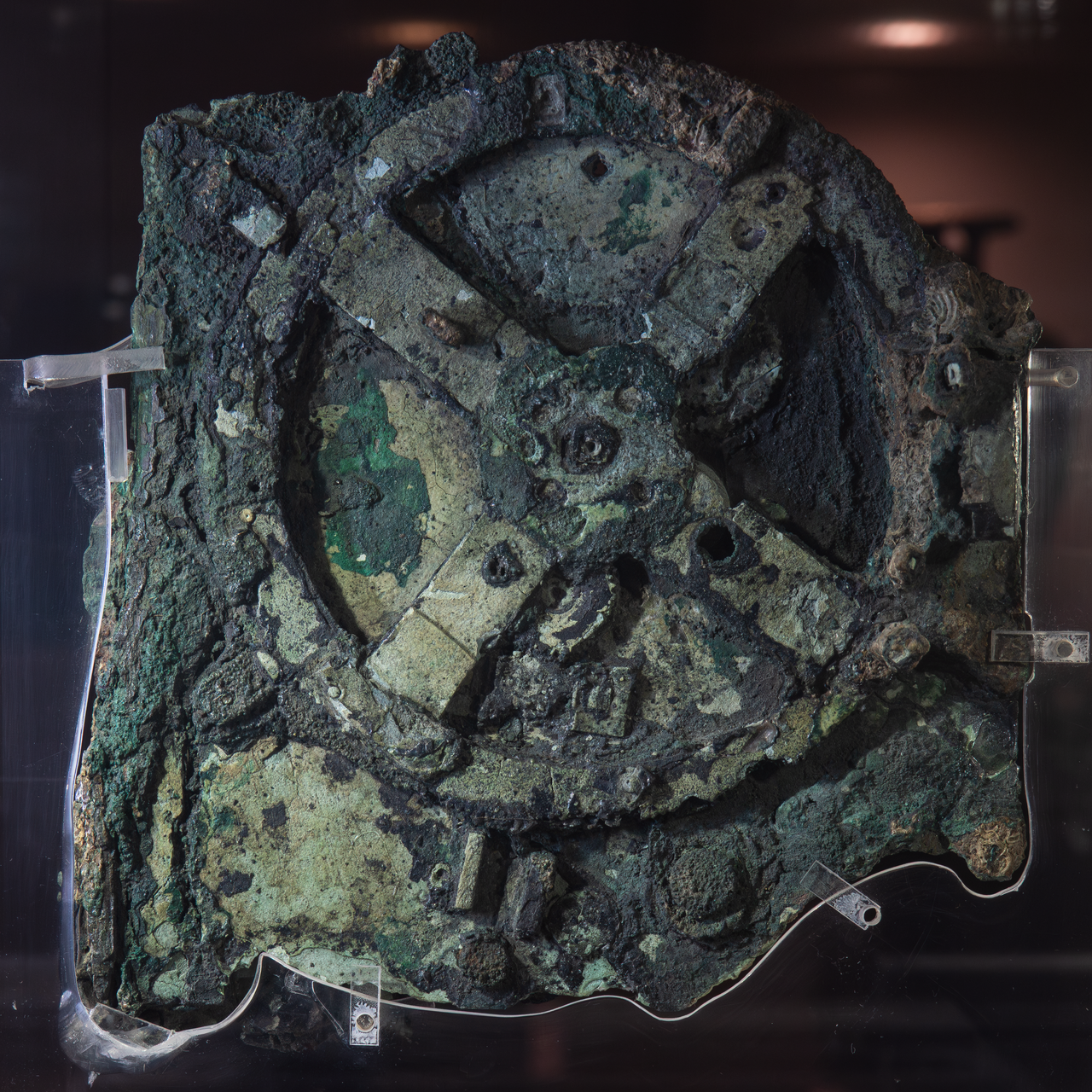
1. The Antikythera shipwreck Mechanism
When sponge divers discovered a shipwreck off a Greek island in 1901, they expected statues and pottery. Instead, they found corroded bronze fragments containing interlocking gears of astonishing complexity.
Once reconstructed, the object revealed itself to be a mechanical astronomical calculator built more than two thousand years ago. It could predict eclipses, track planetary cycles, and model lunar motion.
Nothing comparable from antiquity had ever been discovered. Precision gear systems of this sophistication were not thought to exist until medieval Europe.
Modern imaging techniques, including X-ray tomography, revealed dozens of gears arranged in carefully engineered ratios. Inscribed markings corresponded to astronomical cycles known to ancient Greek science.
Rather than disproving history, the mechanism transformed it. Scholars realized that advanced mechanical engineering existed in the Hellenistic world but left few surviving examples. The device revealed not an anomaly, but a lost tradition of precision instrument making.
2. The Khujut Rabu Ceramic Vessel Often Called the “Baghdad Battery”
In the 1930s, archaeologists excavating near Baghdad uncovered clay jars containing copper cylinders and iron rods. When filled with acidic liquid, such arrangements can generate a small electric current.
Some researchers proposed that these vessels functioned as primitive batteries, possibly used for electroplating metal objects.
The idea was controversial. No definitive evidence links them to electrical technology, and alternative explanations include storage containers or ritual objects.
Scientific testing has shown that the design could produce electricity, but archaeological context remains uncertain. Without wiring, conductive pathways, or clearly electroplated artifacts from the same setting, the electrical interpretation remains debated.
This object illustrates how function cannot be assumed from structure alone. It challenges interpretation more than history itself.
3. The Voynich Manuscript
Discovered in the early twentieth century but written centuries earlier, this illustrated codex remains undeciphered despite extensive analysis.
Its pages contain drawings of unfamiliar plants, astronomical diagrams, and text written in a script that does not match any known language. Statistical analysis shows patterns consistent with structured writing rather than random symbols.
Linguists, cryptographers, and computer scientists have attempted decoding for decades. Proposed interpretations range from encoded natural language to constructed linguistic systems.
Carbon dating confirms medieval origins. Ink analysis and parchment composition align with fifteenth-century European materials.
The manuscript does not overturn history, but it demonstrates how knowledge can exist without interpretation. It is evidence of meaning that remains inaccessible.
4. The Nazca Lines
Across a desert plateau in Peru stretch enormous geometric shapes and animal figures visible primarily from above. Some span hundreds of meters.
Their scale raised early speculation about aerial observers or lost technologies. However, careful archaeological study revealed how they were constructed by removing surface stones to expose lighter soil beneath.
Radiocarbon dating and pottery analysis link them to Nazca culture between roughly 500 BCE and 500 CE.
The true puzzle is not their construction but their purpose. Hypotheses include ritual pathways, water symbolism, astronomical alignment, or ceremonial display.
They challenge assumptions about ancient societies’ capacity for large-scale landscape design, not their technological limits.
5. Gobekli Tepe
Before its excavation, scholars believed monumental architecture required agricultural society and permanent settlement. Then archaeologists uncovered massive stone pillars arranged in circular enclosures—built by hunter-gatherers more than 11,000 years ago.
This discovery transformed understanding of early human social organization. It suggested that complex ritual structures may have preceded agriculture rather than followed it.
Radiocarbon dating confirmed extraordinary antiquity. Carved animal reliefs demonstrated symbolic culture at a scale previously unimagined for that era.
The site did not contradict history—it rewrote a foundational assumption about how civilization began.
6. The Saqqara necropolis Wooden Bird
This small carved object resembles a stylized bird but has proportions some researchers compare to glider aerodynamics.
Most Egyptologists interpret it as a symbolic or decorative item, possibly a toy or ceremonial figure. No evidence suggests practical flight experimentation.
Wind-tunnel testing of replicas shows limited aerodynamic stability, but such tests do not demonstrate historical function.
The artifact highlights how modern technological perspectives can shape interpretation of ancient objects.
7. The Piri Reis World Map
Drawn in 1513, this map depicts parts of the Americas with surprising accuracy relative to contemporary European cartography.
Some once claimed it showed Antarctica centuries before discovery. Detailed geographic analysis, however, indicates the southern landmass corresponds to distorted South American coastline.
The map demonstrates how early modern cartographers synthesized diverse sources, including lost navigational charts. It reveals the global reach of maritime knowledge in the early sixteenth century.
8. The London Texas Hammer
Found encased in a rock formation, this hammer became famous as an alleged artifact millions of years old.
Geological examination shows the surrounding concretion formed around a relatively recent object. Mineral deposits can accumulate rapidly under certain conditions.
Material analysis identifies the hammer as consistent with nineteenth-century manufacturing techniques.
The artifact illustrates how geological processes can create misleading appearances of extreme antiquity.
9. The Coso Mountains Spark Plug Object
In the 1960s, collectors discovered a spark-plug-like structure embedded in a mineral nodule. Some claimed prehistoric technological origins.
Subsequent investigation identified it as a twentieth-century spark plug encased within hardened mineral deposits formed in decades rather than millennia.
Rapid concretion processes again demonstrated how geological context can be deceptive.
10. The Dendera Temple Complex Reliefs Sometimes Called the “Dendera Light”
Carvings in this temple depict elongated shapes emerging from lotus flowers, interpreted by some as ancient electric lamps.
Egyptologists interpret them symbolically, representing mythological imagery involving creation and divine power.
No physical evidence of electrical infrastructure exists at the site. Artistic context strongly supports religious meaning.
The reliefs challenge interpretation rather than chronology.
11. The Ural Mountains Shigir Idol
Carved from wood more than 9,000 years ago, this towering sculpture is the oldest known monumental wooden artwork.
Its geometric patterns and symbolic carvings demonstrate sophisticated artistic expression among early Holocene hunter-gatherers.
Its preservation in peat prevented decay, allowing survival across millennia.
The idol reshaped understanding of prehistoric symbolic culture.
12. The Nebra Sky Disc
This bronze disc embedded with gold symbols appears to depict celestial objects including the Sun, Moon, and star clusters.
Dated to around 1600 BCE, it represents one of the earliest known visual representations of the night sky.
Metallurgical analysis confirmed advanced bronze-working techniques. Astronomical interpretation suggests knowledge of solar cycles.
The disc revealed unexpected sophistication in Bronze Age European cosmology.
13. The Klerksdorp Spheres
Small metallic-looking spheres found in ancient rock layers were once claimed to be artificial objects billions of years old.
Geological analysis shows they are natural mineral concretions formed through sedimentary processes.
Scientific examination resolved the mystery completely.
14. The Ica Region Carved Stones
These engraved stones depict scenes including dinosaurs and advanced technology. Investigation revealed most were modern creations produced for the tourist trade.
Tool-mark analysis, inconsistent patina, and confessions from makers confirmed fabrication.
They demonstrate how artifacts can be manufactured to appear ancient.
15. The Roman dodecahedra sites Bronze Dodecahedra
Across parts of the former Roman Empire, archaeologists have uncovered hollow twelve-sided bronze objects with circular openings.
No written description explains their purpose. Hypotheses include measuring instruments, ritual objects, or textile tools.
Despite extensive research, function remains uncertain.
This is a genuine archaeological mystery—not because it violates history, but because meaning has been lost.
What These Discoveries Truly Teach
Out-of-place artifacts rarely overthrow established knowledge. Instead, they refine it. Some reveal underestimated technological capability. Others expose how interpretation evolves with new evidence. Many show how geological and cultural processes can obscure context.
Science does not fear anomalies. It investigates them.
The Dynamic Nature of History
History is not a fixed narrative carved in stone. It is an evidence-based reconstruction constantly revised through discovery. Each artifact—whether misunderstood, misinterpreted, or transformative—contributes to a deeper understanding of humanity’s past.
The real challenge these objects pose is not to history books themselves, but to the assumption that knowledge is ever complete.
And that may be their greatest significance of all.