Human civilization has always been restless. Cities rise from forests, deserts, and riverbanks, flourish with life and culture, and sometimes vanish with astonishing finality. Earthquakes bury them. Empires collapse. Trade routes shift. Forests reclaim stone. Sandstorms swallow streets. Over centuries, memory fades, myths replace history, and entire urban worlds disappear from human knowledge.
Yet the ground remembers what people forget.
The rediscovery of lost cities is one of the most dramatic achievements of archaeology. These discoveries are rarely accidents alone. They emerge from scientific reasoning, historical analysis, geological study, remote sensing technology, and patient excavation. Archaeologists read ancient texts, examine soil chemistry, analyze satellite images, and map landscapes shaped by time. Each rediscovery reveals not only a vanished place but also the processes that hid it and the methods that brought it back into human awareness.
Lost cities capture the imagination because they exist at the intersection of myth and evidence. For centuries, many were dismissed as legends. When finally revealed, they reshaped historical understanding. They demonstrated the scale of forgotten civilizations, the sophistication of ancient engineering, and the fragility of human permanence.
The following seven cities were not merely found. They were recovered from silence through science, persistence, and the refusal to accept that memory alone defines history.
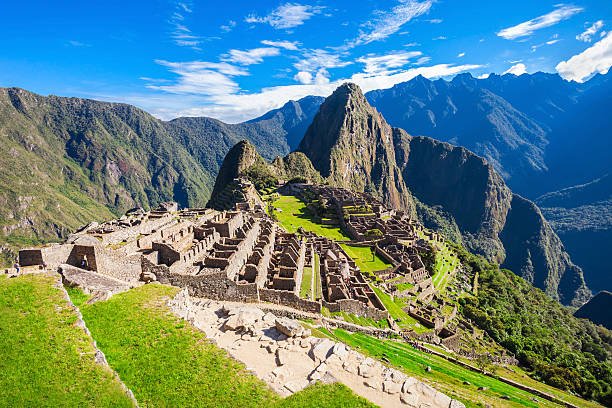
1. Machu Picchu
High in the Andes Mountains, hidden among steep ridges and drifting clouds, lies one of the most extraordinary archaeological rediscoveries in history. This Inca city remained concealed for centuries after the collapse of the Inca Empire, shielded by rugged terrain and dense vegetation.
Although local Indigenous communities always knew of its existence, the wider world remained unaware until the early twentieth century. In 1911, American explorer Hiram Bingham arrived in the region while searching for other Inca strongholds. Guided by local residents, he climbed the mountain slopes and encountered stone terraces and structures emerging from jungle growth.
The rediscovery was not a simple unveiling of ruins. The city had been remarkably preserved because Spanish conquerors never found it. Unlike many other Inca settlements, it was not dismantled or built over. Instead, it remained suspended in time.
Scientific study of the site revealed sophisticated engineering. Agricultural terraces stabilized steep slopes and prevented erosion. Stone blocks were cut with extraordinary precision, fitted without mortar yet resistant to seismic activity. Water channels demonstrated advanced hydraulic planning.
Archaeologists mapped the site carefully, analyzing architecture, ceramics, and burial remains. The city’s purpose remains debated—possibly a royal estate, ceremonial center, or administrative hub—but its rediscovery transformed understanding of Inca civilization. It showed that their architectural and environmental mastery extended far beyond previously known limits.
Modern conservation science continues to monitor erosion, visitor impact, and geological stability. The rediscovery of this mountain city demonstrated how geography itself can serve as the most effective preservation system imaginable.
2. Pompeii
Some lost cities vanish slowly. Others disappear in a single catastrophic moment.
In 79 CE, Mount Vesuvius erupted with devastating force, burying nearby settlements under ash, pumice, and volcanic debris. Among them was a thriving Roman city, instantly sealed beneath meters of material. Over time, its precise location faded from memory.
Fragments resurfaced accidentally in the sixteenth century during construction work, but systematic investigation did not begin until the eighteenth century under the patronage of the Kingdom of Naples.
Excavation methods gradually improved, transforming the site into one of the most scientifically significant archaeological locations on Earth. The volcanic ash that destroyed the city also preserved it in extraordinary detail. Buildings remained standing. Wall paintings survived. Everyday objects stayed where they had been left.
Perhaps most hauntingly, the forms of victims were preserved as voids in hardened ash. When plaster was poured into these cavities, it revealed the final postures of people at the moment of death. These casts provided direct evidence of human response to sudden disaster.
Geological analysis of ash layers allowed scientists to reconstruct eruption phases with remarkable precision. Archaeologists could study Roman urban planning, diet, social structure, and commerce in a frozen snapshot of daily life.
The rediscovery of this buried city did more than reveal ruins. It created a time capsule, offering unparalleled insight into ancient Roman civilization and the destructive power of volcanic processes.
3. Troy
For centuries, Troy existed primarily as literature. Its story lived in epic poetry, especially the works attributed to Homer. Many scholars believed the city was mythological rather than historical.
In the nineteenth century, German businessman and amateur archaeologist Heinrich Schliemann became convinced that the legendary city had once been real. Using textual clues from ancient sources, he identified a mound in northwestern Anatolia and began excavations in 1870.
What emerged was not one city but multiple layers of settlement stacked atop one another. Each represented a different historical period, built upon the ruins of its predecessor. This stratification demonstrated continuous occupation over millennia.
Archaeological analysis revealed fortification walls, gates, and evidence of destruction consistent with warfare. Although debates continue about which layer corresponds to the famous conflict described in epic tradition, the rediscovery proved that a major urban center existed at the location described in ancient literature.
The excavation of this site helped establish archaeology as a scientific discipline grounded in stratigraphy—the study of layered deposits. It showed how myths can preserve distorted memories of real places and events.
The rediscovery of this city reshaped the relationship between legend and history, demonstrating that poetic narrative can contain echoes of physical reality.
4. Angkor
Deep within Southeast Asia’s tropical forests lies the monumental urban complex of Angkor, once the heart of the Khmer Empire. At its peak, it was one of the largest preindustrial cities in the world.
European awareness of the site expanded dramatically in the nineteenth century after reports by the French naturalist Henri Mouhot. However, the city had never truly been lost to local populations. What had vanished was global recognition of its scale and significance.
Dense jungle concealed vast temple complexes, reservoirs, and road networks. Early exploration was limited by vegetation and terrain. The true extent of the city remained unclear for decades.
Modern rediscovery reached a new level through remote sensing technology, particularly airborne laser scanning known as LiDAR. This method penetrates forest canopy to map ground surfaces with high precision. Scientists using LiDAR revealed an enormous urban grid, including canals, embankments, and previously unknown structures.
Hydrological analysis showed that the city relied on a complex water management system involving reservoirs and channels that regulated seasonal flooding. Environmental evidence suggests that shifts in climate and infrastructure strain may have contributed to the city’s decline.
The rediscovery of Angkor demonstrated how advanced technology can reveal landscapes invisible to traditional fieldwork. It transformed understanding of preindustrial urbanism and environmental adaptation.
5. Petra
Hidden within desert canyons, carved directly into rose-colored sandstone cliffs, lies one of the most visually striking ancient cities ever built.
This city flourished as a major trade hub of the Nabataean civilization, strategically positioned along caravan routes connecting Arabia, Egypt, and the Mediterranean. Over time, trade patterns shifted, earthquakes damaged infrastructure, and the city gradually declined.
By the early nineteenth century, knowledge of the site had largely vanished from the Western world. In 1812, Swiss explorer Johann Ludwig Burckhardt gained access by disguising himself as a traveler seeking a local religious site. His careful observation revealed monumental structures carved into canyon walls.
Archaeological study showed sophisticated water management systems, including channels, dams, and reservoirs designed to capture and store scarce rainfall. Engineering analysis revealed that the city’s survival in a desert environment depended on precise hydraulic planning.
Geological investigation of sandstone composition helped explain both the beauty and vulnerability of the carved structures. Erosion patterns continue to shape preservation efforts today.
The rediscovery of this canyon city highlighted the importance of trade networks in shaping urban development and demonstrated the ingenuity required to sustain life in extreme environments.
6. Great Zimbabwe
Across the southern African plateau stand immense stone enclosures built without mortar, forming one of the largest ancient architectural complexes in sub-Saharan Africa.
For centuries, the origins of these structures were misunderstood or misattributed. Early colonial narratives denied that local African societies could have constructed such monumental works. Archaeological science eventually corrected these misconceptions.
Systematic excavation and radiocarbon dating demonstrated that the site was built and inhabited by ancestors of the Shona people between the eleventh and fifteenth centuries. Analysis of trade goods revealed connections to distant regions, including the Indian Ocean network.
Architectural study showed advanced stone masonry techniques using precisely stacked granite blocks. The structures served administrative, residential, and ceremonial functions.
The rediscovery and scientific interpretation of this city played a crucial role in rewriting regional history. It demonstrated the scale and sophistication of indigenous African urban development long before colonial contact.
Archaeology here became not only a scientific enterprise but also a corrective force against historical distortion.
7. Ciudad Perdida
Deep within Colombia’s mountainous rainforest lies a vast terraced settlement built by the Tairona civilization. For centuries, dense jungle concealed its stone stairways and platforms.
The site entered modern awareness in the 1970s after looters stumbled upon stone steps while searching for artifacts. This discovery prompted official archaeological investigation led by the Instituto Colombiano de Antropologia e Historia.
Scientific survey revealed an extensive urban network of terraces connected by staircases carved into mountainsides. Soil analysis and botanical study showed how inhabitants modified the landscape to support agriculture in steep terrain.
Environmental archaeology demonstrated that the city was not isolated but part of a regional system of settlements connected by pathways and ecological management.
The rediscovery required not only excavation but also conservation in a fragile rainforest environment. Researchers continue to study erosion, vegetation growth, and climate effects to preserve the site.
This jungle city illustrates how ecosystems can reclaim human structures so completely that even large urban centers disappear beneath living landscapes.
The Science Behind Rediscovery
The recovery of lost cities is not a matter of chance alone. It is the result of interdisciplinary investigation combining geology, archaeology, anthropology, remote sensing, and historical scholarship.
Researchers examine ancient texts, oral traditions, and environmental data. They analyze sediment layers, radiocarbon samples, and artifact distribution. Technologies such as satellite imaging, ground-penetrating radar, and LiDAR allow scientists to detect buried structures without excavation.
Each rediscovery reflects a dialogue between human inquiry and natural processes. The Earth conceals, but it also preserves. Time erases, but it also records.
Why Lost Cities Matter
Rediscovered cities transform historical understanding. They reveal the diversity of human adaptation to environment, the rise and fall of complex societies, and the resilience of cultural memory.
They remind us that civilization is neither permanent nor inevitable. Urban centers that once dominated regions can vanish entirely, leaving only fragments beneath soil, jungle, or ash.
Yet rediscovery also demonstrates continuity. Human curiosity persists across generations. The desire to understand the past drives exploration, science, and preservation.
The Continuing Search
Many lost cities remain undiscovered. Remote landscapes, shifting environments, and incomplete records ensure that archaeological exploration continues.
New technologies expand the range of possible discovery. Remote sensing can reveal structures beneath dense vegetation or desert sands. Machine learning assists in identifying patterns within vast datasets. Environmental modeling helps predict where ancient settlements might lie hidden.
The story of lost cities is unfinished.
The Memory of Stone and Soil
When a lost city emerges from obscurity, it does more than reveal architecture. It restores human presence where silence once reigned. It reconnects modern observers with lives lived centuries or millennia ago.
Streets that once echoed with voices become visible again. Walls that witnessed rituals and trade rise from concealment. Landscapes once shaped by human intention reenter historical awareness.
Lost cities remind us that time is not merely destructive. It is also preservative. Beneath layers of earth and vegetation, memory endures—waiting for those willing to search, measure, and listen.
And so the rediscovery of lost cities is never just about the past. It is about humanity’s ongoing relationship with history, knowledge, and the enduring traces of our presence on the planet.