Few legends have captured the human imagination as powerfully as El Dorado.
For centuries, explorers crossed mountains, hacked through jungles, and sailed along dangerous rivers in search of a place they believed contained unimaginable riches. They dreamed of golden palaces glittering beneath the tropical sun, streets paved with precious metals, and rulers so wealthy that gold was treated as casually as stone.
The legend inspired some of the most ambitious and dangerous expeditions in history. Men abandoned comfortable lives, invested fortunes, and risked death in pursuit of a city that no one had ever seen. Thousands suffered from hunger, disease, attacks, exhaustion, and despair. Entire expeditions vanished into the wilderness.
Yet despite countless searches, El Dorado was never found.
Today, historians and archaeologists understand that the story of El Dorado is far more complicated—and far more fascinating—than the simple tale of a lost city of gold. The legend evolved over time, changing from a golden king into a kingdom, then into a city, and eventually into an entire golden empire hidden somewhere in the vast interior of South America.
The search for El Dorado reveals not only the history of exploration but also the dangers of greed, ambition, and wishful thinking. It is a story of cultural misunderstanding, human endurance, and the extraordinary power of a myth that refused to die.
The Meaning of El Dorado
The term “El Dorado” originally did not refer to a city.
In Spanish, El Dorado means “The Gilded One” or “The Golden One.”
When the legend first emerged, it described a ruler rather than a place. According to accounts collected by Spanish explorers, an Indigenous leader participated in a ceremonial ritual involving gold dust.
The ruler supposedly covered his body with fine gold powder until he appeared to shine like the sun. He then traveled by raft onto a sacred lake and offered treasures to the gods by casting gold and precious objects into the water.
The image was unforgettable.
To Europeans who had recently arrived in the Americas and were already obsessed with stories of wealth, the idea of a king covered in gold seemed almost unbelievable.
Over time, however, the story began to change.
The golden king became associated with a wealthy kingdom. The kingdom transformed into a magnificent city. Eventually, the city grew into a vast hidden civilization overflowing with treasure.
The legend expanded with every retelling.
The Age of Conquest
To understand why El Dorado became so powerful, it is important to understand the world in which the legend emerged.
The early sixteenth century was an age of exploration and conquest. European powers were expanding their influence across oceans and continents. New lands offered opportunities for wealth, power, and prestige.
Spanish conquistadors had already achieved astonishing successes.
The conquest of the powerful Aztec Empire brought enormous quantities of gold and silver into Spanish hands. Soon afterward, Spanish forces conquered the Inca Empire, one of the largest and wealthiest states in the Americas.
Stories of these victories spread rapidly throughout Europe.
Many people concluded that unimaginable riches still awaited discovery elsewhere.
If two wealthy empires had been found, why not a third?
Why not a kingdom even richer than the others?
The idea seemed entirely plausible to those living at the time.
As a result, rumors of hidden golden civilizations found eager audiences among adventurers, investors, and rulers.
The Muisca People and the Origins of the Legend
Most historians trace the origins of El Dorado to the Indigenous Muisca Confederation of present-day Colombia.
The Muisca were skilled farmers, traders, and metalworkers who lived in the highlands of the northern Andes. Their society was sophisticated and prosperous long before the arrival of Europeans.
Gold held deep cultural and religious significance within Muisca society.
Unlike many Europeans, who valued gold primarily for its monetary worth, the Muisca often viewed it as a symbolic and spiritual material. Gold objects played important roles in ceremonies and rituals.
Spanish chroniclers eventually learned of a ceremony involving a newly installed ruler.
According to descriptions, the ruler traveled to the center of a sacred lake while covered in gold dust. Offerings of gold and precious items were thrown into the water as part of a religious ritual.
This ceremony appears to have taken place at Lake Guatavita.
The story fascinated the Spanish.
What began as an account of a sacred ceremony soon evolved into something much larger.
The Sacred Lake
Lake Guatavita occupies a unique place in the history of El Dorado.
Nestled in the mountains of Colombia, the circular lake inspired generations of treasure seekers.
Convinced that enormous quantities of gold lay hidden beneath its waters, explorers repeatedly attempted to drain the lake.
These efforts were difficult, expensive, and often dangerous.
Workers dug channels and trenches in hopes of lowering the water level. Some recovered small quantities of gold objects and artifacts, encouraging further efforts.
Yet the spectacular riches imagined by treasure hunters never appeared.
Modern archaeological investigations have confirmed that ceremonial offerings were indeed placed in the lake. Gold objects have been recovered, supporting historical accounts of ritual activity.
However, the evidence suggests religious offerings rather than a vast treasure hoard.
The lake played a crucial role in transforming a cultural practice into one of history’s most famous legends.
How a King Became a City
The transformation of El Dorado from a person into a place happened gradually.
As stories traveled across vast distances, details changed. Rumors mixed with speculation. Facts merged with imagination.
Every explorer who returned from the interior brought new tales.
Some claimed to have heard of rich kingdoms beyond the mountains.
Others spoke of prosperous cities hidden deep within the forests.
Maps began showing mysterious locations that no European had actually visited.
The farther away a place seemed, the more extraordinary it became.
Soon El Dorado was no longer a golden ruler.
It had become a lost city waiting to be discovered.
Then it became an entire empire.
The legend grew larger with each generation.
The Unknown Interior of South America
One reason the myth survived for so long was that much of South America remained unknown to Europeans.
The continent’s interior presented enormous challenges.
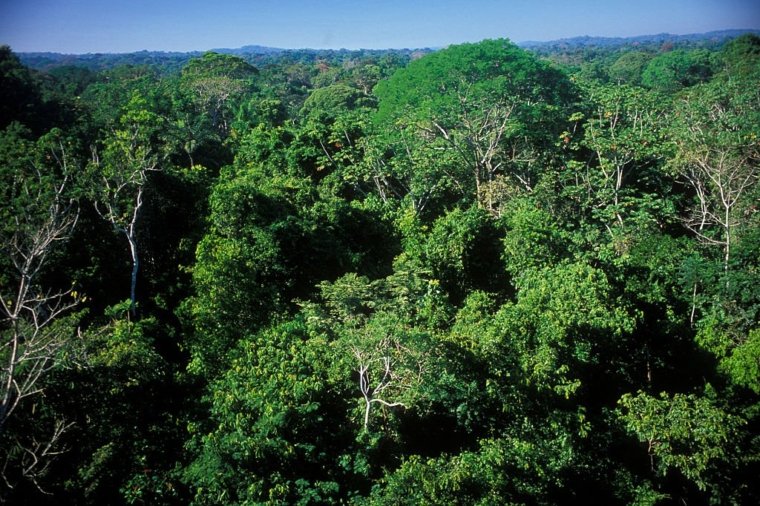
Dense rainforests stretched for thousands of kilometers. Massive rivers carved through remote regions. Mountain ranges rose into the clouds. Vast plains extended beyond the horizon.
Maps contained enormous blank spaces.
Where knowledge was absent, imagination flourished.
People could easily believe that hidden civilizations existed somewhere beyond the limits of exploration.
After all, the Aztec and Inca civilizations had once been unknown to Europeans as well.
The discovery of one great civilization made the discovery of another seem entirely possible.
This belief fueled expedition after expedition.
Expeditions into the Wilderness
Searching for El Dorado was never easy.
The landscapes explorers encountered were among the most challenging on Earth.
Dense vegetation slowed progress to a crawl. Tropical diseases spread rapidly. Food supplies often dwindled. Dangerous animals and insects added further difficulties.
Many expeditions faced starvation.
Others suffered from internal conflicts, mutiny, or violence.
Yet the promise of unimaginable wealth continued to attract participants.
Men endured extraordinary hardships because they believed the next river bend or mountain pass might reveal the legendary city.
The search became an obsession.
Again and again, explorers pressed deeper into unknown territory despite repeated failures.
Gonzalo Pizarro’s Famous Expedition
One of the most famous searches for El Dorado was led by Gonzalo Pizarro.
In the early 1540s, Pizarro organized a massive expedition into the eastern regions of South America.
The journey began with great expectations.
Hundreds of men, horses, Indigenous guides, and support personnel participated. The expedition carried supplies for what participants expected would be a triumphant search for wealth.
Reality proved far different.
The explorers encountered difficult terrain, extreme weather, and severe food shortages. As conditions worsened, survival became more important than finding treasure.
Many participants died.
The expedition eventually descended into chaos and hardship.
Yet even this disaster did not end belief in El Dorado.
Instead, new rumors emerged from the experience.
Francisco de Orellana and the Amazon
A remarkable chapter of exploration emerged from the same expedition.
Francisco de Orellana separated from Pizarro’s main force while searching for supplies.
Unable to return against powerful river currents, Orellana and his companions continued downstream.
Their journey led to one of the greatest geographical discoveries in history.
They became the first Europeans known to travel the entire length of the Amazon River.
The expedition revealed the immense scale of the Amazon basin.
Yet even after crossing one of the world’s largest river systems, the explorers found no golden city.
The wilderness remained vast, mysterious, and seemingly endless.
Sir Walter Raleigh and the Golden Dream
The legend of El Dorado eventually spread beyond Spain.
One of its most famous believers was Walter Raleigh.
Raleigh became convinced that a wealthy kingdom existed in the region of present-day Guyana and Venezuela.
In 1595, he launched an expedition to search for the legendary land.
Raleigh returned without finding El Dorado, but he remained convinced that the city existed.
He published accounts describing a magnificent golden empire hidden in the interior.
His writings helped keep the legend alive throughout Europe.
Generations of readers became fascinated by the possibility that a vast undiscovered civilization still awaited discovery.
Raleigh’s descriptions blended observation, rumor, and speculation into a compelling narrative that strengthened belief in El Dorado.
The Human Cost of the Search
Behind the romance of exploration lay a darker reality.
The search for El Dorado claimed countless lives.
Explorers died from disease, starvation, drowning, and exhaustion.
Indigenous communities often suffered even more.
Expeditions disrupted local societies, spread violence, and introduced devastating diseases.
Entire regions experienced profound changes as European explorers pushed deeper into previously isolated areas.
The pursuit of El Dorado was not merely an adventure story.
It was also a human tragedy.
The dream of gold encouraged actions that caused suffering across large parts of the continent.
Understanding this reality is essential to understanding the true history of the legend.
Why Gold Held Such Power
Gold has fascinated humans for thousands of years.
Its beauty, rarity, and resistance to corrosion make it unique among metals.
Across many cultures, gold became associated with wealth, power, divinity, and prestige.
For Europeans during the Age of Exploration, gold represented opportunity.
It could finance kingdoms, reward investors, and elevate social status.
Stories involving gold naturally attracted attention.
The legend of El Dorado combined humanity’s attraction to gold with the excitement of exploration and the mystery of unknown lands.
It was a powerful combination.
People wanted the story to be true.
That desire often made them overlook evidence and embrace rumors.
Indigenous Realities Versus European Fantasies
One of the most important aspects of the El Dorado story is the contrast between Indigenous realities and European expectations.
Many Indigenous societies used gold in artistic, ceremonial, and religious contexts.
Their relationship with gold often differed significantly from European attitudes.
European explorers frequently misunderstood what they observed.
A ceremonial object might be interpreted as evidence of vast wealth.
A ritual offering could become proof of hidden treasure.
Stories passed through translators, cultural barriers, and personal biases.
As a result, the legend of El Dorado grew increasingly disconnected from the realities that inspired it.
What Europeans sought often reflected their own hopes more than the cultures they encountered.
Archaeological Discoveries
Modern archaeology has transformed understanding of the regions associated with El Dorado.
Researchers have uncovered evidence of sophisticated societies throughout South America.
Ancient communities constructed settlements, agricultural systems, roads, ceremonial centers, and trade networks.
These discoveries reveal that many regions once considered sparsely populated actually supported large and complex populations.
The findings are remarkable.
Yet they do not confirm the existence of a golden city.
Instead, they paint a richer and more nuanced picture of Indigenous civilizations.
The real history is often more interesting than the myth.
Rather than a single lost city, the continent hosted numerous diverse cultures with unique achievements and traditions.
The Mystery of Lake Parime
Another important chapter in the El Dorado story involves the mythical Lake Parime.
For centuries, European maps depicted a vast lake in northern South America.
Cartographers often placed a wealthy city along its shores.
The lake appeared so frequently on maps that many people assumed it existed.
Explorers searched for it repeatedly.
Over time, however, evidence accumulated against its existence.
Eventually, improved surveys demonstrated that Lake Parime was largely a cartographic myth.
The episode illustrates how easily speculation could become accepted as fact.
Once an idea appeared on maps, it gained an aura of legitimacy that encouraged further belief.
The Role of Imagination
The story of El Dorado reveals the extraordinary power of imagination.
Human beings are storytellers by nature.
We seek patterns, possibilities, and mysteries.
When information is incomplete, imagination fills the gaps.
The unknown interior of South America provided fertile ground for speculation.
Every rumor could become a new clue.
Every unexplored region could conceal a lost city.
Every expedition failure could be explained by claiming the treasure lay just beyond the next horizon.
The legend survived because it continually adapted to new circumstances.
When one location proved disappointing, El Dorado simply moved somewhere else.
Scientific Perspectives Today
Today, historians, archaeologists, and anthropologists generally agree that El Dorado as a literal golden city never existed.
The evidence points instead to a gradual evolution of stories originating from real cultural practices, particularly among the Muisca.
This conclusion does not diminish the significance of the legend.
In fact, understanding its origins makes the story even more fascinating.
El Dorado demonstrates how myths develop, spread, and transform over time.
It reveals the interactions between different cultures.
It shows how misunderstanding, hope, and ambition can create narratives that outlive generations.
The legend itself has become a historical phenomenon worthy of study.
The Legacy of El Dorado
Although the mythical city was never found, the search left a lasting legacy.
Explorers mapped rivers, mountains, and forests.
Geographical knowledge expanded dramatically.
New routes were discovered.
Regions previously unknown to Europeans entered global awareness.
At the same time, the search serves as a cautionary tale.
The pursuit of wealth can distort judgment.
Desire can overshadow evidence.
Dreams can inspire remarkable achievements, but they can also lead to tragedy.
El Dorado embodies both sides of human ambition.
Why the Legend Endures
Even today, El Dorado remains deeply embedded in popular culture.
Books, films, television programs, and video games continue to reimagine the lost city.
The reason is simple.
The legend speaks to universal human desires.
People are drawn to mysteries.
They enjoy imagining hidden worlds and undiscovered treasures.
The idea that something extraordinary might still be waiting beyond the known horizon remains emotionally powerful.
El Dorado symbolizes the ultimate quest—the search for something magnificent that always seems just out of reach.
Conclusion
The story of El Dorado began with a real ceremonial tradition among the Muisca people of present-day Colombia. Over time, that tradition transformed into one of the greatest legends in world history. A golden ruler became a kingdom, the kingdom became a city, and the city became an entire empire hidden somewhere in the vast landscapes of South America.
For centuries, explorers risked everything to find it. They crossed mountains, navigated dangerous rivers, and ventured into some of the most challenging environments on Earth. Many never returned. Others came back with stories that only strengthened the myth.
Modern research has shown that no golden city matching the legend ever existed. Yet the search was not entirely futile. It expanded geographical knowledge, revealed the complexity of Indigenous civilizations, and left behind a remarkable historical record of exploration and human ambition.
The true significance of El Dorado lies not in treasure buried beneath the earth but in what the legend reveals about people themselves. It shows how hope can inspire courage, how greed can fuel obsession, and how stories can become more powerful than facts. More than five hundred years after the first rumors spread across the Americas, El Dorado remains one of history’s most enduring mysteries—not because it was found, but because it never was.