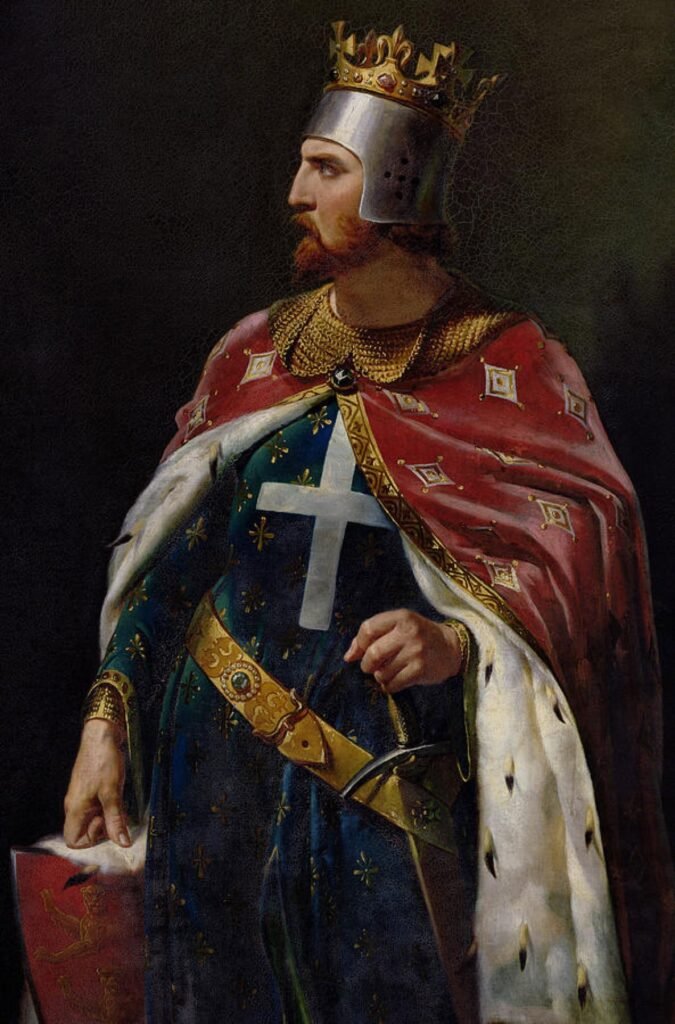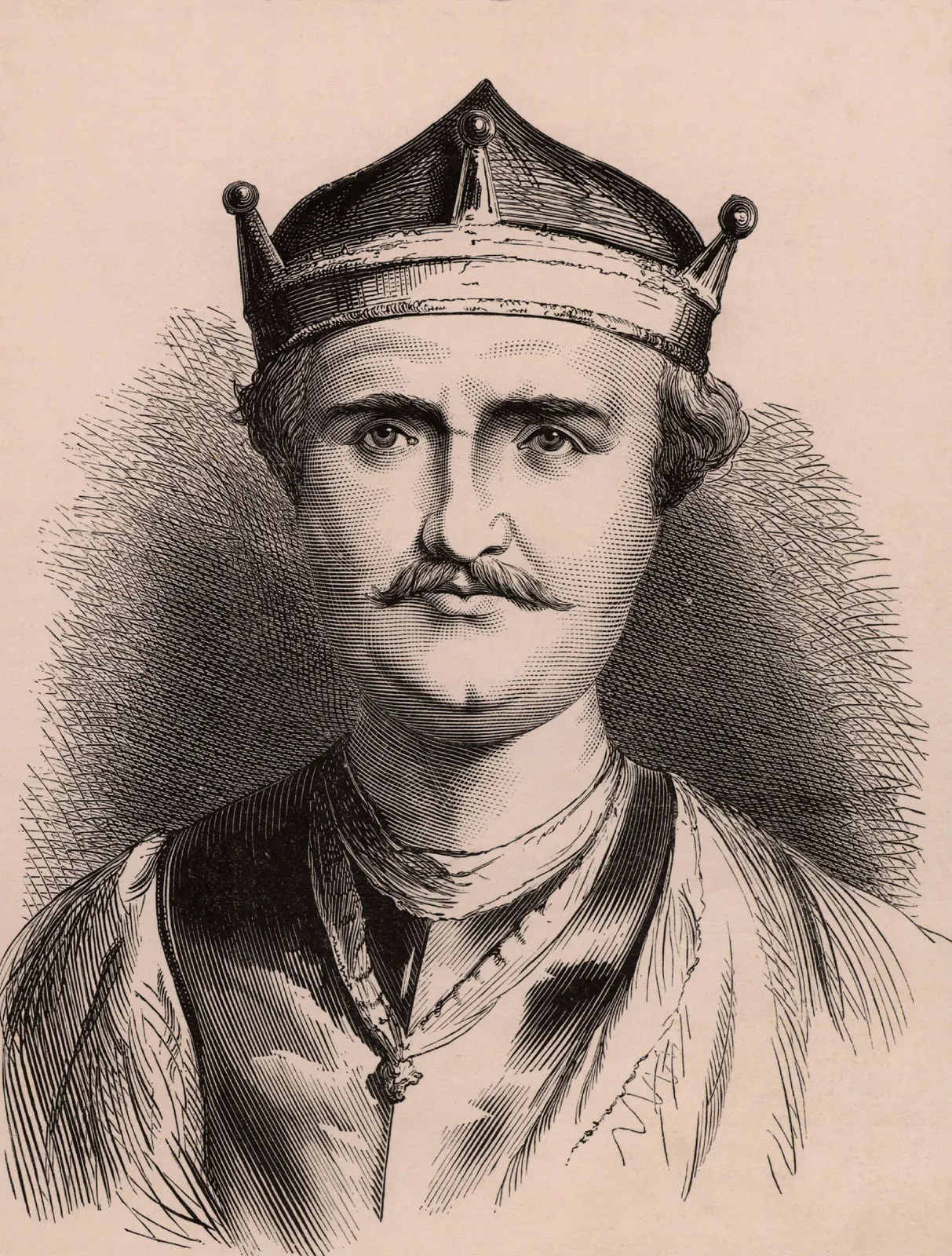
William the Conqueror (born around 1028, Falaise, Normandy, France—died September 9, 1087, Rouen, Normandy, France) was the Duke of Normandy and King of England from 1066 until his death. Also known as William I and William the Bastard, he became king after defeating the English army at the Battle of Hastings in 1066. His conquest of England ended the Anglo-Saxon royal dynasty and established Norman rule over the country. He was the son of Robert I, Duke of Normandy, and Herleva, a woman of non-noble birth.
Early Life and Family Background
William was born in Falaise, a town in the Duchy of Normandy, a region in northern France. His father, Robert I, was the ruler of Normandy, while his mother, Herleva, was associated with a family of more modest social standing. Because his parents were not married, William was considered illegitimate. This circumstance earned him the nickname William the Bastard, which followed him during his early years.
His father had no legitimate sons, and William became his recognized heir. In 1034, Robert announced his intention to make a pilgrimage to Jerusalem. Before leaving, he arranged for Norman nobles to recognize William as his successor. Robert died during his journey in 1035, leaving his young son as Duke of Normandy.
William was only about seven years old when he inherited the title. His youth made it difficult for him to control the powerful nobles who governed different parts of the duchy. Several members of the Norman aristocracy competed for influence, and some challenged the authority of the young duke.
The early years of William’s rule were marked by violence and political instability. Powerful nobles fought among themselves, and some of William’s supporters were killed. His guardians and advisers struggled to protect him from rivals who wanted greater control over Normandy.
William himself narrowly escaped several attempts on his life. According to accounts of the period, he was forced to flee from danger on at least one occasion. These experiences exposed him to the risks of ruling in a society where political power often depended on military strength and personal alliances.
Despite these difficulties, William gradually gained the support of important nobles and church leaders. His mother remained an important figure in his early life, and his extended family helped him maintain connections with influential people.
Gaining Control of Normandy
As William grew older, he began taking a more active role in governing Normandy. His position became stronger through military victories, political agreements, and the support of important allies.
One of his major early challenges came from Guy of Burgundy, a nobleman who opposed William’s authority and gathered supporters against him. William responded by using military force to defend his position.
In 1047, William defeated a rebellion at the Battle of Val-ès-Dunes, with support from King Henry I of France. The victory helped him strengthen his authority and reduce the influence of rebellious nobles.
William continued working to bring the duchy under firmer control. He established stronger relationships with loyal supporters, strengthened important castles, and used military campaigns to challenge opponents who threatened his position.
In 1051, William visited England, where his relative Edward the Confessor was king. Edward had spent much of his earlier life in Normandy and maintained close connections with Norman leaders. Later accounts claimed that Edward promised William the English throne during this visit, although the exact circumstances and meaning of the alleged promise remain disputed.
William’s growing power also attracted opposition from neighboring rulers. King Henry I of France, who had once supported him, became concerned about the strength of Normandy. In 1054 and again in 1057, French forces invaded Norman territory. William successfully resisted these attacks and maintained his independence.
His victory at the Battle of Varaville in 1057 helped secure his position against French intervention. By the end of the 1050s, he had become a more experienced and powerful ruler.
Marriage to Matilda of Flanders
Around 1050 or 1051, William married Matilda of Flanders, the daughter of Baldwin V, Count of Flanders, and Adela of France. Matilda came from one of the most influential families in western Europe.
The marriage strengthened William’s political position by connecting him to an important neighboring territory. It also gave him a large family that would become central to the future of Normandy and England.
The marriage initially faced opposition from the church because William and Matilda were considered too closely related under the rules of the time. Church authorities eventually allowed the union, although the couple were required to make religious arrangements, including establishing religious foundations.
William and Matilda had several children, including Robert, William, and Henry, who later played important roles in the political affairs of Normandy and England. Their daughters included Cecily, who became a nun, and Adela, who married Stephen, Count of Blois.
Matilda was more than a royal wife. She took part in managing important affairs in Normandy and later helped govern England during William’s absences. She also supported religious institutions and charitable activities.
Their marriage lasted until Matilda’s death in 1083.
The Disputed English Succession
William’s claim to the English throne developed during the final years of Edward the Confessor’s reign. Edward had no children, and the question of who would succeed him became increasingly important as his health declined.
Several individuals had possible claims to the throne. Among them were William, Harold Godwinson, and Edgar the Ætheling, a member of the old English royal family.
Harold Godwinson was one of the most powerful nobles in England. He belonged to the influential Godwin family and had gained considerable political and military authority under Edward.
According to Norman accounts, Edward had promised William the English crown. William also claimed that Harold had previously sworn an oath to support his right to the throne. The details of this oath are disputed, and English accounts do not agree with the Norman version of events.
In January 1066, Edward the Confessor died. Harold Godwinson was quickly chosen and crowned king of England.
William rejected Harold’s claim. He argued that Harold had broken his earlier oath and taken a crown that rightfully belonged to him. William also sought support from the pope, presenting his planned invasion as a justified effort to claim the English throne.
Pope Alexander II supported William’s cause and sent him a banner. This religious backing helped William gain support among Norman nobles and other European warriors.
William began preparing a major invasion. He gathered soldiers, ships, horses, weapons, and supplies. His army included Norman fighters as well as soldiers from other parts of France and neighboring territories.
The Norman Conquest of England
William’s invasion plans faced a serious obstacle when unfavorable winds delayed his departure. Meanwhile, Harold Godwinson had to deal with another invasion from the north.
In September 1066, Harald Hardrada, King of Norway, invaded northern England with the support of Harold’s brother Tostig Godwinson. Harold marched north with his army and defeated the invading forces at the Battle of Stamford Bridge on September 25.
The English victory was costly, and Harold’s troops had little time to recover. Soon afterward, William’s fleet crossed the English Channel and landed in southern England, near Pevensey, in September 1066.
William established a base and began preparing for a confrontation. Harold received news of the landing and quickly marched south with his exhausted army.
The two forces met on October 14, 1066, at the Battle of Hastings, near present-day Battle in East Sussex.
The English army fought mainly on foot, using a strong defensive formation known as a shield wall. The Norman army included infantry, archers, and mounted knights. William used different military tactics to weaken the English defense.
The battle continued for much of the day. Norman forces launched repeated attacks, while the English soldiers held their position for hours. At different points, Norman troops appeared to retreat, and some English soldiers left their defensive formation to pursue them.
These movements weakened the English line. Norman cavalry and infantry eventually broke through the English defenses.
Harold was killed during the battle, although accounts differ about the exact circumstances of his death. His army collapsed, and the Norman forces won a decisive victory.
The Battle of Hastings changed the direction of English history. William had defeated the reigning king, but he still needed to secure the country and establish his authority.
Becoming King of England
After the victory at Hastings, William moved toward London. Some English leaders initially resisted him, but the loss of Harold and the defeat of the English army had left the country without strong central leadership.
Edgar the Ætheling was briefly recognized as a possible king by some English nobles, but his position was weak. William’s forces advanced through southern England, and several important English leaders eventually submitted to him.
On December 25, 1066, William was crowned King of England at Westminster Abbey. The ceremony was conducted by Archbishop Ealdred of York.
His coronation marked the beginning of Norman rule, but it did not mean that all of England had accepted his authority. Many English nobles and communities continued to resist the new king.
William therefore spent much of his early reign securing control through military campaigns, fortified settlements, and political agreements.
He also had to balance his responsibilities as King of England with his position as Duke of Normandy. The two territories were governed separately, but their political and military interests became closely connected through his rule.
Resistance and the Harrying of the North
William faced repeated rebellions during the first years of his English reign. Many English nobles had lost their lands and positions to Norman supporters, creating widespread resentment.
In 1067, William returned to Normandy for a period, leaving trusted officials to manage England. Rebellions soon developed in different parts of the country.
One of the major challenges came in 1068, when English resistance grew in the north. Edgar the Ætheling joined forces with other opponents of Norman rule and received support from Scottish King Malcolm III.
William responded with military campaigns designed to defeat the rebels and strengthen his control. He built castles in important locations, including York, and placed Norman officials in positions of authority.
In 1069, another major uprising developed in northern England. Danish forces also arrived to support the resistance. The rebels attacked Norman strongholds, including castles in York.
William launched a campaign to crush the rebellion. During the winter of 1069–1070, his forces carried out the campaign later known as the Harrying of the North.
Norman soldiers destroyed settlements, burned crops, killed livestock, and damaged food supplies. The destruction made it difficult for local communities to support resistance movements.
The campaign caused widespread suffering and famine. Many people died, and large areas of northern England were left devastated. The effects of the destruction continued for years.
William’s actions secured his military control over the region, but they also created lasting hostility among the English population.
Building Norman Rule
After suppressing major rebellions, William worked to establish a more permanent system of government in England.
He replaced many English nobles with Norman and other continental supporters. Large estates that had belonged to English landowners were redistributed among his followers, especially those who had supported the conquest.
This transfer of land changed the structure of English society. Norman nobles became the leading landowners, while many English aristocrats lost their property and political influence.
William also encouraged the construction of castles throughout England. These buildings served as military bases, administrative centers, and residences for Norman lords.
One of the best-known examples was the Tower of London, whose construction began during William’s reign. Its central stone building, now known as the White Tower, was designed to strengthen Norman control over the capital and protect an important crossing of the River Thames.
William maintained many existing English institutions rather than replacing the entire system of government. Local administrative arrangements continued, although they increasingly operated under Norman authority.
He also relied on sheriffs, who were royal officials responsible for collecting taxes, maintaining order, and carrying out the king’s commands in local areas.
The church underwent major changes as well. William appointed Norman and other foreign church leaders to important positions. Lanfranc, an Italian-born scholar and churchman, became Archbishop of Canterbury in 1070 and helped reorganize the English church.
William continued to rely on the church as an important part of government. Religious institutions also received land and royal support during his reign.
The Domesday Book
One of William’s most important administrative projects was the survey of England known as the Domesday Book.
In 1085, William ordered an extensive investigation into land ownership, property, and resources across much of England. Officials gathered information about who held land, how much it was worth, and what resources and livestock were available.
The findings were recorded in the Domesday Book, which was largely completed in 1086.
The survey helped William understand the wealth and resources of his kingdom. It also provided information that could be used to determine taxes and establish the obligations of landholders.
The name Domesday reflects the idea that the survey’s judgments were final and difficult to challenge, much like the judgment associated with the biblical Day of Judgment.
The book recorded details about thousands of settlements and landholdings. It remains one of the most important surviving records of medieval England.
William also used the information to strengthen royal authority over landowners. In 1086, many leading landholders gathered at Salisbury and swore an oath of loyalty directly to him.
This gathering reinforced the king’s position as the central authority over the landholding class.
Relations with Scotland and Wales
William’s military and political concerns extended beyond England. He also had to protect his kingdom from neighboring rulers and potential enemies.
Relations with Scotland were often tense because Scottish leaders supported English opponents of Norman rule. Malcolm III had provided assistance to Edgar the Ætheling and other rebels.
In 1072, William led an expedition into Scotland. Malcolm eventually agreed to terms that included recognizing William’s authority and promising not to support English rebels.
William also faced challenges along the Welsh border. Norman nobles gradually expanded their influence into parts of Wales, establishing territories that became known as the Welsh Marches.
These areas were controlled by powerful lords who held considerable freedom in managing their lands and defending their positions.
William’s efforts to secure the borders helped protect his English kingdom, although conflicts with neighboring rulers continued during his reign.
Conflicts Within the Norman Family
Although William had established himself as king and strengthened his authority, his own family became a source of political difficulty.
His eldest surviving son, Robert Curthose, expected to inherit Normandy. However, tensions developed between father and son over Robert’s position and authority.
Robert wanted greater independence, while William was reluctant to surrender control of the duchy.
Around 1077, Robert rebelled against his father with the support of some Norman nobles. The conflict developed into a struggle involving other members of the family and rival political interests.
William’s second son, William Rufus, and his youngest son, Henry, also became involved in the family tensions at different times.
In 1079, William fought against Robert near the town of Gerberoi in Normandy. During the battle, Robert reportedly wounded his father before recognizing him. The incident highlighted the depth of their disagreement.
Although the conflict eventually ended, the relationship between William and Robert remained strained.
William continued to rule Normandy and England, while Robert maintained ambitions for greater power.
Later Years and Final Campaign
During the final years of his life, William continued to defend his territories and manage political challenges in France.
His relationship with King Philip I of France became increasingly hostile. Philip supported opponents of William and challenged Norman influence in areas close to the French royal lands.
In 1087, William led a military campaign against the French-held town of Mantes, which had become a base for attacks on Norman territory.
During the campaign, William was injured while riding. Accounts describe an injury sustained when his horse struck or fell against an obstacle near the town.
The injury became serious, and William’s health declined. He was taken to Rouen, where he received treatment and spent his final days.
Before his death, he made arrangements concerning the future of his territories. He decided that his eldest son, Robert Curthose, would receive Normandy, while his second son, William Rufus, would become King of England.
His youngest son, Henry, received money, although he did not immediately inherit either of the principal territories.
William the Conqueror died on September 9, 1087, in Rouen, Normandy, at approximately 59 years of age.
His body was taken to Caen for burial at the Abbey of Saint-Étienne, which he had founded. His funeral was disrupted by a dispute over the ownership of the burial site, but he was eventually buried in the church.
His death ended a reign that had transformed the political leadership of England and established a new ruling family across the English Channel. His sons inherited the territories he had controlled, beginning a new period of rivalry and political struggle within the Norman dynasty.