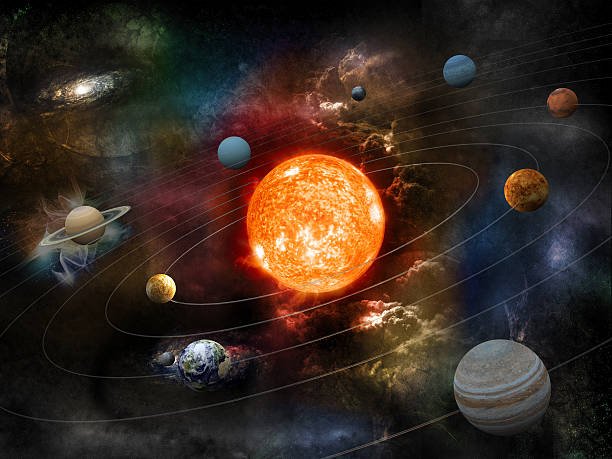
Our solar system is often imagined as a quiet clockwork of planets calmly orbiting the Sun. From a distance, it looks orderly, even peaceful. Yet this serenity is deceptive. Beneath the elegance of celestial motion lies an arena of extremes so violent and unforgiving that unprotected human life would last seconds, sometimes less. Crushing pressures, searing temperatures, lethal radiation, and chemical storms dominate most worlds beyond Earth. These environments are not merely hostile; they are actively destructive to biology, technology, and matter itself.
Exploring these places has transformed planetary science. Spacecraft have revealed that “deadly” in the solar system does not mean one thing, but many. Some worlds kill with heat, others with cold. Some destroy through pressure, others through radiation or chemistry. Each environment represents a different way nature tests the limits of physics and life.
The following ten environments stand as the most lethal known regions in our solar system, ranked not by drama or imagination, but by well-established scientific evidence. Each is a reminder that Earth’s habitability is not the norm, but a rare and fragile exception.
1. Venus Surface – A Planet That Crushes and Burns Simultaneously
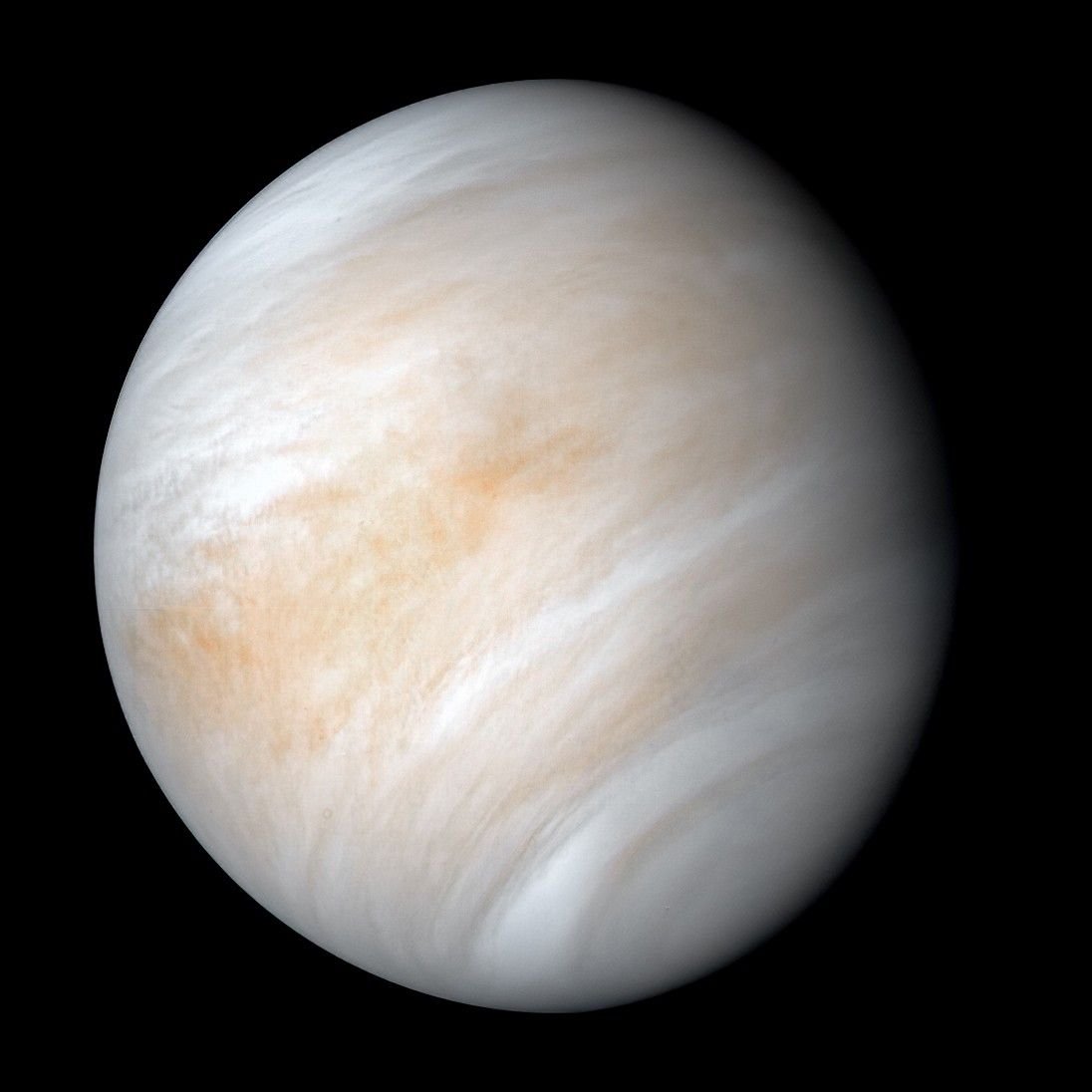
Venus is often called Earth’s twin because of its similar size and composition, but on the surface, the resemblance ends violently. Venus hosts the most extreme surface environment of any rocky planet in the solar system. The danger does not come from a single factor, but from a convergence of multiple lethal conditions acting at once.
Surface temperatures on Venus average around 465 degrees Celsius, hot enough to melt lead and destroy most known materials. This heat is not localized or seasonal; it is global and constant, day and night, pole to equator. The cause is a runaway greenhouse effect driven by an atmosphere composed of over 96 percent carbon dioxide. Once heat enters, it cannot escape.
Pressure on the Venusian surface is approximately 92 times that of Earth’s atmospheric pressure, equivalent to being nearly one kilometer underwater in Earth’s oceans. This pressure alone would crush a human body instantly. Combined with extreme heat, it also destroys electronics and structural materials. Even the most robust landers ever sent to Venus have survived only hours.
The atmosphere itself is chemically hostile. Clouds of sulfuric acid rain fall continuously, never reaching the ground because they evaporate in the intense heat below. The sky glows with a dim yellow light filtered through thick, toxic gases. There is no breathable oxygen, no water, and no safe refuge.
Venus is deadly not because it is chaotic, but because it is stable in its hostility. It is a world locked in a permanent state of lethal equilibrium, making it the most immediately unsurvivable solid surface in the solar system.
2. Jupiter’s Radiation Belts – A Zone That Destroys Life at the Atomic Level
Jupiter has no solid surface to stand on, but its surrounding space environment is among the most dangerous regions known. The planet possesses the strongest magnetic field of any planet in the solar system, creating radiation belts that dwarf even Earth’s Van Allen belts.
These belts trap high-energy charged particles, primarily electrons and ions, accelerating them to near-relativistic speeds. Radiation levels near Jupiter are so intense that they can destroy unshielded electronics in minutes and deliver fatal doses to humans in seconds. The danger here is invisible and silent, but absolute.
A human exposed directly to Jupiter’s inner radiation belts would suffer catastrophic cellular damage almost immediately. DNA strands would break faster than biological repair mechanisms could respond. Neural tissue, particularly sensitive to radiation, would be severely damaged, leading to rapid loss of consciousness and death.
Even robotic spacecraft struggle here. Missions such as Juno are designed with radiation-hardened systems and carefully planned orbits to minimize exposure. Despite these precautions, radiation remains one of the greatest threats to their longevity.
Jupiter’s radiation environment demonstrates that death in space does not always come from vacuum or temperature. Sometimes it comes from invisible forces that strip matter apart particle by particle.
3. The Sun’s Corona – A Realm of Extreme Heat and Energy
The Sun is the source of life on Earth, but approaching it reveals one of the most hostile environments imaginable. The Sun’s corona, its outer atmosphere, defies intuition and physics expectations by reaching temperatures of several million degrees Celsius, far hotter than the solar surface below.
In the corona, atoms are stripped of their electrons, forming plasma—a state of matter dominated by electromagnetic forces. Any solid object entering this region would be vaporized almost instantly. Human tissue would not burn; it would dissociate at the atomic level.
The danger is not only thermal. The corona is a source of intense radiation, including ultraviolet and X-rays, capable of penetrating and destroying biological cells. Solar flares and coronal mass ejections release colossal bursts of energy, accelerating particles to extreme velocities.
Even at a distance, these events can disrupt satellites and power grids on Earth. Up close, they represent a level of energetic violence unmatched anywhere else in the solar system. The Sun’s corona is not merely hot; it is a continuously erupting ocean of plasma governed by magnetic chaos.
4. Mercury’s Surface – A World of Thermal Extremes
Mercury is the closest planet to the Sun, and its surface environment reflects this proximity in a particularly brutal way. Lacking a substantial atmosphere, Mercury cannot retain heat or distribute it evenly. As a result, it experiences the most extreme temperature swings of any planet.
Daytime temperatures on Mercury can exceed 430 degrees Celsius, hot enough to cause instant fatal burns and rapid dehydration. At night, temperatures plunge to around minus 180 degrees Celsius, cold enough to freeze human tissue solid within moments.
These extremes are not gradual. As Mercury rotates slowly, a single location experiences prolonged exposure to intense sunlight followed by long, frigid nights. The absence of an atmosphere also means there is no protection from solar radiation or micrometeoroids.
For humans, survival would be impossible without massive, perfectly insulated, and radiation-shielded habitats capable of withstanding both extreme heat and cold. Mercury’s deadliness lies not in constant conditions, but in violent oscillation between opposites that no biological system can tolerate.
5. Saturn’s Upper Atmosphere – Crushing Pressure and Chemical Violence
Saturn, like Jupiter, is a gas giant with no solid surface. Descending into its atmosphere would be a one-way journey into increasing pressure, heat, and chemical destruction.
The upper layers may appear calm, but as one descends, pressure rises rapidly. Hydrogen and helium dominate the atmosphere, and at deeper levels, pressure reaches values millions of times greater than Earth’s atmosphere. Under such conditions, gases behave like liquids and eventually metallic fluids.
Temperatures also rise dramatically with depth. What begins as a cold, windy environment transitions into an inferno of compressed gas. Human bodies would first suffocate, then be crushed, then thermally destroyed.
Saturn’s powerful winds, reaching speeds over 1,600 kilometers per hour, add mechanical violence to the environment. Chemical reactions under extreme pressure further destabilize any structure or organism.
Saturn kills not with sudden impact, but with relentless compression, turning matter into something fundamentally different under the weight of its atmosphere.
6. Io – The Most Volcanically Violent World Known
Io, a moon of Jupiter, is the most volcanically active body in the solar system. Its surface is reshaped constantly by eruptions driven not by internal heat alone, but by tidal forces exerted by Jupiter’s immense gravity.
These tidal forces stretch and compress Io’s interior, generating heat through friction. The result is a surface dotted with hundreds of active volcanoes, some ejecting material hundreds of kilometers into space. Lava temperatures on Io exceed those of any volcano on Earth.
The environment is lethal in multiple ways. Extreme volcanism releases sulfur dioxide gas, which freezes and sublimates across the surface. Radiation from Jupiter bombards Io relentlessly, compounding the danger.
A human on Io’s surface would face intense radiation, toxic gases, unstable ground, and sudden eruptions capable of obliterating entire regions. Io is a world where the ground itself is alive with violence, offering no safe refuge even for moments.
7. Neptune’s Atmosphere – Supersonic Winds and Extreme Cold
Neptune is the most distant planet from the Sun, and its environment reflects both isolation and internal energy. Despite receiving minimal solar heat, Neptune hosts the fastest winds in the solar system, reaching speeds over 2,000 kilometers per hour.
Temperatures in Neptune’s atmosphere plunge to around minus 200 degrees Celsius. At such cold, human tissue would freeze almost instantly. The atmosphere is composed mainly of hydrogen, helium, and methane, offering no oxygen and no protection from pressure changes.
Descending into Neptune would expose a human to increasing pressure and wind shear capable of tearing apart any structure. The combination of cold, speed, and compression makes Neptune’s atmosphere lethally dynamic.
Neptune demonstrates that distance from the Sun does not equate to calm. Internal heat and fluid dynamics create an environment as violent as it is cold.
8. Europa’s Surface – Radiation and Cryogenic Desolation
Europa, another moon of Jupiter, is famous for its subsurface ocean and potential habitability. Yet its surface environment is among the deadliest in the solar system.
Europa is bombarded by intense radiation from Jupiter’s magnetic field. Surface radiation levels are high enough to deliver a lethal dose to a human in less than a day. This radiation penetrates deeply, damaging cells and genetic material.
Temperatures on Europa’s surface average around minus 160 degrees Celsius. The icy crust is rigid, fractured, and constantly reshaped by tidal stresses. There is no atmosphere to provide insulation or protection.
Europa’s danger lies in contrast. Beneath the ice may lie conditions suitable for life, but on the surface, death is swift and unavoidable. It is a reminder that habitability can exist alongside extreme hostility, separated by mere kilometers of ice.
9. Titan’s Upper Atmosphere – Chemical Suffocation and Cryogenic Hazards
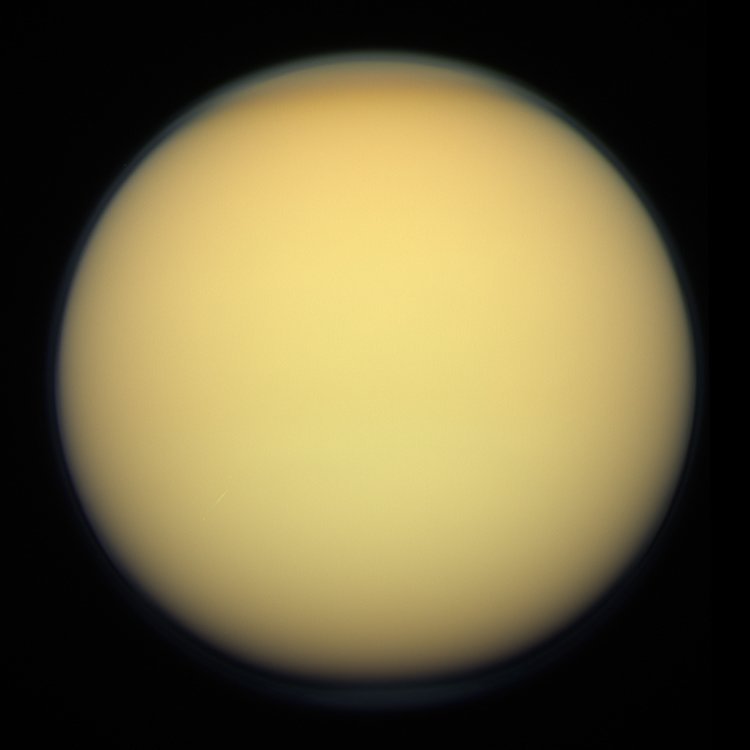
Titan, Saturn’s largest moon, has a thick atmosphere, making it superficially appealing. However, its composition and temperature render it lethal to humans.
Titan’s atmosphere is rich in nitrogen but contains no breathable oxygen. Temperatures hover around minus 180 degrees Celsius, cold enough to freeze exposed tissue rapidly. Hydrocarbon chemistry dominates, with methane and ethane forming clouds, rain, and lakes.
At these temperatures, water ice behaves like rock, while hydrocarbons act as liquids. Human physiology, evolved for liquid water and moderate temperatures, cannot function in such conditions.
Titan suffocates and freezes rather than burns or crushes. Its danger is subtle, rooted in chemistry and thermodynamics that are incompatible with life as we know it.
10. The Kuiper Belt – Extreme Cold and Isolation Beyond Survival
Beyond Neptune lies the Kuiper Belt, a vast region of icy bodies and debris. While not a single location, it represents one of the most inhospitable environments accessible to human understanding.
Temperatures in the Kuiper Belt approach absolute zero, around minus 230 degrees Celsius. In such cold, molecular motion nearly ceases. Human tissue would freeze instantaneously, and most materials become brittle and prone to fracture.
Solar energy is weak, offering little heat or power. The environment is a near-perfect vacuum, with no atmosphere and constant exposure to cosmic radiation. Rescue or support is effectively impossible due to immense distance.
The Kuiper Belt is deadly not through violence, but through indifference. It is a region where energy, warmth, and life itself are nearly absent.
Conclusion: Death as the Rule, Life as the Exception
These ten environments reveal a fundamental truth about our solar system: Earth is an extraordinary anomaly. Most worlds are not merely unfriendly to life; they are actively lethal. Heat, cold, pressure, radiation, and chemistry combine in countless ways to destroy biology.
Understanding these deadly environments does more than satisfy curiosity. It deepens our appreciation of Earth’s fragile balance and informs future exploration. Every probe that survives these conditions expands our knowledge of physics, planetary science, and the limits of existence.
In a solar system shaped by extremes, life is not the rule—it is the miracle.