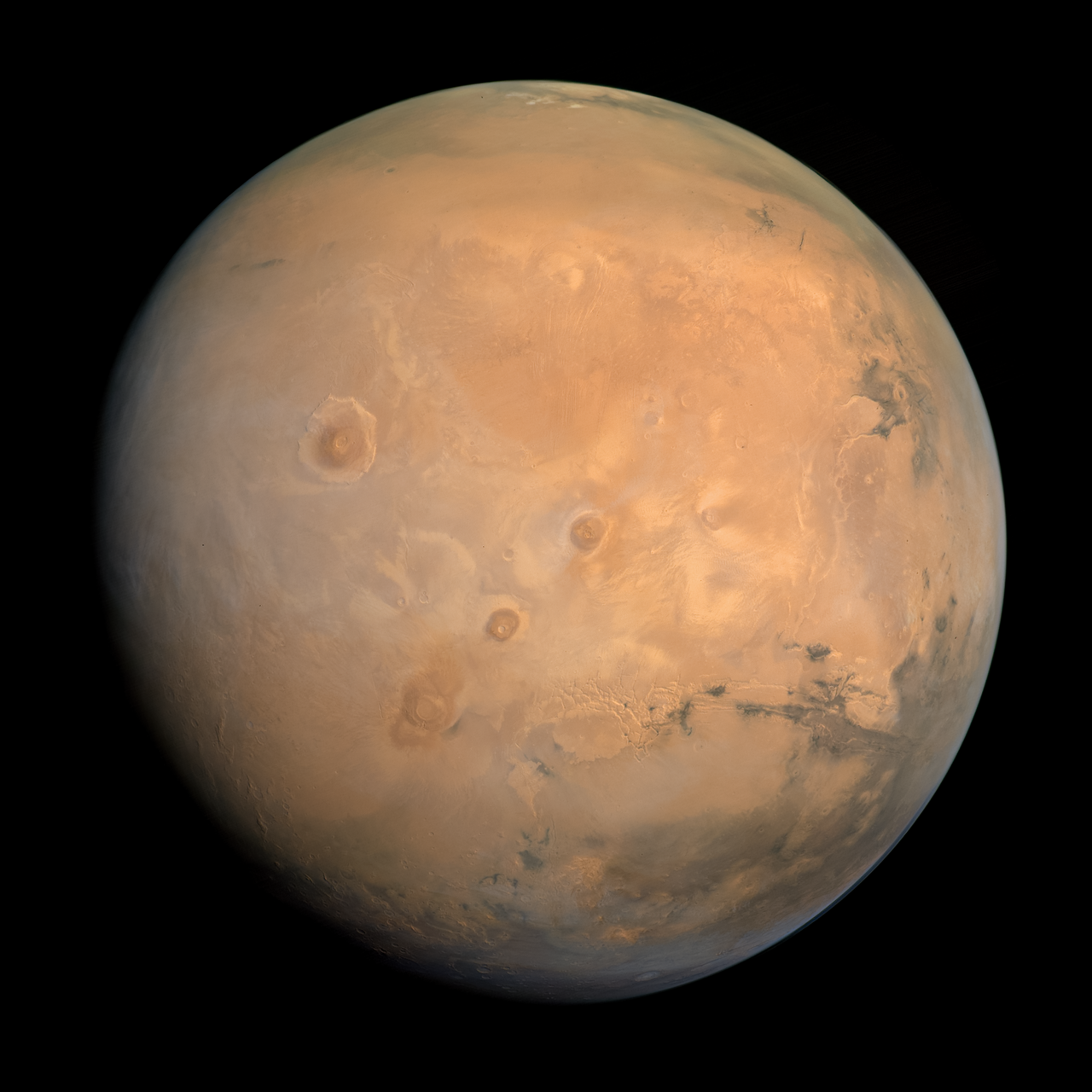
Humanity has always been a migratory species, driven by curiosity, survival, and an enduring desire to cross frontiers. From the first journeys out of Africa to the exploration of the oceans and polar regions, expansion has been a defining feature of our history. In the twenty-first century, that ancient impulse has turned outward, beyond Earth itself. Among all the worlds in our solar system, Mars has emerged as the most compelling destination for long-term human settlement. This is not because Mars is friendly or forgiving—it is neither—but because, when examined through the lens of physics, chemistry, biology, and planetary science, Mars offers a rare combination of challenges and opportunities that no other nearby world can match.
Colonizing Mars is not about escape from Earth, nor is it a romantic fantasy detached from scientific reality. It is a calculated response to what we know about planetary environments, human physiology, and technological limits. Mars stands out because it is difficult yet possible, hostile yet adaptable, alien yet strangely familiar. The following seven reasons explain, in scientifically grounded terms, why Mars is widely considered the best candidate for human colonization.
1. Mars Is the Most Earth-Like Planet in the Solar System
At first glance, calling Mars “Earth-like” may seem generous. Mars is cold, dry, and bathed in radiation, with a thin atmosphere and no liquid water flowing openly on its surface. Yet when compared with every other planet and moon in the solar system, Mars consistently comes closest to resembling Earth in ways that matter deeply for human survival.
Mars has a solid, rocky surface rather than a gaseous or icy exterior. This alone sets it apart from gas giants like Jupiter and Saturn, whose immense gravity and lack of a solid surface make human habitation physically impossible. Venus, despite being similar in size to Earth, has surface temperatures hot enough to melt lead and an atmosphere so dense and corrosive that long-term human presence is currently unimaginable. The Moon, while close, lacks sufficient gravity and essential chemical resources for sustainable, independent settlement.
Mars, by contrast, offers a familiar planetary structure. It has mountains, valleys, volcanoes, polar ice caps, and a day-night cycle that closely mirrors Earth’s. A Martian day, known as a sol, lasts approximately 24 hours and 39 minutes. This similarity is not trivial. Human circadian rhythms are deeply tied to a roughly 24-hour cycle, and maintaining mental and physical health over long periods becomes far more feasible when the environment aligns with our biological clocks.
Gravity on Mars is about 38 percent of Earth’s. While lower gravity presents health challenges, such as muscle and bone loss, it is far closer to Earth’s gravity than that of the Moon, which is only about 16 percent. This makes Mars a better candidate for long-term adaptation and for raising future generations who may never live on Earth.
In planetary terms, Mars feels like a stripped-down version of Earth—a world that once had rivers, lakes, and perhaps oceans, and that still preserves the geological memory of a more hospitable past. This partial familiarity reduces both the technical and psychological barriers to colonization, making Mars not just reachable, but imaginable as a place where humans could one day feel at home.
2. Mars Has Accessible Water in the Form of Ice
Water is the cornerstone of any human settlement. It is essential not only for drinking, but also for growing food, producing oxygen, regulating temperature, and creating fuel. Mars distinguishes itself by possessing abundant water, primarily in the form of ice.
Observations from orbiters, landers, and rovers have confirmed that water ice exists at the Martian poles and beneath the surface at lower latitudes. In some regions, ice lies just a few centimeters below the ground, protected from sublimation by a thin layer of soil. This accessibility is crucial. Extracting water from subsurface ice is far more practical than importing it from Earth or synthesizing it through complex chemical processes.
Water on Mars can serve multiple roles within a colony. When purified, it can sustain human life directly. Through electrolysis, water can be split into hydrogen and oxygen. Oxygen supports breathing, while hydrogen can be combined with carbon dioxide from the Martian atmosphere to produce methane fuel. This chemical pathway, well understood in physics and engineering, enables in-situ resource utilization, reducing dependence on Earth-based supply chains.
Beyond its practical uses, water has symbolic importance. The presence of water transforms Mars from a barren rock into a world with potential. It allows agriculture in controlled environments, supports hygiene and sanitation, and offers psychological comfort to settlers living far from Earth. A planet with water is not just survivable; it is adaptable.
The discovery of widespread water ice has shifted Mars colonization from speculation to planning. Water is no longer a hypothetical resource—it is a known asset, waiting to be unlocked by human ingenuity.
3. The Martian Atmosphere Can Be Used, Despite Its Thinness
Mars does not have a breathable atmosphere, but it does have an atmosphere that can be worked with. This distinction is critical. The Martian atmosphere is thin, with surface pressure less than one percent of Earth’s, and is composed primarily of carbon dioxide. While this composition is lethal to unprotected humans, it is far from useless.
Carbon dioxide is a valuable resource. Plants require it for photosynthesis, and in controlled habitats, it can support food production. More importantly, carbon dioxide can be processed chemically to produce oxygen and fuel. Technologies that convert carbon dioxide into oxygen have already been demonstrated on Mars in experimental form, proving that local atmospheric resources can be harnessed.
The thin atmosphere also offers partial protection against micrometeorites and helps regulate surface temperatures, preventing the extreme thermal swings experienced on airless bodies like the Moon. While radiation exposure remains a serious concern, the presence of even a tenuous atmosphere reduces the intensity of cosmic radiation compared to completely unshielded environments.
In the long term, the Martian atmosphere presents possibilities for gradual modification. Although fully terraforming Mars remains far beyond current technological capabilities, localized atmospheric enhancement within domes or enclosed valleys is theoretically achievable. Physics allows for the creation of pressurized habitats where humans can live and work without bulky suits, bringing daily life closer to terrestrial experience.
Mars’s atmosphere, though hostile in its natural state, is chemically cooperative. It offers raw materials that can be transformed into life-support systems, making Mars not an inert destination, but an active participant in its own colonization.
4. Mars Offers Abundant Natural Resources for Self-Sufficiency
A sustainable colony must eventually rely on local resources rather than constant resupply from Earth. Mars is uniquely well-positioned in this regard. Its soil, atmosphere, and geology provide the essential elements needed for construction, energy production, and manufacturing.
Martian regolith contains iron, aluminum, silicon, and other metals that can be extracted using known metallurgical techniques adapted for lower gravity and reduced atmospheric pressure. These materials can be used to build structural components, tools, and protective shielding. Silicon, in particular, can support the production of solar panels, enabling local energy generation.
The planet’s geology also offers potential access to sulfur, magnesium, and other industrially useful elements. Combined with water and atmospheric carbon dioxide, these resources form the foundation of a closed-loop system in which waste is minimized and materials are continually recycled.
Energy is another critical factor. Mars receives less sunlight than Earth, but still enough to make solar power viable, especially with large arrays and efficient storage systems. Nuclear energy provides an additional option, offering consistent power regardless of dust storms or seasonal variations.
The ability to live off the land is not merely a technical advantage; it is a psychological one. A colony that can produce its own air, water, food, and building materials is not just surviving—it is enduring. Mars offers the raw ingredients for such independence, making it the strongest candidate for a truly self-sustaining human presence beyond Earth.
5. Mars Is Close Enough for Practical Exploration and Support
Distance matters in space exploration, not only in terms of travel time, but also in communication, emergency response, and long-term logistics. Mars occupies a favorable position within the solar system, close enough to Earth to be reachable with existing propulsion technology.
At its closest approach, Mars lies tens of millions of kilometers from Earth. While this distance is vast by terrestrial standards, it is manageable in interplanetary terms. Spacecraft can reach Mars in several months, and launch windows occur regularly due to the predictable alignment of planetary orbits.
Communication delays between Earth and Mars range from a few minutes to around twenty minutes, depending on their relative positions. This delay is significant but not prohibitive. It allows for data exchange, remote support, and collaboration, even if real-time conversation is impossible.
By contrast, destinations farther out in the solar system involve years-long journeys and communication delays so severe that meaningful interaction becomes extremely limited. Mars sits at the threshold where human presence is challenging but still connected to Earth, making it an ideal testing ground for off-world civilization.
This relative proximity also allows for gradual expansion. Early missions can establish infrastructure, followed by larger crews and eventually permanent settlers. Mars is distant enough to demand innovation, yet close enough to forgive mistakes—a balance that no other planetary body offers so well.
6. Mars Preserves a Record of Planetary Evolution and Life Potential
Mars is not just a place to live; it is a place to learn. The planet’s ancient surface preserves geological and chemical evidence from billions of years ago, offering insights into planetary evolution and the conditions that allow life to emerge.
Unlike Earth, where tectonic activity and erosion continually recycle the surface, Mars has remained largely geologically inactive for much of its history. As a result, ancient riverbeds, mineral deposits, and sedimentary layers remain exposed and accessible. These features provide a window into a time when Mars was warmer, wetter, and potentially habitable.
For a human colony, this scientific value is profound. Settlers on Mars would not only be pioneers, but also researchers, living directly atop one of the most important natural laboratories in the solar system. Studying Mars could help answer fundamental questions about whether life arises easily when conditions permit, or whether Earth is an exceptional case.
This knowledge has implications far beyond Mars itself. Understanding why Mars lost much of its atmosphere and water can inform models of Earth’s future and guide the search for life on planets orbiting other stars. A Martian colony would thus serve as both a home and a center of discovery, blending survival with exploration in a uniquely powerful way.
7. Mars Represents Humanity’s Best Chance at Becoming a Multi-Planet Species
Perhaps the most profound reason Mars stands as the best candidate for colonization lies not in geology or chemistry, but in long-term survival. Earth is resilient, but it is not invulnerable. Asteroid impacts, supervolcanoes, climate shifts, and other large-scale events have shaped Earth’s history and will continue to do so.
Establishing a self-sustaining human presence on Mars would mark a turning point in human evolution. It would mean that humanity’s fate is no longer tied to a single planet. This diversification reduces existential risk and opens a new chapter in our species’ story.
Mars offers the right balance of challenge and possibility for this step. It demands advanced technology, cooperation, and careful planning, but it does not violate the known limits of physics or human biology. Colonizing Mars would require humanity to mature—to think in centuries rather than decades, and to act as a planetary species rather than a collection of competing nations.
Emotionally, Mars represents hope grounded in realism. It is not an escape from Earth’s problems, but a continuation of the human journey, carrying our knowledge, culture, and responsibility outward into the solar system. In choosing Mars, humanity chooses to invest in its future, guided by science, humility, and the enduring desire to explore.
Conclusion: Why Mars Stands Above All Others
Mars is not an easy world, and colonizing it will demand extraordinary effort. Yet when all factors are weighed—environmental similarity, water availability, atmospheric utility, resource richness, proximity, scientific value, and long-term survival potential—Mars emerges as the strongest candidate for human colonization.
It is close enough to reach, rich enough to sustain life, and challenging enough to transform us. Mars asks humanity to apply everything it has learned about physics, biology, and cooperation. In answering that challenge, we do not merely seek a new home; we redefine what it means to be human in a universe that is vast, indifferent, and yet full of possibility.