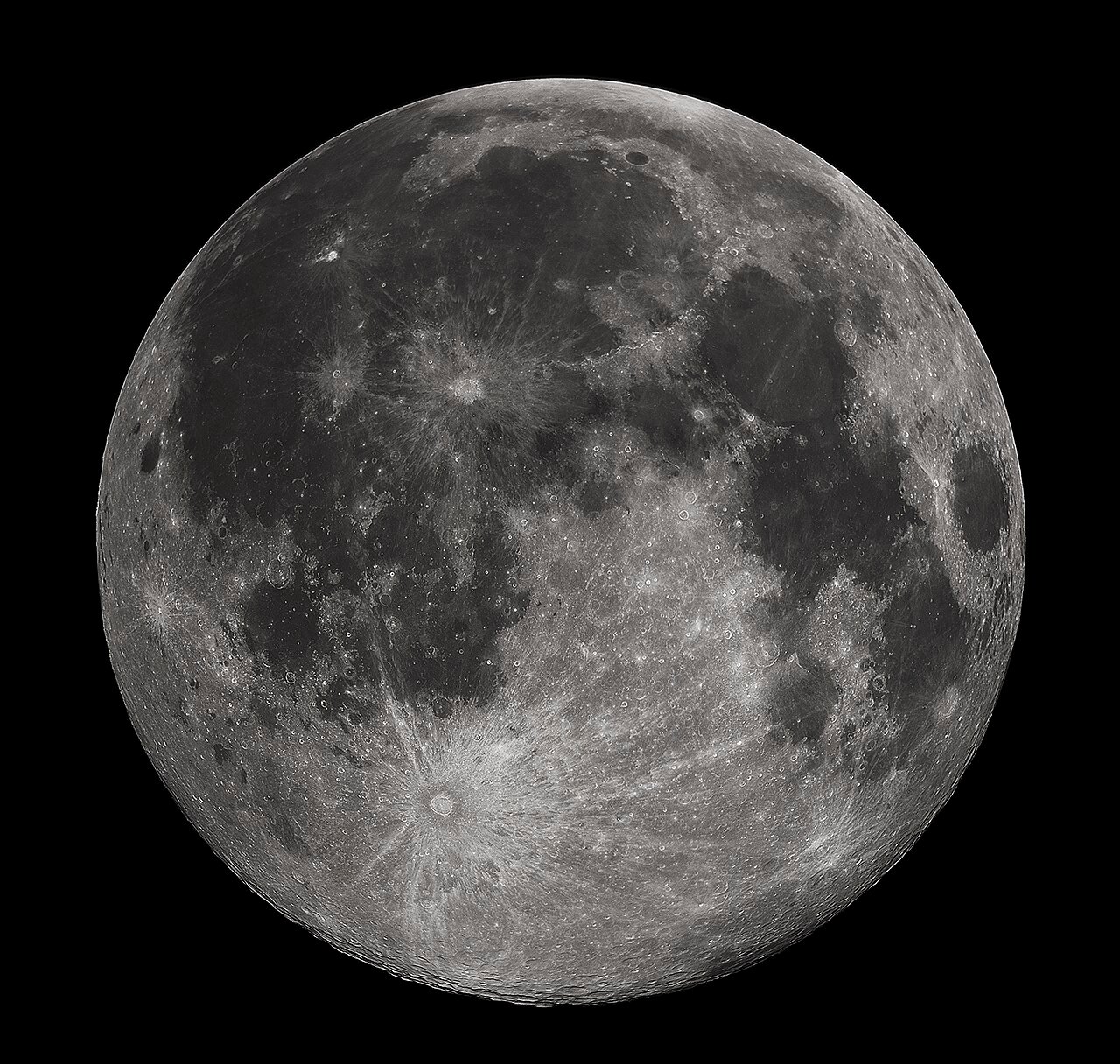
The Moon is the most familiar object in the night sky and, paradoxically, one of the most misunderstood. It rises and sets with comforting regularity, shapes calendars and tides, and has inspired poetry, myth, and science for thousands of years. Because it feels so close and so constant, it is easy to assume that the Moon holds few surprises. In reality, the Moon is a deeply strange world. Beneath its quiet glow lies a history of violence, exotic physics, and geological processes unlike anything on Earth. Modern space missions and careful measurements have revealed that the Moon is not a simple, inert rock, but a complex and sometimes unsettling planetary body.
What makes the Moon especially fascinating is that its strangeness is subtle. It does not announce itself with raging storms or towering atmospheres. Instead, it hides its oddities in gravity anomalies, chemical fingerprints, ancient scars, and silent quakes that ripple through a seemingly dead world. Each discovery has reshaped scientific understanding, forcing researchers to rethink how moons form, how planets evolve, and how delicate Earth’s own stability truly is.
The following eight phenomena reveal why the Moon is far stranger than its calm appearance suggests. Each of them is grounded in modern physics and planetary science, and together they tell a story of a world that is anything but ordinary.
1. The Moon Is Slowly Drifting Away from Earth
One of the most counterintuitive facts about the Moon is that it is not locked in place around Earth. Instead, it is gradually moving away. High-precision laser measurements, made possible by reflectors placed on the lunar surface during Apollo missions, show that the Moon recedes from Earth by about 3.8 centimeters each year. This motion is slow on human timescales, but over geological time it is profound.
The cause of this drift lies in the physics of tides. The Moon’s gravity raises tidal bulges in Earth’s oceans. Because Earth rotates faster than the Moon orbits, these bulges are carried slightly ahead of the Moon’s position. The gravitational interaction between the bulges and the Moon transfers angular momentum from Earth’s rotation to the Moon’s orbit. As a result, Earth’s rotation gradually slows, and the Moon moves into a higher, wider orbit.
This process reveals an intimate and dynamic relationship between Earth and its satellite. Billions of years ago, the Moon was significantly closer, appearing much larger in the sky. Tides were stronger, days were shorter, and Earth’s rotation was faster. The gradual distancing of the Moon has helped stabilize Earth’s climate and lengthen days, quietly shaping the conditions under which complex life evolved.
What makes this phenomenon strange is not merely the motion itself, but its implications. The Moon is not a static companion; it is an active participant in Earth’s long-term evolution. Without this delicate exchange of energy, Earth’s rotational behavior and climate history would have been dramatically different.
2. The Moon Has “Moonquakes” That Can Last for Hours
The Moon appears geologically dead, with no active plate tectonics or flowing lava on its surface today. Yet seismometers left behind by Apollo astronauts revealed that the Moon experiences its own version of earthquakes, known as moonquakes. These events are fundamentally different from earthquakes on Earth and behave in ways that seem almost eerie.
Moonquakes come in several varieties. Some are caused by tidal stresses as Earth’s gravity flexes the Moon’s interior. Others result from thermal expansion and contraction as the lunar surface heats up during the day and cools at night. Still others are triggered by meteorite impacts. The most surprising aspect is not their origin, but their duration. While earthquakes on Earth typically dissipate within seconds or minutes, moonquakes can continue for up to an hour.
The reason lies in the Moon’s internal structure. Earth’s interior contains water and partially molten regions that dampen seismic vibrations. The Moon, by contrast, is extremely dry and rigid. When seismic waves pass through it, there is little to absorb their energy. As a result, vibrations bounce back and forth through the Moon’s interior like sound echoing in a bell.
This behavior reveals a world that is not inert, but quietly responsive to gravitational forces and thermal cycles. It also has practical implications for future lunar habitats. Structures built on the Moon will need to withstand long-lasting vibrations, even if those vibrations are relatively weak.
Moonquakes remind scientists that geological activity does not require volcanoes or moving plates. Even a seemingly frozen world can be internally dynamic, shaped by forces that operate slowly and silently.
3. The Moon’s Gravity Is Uneven and Lumpy
Gravity is often imagined as smooth and uniform, especially on a spherical body like the Moon. In reality, the Moon’s gravitational field is surprisingly uneven. Certain regions exert slightly stronger gravitational pull than others, creating anomalies that have puzzled scientists for decades. These anomalies are known as mass concentrations, or mascons.
Mascons were first discovered during early lunar missions, when spacecraft in low lunar orbit experienced unexpected changes in trajectory. Instead of following predictable paths, they were subtly tugged off course. Careful analysis revealed that large, dense regions beneath the Moon’s surface were distorting its gravitational field.
These dense regions are associated primarily with ancient impact basins that were later filled with dense volcanic material. When massive asteroids struck the Moon billions of years ago, they created deep depressions in the crust. Later, molten rock from the Moon’s interior flooded these basins and solidified, forming regions of higher density than the surrounding crust.
What makes this strange is the scale and persistence of these anomalies. On Earth, plate tectonics and erosion redistribute mass over time, smoothing out gravitational irregularities. The Moon lacks such processes, so its gravitational scars remain preserved for billions of years.
The lumpy gravity of the Moon has practical consequences. It complicates navigation for orbiting spacecraft and must be carefully accounted for in mission planning. More profoundly, it offers a frozen record of the Moon’s violent early history, revealing how impacts and internal processes shaped its evolution in ways that are still measurable today.
4. The Moon Once Had a Magnetic Field
Today, the Moon has no global magnetic field. Unlike Earth, it does not possess a protective magnetosphere to shield its surface from solar wind and cosmic radiation. Yet lunar rocks tell a surprising story: the Moon once had a magnetic field strong enough to magnetize solidifying lava.
Samples returned by Apollo missions contain minerals whose magnetic orientation indicates that they formed in the presence of a substantial magnetic field billions of years ago. This discovery was unexpected, because the Moon is small and was long thought incapable of sustaining the kind of molten, convecting core required to generate a magnetic dynamo.
The leading explanation is that the Moon once had a partially molten metallic core that generated a magnetic field early in its history. As the Moon cooled and its internal energy dissipated, this dynamo gradually shut down. Another possibility is that mechanical stirring caused by Earth’s gravitational influence contributed to early magnetic activity.
The loss of the Moon’s magnetic field had dramatic consequences. Without magnetic protection, the solar wind began to strip away any remaining atmosphere and volatile elements. This process likely contributed to the Moon’s extreme dryness and airless surface.
The idea that the Moon once had a magnetic shield challenges the perception of it as a permanently inert body. It suggests that the Moon experienced a dynamic youth, complete with internal heat, molten layers, and electromagnetic activity. In this sense, the Moon is not a failed planet, but a world that evolved rapidly and then settled into long-term quiet.
5. The Moon Is Shrinking and Wrinkling
Although it appears unchanged to the naked eye, the Moon is slowly shrinking. As its interior cools over time, it contracts, causing the surface to buckle and fracture. This process has created distinctive geological features known as lobate scarps—small cliffs formed by thrust faults where one section of crust is pushed over another.
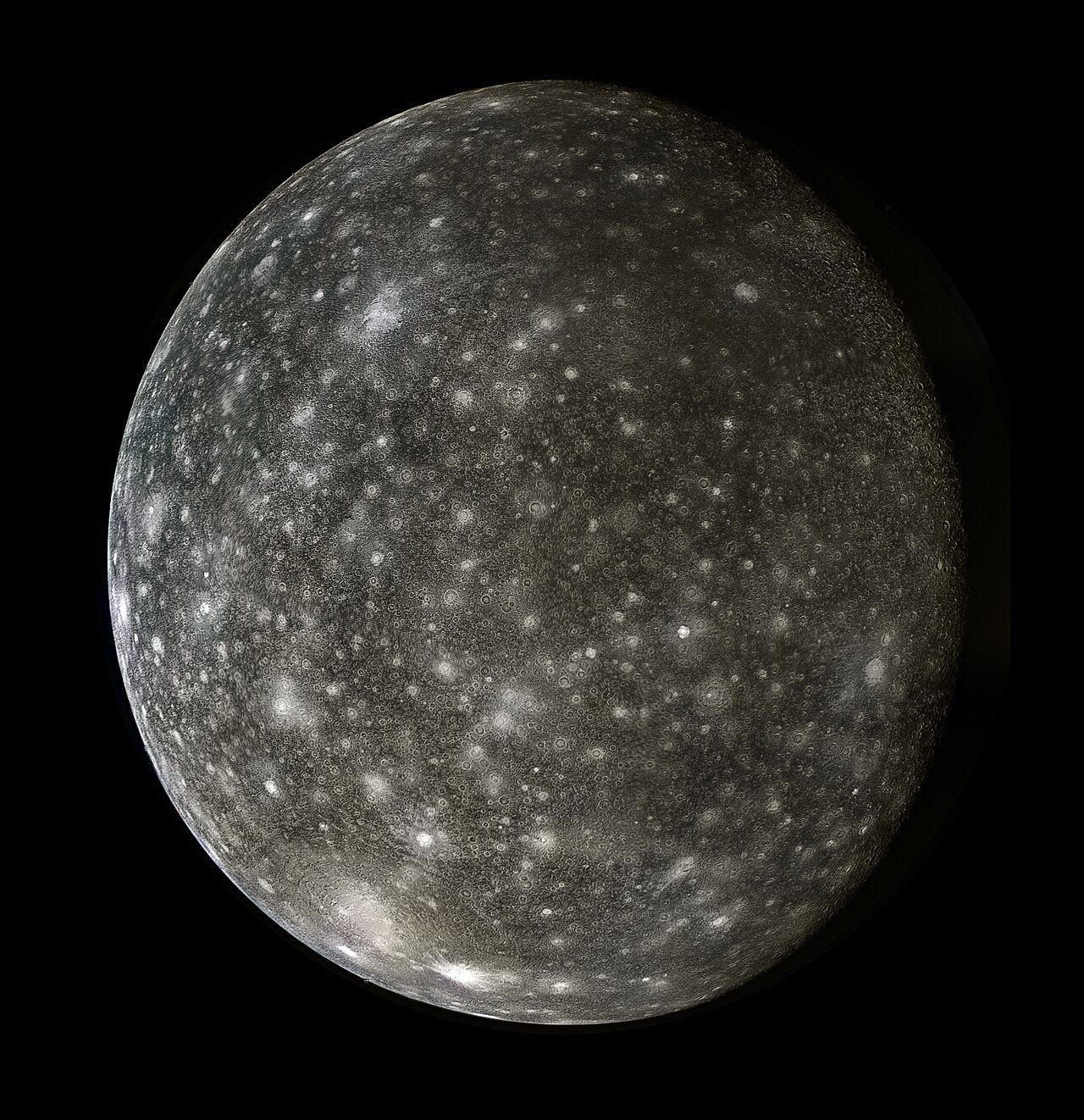
High-resolution images from lunar orbiters have revealed thousands of these scarps scattered across the Moon’s surface. Their crisp appearance indicates that some of them formed relatively recently, in geological terms, perhaps within the last few hundred million years.
This shrinkage is strange because it contradicts the image of the Moon as completely geologically dead. While it lacks volcanoes and flowing lava today, it is still adjusting to the slow loss of internal heat. The Moon is, in effect, aging and settling, its surface creasing like cooling metal.
The forces involved are small compared to those driving Earth’s tectonics, but they are persistent. Over immense spans of time, even subtle contraction can reshape an entire world. This quiet deformation reveals that planetary bodies do not simply freeze and remain unchanged. They continue to evolve, even in silence.
The Moon’s wrinkles are a reminder that geological activity exists on a spectrum. A world does not need roaring volcanoes to be alive in a scientific sense. Even a shrinking, cooling body can carry the marks of ongoing change.
6. The Moon Has Water, but in Unexpected Places
For much of the twentieth century, the Moon was believed to be completely dry. This assumption was based on its airless surface, intense solar radiation, and the apparent absence of liquid water. Modern observations have overturned this view, revealing that the Moon contains water, though not in forms or locations that intuition would suggest.
Significant quantities of water ice exist in permanently shadowed regions near the Moon’s poles. These areas never receive direct sunlight, allowing temperatures to remain cold enough for ice to persist for billions of years. The ice is mixed with lunar soil and may exist in layers or patches beneath the surface.
In addition to polar ice, trace amounts of water are found across the lunar surface. Some of this water is delivered by comets and meteorites, while some forms through chemical reactions triggered by solar wind interacting with oxygen-rich minerals. Even the harsh environment of the Moon allows for the creation and retention of water at microscopic scales.
This discovery is strange because it reveals water in a place long considered its opposite. The Moon does not have rivers, clouds, or rain, yet it holds water in shadow and stone. For science, this reshapes theories of how water moves through the solar system. For future exploration, it transforms the Moon from a barren outpost into a potentially sustainable destination.
Water on the Moon blurs the line between dry and wet worlds. It shows that even in extreme environments, essential ingredients for life and exploration can persist in hidden forms.
7. The Moon’s Far Side Is Radically Different from the Near Side
One of the Moon’s most striking oddities is the dramatic difference between the side that faces Earth and the side that does not. The near side is dominated by large, dark plains known as maria, formed by ancient volcanic eruptions. The far side, by contrast, is heavily cratered and almost entirely lacking in these basaltic plains.
This asymmetry is not a coincidence. It reflects differences in crust thickness and internal heat distribution early in the Moon’s history. The crust on the far side is significantly thicker, making it harder for molten rock to reach the surface. As a result, volcanic activity was far more limited there.
The reason for this crustal imbalance remains an active area of research. One leading hypothesis suggests that Earth’s gravity influenced the Moon’s cooling, causing the near side to remain warmer for longer. Another possibility involves the Moon’s early interaction with a companion body or uneven accretion during formation.
The strangeness lies in the scale of the difference. Two hemispheres of the same object, formed at the same time, evolved in dramatically different ways. This challenges simplistic models of planetary formation and highlights the sensitivity of early processes to initial conditions.
The far side of the Moon, hidden from Earth, is not merely unfamiliar; it is fundamentally different. It stands as a reminder that even the most studied celestial objects can harbor unseen complexity.
8. The Moon Stabilizes Earth’s Climate and Makes Life Possible
Perhaps the strangest fact about the Moon is not about the Moon itself, but about its effect on Earth. The Moon plays a crucial role in stabilizing Earth’s axial tilt, the angle at which our planet rotates relative to its orbit. This tilt is responsible for the seasons, and its stability is essential for long-term climate balance.
Without the Moon’s gravitational influence, Earth’s axial tilt would vary chaotically over time, driven by interactions with other planets. Such variations could produce extreme climate swings, making the long-term evolution of complex life far more difficult.
The Moon acts as a stabilizing anchor, damping these variations and keeping Earth’s tilt within a relatively narrow range. This quiet gravitational partnership has allowed Earth’s climate to remain stable over geological timescales, supporting the development of ecosystems and civilizations.
What makes this strange is how contingent it is. The Moon is unusually large relative to its planet, likely formed by a massive collision early in Earth’s history. This specific outcome is not guaranteed in planetary systems. Earth’s habitability, in this sense, may depend on a rare cosmic accident.
The Moon is not just a companion in the sky; it is a silent architect of life’s stability. Its presence has shaped Earth’s history in ways that are invisible in daily life but profound in their consequences.
Conclusion: The Moon as a World of Quiet Wonders
The Moon appears calm, constant, and unchanging, yet science reveals it to be a world of deep and lasting strangeness. It drifts away from Earth, rings with lingering quakes, hides water in shadow, remembers ancient magnetic fields, and bears gravitational scars from a violent past. It shrinks, wrinkles, and quietly stabilizes the planet that watches it each night.
These discoveries transform the Moon from a passive backdrop into an active participant in the solar system’s story. They remind us that familiarity does not equal simplicity, and that even the closest worlds can hold mysteries capable of reshaping scientific understanding.
In learning how strange the Moon truly is, we also learn something about ourselves. The Moon has shaped Earth’s rhythms, protected its climate, and guided human curiosity since the dawn of history. To understand the Moon is to recognize that even the most familiar companions in the universe are filled with hidden depth, waiting patiently to be understood.