From the moment early humans first lifted their eyes to the glittering sky, one question has shimmered in the depths of our imagination: How old is it all? How long have the stars burned, how far back does time stretch, and where did it all begin?
The question of the universe’s age is not merely a scientific curiosity—it’s a profound human desire to know where we come from and how long the cosmic story has been unfolding. It is a quest to trace our lineage not just through ancestors or history, but through space and time itself—to the very dawn of existence.
For centuries, the heavens seemed eternal and unchanging. The stars, cold and distant, gave no hint of their beginnings. But through the patient, curious eyes of astronomers and the precise language of physics, humanity has learned to read the cosmos like a clock—a clock that has been ticking since the birth of time itself.
Today, astronomers estimate the age of the universe to be about 13.8 billion years. But how do we know that? How can we measure the passage of time across such unimaginable scales, when even mountains and stars fade into dust long before the universe itself changes?
To find that answer, we must travel across light-years, through equations, telescopes, and the faint glow of creation that still lingers in the sky.
The Universe as a Time Machine
When we look at the night sky, we are not seeing the stars as they are now—we are seeing them as they were. Light takes time to travel, and that means every glance upward is a journey into the past.
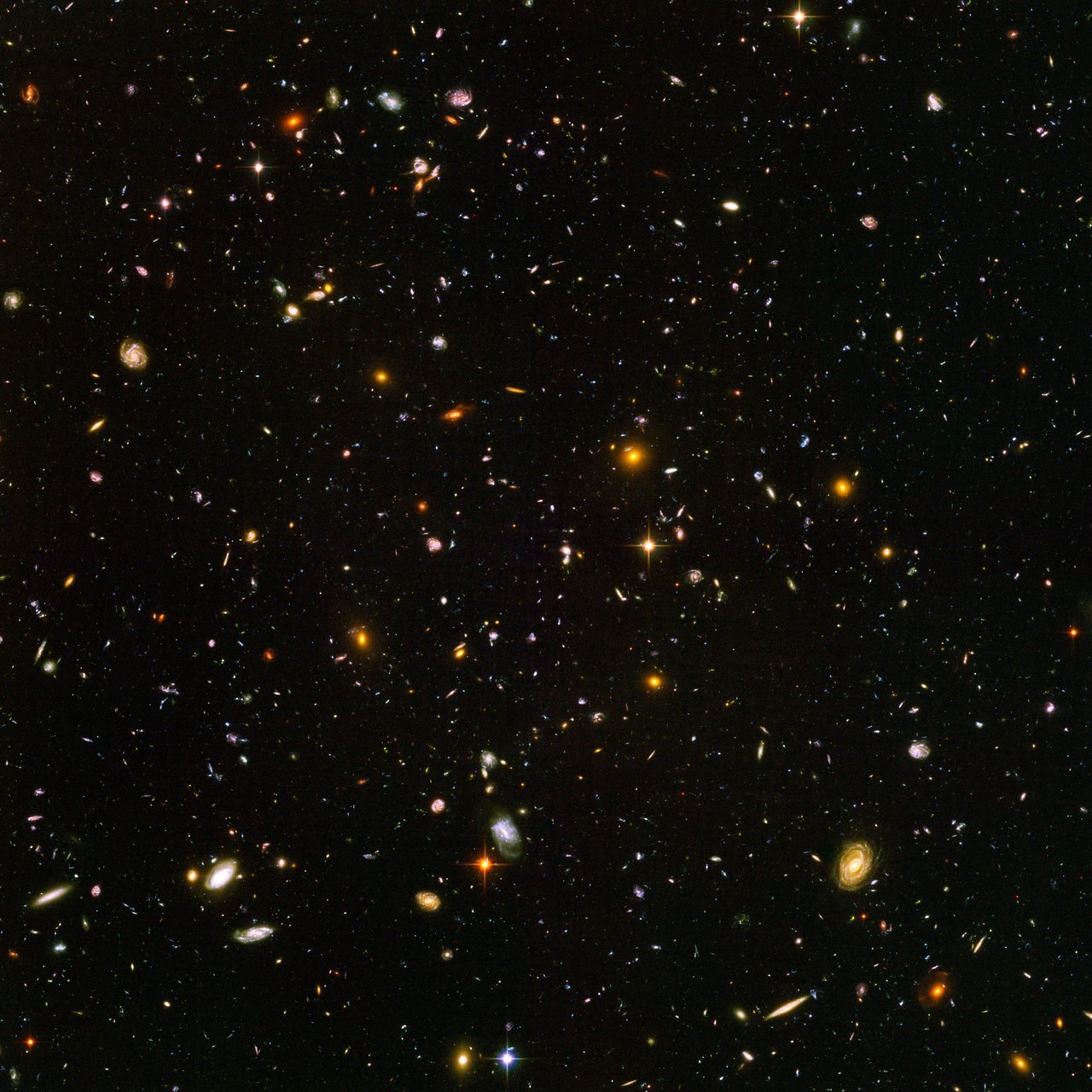
The light from the Sun takes about eight minutes to reach Earth. The light from the nearest star system, Alpha Centauri, takes over four years. The light from distant galaxies has been traveling for billions of years before it touches our telescopes.
This simple truth—that light carries history—is the foundation of cosmic timekeeping. Every photon, every beam of starlight, is a messenger from the past, bringing news from different epochs of the universe.
Astronomers have learned to decode these messages. By studying how light stretches, how stars age, and how galaxies evolve, they can piece together the universe’s grand timeline—from the fiery birth of space and time to the slow unfolding of the present cosmos.
The Expanding Universe and the Discovery of Time’s Beginning
In the early 20th century, most scientists believed the universe was static—eternal, unchanging, infinite. But that vision shattered when a man named Edwin Hubble turned his telescope toward distant galaxies.
Hubble discovered something astonishing: the farther away a galaxy was, the faster it seemed to be moving away from us. The universe wasn’t static at all—it was expanding.
This expansion implied something profound. If galaxies are moving apart now, then long ago they must have been closer together. Rewind the cosmic film far enough, and everything—matter, energy, even space itself—must have once been compressed into an unimaginably dense, hot point.
That moment marks the beginning of time, what we now call the Big Bang.
The realization that the universe had a beginning changed everything. Suddenly, the cosmos had an age, a history, a birth moment that could be studied.
But how old was that beginning? If the universe is expanding, then by measuring the rate of expansion, we could, in theory, calculate how long it’s been expanding—and thus, how long ago the Big Bang occurred.
This simple idea became one of the greatest detective stories in science.
Hubble’s Constant: The Key to the Cosmic Clock
To measure the universe’s age, astronomers first needed to know how fast it’s expanding. This speed of expansion is known as the Hubble Constant, named after Edwin Hubble himself.
Imagine the universe as a balloon. As it expands, every point on its surface moves away from every other point. The farther apart two points are, the faster they recede. That’s exactly what happens in our universe: distant galaxies move away more quickly than nearby ones.
By measuring how much the light from a galaxy is stretched (a phenomenon called redshift) and comparing it with the galaxy’s distance, astronomers can determine the expansion rate.
However, here’s the twist—determining this constant precisely has proven incredibly difficult. Different methods give slightly different answers. Some measurements suggest the universe is expanding faster, implying it’s younger; others suggest a slower expansion, implying it’s older.
Despite the uncertainty, the general consensus—based on data from observatories and satellites like Hubble, Planck, and WMAP—places the expansion rate at roughly 70 kilometers per second per megaparsec. That means for every 3.26 million light-years of distance, galaxies are receding about 70 kilometers per second faster.
By reversing this expansion mathematically, astronomers estimate the time since the universe began expanding: about 13.8 billion years.
It’s like playing the cosmic movie backward, watching galaxies converge until they meet at the moment of creation.
The Cosmic Microwave Background: The Universe’s First Light
But scientists are cautious. Measuring the expansion rate alone isn’t enough. The early universe went through complex changes—gravity, dark energy, and matter all shaped its evolution. So astronomers needed another way to cross-check their calculations.
The answer came from a faint whisper of ancient light: the Cosmic Microwave Background, or CMB.
In 1965, two radio astronomers, Arno Penzias and Robert Wilson, were testing an antenna when they detected a mysterious background hiss coming from every direction. No matter where they pointed, the noise was the same. They had stumbled upon the afterglow of the Big Bang itself—the oldest light in the universe.
This light was released when the universe was only 380,000 years old. Before that, the cosmos was too hot and dense for light to travel freely. As it cooled, atoms formed, and light broke free—filling the universe with a glow that still exists today, stretched into microwave wavelengths by billions of years of expansion.
By mapping tiny variations in this ancient radiation, scientists can determine the universe’s age, composition, and structure with stunning precision.
The Planck satellite, launched in 2009, measured the CMB more accurately than ever before. Its data confirmed that the universe is 13.8 billion years old, with a margin of error of less than one percent.
That faint glow, still visible today, is the echo of our cosmic birth cry—a message from the universe’s infancy, whispering its age to those who know how to listen.
Reading the Ages of Stars
Even before the discovery of the cosmic microwave background, astronomers had another method for estimating the universe’s age: studying stars themselves.
Stars are natural clocks. They are born, they live, and they die, and their lifespans are governed by the laws of physics. The more massive a star, the faster it burns through its fuel; the smaller it is, the longer it lives. By measuring a star’s temperature, brightness, and chemical composition, astronomers can estimate how far along it is in its life cycle—and therefore how old it is.
In particular, astronomers look at globular clusters—dense, spherical collections of hundreds of thousands of ancient stars. These clusters orbit the Milky Way and contain some of the oldest stars known.
By comparing theoretical models of stellar evolution with the observed brightness and color of stars in these clusters, scientists estimate their ages to be about 13 billion years.
If stars this old exist, then the universe must be at least slightly older. The ages of these stars beautifully align with the 13.8-billion-year figure derived from other methods, reinforcing the accuracy of our cosmic timeline.
These ancient suns are like fossils from the dawn of creation, burning steadily through eons, preserving the memory of the universe’s youth.
The Role of Elemental Clues
Another way astronomers estimate the universe’s age is by examining the chemical fingerprints left behind in the oldest stars and galaxies.
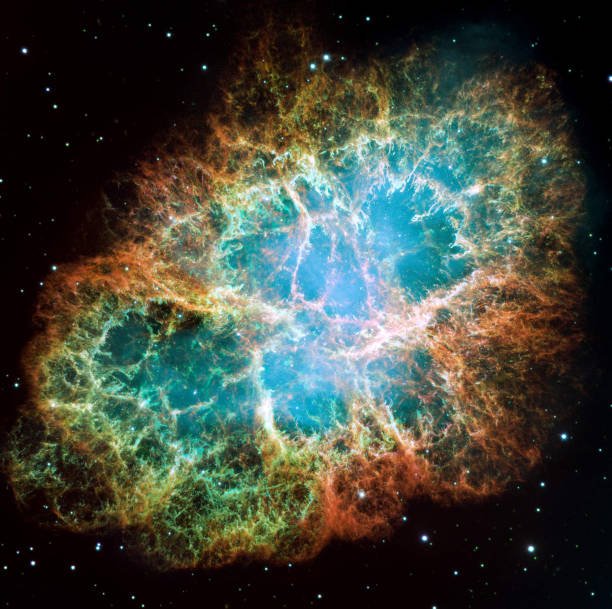
In the early universe, only hydrogen, helium, and trace amounts of lithium existed. All heavier elements—carbon, oxygen, iron, and beyond—were forged later in the hearts of stars and released through supernova explosions.
By analyzing the abundance of these elements in old stars, astronomers can tell how many generations of stellar births and deaths have occurred. This, in turn, provides a lower bound for the universe’s age.
Stars with extremely low metal content (that is, low amounts of heavy elements) are among the earliest formed after the Big Bang. The discovery of such stars, known as Population II and Population III stars, helps trace the timeline of cosmic evolution from near the beginning of time.
Each atom of gold, carbon, or calcium in our bodies is a timestamp—evidence of billions of years of cosmic alchemy that began in the universe’s first moments.
The Geometry of Space and the Role of Dark Energy
Understanding the universe’s age also requires knowing its geometry—its overall shape and fate. Is the universe flat, open, or closed? Will it expand forever, or eventually collapse?
These questions are not merely philosophical. The rate at which the universe expands—and whether that expansion accelerates or slows down—affects how long it has been expanding.
In the late 1990s, astronomers made another shocking discovery. By observing distant supernovae, they found that the universe’s expansion isn’t slowing down—it’s speeding up. Something, an unseen force, is driving galaxies apart faster and faster.
That mysterious force is called dark energy.
Dark energy now makes up about 68% of the total energy of the cosmos, and though we don’t yet understand its nature, it profoundly influences how we calculate the universe’s age.
By combining observations of the cosmic microwave background, supernovae, and galaxy distributions, scientists can model the universe’s expansion history. These models show that the universe, under the influence of dark energy, has been expanding for roughly 13.8 billion years.
The very geometry of space itself—its curvature, its expansion, its invisible energy—becomes a cosmic clock ticking since the beginning of time.
The Challenge of Precision: The Hubble Tension
While modern cosmology has achieved incredible precision, a subtle tension lingers in the data. Measurements of the Hubble Constant using the cosmic microwave background differ slightly from those made using local observations of galaxies and supernovae.
This discrepancy, known as the Hubble Tension, suggests that either there are hidden errors in our measurements or, more intriguingly, that new physics is waiting to be discovered.
Perhaps dark energy changes over time, or perhaps the universe’s early expansion followed a pattern we don’t yet understand. The tension is small—just a few kilometers per second per megaparsec—but significant enough to spark heated debates and inspire new theories.
The quest to resolve this tension continues, driving cosmologists to refine their models, build new telescopes, and test the very foundations of physics.
It’s a reminder that even when we think we’ve measured time itself, the cosmos may still be holding secrets just beyond our reach.
The Echo of Creation
When we speak of the universe being 13.8 billion years old, we’re not simply quoting a number. We are telling a story—a story written in light, motion, and time.
From the redshift of galaxies to the whisper of the cosmic microwave background, from the burning of ancient stars to the geometry of space itself, every piece of evidence converges to reveal a cosmos that began in a moment of blinding creation and has been unfolding ever since.
In the faint glow of the CMB, we see the afterglow of that first instant. In the rhythm of the expansion, we feel the pulse of cosmic time. In the atoms of our own bodies, forged in ancient stars, we carry the memory of that beginning.
To measure the age of the universe is not merely to know how many years have passed—it is to trace the heartbeat of existence, to touch the edges of eternity, and to understand that we are part of a story that began long before Earth, long before stars, and perhaps will continue long after we are gone.
The Universe’s Timeline, Told in Light
Every second, the universe expands a little more. Every ray of starlight that reaches us carries a message from a different era—one from the youth of the cosmos, another from its adolescence, and another from its present maturity.
Telescopes like the James Webb Space Telescope now peer deeper than ever before, capturing galaxies that formed less than 300 million years after the Big Bang. Each discovery adds a new chapter to the cosmic chronicle, refining our understanding of the universe’s early years.
By comparing observations from different epochs, astronomers reconstruct how the cosmos evolved—how hydrogen clouds condensed into stars, how galaxies took shape, and how dark energy began to accelerate the expansion.
Every observation acts as a timestamp, a marker on the universe’s clock. Piece by piece, these data points converge on the same truth: the cosmos has been expanding and evolving for roughly 13.8 billion years.
The consistency across methods—stellar ages, cosmic radiation, expansion rate—gives this figure extraordinary credibility. It’s not an estimate pulled from thin air; it’s a harmony of evidence, a chorus of cosmic voices singing the same ancient song.
The Human Meaning of a 13.8-Billion-Year Story
Numbers can be cold. “13.8 billion years” is immense but abstract—hard for the mind to grasp. Yet when we think about what that truly means, it becomes profoundly moving.
It means the universe has been alive for nearly fourteen billion years—long enough for galaxies to form, stars to ignite, planets to coalesce, and life to wonder about its own origins. It means that when we gaze at the stars, we are looking across almost all of time.
It means that every human story—every thought, every emotion, every civilization—is a flicker in a vast cosmic theater that has been burning since time began.
And yet, despite that immensity, we are part of it. The same laws that govern galaxies govern our hearts. The same physics that measures cosmic time also beats within our cells.
To know the age of the universe is to feel our belonging to it—to understand that our brief lives are chapters in a much older, more beautiful story.
The Quest Continues
Even as we measure the universe’s age with remarkable precision, the quest is far from over. The next generation of telescopes—such as the Vera Rubin Observatory, the Nancy Grace Roman Space Telescope, and future gravitational wave observatories—will look deeper and further than ever before.
They will probe the first galaxies, study the birth of stars, and perhaps even witness the faint traces of what came before the Big Bang, if such a concept exists.
Some theories suggest that the Big Bang might not have been the beginning, but a transition—a “bounce” from a previous universe or a fluctuation in an eternal multiverse. If so, then 13.8 billion years may mark only the latest chapter in an endless cosmic saga.
Whatever the truth, one thing remains certain: the act of measuring, of wondering, of seeking to know, is as ancient as the stars themselves. In our curiosity, we mirror the universe’s own drive to evolve, to expand, to understand itself.
The Universe’s Age—Written in Our Atoms
We began by asking how astronomers measure the age of the universe. The answer lies in the combination of light, motion, radiation, and mathematics. But beneath the equations and telescopes lies something deeper: a relationship between the cosmos and consciousness.
When scientists measure the universe’s age, they are not merely calculating—they are remembering. They are uncovering the story encoded in starlight and matter, the story that led from the first flash of creation to the emergence of life capable of asking these questions.
Every atom in your body once burned in the heart of a star. Every breath you take contains oxygen forged in supernovae billions of years ago. Every heartbeat echoes the rhythm of expansion that began 13.8 billion years in the past.
You are not separate from that history—you are that history, aware of itself.
The universe measures its own age through you.
The Endless Mystery of Time
Thirteen point eight billion years—a number vast enough to contain all things, yet still only the beginning of understanding.
For all we know, there is still so much we do not know. Dark matter remains invisible. Dark energy is still mysterious. The nature of time itself may hide deeper truths.
Perhaps one day, physicists will uncover an even grander theory—a theory that unites quantum mechanics and gravity, explains the birth of time, and reveals what lies beyond the horizon of the Big Bang.
Until then, the night sky remains our greatest textbook. Every star, every galaxy, every faint photon from the edge of creation continues to teach us about the universe’s age—and about our own.
The story of how astronomers measure the age of the universe is not just a tale of science. It is a love story between humanity and the cosmos. It’s the story of a species that learned to count the years of the universe by watching the light of distant suns.
We may never know what came before the beginning, or what will follow the end. But for now, we can stand beneath the stars, look across 13.8 billion years of cosmic history, and whisper with awe:
This is our time. This is our universe. And we have finally learned how old it is.