Before there were planets, before the Sun ignited, before even the faintest glimmer of starlight touched the cosmic void, there was only darkness—and dust. It was a time when the universe was ancient, yet our Solar System had not yet taken shape. The story of how our Sun and planets came to be is one of transformation: a story of chaos becoming order, of dust becoming worlds, of nothingness giving birth to everything we know.
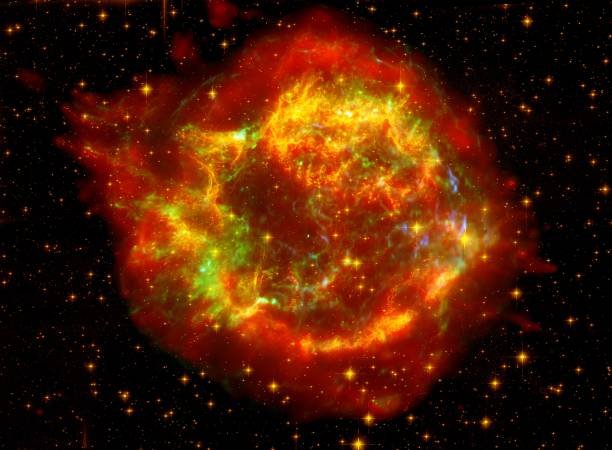
In the quiet arms of a vast spiral galaxy, 4.6 billion years ago, a great cloud of gas and dust drifted in cold silence. It was neither special nor bright—one of countless molecular clouds scattered throughout the Milky Way. But in that obscurity, destiny was stirring. A ripple of gravity, perhaps from a nearby supernova explosion, disturbed the balance. That ripple set everything in motion.
The Collapse of the Nebula
Gravity is the sculptor of the cosmos, the silent hand that draws dust into stars. When that ancient cloud—called the solar nebula—began to collapse under its own weight, it was as though the universe was taking a deep breath. Slowly, the cloud’s particles drew closer, its temperature rising as potential energy turned into heat.
The nebula was immense—so vast that it could have swallowed thousands of Suns. Yet, as it collapsed, it began to spin. This rotation, once gentle, grew faster and faster as the cloud shrank, following the conservation of angular momentum—the same principle that makes a figure skater spin faster as they pull their arms in.
The once shapeless cloud flattened into a vast, rotating disk of dust and gas, with most of the material being pulled toward the center. At the heart of this growing maelstrom, the pressure and heat intensified. A young star was about to be born.
The Birth of the Sun
In the center of the disk, gravity worked relentlessly. Hydrogen atoms were crushed together under unimaginable pressure and heat, until they began to fuse into helium. In that instant, the Sun ignited—a newborn star blazing into life.
This nuclear fusion released an immense flood of energy. Light and heat streamed outward, pushing back the surrounding gas and dust, and announcing the arrival of a new source of power in the cosmos.
The Sun began its early life as a T Tauri star—violent, variable, and restless. It blasted intense solar winds across the surrounding disk, blowing away lighter gases from the outer regions while stirring up the heavier dust grains that remained. This turbulent phase would define the architecture of our Solar System, deciding which materials stayed close to the Sun and which were cast far away.
As the Sun stabilized, it began to shine steadily, bathing the young Solar System in golden light. Around it, the remnants of the original nebula continued their dance, setting the stage for the creation of worlds.
The Dust Becomes Seeds of Planets
Within the protoplanetary disk surrounding the young Sun, temperatures varied dramatically. Near the Sun, the heat was so intense that only metals and rocky materials could remain solid. Farther out, where sunlight was weaker, ices could survive—water, methane, ammonia, and other frozen compounds. This temperature gradient divided the Solar System into two broad regions: the inner zone of rocky worlds and the outer zone of icy giants.
Tiny dust grains—microscopic fragments of silicates, iron, and carbon—drifted through the disk. When they collided gently, static electricity helped them stick together. Over time, they grew into pebbles, then into boulders, and eventually into kilometer-sized bodies known as planetesimals.
These planetesimals were the first solid building blocks of planets. They were small, but their gravity allowed them to attract more material, pulling in gas, dust, and other planetesimals. With every collision, they grew larger and hotter, until their interiors melted from the energy of impacts and radioactive decay. In this way, the seeds of the planets were sown.
The Birth of the Rocky Worlds
In the inner regions of the Solar System—where the young Sun’s heat burned away lighter elements—the forming worlds were built from rock and metal. Here, dust grains fused into planetesimals that collided and merged over millions of years, forming protoplanets—the embryonic versions of the terrestrial worlds we know today.
This was a violent, chaotic time. The inner Solar System was a battlefield of collisions. Worlds were shattered and rebuilt in endless cycles of destruction and creation. Mercury, Venus, Earth, and Mars were not born peacefully—they were forged in fire.
Earth, in its youth, was a molten sphere bombarded by asteroids. Its surface roiled with magma oceans and its skies were filled with volcanic ash. Around 4.5 billion years ago, a Mars-sized protoplanet—nicknamed Theia—collided with the early Earth. The impact was catastrophic, vaporizing much of both worlds. From the debris of that collision, a new body emerged: the Moon.
That single impact changed Earth’s destiny. The Moon stabilized our planet’s tilt, influencing tides and climate, and quietly shaping the evolution of life that would one day appear.
The Formation of the Gas Giants
While the inner Solar System blazed with heat, the outer regions were colder and calmer. Here, ices could accumulate alongside rock and metal, forming massive planetesimals that quickly reached sizes many times larger than Earth. These giant cores, once they grew large enough—around ten times Earth’s mass—began to pull in vast amounts of hydrogen and helium gas from the surrounding nebula.
This process gave birth to the gas giants: Jupiter and Saturn. Jupiter, the first and largest, formed rapidly, its immense gravity shaping the architecture of the entire Solar System. Its powerful presence prevented more planets from forming between Mars and Jupiter, leading to the creation of the asteroid belt—a region of rocky debris that never coalesced into a full planet.
Saturn followed, its beautiful rings forming much later from icy debris left over from moon collisions. Together, these two titans dominated the outer Solar System, their gravity sculpting the orbits of countless smaller bodies.
Farther out still, where the Sun’s influence was faint and ices were abundant, two more giants took shape: Uranus and Neptune. These so-called ice giants contained more frozen water, methane, and ammonia than hydrogen or helium, giving them their distinctive bluish hues.
The formation of these distant worlds was slower, but they too emerged from the same swirling disk of dust that had once been nothing more than interstellar debris.
The Leftovers: Asteroids, Comets, and Dwarf Planets
Not everything in the early Solar System found a home within a planet. Vast amounts of material were left over—some trapped between Mars and Jupiter as asteroids, others hurled to the far edges of the system.
The asteroid belt became a graveyard of planetesimals—remnants of the early building process. Some, like Ceres and Vesta, are massive enough to be considered dwarf planets. Others remain as fragments, preserving in their rocky forms the chemical memory of the early Solar System.
Farther out, beyond Neptune, lies the Kuiper Belt, a vast ring of icy bodies that includes Pluto, Haumea, Makemake, and Eris. Beyond even that stretches the Oort Cloud, a distant spherical shell of icy debris that may contain trillions of comets.
Comets, those luminous wanderers that streak across our skies, are time capsules from the Solar System’s birth. When they pass close to the Sun, their ices vaporize, forming glowing tails that remind us of our system’s frozen origins.
These leftover fragments—asteroids and comets—were also crucial to Earth’s story. In the chaotic youth of the Solar System, they bombarded the young Earth, bringing with them water, carbon, and organic molecules. These cosmic gifts may have seeded the chemistry of life itself.
The Clearing of the Disk
As the Sun matured, its solar wind strengthened, sweeping away the last remnants of gas and dust from the protoplanetary disk. What was once a cloud of chaos became a system of order. The planets settled into their orbits, the debris thinned, and the age of formation gave way to the age of stability.
This period, however, was not entirely peaceful. Between 3.9 and 4.1 billion years ago, the Solar System experienced a surge of impacts known as the Late Heavy Bombardment. During this time, leftover debris from the outer regions was scattered inward, colliding with the inner planets. The scars of this violent epoch can still be seen today in the cratered surfaces of the Moon and Mercury.
When the bombardment subsided, the Solar System entered a long calm. The Sun shone steadily, and the planets, now fully formed, began their quiet dance through space. The dust had given way to worlds.
The Unique Journey of Each Planet
Each planet tells a different chapter of the same cosmic story.
Mercury, closest to the Sun, was stripped of much of its original material, leaving a dense, iron-rich world scorched by heat.
Venus, Earth’s twin in size, became a warning of planetary fate. With a thick atmosphere rich in carbon dioxide, it turned into a runaway greenhouse, its surface hot enough to melt lead.
Earth became something extraordinary—a world where chemistry learned to breathe. Its distance from the Sun allowed liquid water to remain stable, and its magnetic field shielded it from radiation. Over billions of years, life emerged and transformed the planet, making it a living world unlike any other we know.
Mars, once warmer and wetter, lost its atmosphere and became a frozen desert. Yet the evidence of ancient rivers and lakes whispers that it once might have been alive with possibility.
Jupiter, the giant guardian, not only shaped the orbits of smaller worlds but may have shielded Earth from many catastrophic impacts, allowing life to thrive.
Saturn, with its glorious rings, reminds us of the beauty hidden in motion and gravity’s delicate balance.
Uranus and Neptune, tipped and distant, hold clues to the outermost reaches of our system and to how planets form in the cold darkness far from their stars.
Even Pluto, now classified as a dwarf planet, represents the frontier of our understanding—a frozen world that challenges our definitions and deepens our curiosity.
The Solar System’s Architecture: A Cosmic Blueprint
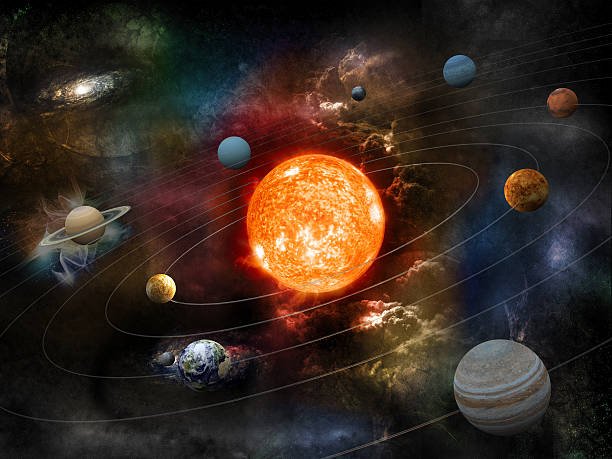
The arrangement of our planets is not random—it is the result of billions of years of gravitational sculpting. The small, rocky planets reside close to the Sun, where only metals and silicates could condense. The gas and ice giants inhabit the outer regions, where ices could accumulate into massive cores capable of capturing thick atmospheres.
Between these two realms lies the asteroid belt, a boundary that marks the gravitational influence of Jupiter. Beyond Neptune, the Kuiper Belt and Oort Cloud form the outermost reaches of our Solar System, linking us to the interstellar medium from which we came.
This structure—a star surrounded by a family of diverse worlds—is not unique. In recent decades, astronomers have discovered thousands of exoplanets orbiting other stars, revealing that planetary systems are common throughout the galaxy. Yet our Solar System, with its delicate balance and habitable Earth, remains a masterpiece of cosmic architecture.
The Role of Chaos and Chance
It is tempting to see the Solar System’s formation as inevitable, but it was anything but. Tiny changes in the early disk could have produced a completely different outcome. A slightly stronger solar wind might have stripped away Earth’s atmosphere. A different orbital resonance might have sent Jupiter spiraling inward, destroying the inner planets.
Physics and chemistry provided the rules, but chance decided the outcome. Every collision, every gravitational tug, every particle of dust played a role in shaping what would become our cosmic home.
That we exist at all is an extraordinary coincidence of stability amid chaos. The same processes that destroyed countless planetesimals also created the perfect conditions for life.
From Dust to Consciousness
When we trace the story of our Solar System, we are also tracing our own origins. The atoms in our bodies were once part of that ancient nebula—carbon, oxygen, and nitrogen forged in long-dead stars before our Sun was even born.
In a profound sense, the story of the Solar System is the story of how the universe became self-aware. From dust to rock, from rock to planet, from planet to life capable of understanding its own beginnings—the journey is both scientific and deeply spiritual.
We are the descendants of cosmic dust, now able to look back across billions of years and reconstruct the steps that led to our creation.
The Continuing Evolution of the Solar System
Though the Solar System has stabilized, it continues to evolve. The Sun will burn steadily for another 5 billion years before swelling into a red giant, engulfing Mercury and Venus, and perhaps even Earth.
The outer planets will drift farther apart as the Sun loses mass. Eventually, it will shed its outer layers, leaving behind a dense white dwarf surrounded by a faint nebula. The planets that remain will orbit this stellar ghost in silent testimony to what once was.
Yet, even as our Sun fades, the materials it releases will enrich the galaxy, contributing to new clouds, new stars, and new planetary systems. The cycle of creation will begin again, just as it did 4.6 billion years ago.
The Cosmic Perspective
When we look up at the night sky and see the planets gliding among the stars, we are witnessing the outcome of billions of years of cosmic artistry. Each world, from tiny Mercury to distant Neptune, carries the signature of its birth from dust and gravity.
The Solar System’s formation was not an isolated miracle—it was part of a grand cosmic rhythm. Everywhere we look in the universe, new stars are being born within clouds of gas and dust, surrounded by swirling disks where new worlds are forming. Our Solar System is simply one verse in an infinite cosmic song.
To understand how the Solar System formed is to understand how nature builds order from chaos, beauty from emptiness, and life from dust. It is to recognize that everything we are—every ocean, mountain, and living creature—emerged from the same primordial cloud that once floated silently in space.
The Eternal Wonder
And so, when we gaze at the planets tonight—the glowing point of Venus, the steady light of Jupiter, the faint shimmer of Saturn—we are seeing echoes of the ancient past. We are looking at worlds born from the same dust that became us.
The story of the Solar System is not just a scientific explanation—it is a cosmic poem written in starlight and gravity. It reminds us that creation is not a singular event, but an ongoing process, one that continues in distant nebulae, in the hearts of galaxies, and even within the atoms that make up our own bodies.
From dust, we came. Through gravity, we were shaped. Through sunlight, we live.
And when our time ends, the dust of our world will once again drift into the darkness—ready to begin the cycle anew.