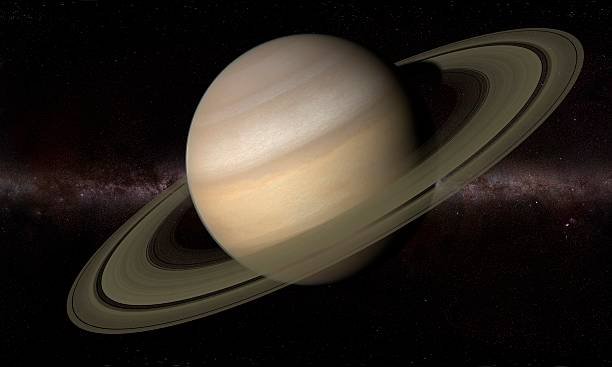
Among all the worlds that dance around our Sun, none has captured the human imagination quite like Saturn—the magnificent lord of the rings. It glides through the darkness like a cosmic crown, wrapped in bands of icy light that shimmer against the blackness of space. No other planet possesses such visual poetry. Saturn is both a scientific marvel and a celestial masterpiece, its rings like whispers of eternity encircling a planet of mystery and grace.
Seen through even the smallest telescope, Saturn looks almost unreal—too perfect, too beautiful to be natural. Yet this breathtaking spectacle is entirely the work of nature’s physics: gravity sculpting ice, dust, and rock into a masterpiece that spans hundreds of thousands of kilometers. Saturn is not just a planet; it is a symbol of cosmic elegance, a reminder that even the cold void of space can produce something sublime.
But beneath its beauty lies complexity. Saturn is a giant world of gas and storms, of roaring winds and swirling bands. Its serene rings conceal the remnants of shattered moons and ancient collisions. Its atmosphere hides mysteries of lightning, chemistry, and perhaps lessons about how planets—and even life—are born. To know Saturn is to peer into both the order and chaos of the cosmos, to see how beauty and violence coexist in perfect equilibrium.
The Distant Wanderer
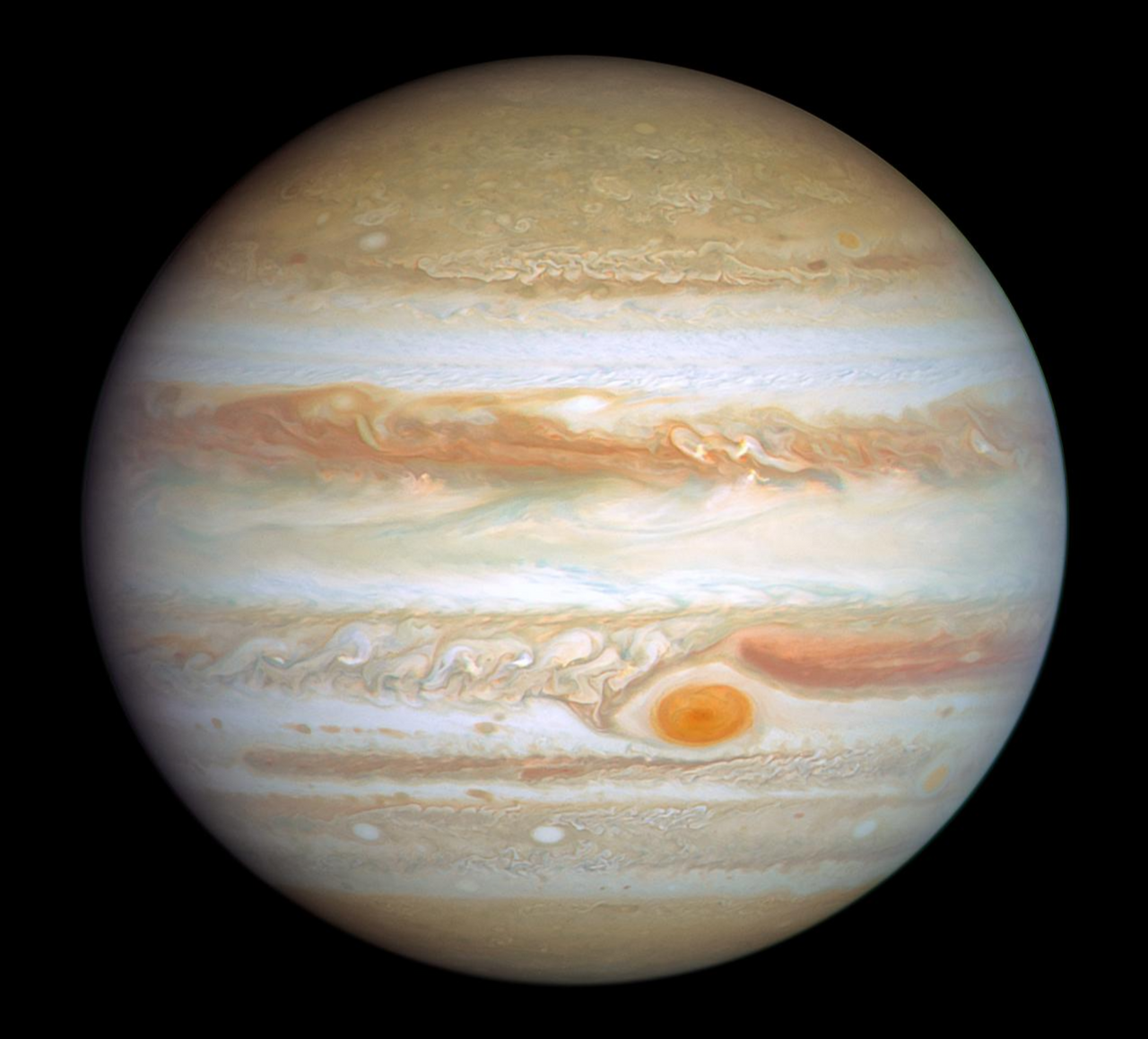
Saturn orbits the Sun at nearly 1.4 billion kilometers away—nine times farther than Earth. It is the sixth planet from the Sun, second only to Jupiter in size, yet distinct in character. While Jupiter is the king of raw power and gravity, Saturn is the artist—its grandeur more delicate, its light more ethereal.
From Earth, Saturn appears as a golden point in the night sky, moving slowly among the stars. It completes a single orbit every 29.5 Earth years, meaning that one Saturnian year is almost three decades long. The planet itself is enormous—about 120,500 kilometers wide, capable of fitting more than 760 Earths inside its volume. Yet despite its size, it is astonishingly light. Saturn’s density is less than that of water. If there were a bathtub big enough to hold it, Saturn would float.
This remarkable lightness comes from its composition. Saturn is made mostly of hydrogen and helium—the same elements that fuel stars. Deep beneath its golden clouds, under crushing pressures, hydrogen transforms into exotic states of matter that behave unlike anything found on Earth. Saturn is, in many ways, a failed star—too small to ignite, yet carrying within it the essence of starlight.
The Golden Clouds of Chaos
From afar, Saturn’s surface appears calm and harmonious, with soft bands of color stretching across its globe. But up close, this serenity dissolves into storm. Saturn’s atmosphere is a vast ocean of gas, whipped by winds that can exceed 1,800 kilometers per hour—faster than any hurricane on Earth.
These winds carve Saturn’s upper clouds into alternating zones of pale gold and gray, created by ammonia ice crystals floating in different layers. Beneath them lie deeper clouds of ammonium hydrosulfide and water, forming complex chemical strata. The colors shift and fade over time, depending on temperature, sunlight, and the changing seasons of its long orbit.
Occasionally, the planet erupts into chaos. Massive storms, called “Great White Spots,” appear roughly once every Saturnian year—about every 30 Earth years. These planet-sized tempests rise from deep within the atmosphere, bright enough to be seen from Earth through small telescopes. They are Saturn’s version of Jupiter’s Great Red Spot, though they come and go like cosmic tempests, roaring and fading into the golden haze.
Saturn’s poles are equally mesmerizing. At its north pole lies a strange and perfect geometric feature—a vast hexagon, 30,000 kilometers across. This six-sided jet stream, first discovered by the Voyager spacecraft and later studied by Cassini, remains one of the great mysteries of planetary science. It is a storm shaped by mathematics itself, spinning endlessly above a planet of gas.
The Secret Heart of a Giant
What lies beneath Saturn’s swirling clouds? We can only infer, for no probe could survive its crushing depths. But scientists believe Saturn has a small, rocky core—perhaps 10 to 20 times the mass of Earth—surrounded by layers of metallic hydrogen and liquid helium.
As the pressure increases with depth, hydrogen gas becomes compressed into a metallic state, capable of conducting electricity. This metallic hydrogen generates Saturn’s magnetic field, which, though weaker than Jupiter’s, still stretches far into space, trapping charged particles and interacting with the solar wind.
Saturn’s interior also produces more heat than it receives from the Sun. This excess energy comes from a process called helium rain—tiny droplets of helium separating from hydrogen and falling toward the core, releasing gravitational energy as heat. It’s a slow, silent storm that has been raining inside Saturn for billions of years.
The planet’s rotation adds another layer of mystery. Saturn spins on its axis in just over 10 hours, but because it has no solid surface, different parts of the atmosphere rotate at slightly different speeds. This differential rotation makes it difficult to define exactly how long a “day” on Saturn lasts.
The Birth of the Rings
The rings of Saturn are the most spectacular and enigmatic structures in the solar system. Stretching out more than 280,000 kilometers from the planet’s center, yet only about 10 meters thick in most places, they are composed mostly of water ice, with traces of rock and dust.
They are divided into several main sections—the A, B, and C rings—separated by gaps such as the Cassini Division, a dark band caused by gravitational resonances with Saturn’s moons. Each ring is made up of countless particles, ranging in size from microscopic grains to boulders meters wide, all orbiting Saturn like a vast, shimmering disk.
From a distance, the rings look solid, like a single sheet of glass. But up close, they are dynamic and alive—millions of icy fragments constantly colliding, clumping, and dispersing. Gravity from Saturn and its moons sculpts waves, spirals, and ripples through the rings, creating an ever-changing symphony of motion.
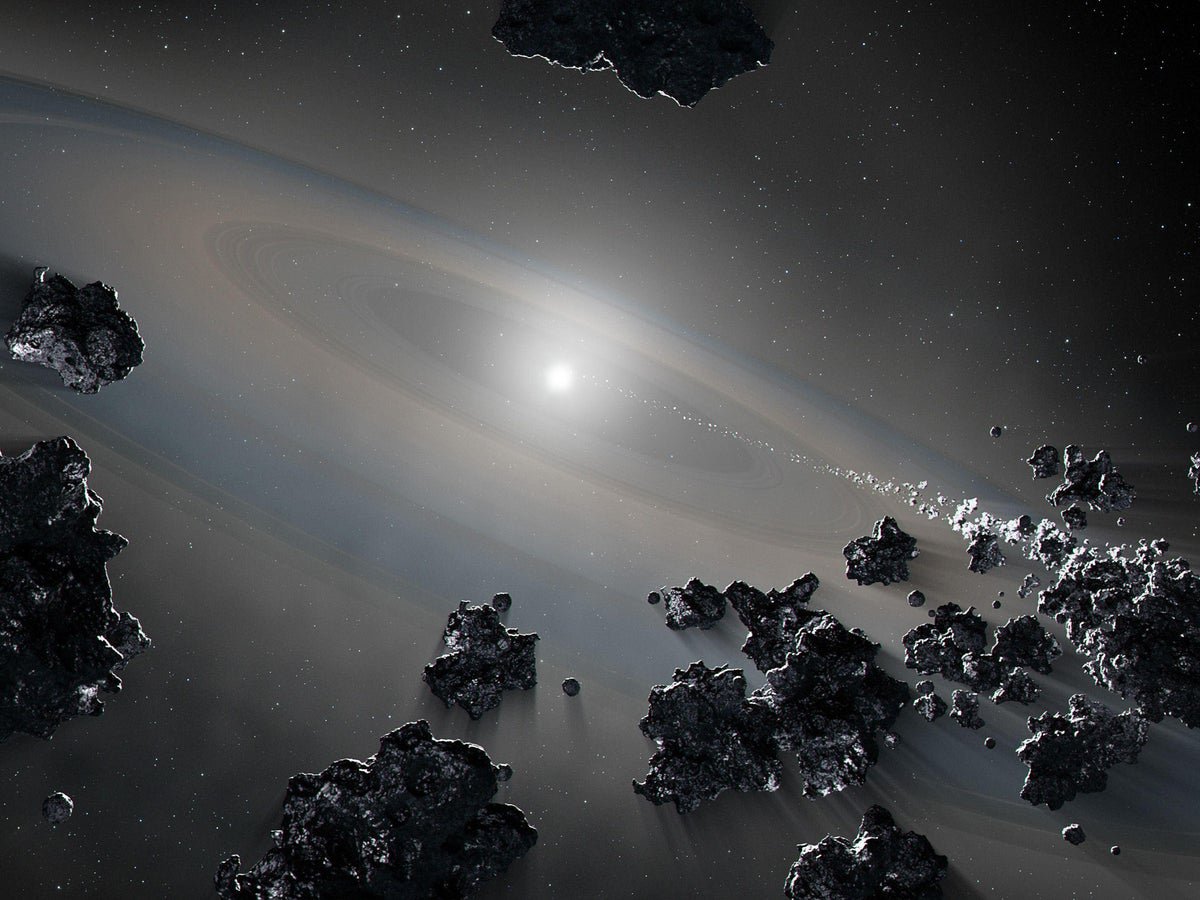
How did the rings form? Theories abound. Some scientists believe they are remnants of a shattered moon—destroyed either by a collision or by Saturn’s immense gravity tearing it apart. Others suggest they may be leftover material from the planet’s formation, never coalescing into a moon.
Recent observations from the Cassini spacecraft revealed that the rings are far younger than the planet itself—perhaps only 100 million years old, a mere blink in cosmic time. They may be transient, destined to fade and fall into the planet, turning Saturn’s magnificent crown into dust.
The Moonlit Kingdom
If Saturn is the lord of the rings, then its moons are the court that surrounds it—each one unique, mysterious, and vital to understanding the planet’s story. Saturn has more known moons than any other planet, with at least 146 confirmed as of recent discoveries. Some are tiny fragments only a few kilometers wide, while others are worlds in their own right.
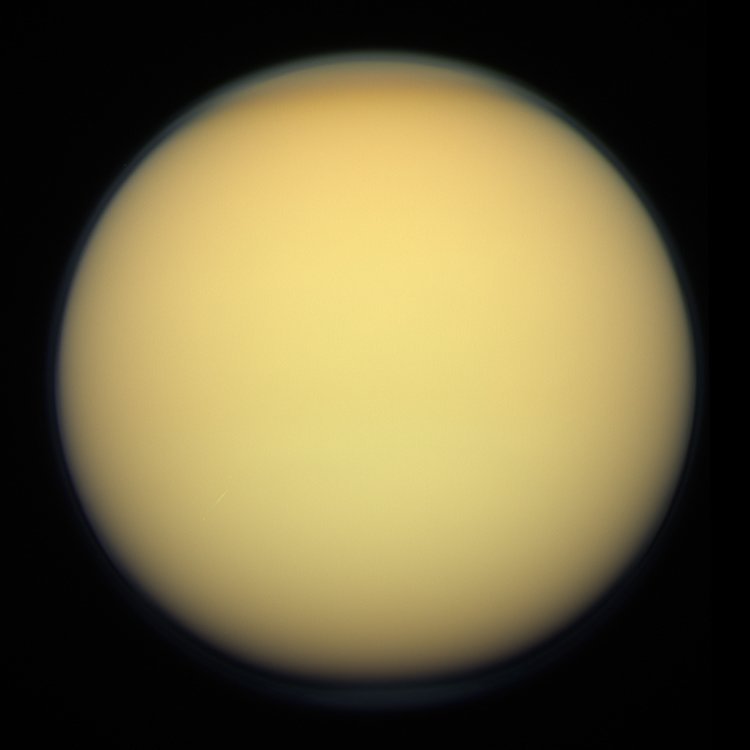
Among them, Titan reigns supreme. Larger than the planet Mercury, Titan is a world shrouded in a thick orange atmosphere of nitrogen and methane. It is the only moon in the solar system with a dense atmosphere and the only body besides Earth known to have stable liquid on its surface. But those lakes and rivers are not made of water—they are composed of liquid methane and ethane, flowing through an alien landscape of hydrocarbon dunes and icy mountains.
Titan’s surface temperature hovers around –179°C, far too cold for liquid water. Yet beneath its frozen crust, scientists suspect an ocean of liquid water mixed with ammonia may exist—a potential cradle for life, though one utterly different from our own.
Enceladus, another of Saturn’s moons, is smaller but perhaps even more astonishing. It shines like a pearl, its surface coated in brilliant ice. Beneath that frozen shell lies a global ocean of liquid water, heated by tidal forces from Saturn’s gravity. Enceladus is not still—it breathes. From cracks near its south pole, jets of water vapor and ice erupt into space, creating a magnificent plume that feeds Saturn’s E ring.
These geysers contain organic molecules and complex chemistry, suggesting that Enceladus may harbor the conditions necessary for life. Beneath its icy crust, it may hide warm, dark seas teeming with potential.
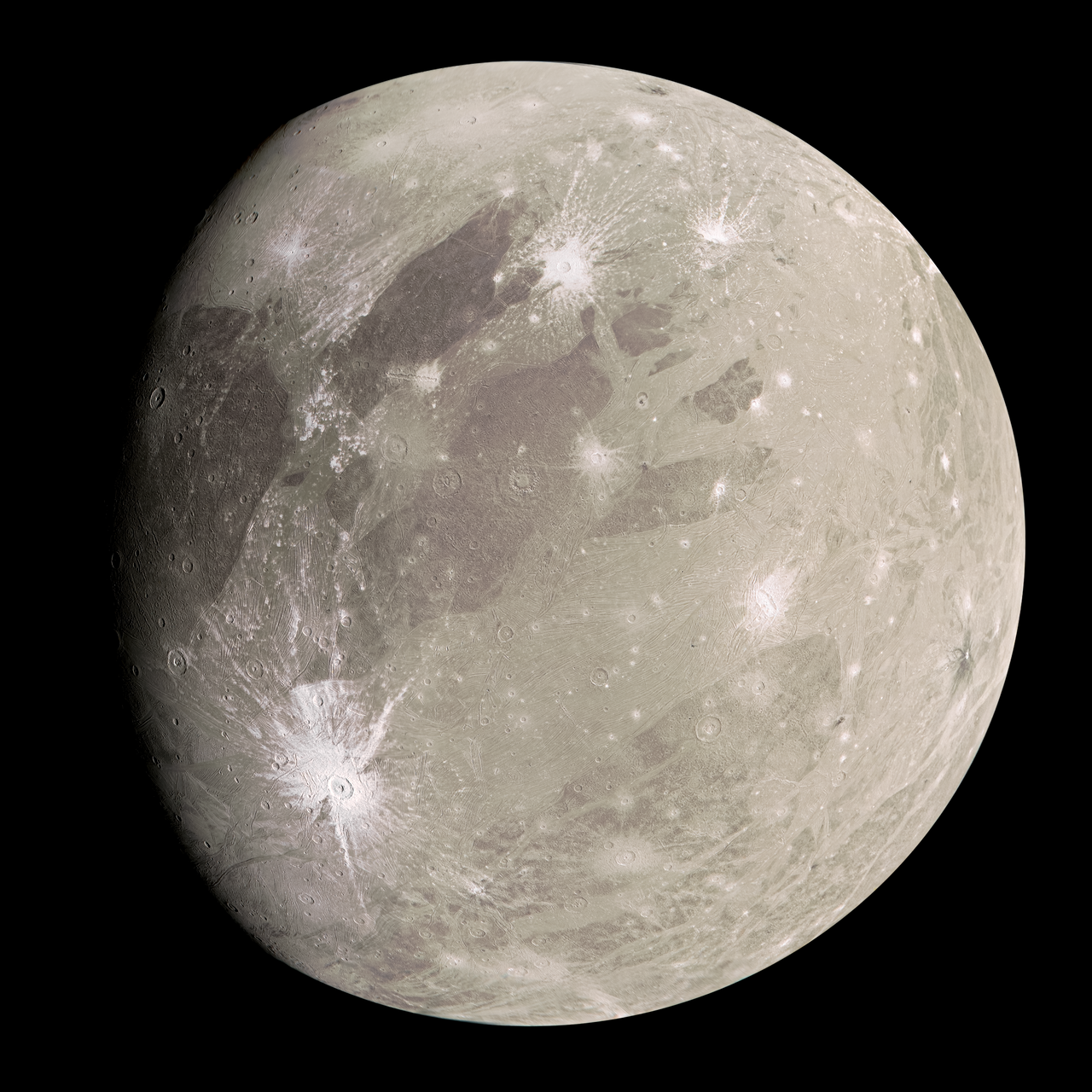
Other moons—like Rhea, Dione, Tethys, and Iapetus—each tell their own tale. Iapetus, for example, is half bright as snow and half dark as coal, its two-faced nature baffling scientists for decades. Hyperion tumbles chaotically through space, and Mimas, scarred by a massive crater, looks hauntingly like the Death Star from Star Wars. Together, Saturn’s moons form a miniature solar system—a realm of diversity and wonder orbiting a golden giant.
The Dance of Gravity and Time
Saturn’s domain is a masterclass in celestial choreography. The planet, its rings, and its moons interact in a delicate balance of gravity, motion, and resonance. Tiny moons called shepherds orbit near the edges of the rings, using their gravity to sculpt and maintain their shape. Without them, the rings would quickly disperse into space.
Some moons are locked in resonant orbits, where their gravitational tugs reinforce one another in rhythmic cycles. This gravitational music keeps the system stable, like a symphony that has played for billions of years.
But even within this harmony lies decay. Saturn’s gravity slowly draws its rings inward, and data from Cassini suggests that the rings are losing material into the planet—rain made of icy dust and charged particles. In 100 million years, the rings may vanish entirely, leaving only ghostly traces of their former glory.
The Cassini-Huygens Odyssey
Our understanding of Saturn was forever transformed by one of the most ambitious missions in human history: the Cassini-Huygens spacecraft. Launched in 1997, Cassini traveled for seven years before arriving at Saturn in 2004. Over the next 13 years, it became our eyes, ears, and heart in the Saturnian system.
Cassini revealed Saturn’s true majesty. It captured high-resolution images of the rings, watched storms evolve across the planet, and mapped the hexagon at the north pole. It discovered new moons, witnessed lightning deep within the clouds, and measured the planet’s magnetic field and composition.
The Huygens probe, carried aboard Cassini, descended through Titan’s thick atmosphere in 2005, landing on its surface and transmitting images of a landscape eerily similar to Earth—river channels, pebbles, and haze. It was humanity’s first touch on a moon beyond our own.
Cassini’s journey ended in 2017, in a finale as poetic as it was scientific. To avoid contaminating Titan or Enceladus with Earth microbes, NASA deliberately sent the spacecraft plunging into Saturn’s atmosphere. As it descended, Cassini transmitted data until it was torn apart by the heat and pressure. Its final act was to become part of the world it had spent so long studying—a fitting tribute to human curiosity and devotion.
The Planet of Seasons and Shadows
Saturn, like Earth, experiences seasons. Its axis is tilted by 26.7 degrees, nearly the same as ours, causing its rings and atmosphere to change as it orbits the Sun. Each season lasts over seven Earth years, slowly transforming the planet’s appearance.
When sunlight strikes the rings at different angles, they cast long, graceful shadows across Saturn’s face. Sometimes, during equinox, the rings appear to vanish entirely, becoming razor-thin lines against the planet’s glow. These shifting shadows remind us that even on this distant world, time passes with rhythm and grace.
The Sound of the Invisible
Saturn is not silent. Its magnetic field and plasma waves produce eerie, haunting sounds—radio emissions that can be converted into audible frequencies. Cassini recorded these signals: strange, ghostly tones that rise and fall like cosmic music. They are the voices of charged particles spiraling through Saturn’s magnetosphere, a symphony of invisible energy.
The planet’s auroras, glowing at its poles, are another manifestation of this magnetic dance. When solar particles collide with Saturn’s atmosphere, they create brilliant rings of light, invisible to human eyes but captured in ultraviolet by spacecraft. Even in darkness, Saturn glows with energy—a giant lantern suspended in the void.
The Lessons of a Giant
Saturn teaches us more than science—it teaches perspective. Its grandeur and mystery remind us that beauty in the universe is often fleeting, that the most breathtaking phenomena are also the most fragile. Its rings, destined to disappear, echo the impermanence of all things, even celestial wonders.
But Saturn is also a teacher of endurance. For over four billion years, it has orbited the Sun, surviving collisions, gravitational tides, and the passage of time itself. Its moons continue to dance, its storms continue to rage, and its light continues to inspire every eye that gazes upward.
From the ancient stargazers who called it Cronus—the god of time—to modern scientists who probe its mysteries with machines of steel and code, Saturn has been a mirror for our own longing to understand the infinite.
The Future of Exploration
Though Cassini’s journey ended, Saturn’s story is far from over. Future missions are being designed to return, focusing on its moons and their potential for life. NASA’s Dragonfly mission, for instance, will send a drone-like explorer to Titan in the 2030s, capable of flying through its atmosphere and exploring multiple sites across its frozen surface.
Scientists also dream of sending new probes to Enceladus, to fly through its plumes and perhaps sample its hidden ocean directly. Such missions could answer one of the most profound questions in science: Are we alone?
Saturn may hold the clues. Its moons, more than any other place beyond Earth, possess environments where life might exist. And even if they are lifeless, they offer insight into the chemistry that could make life possible elsewhere. Saturn, the ancient lord of the rings, remains one of the best teachers in the school of the cosmos.
The Eternal Crown
Every time we gaze at Saturn through a telescope or a photograph, we see not just a planet, but an idea—a symbol of balance, elegance, and wonder. Its rings, delicate yet vast, are like the brushstrokes of creation itself, painted on the canvas of space.
For all its distance and mystery, Saturn connects deeply with the human spirit. It stirs in us a sense of awe that transcends time and culture—the same awe that guided Galileo when he first saw its rings, and the same wonder that drives scientists today to uncover its secrets.
Saturn stands as a testament to the artistry of the universe. It reminds us that the cosmos is not only governed by mathematics and physics, but also graced with beauty beyond measure.
And perhaps that is the greatest truth Saturn offers us: that even in the cold reaches of space, amid storms and silence, the universe has a soul—a soul that reveals itself in golden light and icy rings, in shadows and storms, in the endless dance of moons around their lord.
The Lord of the Rings Forever
Saturn’s story is one of majesty and melancholy. Its rings will one day fade, its storms will quiet, and its moons may change, but its influence—its presence in the human heart—will remain eternal. It is the planet that shows us the delicate balance between chaos and beauty, impermanence and eternity.
When you next see that golden point of light in the night sky, remember that you are witnessing a masterpiece—a world so vast it could swallow Earth whole, yet so fragile it wears a crown made of dust and ice.
Saturn reigns as the lord of the rings, a king in exile from a celestial age long past, yet still radiant in his splendor. Around him whirl the remnants of creation, frozen in time, luminous against the dark.
And as long as there are eyes to look up, hearts to wonder, and minds to seek, Saturn will continue to reign—not only in the heavens, but in the imagination of humankind, forever crowned in rings of light.