Every sunrise feels eternal. The Sun climbs the horizon, paints the world in gold, and gives life to every leaf, breath, and heartbeat. For all of human history, it has been constant—the faithful star around which everything turns. But the Sun, like all things in the cosmos, is not immortal. One day, far in the future, its light will fade, its warmth will swell into fire, and Earth, our precious home, will face the long twilight of existence.
The story of the Sun’s death is not one of sudden catastrophe but of slow, majestic transformation—a process that will unfold over billions of years. Yet within that cosmic timescale lies a haunting truth: the Earth’s time as a living world is finite. As the Sun ages, its very nature will change, altering the delicate balance that has nurtured life for eons.
To understand the future of Earth is to understand the life and death of stars. Our planet’s fate is written in the physics of hydrogen and helium, in the slow heartbeat of nuclear fusion deep within the Sun’s core. It is a story of creation and decay, of beauty and inevitability—a story that reminds us that even the light we trust most will one day betray us.
The Life Cycle of a Star
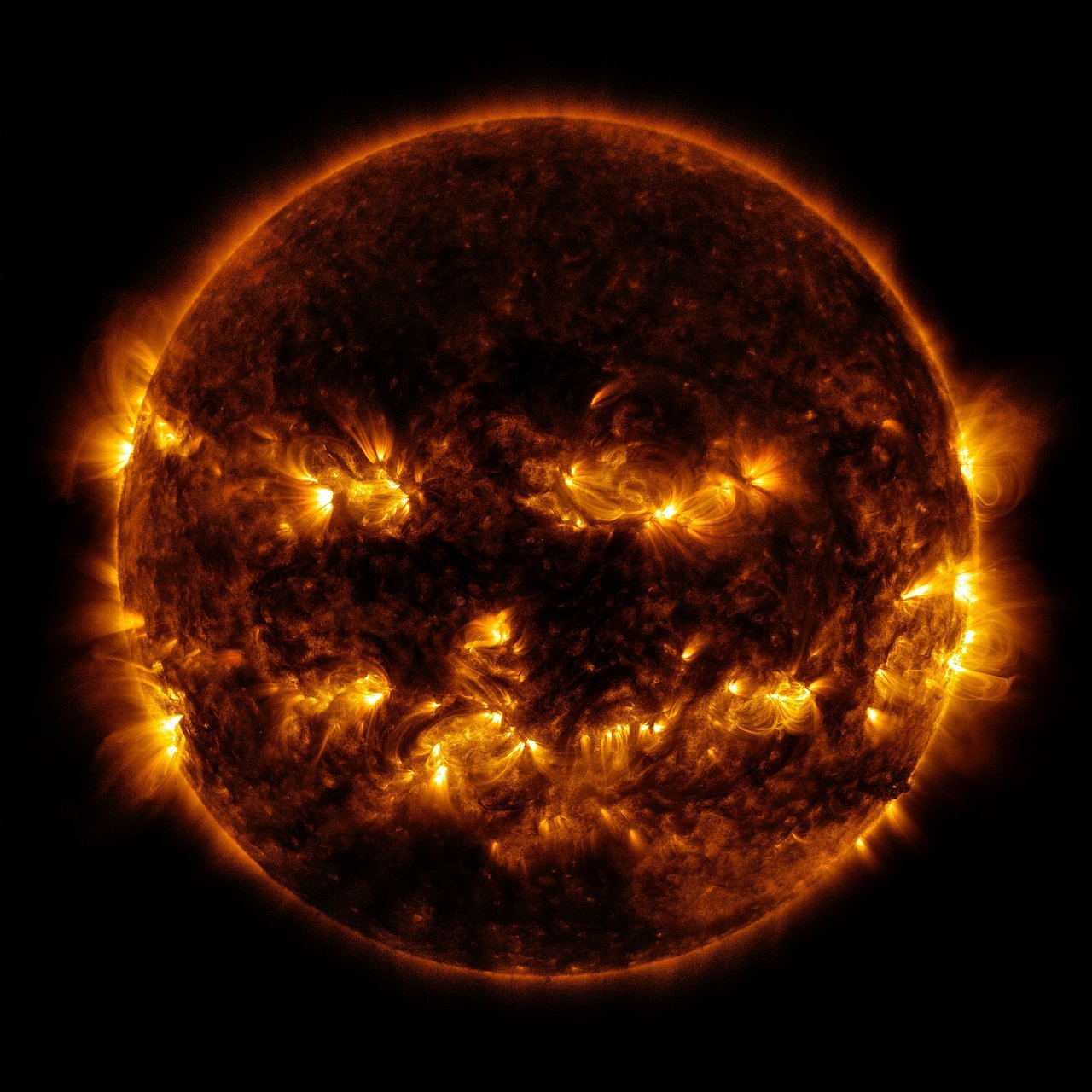
The Sun, though majestic, is an ordinary star. It was born about 4.6 billion years ago from a vast cloud of gas and dust swirling in the Milky Way. Gravity pulled the cloud inward until the pressure and temperature at its heart ignited nuclear fusion. Hydrogen atoms fused into helium, releasing energy that counterbalanced gravity’s pull. A star was born—a perfect engine of light.
For billions of years, the Sun has burned steadily, converting hydrogen into helium in its core. This balance between gravity (pulling inward) and radiation pressure (pushing outward) defines the main sequence phase—the stable period of a star’s life. The Sun is halfway through this phase, a middle-aged star in stellar terms, with roughly 4.5 billion years left before its fuel begins to run low.
But nothing in the universe lasts forever. As hydrogen dwindles, equilibrium will falter. The Sun will change, and with it, everything around it—including Earth.
The Brightening of the Sun
Even before the Sun begins to die, Earth’s environment will be transformed. As the Sun ages, its core slowly contracts, causing fusion to accelerate. This makes the Sun brighter and hotter over time.
Astronomers estimate that the Sun’s luminosity increases by about 10% every billion years. That may not sound like much, but the effects will be profound. In about a billion years, Earth’s surface will receive enough extra solar energy to raise global temperatures significantly. The oceans will start to evaporate, and the atmosphere will fill with water vapor—a potent greenhouse gas.
This will trigger a runaway greenhouse effect similar to what happened on Venus, though slower. As temperatures climb, carbon dioxide will be stripped from the air by chemical reactions with rocks, starving plants of their most vital resource. Photosynthesis will falter, oxygen will dwindle, and the biosphere will begin to collapse.
Before the Sun even leaves its stable phase, life on Earth will be in peril. Humanity—or whatever descendants we leave behind—will face the challenge of survival on a world growing steadily less hospitable.
The Death of the Blue Planet
In about 1.5 to 2 billion years, the oceans will be gone. The last drops of liquid water will boil away, leaving behind vast salt flats and dry basins beneath a sky thick with steam. The atmosphere, saturated with water vapor, will trap heat relentlessly, raising surface temperatures beyond 100°C.
The great forests will vanish first, followed by the oceans’ plankton and coral reefs. The remaining extremophiles—organisms that thrive in heat and dryness—will cling to life in the shadows, perhaps deep underground or in polar refuges. But even they will eventually succumb.
Earth will become a desert planet, scorched and airless. The continents will be baked into shades of red and brown, the atmosphere reduced to a thin haze of nitrogen and carbon compounds. The world will look eerily like Venus—a sterile, fiery relic orbiting too close to its aging star.
The Red Giant Awakens
When the Sun finally exhausts the hydrogen in its core, gravity will begin to collapse it inward. As the core shrinks, it heats up, igniting a shell of hydrogen just outside it. The Sun’s outer layers will expand enormously, swelling hundreds of times larger than its current size.
The transformation will be spectacular—and deadly. The Sun will become a red giant, its surface cooling to a deep orange hue even as its outer layers stretch past the orbit of Mercury and possibly engulf Venus. The Sun’s radius could reach 150 million kilometers, nearly touching Earth’s orbit.
For our planet, this will mark the end. The swelling Sun will flood the inner solar system with heat and radiation. The atmosphere will be stripped away by the solar wind, the crust will melt, and the surface will glow with liquid fire.
There is a small chance Earth might escape complete engulfment. As the Sun loses mass during its expansion, its gravitational pull will weaken, causing the planets to drift outward. Earth might move far enough to survive physically—but survival in form does not mean survival in spirit. Even if it remains intact, the planet will be a molten wasteland orbiting a dying sun.
The Last Days of Light
As the Sun enters its red giant phase, it will pulsate—expanding and contracting as it struggles to maintain balance. These oscillations will last for hundreds of millions of years. Each pulse will shed more material into space, forming vast clouds of gas and dust.
During this time, the solar system will be transformed. The asteroid belt will be disturbed, comets will shift from their icy homes, and the outer planets’ moons may experience strange new warmth. The Sun’s dying breath will reach across billions of kilometers, reshaping everything it once illuminated.
From the outer solar system, the sight would be hauntingly beautiful: a colossal red orb filling half the sky, its surface roiling with convection cells larger than Earth itself. The light will be dim and blood-colored, casting long shadows across the frozen moons of Jupiter and Saturn, briefly thawing their icy surfaces before fading again.
For any observer—perhaps a future civilization that has fled Earth—the dying Sun will be both awe-inspiring and tragic: a reminder that even stars must die.
The White Dwarf’s Silent Reign
After the red giant phase, the Sun will finally run out of fuel entirely. It will shed its outer layers in one final act of beauty, creating a vast, glowing shell of gas—a planetary nebula. This nebula will expand into space, illuminated by the last radiation from the dying core.
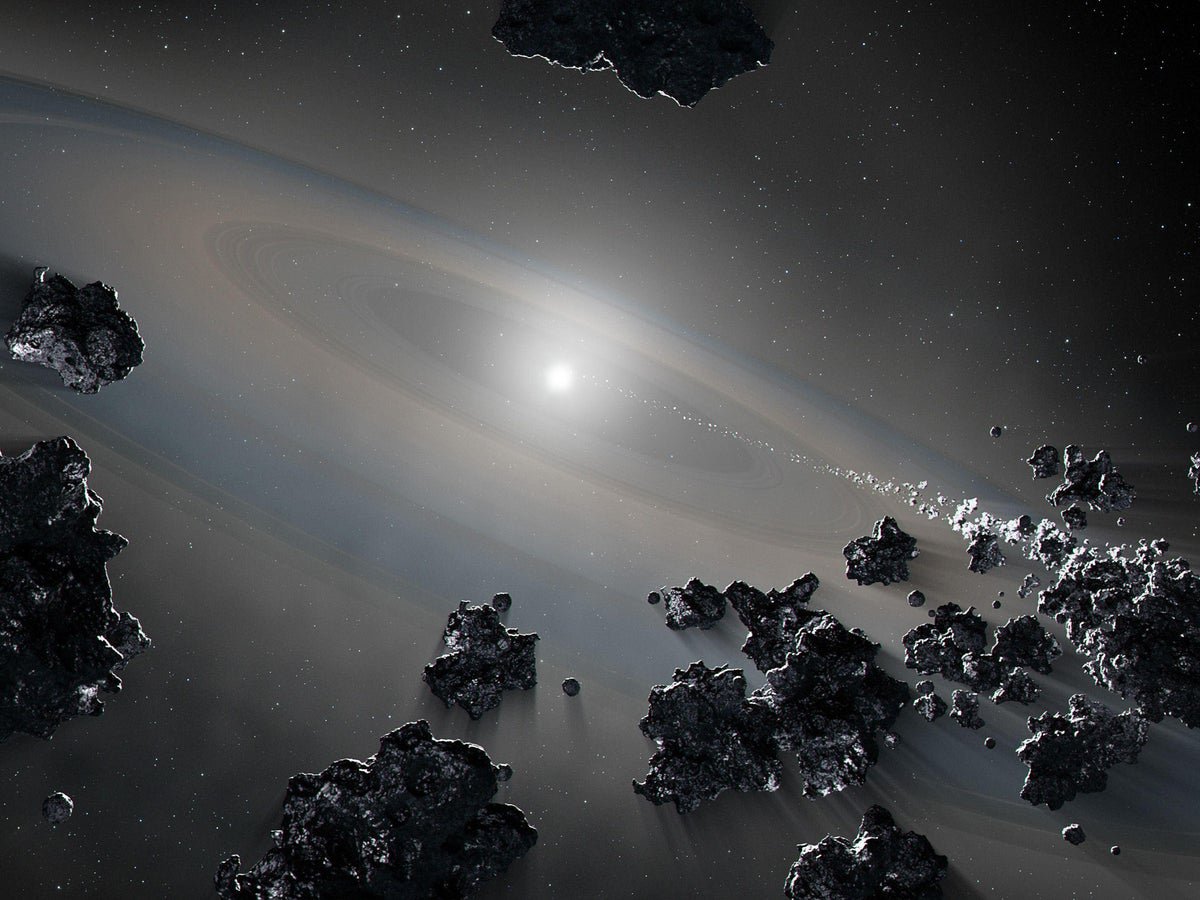
At the center of that nebula, what remains of the Sun will shrink into a dense, white-hot ember—a white dwarf. Roughly the size of Earth but with half the Sun’s mass, this remnant will no longer produce energy through fusion. It will simply radiate away its residual heat for billions of years, slowly cooling into darkness.
Earth, if it still exists, will orbit this stellar corpse. Its molten surface will have long since solidified into a cracked, lifeless crust. The air and seas will be gone, the sky black except for the pale ghost of the white dwarf Sun.
No wind will blow. No rivers will flow. The Earth will be silent, a frozen cinder orbiting a ghost star in an expanding, cooling universe.
The Solar System After the Sun
When the Sun becomes a white dwarf, it will have lost nearly half its mass. The outer planets—Jupiter, Saturn, Uranus, and Neptune—will drift farther away. Their icy moons may remain, orbiting quietly in the distant dark. The Kuiper Belt, a realm of frozen bodies beyond Neptune, will persist, though its objects may be perturbed into new orbits by the Sun’s weakened gravity.
Comets will still exist in the Oort Cloud, at the very edge of the solar system, perhaps flung outward into interstellar space. The architecture of the solar system will remain, but it will be a ghostly echo of its former self—cold, sparse, and silent.
If intelligent life still exists somewhere in the cosmos, they may one day discover our system and see the remains of what was once a vibrant world. They might find a frozen Earth, locked in eternal twilight, and wonder about the creatures who once looked at the stars and pondered their fate.
Could Earth Be Saved?
It is natural to ask whether this fate can be avoided. Could humanity—or our distant descendants—save the Earth from destruction? Could we move our world to a safer orbit or protect it from the Sun’s wrath?
In theory, such ideas are not entirely impossible. Over millions of years, small gravitational nudges—perhaps from passing asteroids or engineered satellites—could gradually shift Earth’s orbit outward. If moved far enough, Earth could remain within the Sun’s habitable zone even as the star brightens.
Another possibility is building colossal structures—solar shades or mirrors—to regulate the planet’s temperature. But these would require unimaginable resources and technological mastery. The sheer timescales involved make such efforts almost beyond comprehension.
More likely, humanity would leave Earth behind. Long before the red giant phase, we may have become an interplanetary—or even interstellar—species, carrying fragments of our planet’s memory into the cosmos. Earth might become a sacred relic, visited by descendants who look back and whisper to the dust: “We began here.”
Life Beyond the Dying Sun
If life endures, it will not be bound to the Sun. Long before our star fades, humans—or their digital or biological successors—may have spread beyond the solar system, living around younger stars or in vast artificial habitats drifting through space.
The elements that make up our bodies—the carbon, oxygen, iron, and calcium—were forged in ancient stars that died long before the Sun was born. The death of our own star will continue that cosmic cycle, scattering new material into the galaxy. The atoms of the Sun, of Earth, and of us will one day form new worlds, new stars, and perhaps new beings who will look up at their own skies in wonder.
In this sense, the death of the Sun is not an ending, but a transformation. Stars die so that new life can arise. The universe itself thrives on this eternal cycle of death and rebirth.
The Far Future: When Even Stars Fade
The death of the Sun is only the first act in a much larger cosmic drama. Over the next trillions of years, stars across the galaxy will live, die, and fade. The universe will grow darker as new star formation slows. Galaxies will drift farther apart as space expands, and the night sky will lose its brilliance.
Eventually, even white dwarfs will cool into black dwarfs—cold, invisible spheres of degenerate matter. The universe will enter an age of darkness, lit only by the rare collisions of remnants and the faint glow of decay.
But this distant epoch—so far away that no human concept of time can truly grasp it—does not diminish the meaning of our present. If anything, it magnifies it. To live now, in the brief luminous age of stars, is to exist in the universe’s golden hour—a fleeting moment of brilliance before the long night.
A Mirror for Humanity
The story of Earth’s future under a dying Sun is not just a tale of astronomy—it is a meditation on impermanence. It reminds us that everything we know, love, and build is temporary, bound to the rhythms of cosmic evolution.
Yet within that impermanence lies meaning. Knowing that the Sun will one day die makes its warmth today more precious. Understanding that our world will fade gives our stewardship of it urgency and purpose.
Physics teaches us inevitability, but consciousness gives us choice. We cannot stop the Sun’s aging, but we can choose how to live within its light. We can preserve life, create beauty, and extend our reach beyond this one fragile world. The universe may be indifferent, but we are not.
The Beauty of the End
Imagine the final days of the Earth: a silent sphere circling a dying Sun. The seas are gone, the air is thin, the sky glows red and dim. Yet perhaps, somewhere beneath the dust, there is still a trace of memory—a fossil, a buried monument, or a coded message left by beings who once thrived here.
The Sun will swell, engulfing the sky. Then, in a final burst, it will shed its outer layers, surrounding the world in a nebula of glowing color. For a short time, the dying Sun will be breathtakingly beautiful—a cosmic flower blooming in the darkness.
Then the light will fade. The nebula will drift away. The Sun will shrink to a white dwarf, and the Earth will freeze. But in that silence, the story does not end—it continues elsewhere, in the hearts of stars not yet born.
The Eternal Legacy
When the Sun’s ashes have cooled and Earth’s surface lies frozen and still, the atoms that once formed oceans, mountains, and living beings will remain. Over time, those atoms may be drawn into new stars, new planets, new forms of life.
Perhaps in some distant future, another civilization will arise from the dust of our world, orbiting another star. They will study the cosmos, build telescopes, and wonder about ancient worlds that once lived under other suns. They may look into the night and see a faint, aged white dwarf—our Sun—and realize that life once burned brightly there.
The cycle will begin again. Life will flourish, love will bloom, and wonder will return to the universe. The death of the Sun will have sown the seeds of new beginnings.
The Sun’s Final Gift
Though the Sun will die, its light will not have been in vain. Every plant that grew, every heartbeat that ever echoed, every thought that ever dreamed—it all came from the Sun’s energy. For billions of years, its warmth made life possible.
In that sense, the Sun’s death is not a tragedy but a completion. Like an artist who spends their life creating beauty and then rests, the Sun will have fulfilled its purpose. It will have turned hydrogen into life, energy into consciousness, and light into love.
Even as it fades, it will continue to give—its final breath scattering elements across the cosmos, ensuring that the story of creation never truly ends.
The Dawn Beyond the Dusk
One day, long after humanity has moved on, the Sun will set for the last time. The sky will darken, and the Earth will fall silent. But somewhere, life will continue—perhaps among the stars we have not yet reached.
The universe, vast and eternal, will carry our memory in the particles that once made us. And though our Sun will die, the light it gave will live on—in the DNA of future worlds, in the energy that moves galaxies, and in the curiosity that drives all living beings to look upward and wonder.
For even in the face of cosmic death, there is something that endures. Not matter, not form—but the spark of understanding, the will to know, the courage to love within the briefness of light.
The Sun will die, but life will not vanish. It will scatter, adapt, and begin anew. And somewhere, in the glow of another dawn beneath another star, someone will lift their eyes to the sky, feel warmth on their skin, and think of home.
The Earth will have passed into legend—but the story of life, born from the light of a dying Sun, will go on forever.