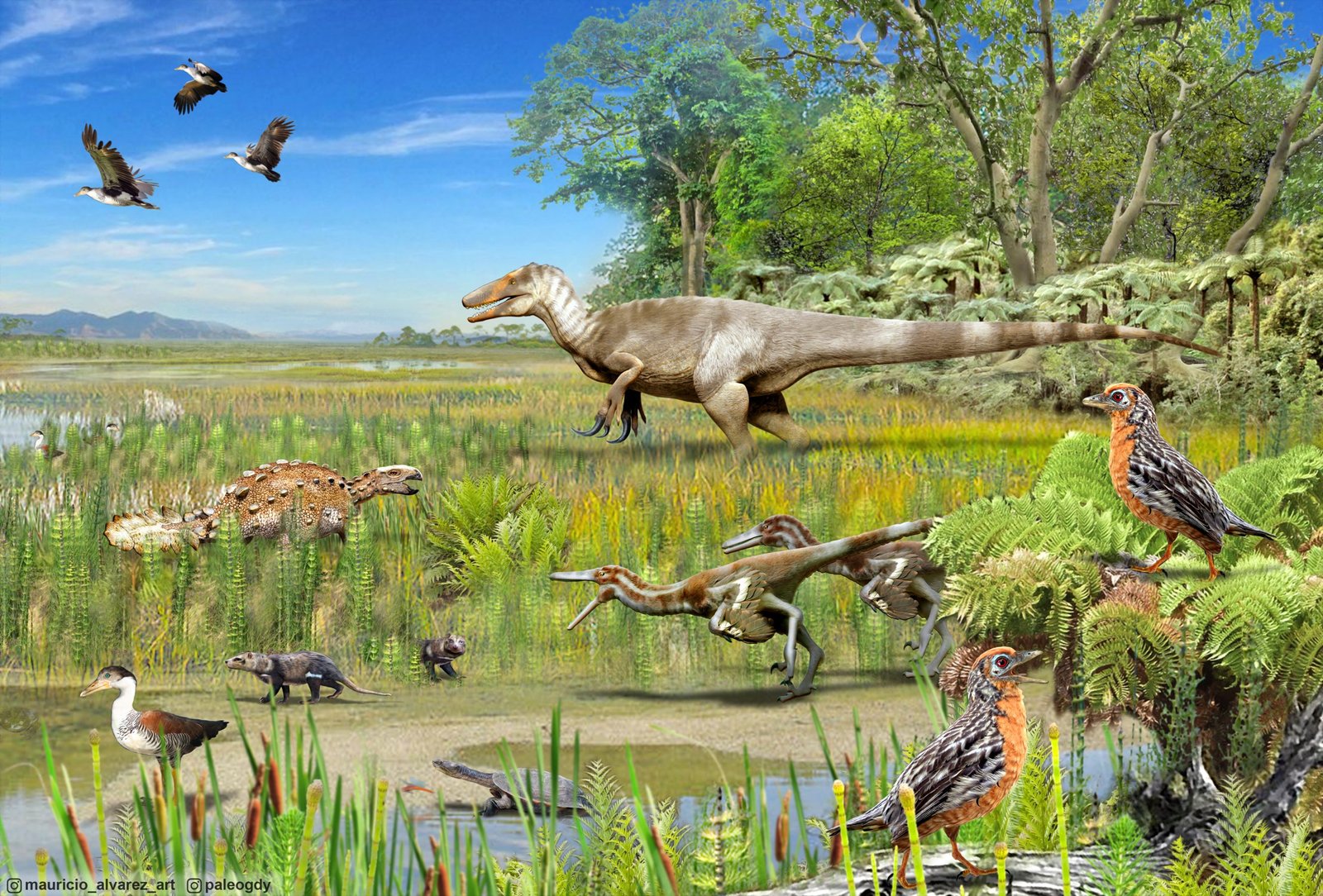
The deep past is not merely a distant chapter of history. It is a vast, shadowy realm that stretches far beyond memory, language, and written record, reaching into a time when the Earth itself was young and life was still learning how to exist. It is a past so ancient that it resists our instincts, a past measured not in years or centuries, but in millions and billions of years. And despite centuries of scientific effort, it remains one of the most difficult stories humans have ever tried to understand.
We live surrounded by the products of the present. Our cities rise quickly, our technologies evolve rapidly, and our lives unfold on the scale of decades. Against this background, the deep past feels unreal, almost abstract. Yet everything we are, everything that breathes, crawls, swims, or grows, is shaped by that immense stretch of time. The deep past is not gone. It is written into our bones, our cells, the rocks beneath our feet, and the atmosphere we breathe. Understanding it is not just an academic challenge. It is a search for our own origins.
Time Beyond Human Imagination
Human beings evolved to think in short spans of time. We remember days, years, perhaps a few generations. Even history, as we usually understand it, covers only a thin slice of Earth’s existence. Writing itself is barely a few thousand years old. Agriculture is even younger. Compared to the age of the planet, all of recorded human history is less than a blink.
The Earth is about 4.5 billion years old. This number is so large that it defies intuition. To make sense of it, scientists sometimes compress Earth’s history into a single calendar year. In that metaphor, humans appear only in the last few minutes of December 31. Everything that shaped the planet for most of its existence happened without us. Continents formed and broke apart. Oceans appeared and vanished. Entire ecosystems rose, flourished, and disappeared long before the first human thought ever formed.
This extreme scale is one of the greatest obstacles to understanding the deep past. Our brains are simply not built to grasp such vast durations. We can calculate them, write them down, and discuss them logically, but emotionally, they remain distant. The deep past challenges not only our knowledge, but our imagination.
Reading a World Without Words
The deep past left no diaries, no photographs, no written testimony. Everything we know about it comes from indirect evidence, fragments preserved in rock, ice, fossils, and chemical signatures. Scientists must reconstruct ancient worlds the way detectives reconstruct a crime scene long after it occurred, using clues that are incomplete, altered, and sometimes misleading.
Rocks are among the most important records of deep time. Layer by layer, they preserve evidence of ancient environments. A sandstone may record a desert that vanished hundreds of millions of years ago. A limestone may reveal a warm, shallow sea once teeming with life. Volcanic rocks mark violent eruptions that reshaped landscapes and altered climates. But rocks are not passive archives. Heat, pressure, erosion, and tectonic forces constantly reshape them, erasing or distorting the evidence they contain.
Fossils offer a more direct connection to ancient life, but they are rare and biased. Most organisms never fossilize. Soft-bodied creatures almost always vanish without a trace. Even hard bones and shells require special conditions to be preserved. As a result, the fossil record is patchy, uneven, and incomplete. Entire branches of the tree of life may have existed without leaving any recognizable fossils behind.
This incomplete record means that the deep past will always contain uncertainty. Scientists must work with what remains, filling gaps with careful inference rather than certainty. Understanding the deep past is not about uncovering a perfect story, but about building the most reliable narrative possible from imperfect evidence.
The Earliest Earth and a Hostile Beginning
The earliest Earth was nothing like the planet we know today. Shortly after its formation, the young Earth was hot, unstable, and violent. It was bombarded by asteroids and comets, its surface repeatedly melted by impacts and volcanic activity. There were no oceans, no continents in their modern form, and no breathable atmosphere.
For a long time, scientists believed that life could not have emerged until the planet cooled significantly. Yet evidence suggests that life appeared surprisingly early, perhaps within a few hundred million years after Earth formed. This raises profound questions. How did life arise in such hostile conditions? What processes allowed nonliving chemistry to cross the threshold into biology?
We do not yet have complete answers. The earliest evidence for life comes from subtle chemical signatures and microscopic structures preserved in ancient rocks. These clues suggest the presence of simple, single-celled organisms that lived in oceans very different from today’s seas. They did not breathe oxygen. They did not see light in the way we do. Yet they laid the foundation for everything that followed.
Understanding this earliest chapter of life is one of the greatest challenges in science. The rocks from this period are rare and heavily altered. The organisms themselves were simple and left few clear traces. Yet within these faint signals lies the story of how life began, a story that connects chemistry, geology, and biology in ways we are still struggling to untangle.
The Long Silence Before Complexity
For most of Earth’s history, life remained simple. Single-celled organisms dominated the planet for billions of years. From a human perspective, this feels like stagnation, but it was anything but. During this immense span of time, life was experimenting, adapting, and slowly transforming the planet itself.
One of the most important changes was the rise of oxygen in the atmosphere. Early life forms produced oxygen as a byproduct of photosynthesis. At first, this oxygen reacted with minerals and never accumulated. Eventually, the planet’s ability to absorb oxygen was overwhelmed, and oxygen began to build up in the atmosphere. This event, known as the Great Oxygenation Event, transformed Earth forever.
Oxygen was toxic to many early organisms, causing widespread extinctions. Yet it also made new forms of life possible. Oxygen allows for far more efficient energy use, paving the way for larger, more complex organisms. The atmosphere changed. The chemistry of the oceans shifted. The planet entered a new phase of its history.
Despite this transformation, complex life took a remarkably long time to appear. For reasons still debated, multicellular organisms emerged only after billions of years of single-celled dominance. Why complexity took so long to arise remains one of the deep mysteries of the past. Was it a matter of environmental conditions, genetic innovation, or sheer chance? The evidence does not yet provide a clear answer.
Explosions That Were Not Instant
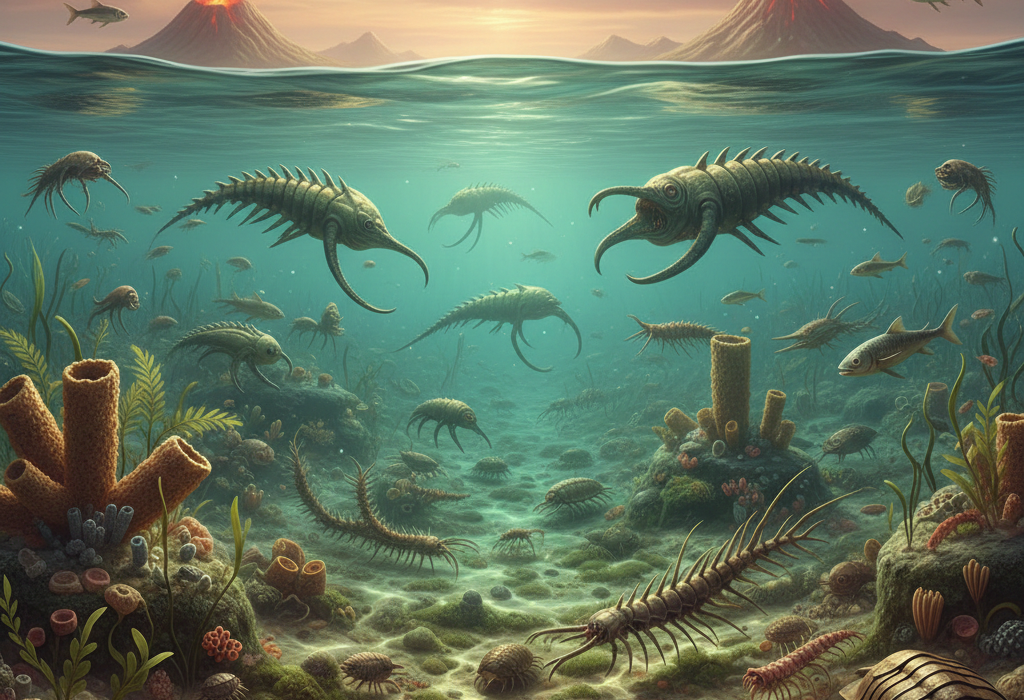
When complex life finally began to diversify, it did so in a pattern that both fascinates and confuses scientists. One of the most famous examples is the Cambrian explosion, a period when many major groups of animals appear in the fossil record over a relatively short geological time.
The word explosion can be misleading. This diversification unfolded over millions of years, not in a sudden burst. Yet in the context of deep time, it was rapid. Body plans emerged that still define animal life today. Creatures developed hard shells, complex eyes, and new ways of moving and feeding.
Why this happened when it did is still debated. Changes in oxygen levels, genetic innovations, ecological interactions, and environmental stability may all have played roles. What makes the Cambrian period particularly challenging is that it marks a turning point after which life becomes more recognizable, yet its causes remain only partially understood.
This pattern appears repeatedly in the deep past. Long periods of relative stability are punctuated by intervals of rapid change. Evolution is not a smooth, continuous process. It moves in fits and starts, shaped by opportunity, catastrophe, and constraint.
Extinction as a Creative Force
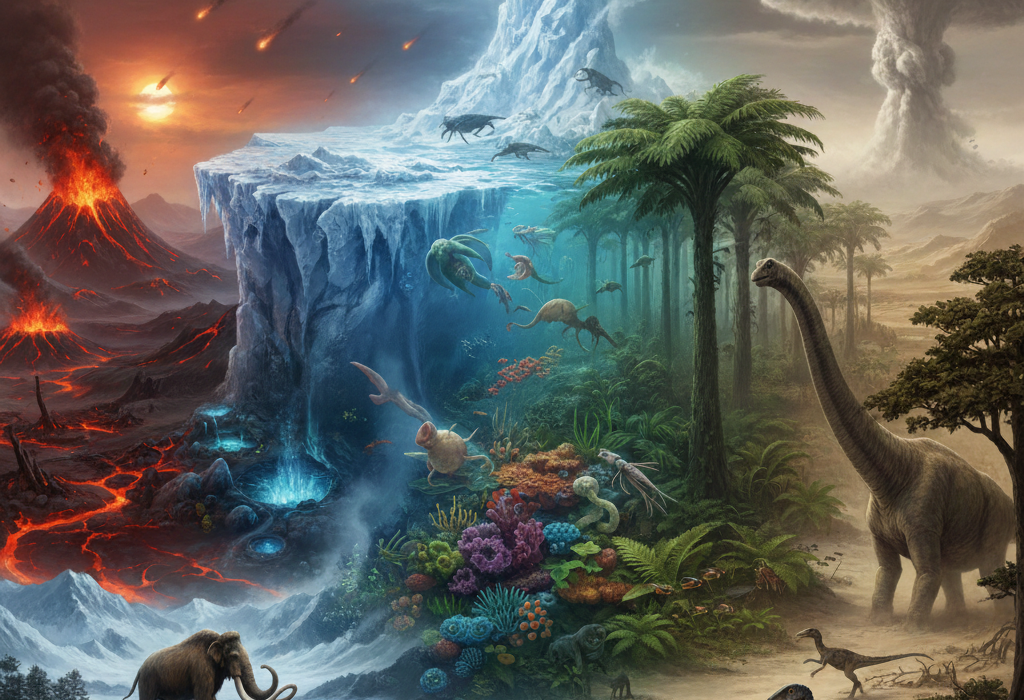
Extinction is often framed as a tragic ending, and on the scale of individual species, it is. Yet in the deep past, extinction has also been a powerful creative force. The history of life is marked by several mass extinctions, events in which a large fraction of species disappeared in a relatively short time.
These events reshaped the course of evolution. They cleared ecological space, allowing surviving organisms to diversify and evolve in new directions. The rise of mammals, for example, was made possible by the extinction of non-avian dinosaurs at the end of the Cretaceous period.
Despite decades of research, many details of these extinction events remain uncertain. In some cases, asteroid impacts played a role. In others, massive volcanic eruptions, climate change, or shifts in ocean chemistry were involved. Often, multiple factors interacted in complex ways.
Understanding mass extinctions matters not only for understanding the past, but for interpreting the present. Today, Earth is experiencing rapid environmental change driven by human activity. Studying ancient extinctions provides insight into how life responds to extreme stress, and how long recovery can take.
Continents That Refused to Stay Still
The surface of the Earth has never been static. Continents drift, collide, split apart, and reshape the planet over millions of years. This movement, driven by plate tectonics, has played a central role in shaping the deep past.
The arrangement of continents influences climate, ocean circulation, and the distribution of life. When continents cluster together, global temperatures and sea levels change. When they spread apart, new coastlines and habitats form. Mountain building alters weather patterns and creates barriers that drive evolutionary divergence.
Yet reconstructing ancient continental positions is extraordinarily difficult. Plates recycle oceanic crust, erasing evidence of ancient seafloors. Magnetic signatures and fossil distributions offer clues, but uncertainties remain. Maps of the deep past are best understood as informed reconstructions rather than exact representations.
These shifting continents remind us that the Earth itself is an active participant in the story of life. The deep past is not just a biological history, but a geological one, where rock and life evolve together.
The Origins of Ourselves
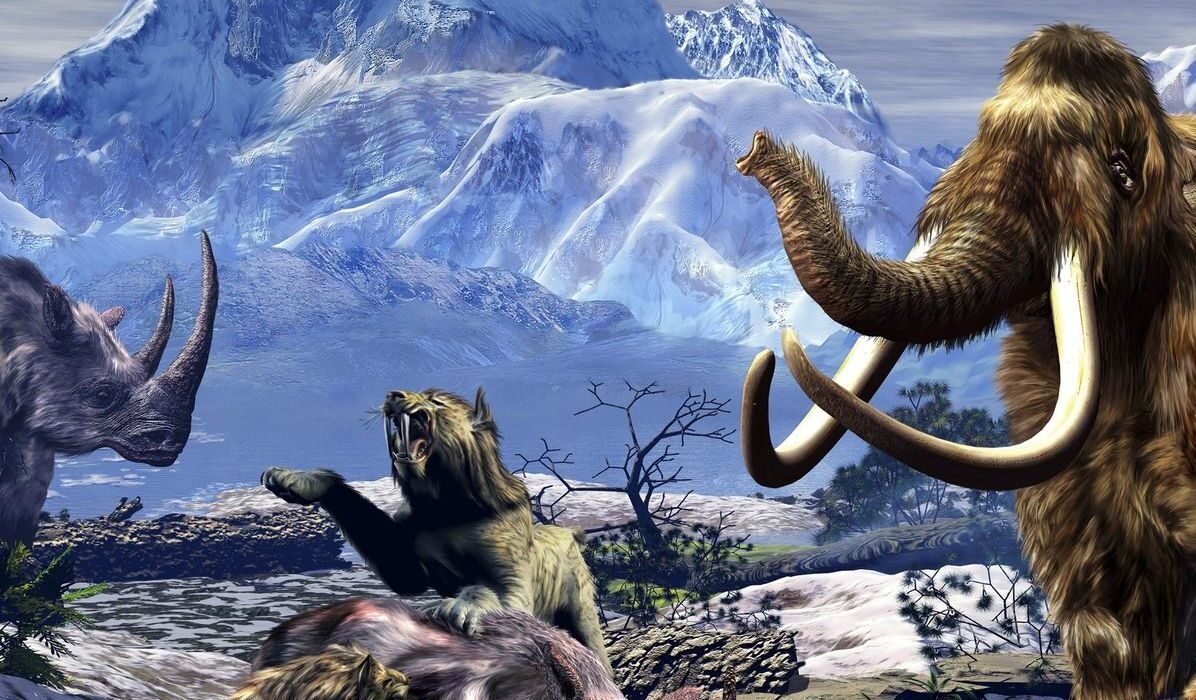
Perhaps the most emotionally charged part of the deep past is the story of our own origins. Humans are late arrivals in Earth’s history, yet our lineage is deeply rooted in ancient evolutionary processes.
The path from early vertebrates to mammals to primates to humans is not a straight line. It is a branching, tangled history filled with experimentation and extinction. Many hominin species existed before modern humans, each adapted to its own environment, each carrying a different version of what it meant to be human.
The fossil record of human evolution is richer than that of many other lineages, yet it is still incomplete. Key transitions remain poorly understood. How and why our ancestors developed large brains, complex language, and symbolic thought are questions that continue to inspire debate.
Understanding human origins forces us to confront uncomfortable truths. We are not the inevitable outcome of evolution. We are one possibility among many. Our existence depends on a long chain of contingent events, any one of which could have unfolded differently.
Why the Deep Past Still Resists Us
Despite powerful tools, advanced technology, and centuries of research, the deep past remains stubbornly elusive. This is not because scientists lack skill or dedication, but because of the nature of the problem itself.
Time erases evidence. Geological processes recycle the crust. Biological materials decay. What survives does so unevenly and often by chance. Every discovery raises new questions, revealing how much remains unknown.
There is also a deeper challenge. The deep past operates under conditions unlike those of the present. Early Earth environments have no modern equivalents. Ancient ecosystems functioned according to rules shaped by different atmospheres, climates, and life forms. Interpreting them requires imagination disciplined by evidence, a delicate balance that is hard to maintain.
Living With an Incomplete Story
The deep past will never be fully known. There will always be gaps, ambiguities, and unanswered questions. This can be frustrating, but it is also part of what makes the study of deep time meaningful.
Science is not a collection of final answers. It is a process of refining understanding, of replacing simpler stories with more accurate ones. The deep past teaches us humility. It reminds us that knowledge is provisional and that certainty is rare.
At the same time, it offers a profound sense of connection. To study the deep past is to recognize that we are part of a story far larger than ourselves. The atoms in our bodies were forged in ancient stars. The traits we carry were shaped by environments long vanished. The ground beneath us holds memories older than any human idea.
The deep past is difficult to understand because it is vast, fragmented, and silent. Yet we continue to study it because it answers the most fundamental question we can ask: how did this world, and we within it, come to be? In struggling to understand the deep past, we are not just uncovering ancient history. We are learning how to see ourselves as part of the long, unfinished story of Earth.