Life on Earth is resilient beyond imagination, yet it is also fragile in ways that defy comfort. Across the planet’s deep history, existence has not unfolded as a smooth upward climb from simple cells to complex beings. Instead, it has been repeatedly interrupted by moments of devastation so vast that they reshaped the entire biosphere. These events, known as mass extinctions, erased enormous portions of life in relatively short spans of geological time. They reset evolution’s trajectory, silenced once-dominant species, and opened ecological space for new forms of life to emerge.
Some mass extinctions are tied to dramatic causes we can point to with reasonable confidence, such as massive volcanic eruptions or asteroid impacts. Yet even in these cases, many details remain unresolved. Other extinction events are far more mysterious, with competing explanations and lingering uncertainties that challenge our understanding of Earth’s systems. These are not just stories of death. They are stories about the limits of scientific knowledge, about how difficult it is to reconstruct ancient catastrophes from fragmentary clues embedded in stone, and about how life responds to extreme stress in ways we still struggle to predict.
To explore the greatest extinctions science still cannot fully explain is to confront a sobering truth: the Earth has endured crises far more severe than anything humanity has yet witnessed, and we do not fully understand why they unfolded as they did.
What a Mass Extinction Truly Means
In everyday language, extinction refers to the disappearance of a species. In geology and paleontology, a mass extinction has a far more specific and devastating meaning. It is not merely the loss of many species, but the collapse of ecosystems on a global scale. During a mass extinction, a significant percentage of Earth’s species vanish in a geologically brief interval, often less than a few million years, sometimes far less.
These events are not evenly spaced nor predictable. They strike irregularly, sometimes after tens of millions of years of relative stability. The fossil record shows that at least five major mass extinctions have occurred over the past 540 million years, the period during which complex life became abundant. Each one transformed the planet in profound ways.
What makes these extinctions so haunting is that they represent moments when life itself nearly failed. Photosynthetic systems collapsed, food webs disintegrated, and once-thriving worlds became barren. Yet from these ashes, life always returned, altered and often radically different from what came before.
The Ordovician–Silurian Extinction and the Frozen World Paradox
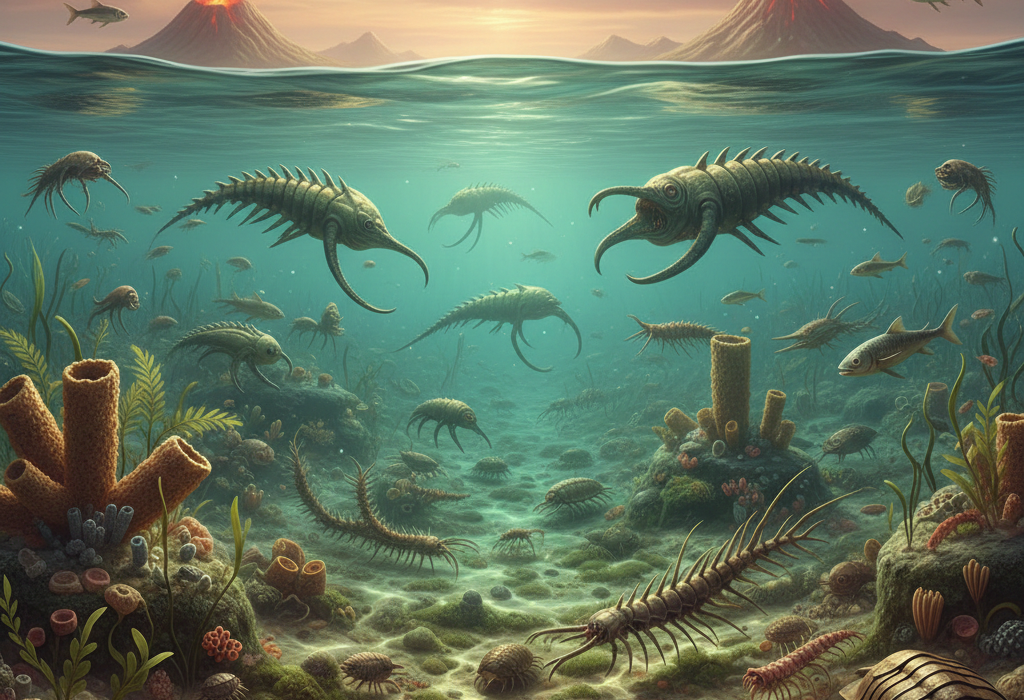
The first of the so-called “Big Five” mass extinctions occurred around 444 million years ago, during the transition from the Ordovician to the Silurian period. At this time, life was almost entirely marine. The oceans teemed with trilobites, brachiopods, early corals, and other creatures that built complex ecosystems beneath shallow seas.
Then, suddenly in geological terms, life suffered a catastrophic blow. Around 85 percent of marine species disappeared. Entire communities vanished, leaving behind a fossil record marked by abrupt absences.
The leading hypothesis for this extinction involves a dramatic global cooling event. Evidence suggests that large ice sheets formed over what is now the southern supercontinent Gondwana. Sea levels fell as water became locked in ice, draining shallow marine habitats that hosted much of Earth’s biodiversity.
Yet this explanation raises troubling questions. Why did Earth suddenly plunge into an ice age during a period generally considered warm? Some scientists propose that changes in atmospheric carbon dioxide levels triggered the cooling, possibly driven by enhanced weathering of newly uplifted landmasses. Others suggest that biological innovations, such as the spread of early land plants, may have altered the carbon cycle.
Even more puzzling is the extinction’s two-phase nature. Fossil evidence indicates that life was hit twice, once during the cooling and again during the subsequent warming when ice melted and oceans returned. This suggests a climate whiplash scenario that ecosystems could not withstand. How such rapid and extreme climate oscillations occurred remains an open question.
The Late Devonian Extinction and the Slow Collapse of Life
Unlike other mass extinctions marked by sudden catastrophe, the Late Devonian extinction unfolded as a prolonged crisis spanning tens of millions of years, roughly between 375 and 360 million years ago. This drawn-out decline makes it one of the most enigmatic extinction events in Earth’s history.
The Devonian period is often called the “Age of Fishes,” a time when vertebrates diversified explosively in the oceans. Reef systems flourished, and the first forests began to spread across land. It was a world of innovation and abundance.
Then, slowly and unevenly, life began to unravel. Reef ecosystems collapsed almost entirely. Many groups of fish disappeared. Marine biodiversity dwindled in pulses rather than a single blow.
One leading explanation involves widespread ocean anoxia, a condition in which oxygen levels drop so low that most complex life cannot survive. Black shale deposits from this time suggest that large portions of the oceans became oxygen-starved. But why this happened is still debated.
Some scientists point to the rise of land plants as an indirect cause. As plants colonized land, their roots broke down rocks, increasing the flow of nutrients like phosphorus into the oceans. This may have triggered massive algal blooms, which consumed oxygen as they decayed, suffocating marine life.
Others propose that repeated volcanic events or even multiple asteroid impacts contributed to environmental stress. There is also evidence for climate cooling, which may have further destabilized ecosystems.
The Late Devonian extinction resists simple explanation because it appears to have multiple overlapping causes acting over long periods. It challenges the idea that mass extinctions must be sudden and dramatic, reminding us that slow, relentless change can be just as deadly as sudden catastrophe.
The Permian–Triassic Extinction and the Great Dying
No extinction event looms larger or darker than the Permian–Triassic extinction, which occurred around 252 million years ago. Known ominously as the Great Dying, it represents the most severe biological crisis in Earth’s history. Up to 96 percent of marine species and around 70 percent of terrestrial vertebrate species disappeared.
Forests vanished. Insects suffered massive losses. Reef systems collapsed and did not recover for millions of years. For a time, the Earth may have been dominated by microbial life, with complex ecosystems reduced to shadows of their former selves.
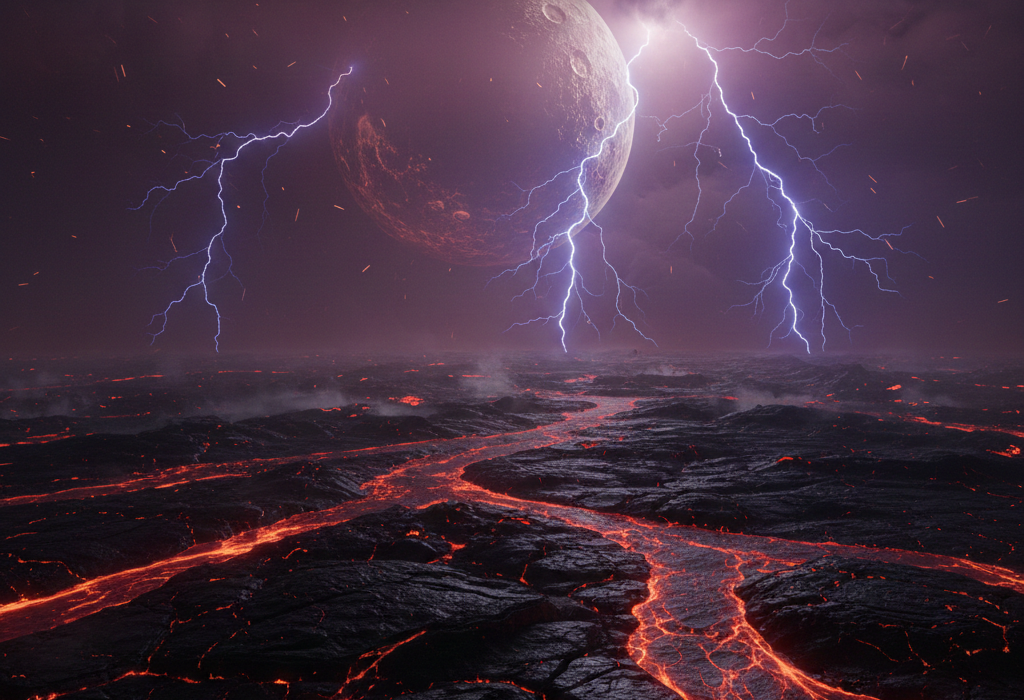
The most widely accepted cause of this extinction is massive volcanic activity in what is now Siberia. The Siberian Traps eruptions released enormous volumes of lava over hundreds of thousands of years, along with vast quantities of carbon dioxide, methane, and other gases.
These emissions likely drove extreme global warming, acidified the oceans, and disrupted the carbon cycle. Some models suggest that temperatures rose so high that large areas of land became lethally hot for vertebrates.
Yet even this dramatic explanation does not fully account for the extinction’s severity. Why did life collapse so completely? Why did recovery take so long? Some evidence points to the release of methane from seafloor hydrates, amplifying warming. Other clues suggest that hydrogen sulfide-producing bacteria may have thrived in oxygen-poor oceans, poisoning marine and possibly even terrestrial environments.
The Great Dying remains a reminder that Earth’s systems can reach tipping points where feedback loops spiral out of control. It is a case study in planetary-scale catastrophe, and despite decades of research, its full sequence of events remains elusive.
The Triassic–Jurassic Extinction and the Birth of the Dinosaurs’ World
Around 201 million years ago, another major extinction reshaped life on Earth, clearing the ecological stage for the rise of dinosaurs. The Triassic–Jurassic extinction eliminated many reptile groups, amphibians, and marine species, fundamentally altering ecosystems on land and sea.
This extinction coincides with the breakup of the supercontinent Pangaea and the eruption of vast volcanic provinces associated with the opening of the Atlantic Ocean. These eruptions released large amounts of carbon dioxide, leading to rapid climate change and ocean acidification.
However, the details remain murky. Some fossil records suggest a sudden extinction, while others indicate a more gradual decline. There is also debate about whether multiple pulses of volcanic activity were involved.
What makes this extinction particularly intriguing is its role in shaping the future of life. Dinosaurs, previously minor players, emerged as dominant terrestrial animals in its aftermath. This raises a profound question: was the extinction selective in ways we do not fully understand? Did certain traits confer survival advantages in a rapidly changing world?
Understanding why some groups survived while others vanished remains one of the central challenges in studying mass extinctions.
The Cretaceous–Paleogene Extinction Beyond the Asteroid
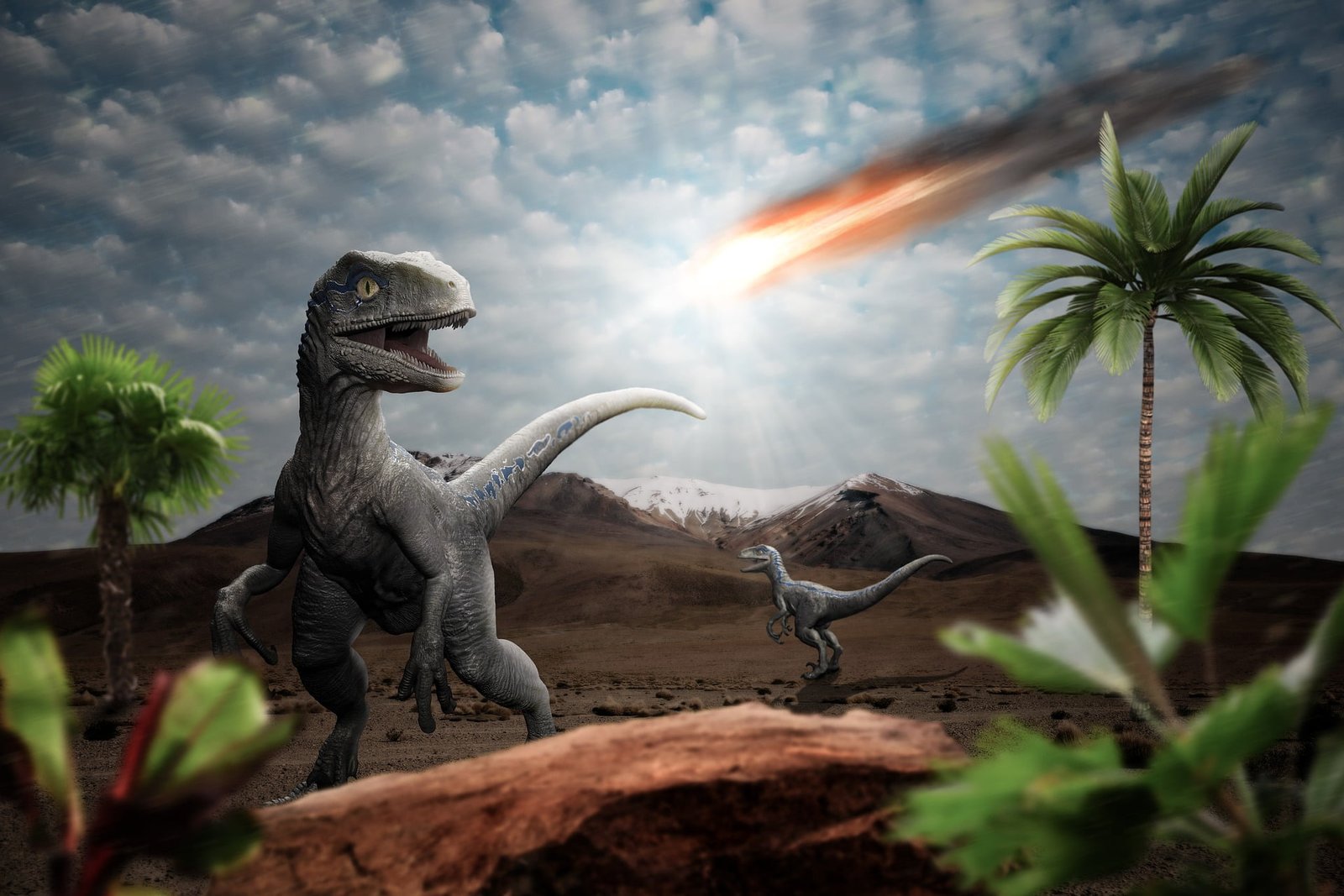
The extinction that ended the age of dinosaurs around 66 million years ago is the most famous, largely because of its dramatic cause: a massive asteroid impact near what is now the Yucatán Peninsula. The evidence for this impact is overwhelming, from a global layer of iridium-rich sediment to the enormous Chicxulub crater.
Yet even this event, often presented as a solved mystery, contains unresolved questions. Not all species died at once. Some groups declined gradually before the impact, suggesting that ecosystems were already under stress.
Massive volcanic eruptions in India, known as the Deccan Traps, occurred around the same time. These eruptions released vast amounts of gases that could have altered climate and ocean chemistry. The extent to which volcanism contributed to the extinction, either independently or by amplifying the impact’s effects, remains debated.
There is also uncertainty about the mechanisms of death. Was it global darkness from impact-generated dust that shut down photosynthesis? Acid rain? Wildfires? A rapid cooling followed by intense warming? The answer is likely a complex combination of all these factors.
The Cretaceous–Paleogene extinction illustrates that even when a primary cause is known, the pathways by which life collapses can be intricate and multifaceted.
Lesser-Known Extinctions That Defy Simple Narratives
Beyond the Big Five, the fossil record contains evidence of other extinction events that do not fit neatly into established categories. Some were regional rather than global. Others affected specific environments more severely than others.
These events challenge scientists because they often lack clear triggers. In some cases, extinction appears to occur without obvious climate change, volcanism, or impact evidence. This raises the possibility that internal ecosystem dynamics, such as the collapse of keystone species or runaway feedback loops, may play a larger role than previously thought.
Such extinctions remind us that life is interconnected in ways that can make systems vulnerable to cascading failures. Once certain thresholds are crossed, recovery may become impossible, even without an obvious external catastrophe.
Why Mass Extinctions Are So Hard to Explain
Reconstructing ancient extinctions is like solving a crime with most of the evidence destroyed. Fossils are rare, unevenly distributed, and biased toward certain environments and organisms. Geological records can be incomplete or altered by later processes.
Time itself is another challenge. What appears sudden in the fossil record may have unfolded over hundreds of thousands of years, while what seems gradual may represent rapid events blurred by low resolution.
Moreover, Earth’s systems are deeply interconnected. Climate, ocean chemistry, biology, and geology influence one another in complex feedback loops. Untangling cause and effect in such a system is extraordinarily difficult.
Mass extinctions often involve multiple stressors acting together. A volcanic eruption may alter climate, which changes ocean circulation, which affects oxygen levels, which in turn impacts ecosystems. Isolating a single cause may oversimplify a far more complex reality.
The Emotional Weight of Deep-Time Catastrophe
Studying mass extinctions is not just an academic exercise. It carries emotional weight. These events represent moments when life’s long experiment nearly failed, when the planet teetered on the edge of biological collapse.
There is something profoundly unsettling about realizing that Earth has come so close to becoming nearly lifeless, not once but multiple times. It forces us to confront the contingency of our own existence. Mammals, including humans, owe their rise in part to ancient catastrophes that wiped out competitors.
At the same time, there is a strange comfort in life’s persistence. Despite unimaginable losses, life always found a way back. New ecosystems emerged, often more complex than before.
What Ancient Extinctions Teach Us About the Present
Modern scientists often look to past extinctions for insight into today’s biodiversity crisis. While no past event is a perfect analog for human-driven change, the fossil record reveals how sensitive life can be to rapid environmental shifts.
Ancient extinctions show that recovery takes immense time, often millions of years. They demonstrate that biodiversity loss is not easily reversed and that ecosystem collapse can have long-lasting consequences.
Perhaps most importantly, they reveal that Earth’s systems can change abruptly once certain thresholds are crossed. This understanding adds urgency to the study of current environmental trends, even as it humbles us with the realization that nature’s responses are not always predictable.
The Unfinished Story of Earth’s Great Extinctions
The greatest extinctions science still cannot fully explain are not failures of knowledge but frontiers of discovery. They remind us that Earth is a dynamic, evolving system whose history is written in stone, chemistry, and fossilized bone.
Each unanswered question is an invitation to deeper understanding. As new technologies emerge and new evidence is uncovered, our picture of these ancient catastrophes will continue to sharpen. Yet it is unlikely that all mysteries will ever be solved.
In the end, mass extinctions are part of Earth’s story, chapters written in loss and renewal. They are warnings etched into deep time, telling us that life is neither guaranteed nor indestructible. To study them is to listen to the planet’s memory, to learn from its most painful moments, and to carry that knowledge forward into an uncertain future.