Long before humans learned to speak, to dream, or to wonder about their own origins, Earth was already ancient and alive with stories. For more than four billion years, life rose, spread, struggled, transformed, and sometimes vanished entirely, only to rise again in new and unexpected forms. The history of life before humans is not a straight march toward progress but a dramatic saga of experimentation, resilience, catastrophe, and renewal. It is a story written in stone, preserved in fossils, and whispered by the chemistry of our own cells.
To understand the rise and fall of life before humans appeared is to understand that humanity is not the center of Earth’s story, but one of its most recent chapters. Long before us, the planet belonged to microbes, forests, monsters of the sea, and giants that shook the ground with every step. Their triumphs and extinctions shaped the world we inherited.
The Birth of a Living Planet
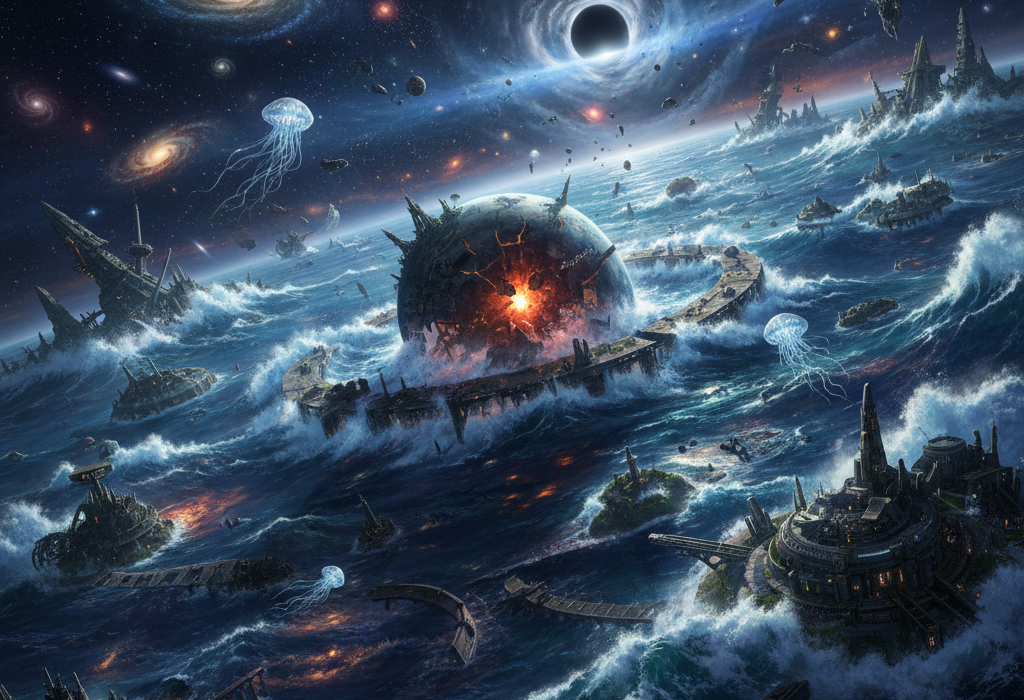
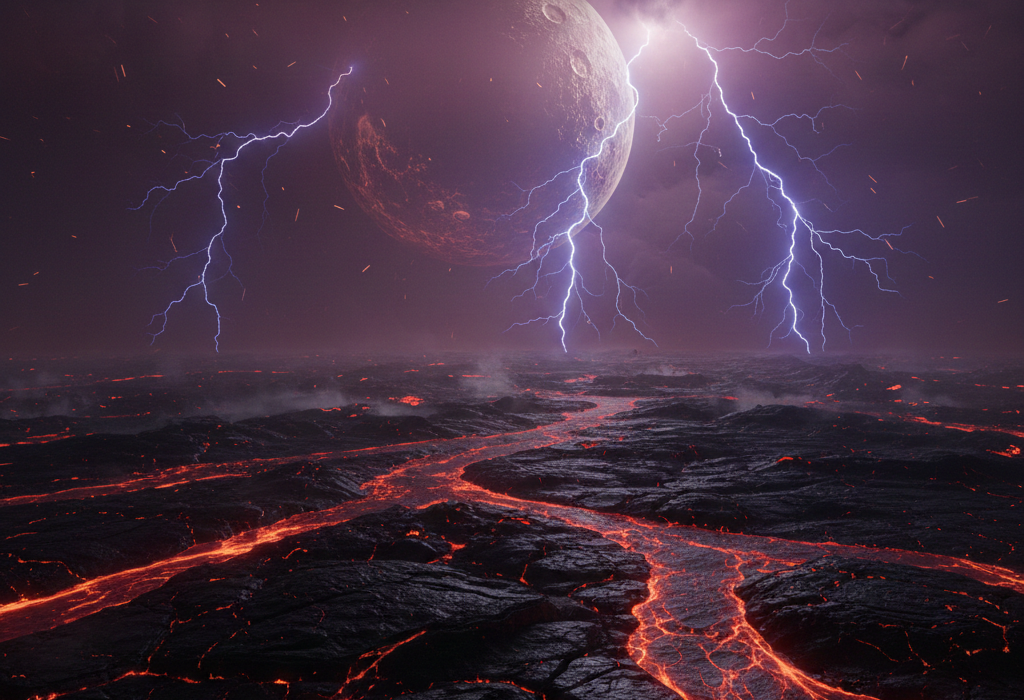
Earth formed about 4.5 billion years ago, a violent place of molten rock, relentless impacts, and poisonous gases. There were no oceans at first, no breathable air, and certainly no life. Yet within a few hundred million years, conditions began to change. The planet cooled. Water condensed and filled vast basins. The atmosphere evolved. Somewhere in this restless, hostile environment, life emerged.
The earliest life forms were microscopic, simple, and astonishingly resilient. These first organisms, likely similar to modern bacteria and archaea, lived more than 3.5 billion years ago. They had no eyes, no limbs, no nervous systems. Yet they possessed something far more powerful: the ability to reproduce and evolve. They fed on chemical energy from their surroundings, thriving in environments that would kill most modern organisms.
These early microbes transformed the planet in ways that would echo through deep time. Some evolved the ability to harness sunlight through photosynthesis, releasing oxygen as a byproduct. At first, oxygen was toxic to many existing life forms. But over millions of years, it accumulated in the atmosphere, triggering the Great Oxygenation Event. This was one of the most profound turning points in Earth’s history. Oxygen reshaped the planet’s chemistry and paved the way for complex life, even as it caused the extinction of countless anaerobic organisms.
The Slow Rise of Complexity
For nearly two billion years, life remained microscopic. The oceans teemed with single-celled organisms, forming invisible ecosystems that cycled nutrients and energy. Though simple in appearance, these organisms were not primitive in ability. They evolved sophisticated biochemical machinery and survived dramatic environmental changes.
The leap from single-celled to multicellular life was one of the greatest revolutions in biology. Cells began to cooperate, specialize, and communicate. This transition allowed organisms to grow larger, live longer, and interact with their environment in new ways. Multicellular life did not appear suddenly but emerged gradually, through countless evolutionary experiments.
By around 600 million years ago, the fossil record reveals the presence of larger, more complex organisms. Soft-bodied creatures drifted and crawled across the seafloor. Though many of these early forms have no modern counterparts, they represent life’s first steps toward visible diversity. The world was still alien, but the stage was being set for a dramatic explosion of life.
The Cambrian Explosion and the Dawn of Animals
Around 540 million years ago, life experienced a burst of innovation known as the Cambrian Explosion. In a relatively short geological time, most major animal groups appeared. Bodies became more complex. Hard shells, jointed limbs, eyes, and nervous systems evolved. Predators and prey entered into an evolutionary arms race, driving rapid adaptation.
The oceans filled with strange and wonderful creatures. Trilobites scuttled across the seafloor, their segmented bodies protected by armored exoskeletons. Anomalocaris, a fearsome predator, ruled the waters with grasping appendages and compound eyes. Early vertebrates appeared, laying the foundation for all animals with backbones, including humans.
This explosion did not happen in isolation. It was shaped by rising oxygen levels, changing ocean chemistry, and genetic innovations that allowed for greater complexity. The Cambrian period revealed a fundamental truth about life: when conditions allow, evolution can be astonishingly creative.
Life Conquers the Land
For most of Earth’s history, life was confined to the oceans. The move onto land was another monumental step, filled with risk and opportunity. Early plants were among the first pioneers. Simple, moss-like organisms colonized damp shorelines, gradually adapting to survive outside water. Over time, plants developed roots, vascular tissues, and leaves, transforming barren landscapes into green worlds.
As plants spread, they altered the atmosphere and climate. They stabilized soils, reduced erosion, and created new habitats. Insects followed, evolving alongside plants in complex ecological relationships. Eventually, vertebrates ventured onto land. Early amphibians emerged from fish-like ancestors, breathing air and moving between water and land.
Reptiles later perfected life on land by evolving amniotic eggs, which protected embryos from drying out. This innovation freed them from the need to reproduce in water, allowing them to dominate terrestrial environments. The land, once empty and hostile, became a stage for towering forests, crawling arthropods, and sprawling ecosystems.
The Age of Giants
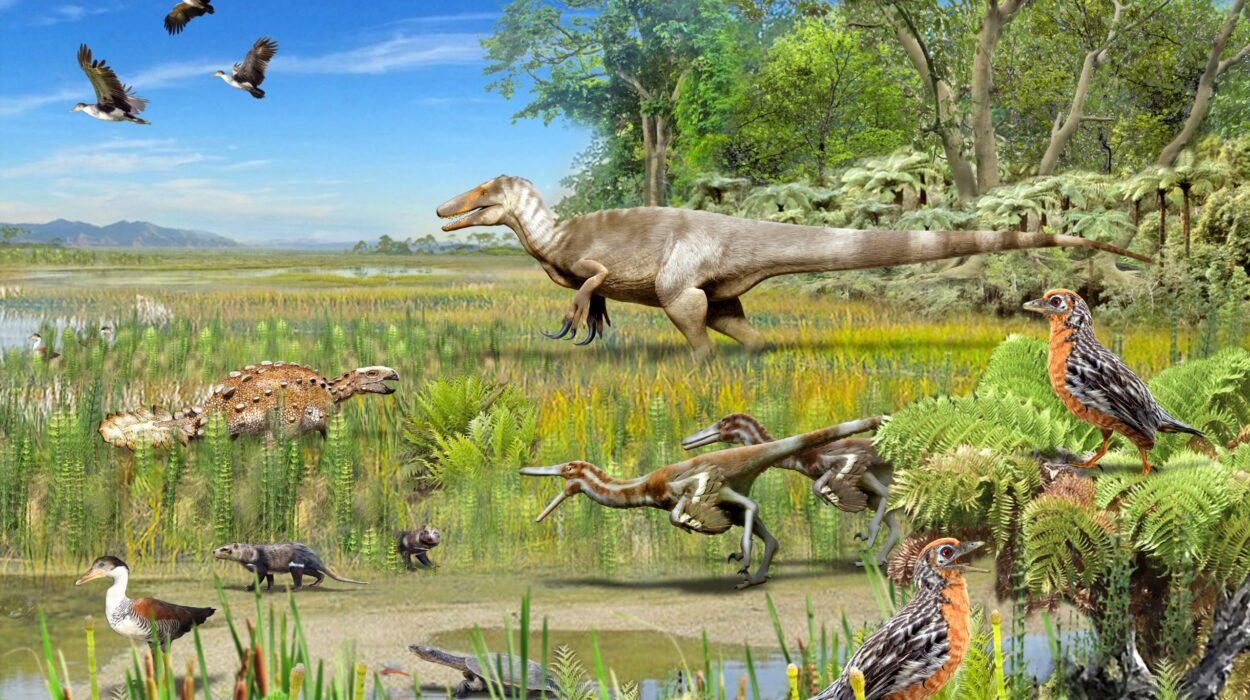
The Mesozoic Era, often called the Age of Dinosaurs, is one of the most iconic chapters in the history of life before humans. For over 160 million years, dinosaurs dominated the land, evolving into an astonishing variety of forms. Some were small and feathered, others enormous beyond imagination. They walked on two legs or four, grazed peacefully or hunted with terrifying efficiency.
Dinosaurs were not evolutionary failures waiting for extinction. They were successful, adaptable, and diverse. Birds, which are living dinosaurs, are a testament to their resilience. Alongside dinosaurs lived early mammals, small and often nocturnal, surviving in the shadows of larger reptiles. The skies were ruled by pterosaurs, while the oceans were patrolled by massive marine reptiles.
This era was not static. Continents drifted apart, climates shifted, and ecosystems changed. Dinosaurs adapted again and again, filling ecological roles across the globe. Life was abundant, dynamic, and powerful.
Catastrophe and the Power of Extinction
Extinction is not an exception in the history of life; it is a rule. Over 99 percent of all species that ever lived are now extinct. These losses were not always gradual. Earth has experienced several mass extinctions, events in which a large percentage of life disappeared in a geological instant.
The most famous occurred about 66 million years ago, when a massive asteroid struck Earth. The impact unleashed unimaginable destruction. Fires raged across continents. Dust and debris blocked sunlight, collapsing food chains. Non-avian dinosaurs vanished, along with many marine species and plants.
Yet extinction, as devastating as it is, also reshapes life. The disappearance of dominant species opens ecological space for others to rise. In the wake of the dinosaur extinction, mammals began to diversify rapidly. What had once been small, marginal creatures evolved into forms of every size and lifestyle, from whales to bats to primates.
Earlier mass extinctions were even more severe. The Permian extinction wiped out most marine species and reshaped life entirely. Each catastrophe reset the evolutionary stage, demonstrating both the fragility and persistence of life.
The Rise of Mammals and a Changing World
After the dinosaurs fell, the Cenozoic Era began, marked by the rise of mammals and birds. Forests spread across the planet. Grasslands later emerged, changing ecosystems and driving new evolutionary paths. Mammals evolved complex brains, social behaviors, and diverse diets.
Primates appeared in this world of trees and shifting climates. They developed grasping hands, forward-facing eyes, and large brains. These traits were not destined to produce humans, but they set the stage for a lineage that would eventually question its own origins.
Life continued to rise and fall. Ice ages advanced and retreated. Sea levels changed. Species migrated, adapted, or vanished. The planet remained alive with motion and change, indifferent to any single form’s survival.
Life’s Fragile Triumph
The history of life before humans is not a story of inevitable progress toward intelligence. It is a story of chance, constraint, and creativity. If the asteroid had missed Earth, dinosaurs might still rule. If oxygen had not accumulated, complex life might never have emerged. Every step depended on countless factors aligning just enough for survival.
This history reveals a profound truth: life is both incredibly resilient and deeply vulnerable. It can endure extremes of heat, cold, pressure, and radiation. Yet it can also be undone by sudden change. The same forces that drive evolution can also bring collapse.
The World We Inherited
Humans arrived very late in this story, shaped by the deep past we barely perceive. The air we breathe, the minerals beneath our feet, and the diversity of life around us are products of billions of years of biological rise and fall. We carry ancient genes forged in oceans long vanished. Our bones reflect structures refined in fish and reptiles. Our existence is inseparable from the lives that came before.
To study life before humans is to gain perspective. It humbles us, reminding us that dominance is temporary and survival is never guaranteed. It also inspires awe. Against all odds, life persisted, diversified, and created worlds within worlds.
The rise and fall of life before humans is not merely prehistory. It is the foundation of our present and a warning for our future. Earth has survived unimaginable upheaval, but the path forward is never assured. Life will continue, with or without us. The question is whether we will learn from the deep history written beneath our feet, or become another chapter in the long, unfinished story of a living planet.