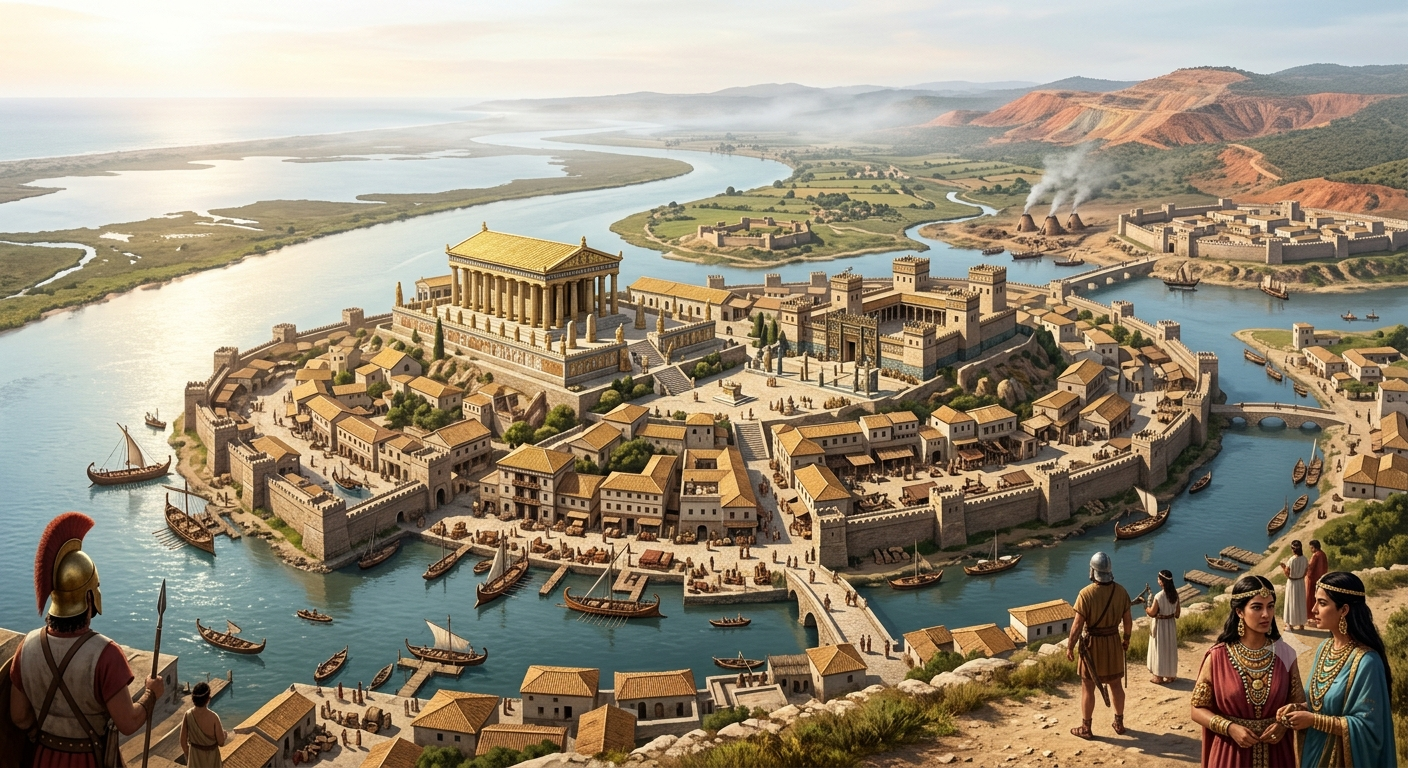
For centuries, stories of lost civilizations have fascinated humanity. Tales of vanished kingdoms, buried cities, and forgotten peoples stir something deep within us. They remind us that history is far larger than the fragments that survive in books and ruins. Among these mysteries, few are as intriguing as Tartessos, an ancient civilization that flourished in what is now southern Spain and then seemingly disappeared from history.
To ancient writers, Tartessos was a land of immense wealth. It was a place where silver flowed in abundance, where merchants crossed distant seas, and where powerful rulers controlled prosperous territories. Greek sailors spoke of it with admiration. Historians described it as one of the richest lands known to the ancient Mediterranean world.
Yet despite its fame in antiquity, Tartessos later vanished so completely that many scholars wondered whether it had ever existed at all.
The mystery became even more fascinating when some researchers began noticing possible connections between Tartessos and the legendary Atlantis described by the Greek philosopher Plato. Both were located near the western edge of the known world. Both were associated with wealth, maritime power, and eventual destruction. Both occupied regions near the Atlantic Ocean beyond the familiar Mediterranean heartlands.
Although Tartessos and Atlantis are not the same thing in mainstream historical scholarship, the similarities have sparked intense debate for decades. Today, archaeologists continue uncovering evidence that reveals more about this remarkable civilization and its possible role in one of history’s greatest legends.
A Civilization Hidden at the Edge of the Ancient World
To understand Tartessos, it is important to imagine the ancient Mediterranean world more than 2,500 years ago.
The civilizations of Egypt, Mesopotamia, Greece, and Phoenicia dominated historical records. Most surviving written accounts came from these regions. Areas farther west remained mysterious to many ancient peoples.
The Iberian Peninsula, which includes modern Spain and Portugal, lay at the edge of the known world from the perspective of Mediterranean civilizations. Beyond its western shores stretched the vast Atlantic Ocean, a place often associated with mystery and uncertainty.
Yet this distant region possessed something highly valuable.
It was extraordinarily rich in metals.
The lands of southern Iberia contained abundant deposits of silver, copper, gold, and tin. These resources attracted traders from across the Mediterranean and transformed the region into an important center of commerce.
It was here, near the mouth of the Guadalquivir River in southwestern Spain, that Tartessos emerged.
The Ancient Sources That Mention Tartessos
One of the reasons Tartessos remains so fascinating is that knowledge of it originally came from ancient texts rather than archaeology.
Greek writers referred to Tartessos as both a place and a people. Ancient accounts described a wealthy kingdom situated in the far west, beyond much of the world familiar to Greek sailors.
These writers portrayed Tartessos as prosperous, peaceful, and rich in natural resources. The civilization appeared to maintain extensive trade relationships and possessed considerable economic power.
One of the most famous stories concerns a king named Arganthonios.
According to Greek traditions, Arganthonios ruled Tartessos for an extraordinarily long time and welcomed Greek traders to his kingdom. Whether these accounts are fully historical remains uncertain, but they reveal how highly Tartessos was regarded in the ancient imagination.
To the Greeks, Tartessos represented opportunity, wealth, and distant horizons.
It was a place where fortunes could be made.
The Phoenician Connection
The rise of Tartessos cannot be understood without examining the influence of the Phoenicians.
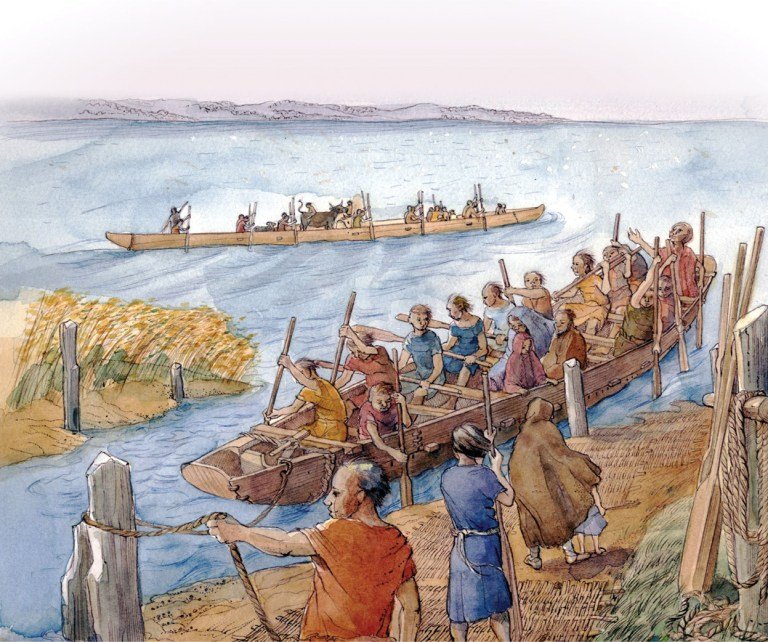
The Phoenicians were among the greatest sailors and traders of the ancient world. Originating from cities along the eastern Mediterranean coast, they established trading networks that stretched across vast distances.
As Phoenician merchants searched for metals, they reached the Iberian Peninsula.
There they encountered local communities already engaged in mining and trade.
Over time, interaction between indigenous Iberian groups and Phoenician settlers created a dynamic cultural environment. Ideas, technologies, artistic styles, and commercial practices moved between these societies.
Many scholars believe Tartessos emerged from this process of cultural exchange.
Rather than appearing suddenly, the civilization likely developed gradually as local communities became increasingly connected to Mediterranean trade networks.
The result was a prosperous society that blended indigenous traditions with influences from the eastern Mediterranean.
The Wealth of Tartessos
Ancient descriptions of Tartessos consistently emphasize wealth.
This reputation was not accidental.
Southern Iberia possessed some of the richest metal deposits in Europe. Silver in particular played a crucial role in the region’s prosperity.
Mining operations generated enormous economic value. Metal exports connected Tartessos to distant markets across the Mediterranean.
Archaeological discoveries support these accounts.
Excavations have revealed evidence of sophisticated metalworking traditions. Artifacts made from gold, silver, bronze, and other materials demonstrate remarkable craftsmanship.
The civilization’s wealth attracted traders from many regions.
Ships arrived carrying goods, ideas, and people.
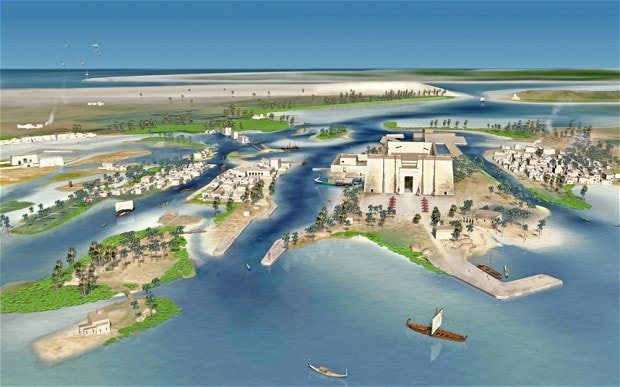
Ports became centers of exchange where cultures interacted and commerce flourished.
In many ways, Tartessos served as a bridge between Atlantic Europe and the Mediterranean world.
Life in the Tartessian World
Although many mysteries remain, archaeology provides glimpses into daily life in Tartessos.
The people lived in settlements that ranged from villages to larger urban centers. Agriculture formed an important foundation of the economy. Farmers cultivated crops and raised livestock in fertile river valleys.
Trade supplemented local production.
Imported goods discovered at archaeological sites reveal connections extending across great distances.
Artistic traditions flourished as well.
Decorated pottery, jewelry, religious objects, and metal artifacts demonstrate a society that valued craftsmanship and symbolism.
Evidence suggests the existence of social hierarchies and political organization. Elite individuals likely controlled access to resources and trade networks.
Religious practices also played a central role.
Temples and ceremonial spaces indicate that spiritual life was deeply woven into Tartessian society.
Although much remains unknown, the picture that emerges is one of a complex and sophisticated civilization rather than a collection of isolated communities.
Archaeological Discoveries Change the Story
For many years, Tartessos occupied an uncertain position in history.
Ancient texts described it, but physical evidence remained limited.
Some scholars questioned whether the civilization truly existed.
That situation changed during the twentieth and twenty-first centuries.
Archaeological excavations began uncovering increasingly compelling evidence.
Artifacts, settlements, sanctuaries, and monumental structures revealed that a significant civilization had indeed flourished in southwestern Iberia during the first millennium BCE.
One of the most important discoveries was the Treasure of El Carambolo.
Found near Seville in 1958, the treasure included spectacular gold objects crafted with remarkable skill.
The discovery transformed perceptions of Tartessos.
It demonstrated that wealthy and sophisticated societies had existed in the region.
The treasure remains one of the most famous archaeological finds associated with Tartessian culture.
The Treasure of El Carambolo
The discovery occurred unexpectedly.
Construction workers uncovered a collection of gold artifacts buried beneath the ground.
The objects included ornate necklaces, plaques, and ceremonial pieces fashioned from high-quality gold.
Their craftsmanship astonished researchers.
Initially, debate surrounded the treasure’s origins.
Some scholars viewed it as evidence of Tartessian culture, while others emphasized Phoenician influence.
Today, researchers generally recognize that the treasure reflects the complex interactions between local populations and Phoenician settlers.
Regardless of its precise cultural identity, the discovery demonstrated the extraordinary wealth present in southern Iberia during the period associated with Tartessos.
The treasure became a symbol of the civilization’s prosperity and sophistication.
The Mysterious Tartessian Language
One of the most intriguing aspects of Tartessos involves language.
Archaeologists have discovered inscriptions written in what is often called the Tartessian script.
These inscriptions represent some of the oldest written records in western Europe.
However, understanding them remains challenging.
Researchers can identify the symbols used in the script, but the language itself is not fully deciphered.
As a result, the inscriptions continue to puzzle scholars.
Every undeciphered language holds the promise of new discoveries.
If researchers eventually unlock the secrets of Tartessian writing, they may gain unprecedented insight into the civilization’s politics, religion, economy, and culture.
For now, the inscriptions remain tantalizing fragments of a lost voice from the ancient past.
The Sudden Disappearance of Tartessos
Perhaps the greatest mystery surrounding Tartessos is its disappearance.
By the sixth century BCE, references to Tartessos become increasingly rare.
The civilization seems to fade from historical records.
Why?
No single answer has achieved universal acceptance.
Several possibilities have been proposed.
Economic changes may have disrupted trade networks.
Political conflicts may have weakened regional power structures.
Competition from emerging Mediterranean powers may have altered commercial routes.
Environmental changes may have affected settlements and agriculture.
Some researchers suggest that multiple factors combined to produce a gradual decline.
Unlike Atlantis, Tartessos does not appear to have vanished in a single catastrophic event.
Instead, its disappearance may have been a complex historical process unfolding over generations.
Yet the mystery remains unresolved.
The Atlantis Connection Begins
The link between Tartessos and Atlantis emerged because of geography.
Plato described Atlantis as existing beyond the Pillars of Hercules, generally identified as the Strait of Gibraltar.
Tartessos occupied a region remarkably close to this location.
For researchers searching for historical inspirations behind the Atlantis story, the similarity was difficult to ignore.
Both civilizations were associated with wealth.
Both occupied the far western edge of the known world.
Both were connected to maritime trade.
Both eventually disappeared from historical prominence.
These parallels encouraged some scholars to explore whether memories of Tartessos might have contributed to the Atlantis legend.
Similarities Between Tartessos and Atlantis
The comparison becomes even more interesting when additional details are considered.
Plato described Atlantis as rich in metals.
Tartessos was famous throughout antiquity for its mineral wealth.
Atlantis supposedly controlled important maritime routes.
Tartessos occupied a strategic location connecting the Atlantic and Mediterranean worlds.
Atlantis represented a powerful western civilization unfamiliar to many Greeks.
Tartessos fit this description remarkably well.
Furthermore, both stories involve disappearance.
Atlantis sank beneath the sea, while Tartessos faded mysteriously from history.
These similarities do not prove a connection.
However, they help explain why the idea remains attractive to researchers and enthusiasts alike.
The Marshlands of Doñana
One of the most discussed Atlantis theories involves the marshlands of southern Spain.
The region around Doñana National Park contains extensive wetlands, ancient river channels, and buried landscapes.
Satellite imagery and archaeological surveys have revealed traces of ancient human activity.
Some researchers have proposed that catastrophic floods or tsunamis may have affected settlements in this region during antiquity.
Because the area lies near territories associated with Tartessos, speculation has grown regarding possible connections to Atlantis.
Most archaeologists remain cautious.
While evidence supports the existence of ancient settlements, definitive proof linking the region to Atlantis has not emerged.
Nevertheless, the area continues attracting scientific interest.
Tsunamis and Ancient Catastrophes
The southwestern coast of Spain has experienced powerful natural disasters throughout history.
Earthquakes and tsunamis generated in the Atlantic Ocean have occasionally struck the region.
One famous example occurred in 1755 when the Lisbon earthquake produced devastating tsunami waves across parts of Portugal, Spain, and North Africa.
Modern researchers recognize that similar events could have occurred in antiquity.
Some scientists have investigated whether ancient tsunamis affected settlements associated with Tartessos.
If such disasters occurred, they may have contributed to local memories of destruction and inundation.
Over centuries, these memories could potentially evolve into legends about lost lands swallowed by the sea.
Although this remains speculative, it offers one possible pathway linking historical events to mythological traditions.
New Discoveries in the Twenty-First Century
Recent archaeological work has transformed understanding of Tartessos.
Excavations continue revealing impressive structures, artifacts, and ceremonial complexes.
One particularly important site is Casas del Turuñuelo.
Researchers uncovered a monumental building containing evidence of elaborate rituals and remarkable preservation.
The discoveries demonstrate that Tartessian society possessed greater complexity than previously recognized.
They also challenge older assumptions that the civilization was poorly developed or peripheral.
Instead, evidence increasingly suggests a sophisticated culture capable of large-scale construction, artistic achievement, and organized social structures.
Each excavation adds another piece to the puzzle.
The Human Story Behind the Mystery
It is easy to focus on gold treasures, lost cities, and archaeological debates.
Yet Tartessos was ultimately a civilization composed of real people.
Farmers worked fertile fields.
Merchants negotiated trade agreements.
Craftsmen shaped metal into beautiful objects.
Sailors crossed dangerous seas.
Children grew up hearing stories about gods, heroes, and distant lands.
These individuals experienced hopes, fears, ambitions, and challenges just as people do today.
The disappearance of their civilization reminds us how fragile human achievements can be.
Great societies rise, flourish, transform, and sometimes vanish.
Yet traces remain.
Artifacts, ruins, and written records allow later generations to reconnect with lives long past.
Why Tartessos Matters Today
The importance of Tartessos extends beyond the Atlantis debate.
The civilization occupies a crucial position in European history.
It demonstrates that sophisticated societies flourished in western Europe earlier than many people once believed.
Its trade networks reveal the interconnected nature of the ancient world.
Its artistic achievements highlight the creativity of cultures often overlooked in traditional historical narratives.
Its archaeological discoveries continue reshaping scholarly understanding of Mediterranean history.
Even if Atlantis had never entered the conversation, Tartessos would remain an important subject of study.
The civilization deserves attention for its own accomplishments and contributions.
The Search Continues
Despite decades of research, many questions remain unanswered.
Where exactly was the political center of Tartessos?
How extensive was its territory?
What language did its people speak?
Why did the civilization decline?
How closely was it connected to neighboring cultures?
Archaeologists continue searching for answers.
New technologies, including remote sensing, geophysical surveys, and advanced excavation techniques, provide tools unimaginable to earlier generations.
Future discoveries may dramatically expand current knowledge.
Some of the most important evidence may still lie hidden beneath fields, river sediments, or ancient ruins waiting to be uncovered.
Separating Myth from History
The relationship between Tartessos and Atlantis illustrates the challenge of interpreting ancient traditions.
Myths often contain echoes of real places and events.
At the same time, stories evolve.
They become embellished, reshaped, and adapted over centuries.
Most historians do not believe Tartessos was Atlantis in the literal sense described by Plato.
The timelines do not align perfectly, and significant differences exist between the two accounts.
However, many scholars acknowledge that knowledge of western Iberia, including regions associated with Tartessos, may have influenced Greek perceptions of distant lands.
In this way, Tartessos may have contributed indirectly to the development of Atlantis traditions.
The connection is not one of identity but of inspiration.
Conclusion
Tartessos stands among the most fascinating civilizations of the ancient world. Once celebrated for its wealth, trade, and resources, it flourished in southern Spain at the crossroads of Mediterranean and Atlantic cultures. Ancient writers described it as a prosperous kingdom, while modern archaeology continues revealing evidence of its sophistication and influence.
Its mysterious disappearance has only deepened its appeal. Unlike many civilizations whose histories are well documented, Tartessos exists partly in shadow. Fragments of texts, undeciphered inscriptions, buried treasures, and scattered ruins offer glimpses into a world that has not yet fully revealed its secrets.
The association with Atlantis has added another layer of intrigue. While no evidence proves that Tartessos was Plato’s lost island, the similarities in geography, wealth, maritime importance, and eventual disappearance make the comparison difficult to ignore. For some researchers, Tartessos may represent one of the historical realities that helped inspire later legends of vanished civilizations.
Whether linked to Atlantis or not, Tartessos remains remarkable in its own right. It was a real civilization that prospered at the edge of the ancient world, connected distant cultures through trade, and left behind mysteries that continue to challenge historians and archaeologists today.
As excavations continue and new discoveries emerge, the story of Tartessos is still being written. Somewhere beneath the landscapes of southern Spain, hidden beneath centuries of soil and memory, pieces of this lost civilization may yet wait to be found. And with each new discovery, we move a little closer to understanding one of Europe’s greatest ancient enigmas.