Few ancient objects have captured the human imagination as powerfully as the Ark of the Covenant. For more than two thousand years, people have searched for it, written books about it, debated its fate, and woven countless legends around its mysterious disappearance. It has inspired archaeologists, explorers, historians, theologians, filmmakers, and treasure hunters alike.
According to the Hebrew Bible, the Ark was no ordinary religious artifact. It was the holiest object in ancient Israel, a sacred chest built according to divine instructions and believed to symbolize God’s presence among His people. It accompanied the Israelites during their journey through the wilderness, stood at the center of important religious ceremonies, and eventually rested inside the innermost chamber of Solomon’s Temple in Jerusalem.
Then, almost as suddenly as it entered history, it disappeared.
No ancient historian clearly recorded what happened to it. No confirmed archaeological discovery has revealed its location. No museum displays it. No scientific examination has verified its survival.
Yet the mystery has never faded.
Some believe the Ark was destroyed when the Babylonians conquered Jerusalem in 586 BCE. Others think faithful priests secretly hid it beneath the Temple Mount before the invasion. Some traditions claim it rests in caves beneath Jerusalem, while others point to distant locations in Egypt or Jordan.
Perhaps the most famous tradition, however, comes from Ethiopia. According to the Ethiopian Orthodox Tewahedo Church, the Ark of the Covenant has been preserved for centuries inside a guarded chapel in the ancient city of Aksum. Only one guardian is permitted to see it, and outsiders are never allowed to examine the sacred object.
Is the Ark truly hidden in Ethiopia?
Was it lost forever more than 2,500 years ago?
Or does its ultimate fate remain one of history’s greatest unsolved mysteries?
The answer depends on whether we examine ancient texts, religious traditions, archaeology, or historical evidence. Each offers part of the story, but none provides a final answer.
What Was the Ark of the Covenant?
According to the Hebrew Bible, the Ark of the Covenant was a sacred chest constructed during the time of Moses after the Israelites left Egypt.
The Book of Exodus describes it in remarkable detail.
It was made from acacia wood and covered inside and outside with pure gold.
Four gold rings were attached to its corners.
Wooden poles covered with gold passed through the rings so the Ark could be carried without being touched directly.
Its lid, known as the Mercy Seat, featured two golden cherubim facing one another with wings stretched upward.
The Ark represented far more than artistic craftsmanship.
It symbolized God’s covenant with Israel and occupied the most sacred position in Israelite worship.
What Was Inside the Ark?
The Hebrew Bible mentions several sacred objects associated with the Ark.
According to Exodus, the stone tablets containing the Ten Commandments were placed inside.
The New Testament Letter to the Hebrews also mentions a golden jar containing manna and Aaron’s staff that had miraculously budded.
Some biblical passages mention only the stone tablets.
Others refer to these additional sacred objects.
Scholars continue debating whether all these items were permanently kept inside the Ark or associated with it at different periods.
Regardless, the Ark represented God’s covenant and His relationship with the people of Israel.
Why Was the Ark So Important?
The Ark was the spiritual center of ancient Israel.
It was not worshipped as a god.
Instead, it symbolized God’s presence among His people.
During Israel’s journey through the wilderness, the Ark accompanied the community.
Priests carried it during important ceremonies.
It stood at the center of the Tabernacle, Israel’s portable sanctuary before the construction of the Temple.
Later, King Solomon placed the Ark inside the Holy of Holies, the innermost chamber of the First Temple in Jerusalem.
Only the High Priest entered this sacred room, and only once each year on the Day of Atonement.
The Ark therefore occupied the holiest place in Israelite religion.
The Ark in Biblical History
The Hebrew Bible records numerous dramatic events involving the Ark.
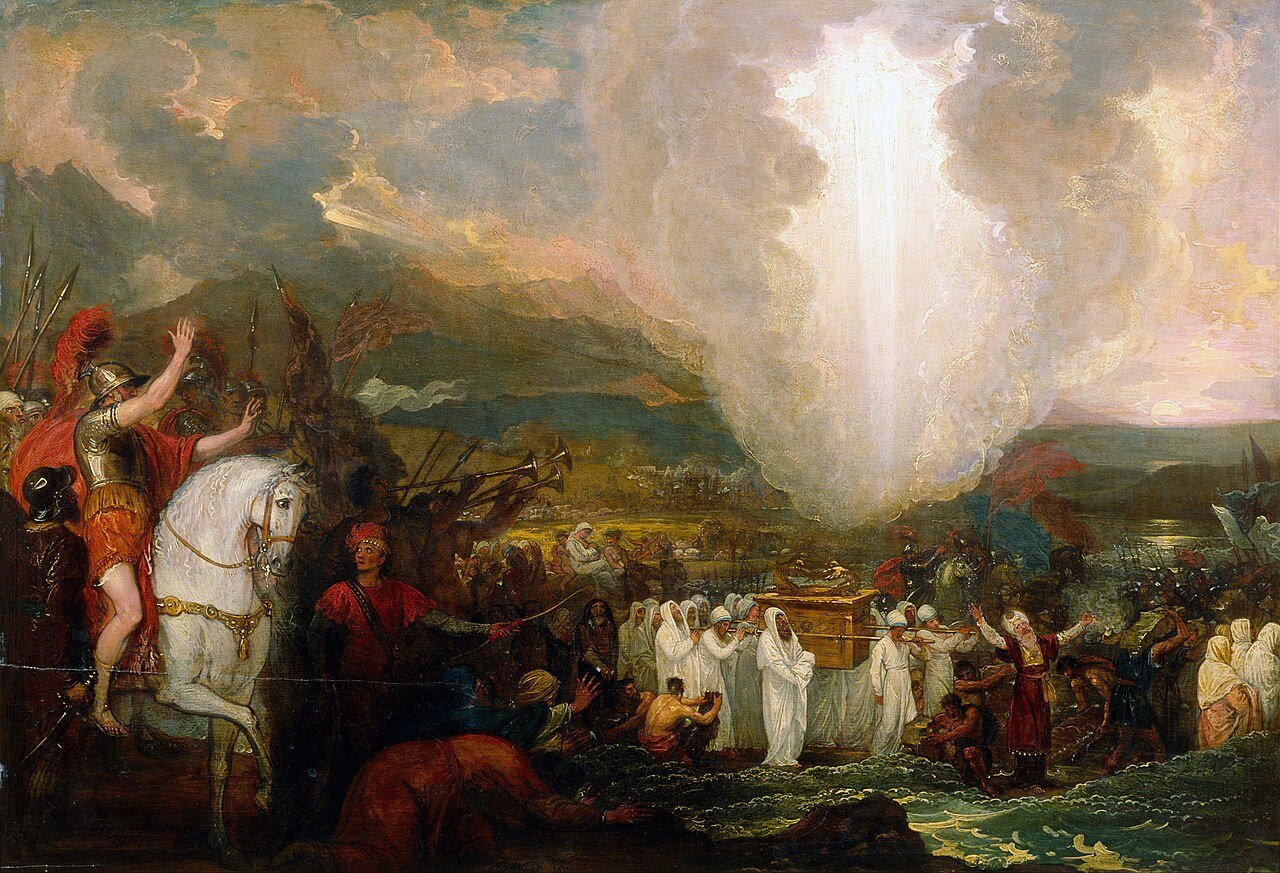
When the Israelites crossed the Jordan River, priests carrying the Ark stepped into the water.
According to the biblical account, the river stopped flowing, allowing the people to cross.
The Ark also played a role during the conquest of Jericho.
The Israelites marched around the city while carrying the Ark.
After several days, the city’s walls collapsed according to the biblical narrative.
Later, during conflicts with the Philistines, the Ark was captured.
Ancient texts describe unusual disasters striking Philistine cities until the Ark was returned.
Whether interpreted literally, symbolically, or theologically, these stories demonstrate the Ark’s extraordinary importance in biblical tradition.
Solomon’s Temple
Around the tenth century BCE, according to biblical tradition, King Solomon constructed the First Temple in Jerusalem.
This magnificent building became Israel’s central place of worship.
The Ark was moved from the earlier Tabernacle into the Temple’s Holy of Holies.
Once placed there, it largely disappears from detailed biblical narratives.
For centuries, the Ark remained at the heart of Israel’s religious life.
Pilgrims traveled to Jerusalem.
Priests conducted sacrifices.
National ceremonies centered on the Temple.
The Ark represented God’s covenant dwelling among His people.
The Babylonian Conquest
Everything changed in 586 BCE.
The Babylonian king Nebuchadnezzar II conquered Jerusalem.
The Temple was destroyed.
Many inhabitants were taken into exile.
The biblical books describing these events carefully list numerous Temple treasures seized by the Babylonians.
Curiously, however, the Ark of the Covenant is never specifically mentioned among the captured objects.
This silence created one of history’s greatest mysteries.
What happened to the Ark before Jerusalem fell?
The Great Disappearance
After the destruction of Solomon’s Temple, the Ark effectively disappears from historical records.
When the Second Temple was later built following the Babylonian exile, ancient Jewish sources indicate that the Holy of Holies stood empty.
The Ark was no longer there.
No contemporary document clearly explains its disappearance.
From that moment onward, speculation began.
Without definitive evidence, numerous theories emerged.
Some rely upon historical reasoning.
Others depend upon religious traditions.
Still others belong more to legend than history.
Theory One: The Ark Was Destroyed
The simplest explanation is also one many historians consider plausible.
The Ark may have been destroyed during the Babylonian conquest.
Ancient warfare often involved fire, looting, and destruction.
Although valuable gold would likely have been removed first, the wooden structure itself could easily have perished.
However, the absence of any direct historical record describing its destruction leaves uncertainty.
The Babylonians documented many captured treasures.
The omission of the Ark remains intriguing.
Theory Two: Hidden Before the Invasion
Another long-standing theory proposes that priests secretly hid the Ark before Babylonian forces reached Jerusalem.
According to this idea, religious leaders anticipated the Temple’s destruction and concealed the Ark to protect it.
Possible hiding places include caves beneath Jerusalem, underground chambers near the Temple Mount, or remote wilderness locations.
Several ancient Jewish traditions describe hidden Temple treasures awaiting future discovery.
However, no archaeological evidence has confirmed these stories.
Theory Three: The Prophet Jeremiah Hid the Ark
One ancient tradition appears in the Second Book of Maccabees, a Jewish work written centuries after the Babylonian conquest.
According to this account, the prophet Jeremiah hid the Ark inside a cave on Mount Nebo before Jerusalem fell.
The location was supposedly sealed.
The text suggests the hiding place would remain unknown until God gathered His people again.
Although this tradition became influential, historians cannot verify its historical accuracy.
No archaeological discovery has confirmed the story.
Theory Four: Taken to Egypt
Another possibility suggests the Ark was transported south into Egypt.
The Hebrew Bible records that some Judeans fled to Egypt after Jerusalem’s destruction.
It is conceivable that priests or refugees carried sacred objects with them.
Some later traditions connect the Ark with Jewish communities living in Egypt.
Yet no convincing archaeological evidence supports this theory.
The Ethiopian Tradition
Perhaps the most famous claim comes from Ethiopia.
According to Ethiopian tradition, the Ark never disappeared.
Instead, it resides today inside the Church of Our Lady Mary of Zion in the ancient city of Aksum.
This belief occupies a central place in Ethiopian religious tradition.
The Ethiopian Orthodox Tewahedo Church teaches that the Ark was brought to Ethiopia long before the Babylonian destruction of Jerusalem.
According to this tradition, it has remained there ever since.
For millions of Ethiopian Christians, this belief is a matter of deep faith.
The Story of Menelik I
The Ethiopian tradition is preserved primarily in a medieval work known as the Kebra Nagast, or “The Glory of the Kings.”
According to this text, the Queen of Sheba visited King Solomon in Jerusalem.
Their union produced a son named Menelik.
As a young man, Menelik later traveled to Jerusalem to meet his father.
When returning to Ethiopia, members of Solomon’s court secretly carried the Ark with them.
In some versions, the transfer occurred with divine approval.
The Ark eventually reached Aksum, where it became Ethiopia’s greatest sacred treasure.
The Kebra Nagast was compiled many centuries after the events it describes, making it a foundational religious tradition rather than a contemporary historical source.
The Church of Our Lady Mary of Zion
The center of the Ethiopian claim is the Church of Our Lady Mary of Zion in Aksum.
According to church tradition, the Ark is kept inside a special chapel.
Only one guardian monk may enter.
He devotes his life to protecting the sacred object.
Even senior church leaders do not routinely inspect it.
Visitors, archaeologists, historians, and scientists are not permitted to examine the artifact.
As a result, no independent investigation has verified its identity.
This secrecy has fueled both fascination and skepticism.
Why Scholars Remain Cautious
Historians distinguish carefully between religious tradition and historical evidence.
The Ethiopian tradition is ancient and deeply meaningful within its religious context.
However, there is currently no archaeological or documentary evidence demonstrating that the object in Aksum is the original Ark described in the Hebrew Bible.
Because no independent examination has occurred, scholars cannot confirm or reject the claim conclusively.
The question therefore remains open from a historical perspective.
Faith and historical evidence operate according to different standards.
The Temple Mount Theory
Some researchers believe the Ark may still lie somewhere beneath Jerusalem’s Temple Mount.
This theory suggests priests concealed it within underground chambers before the Babylonian invasion.
Ancient Jewish literature occasionally refers to hidden Temple treasures.
Unfortunately, archaeological excavation beneath the Temple Mount is extraordinarily limited because the site remains one of the world’s most religiously and politically sensitive locations.
Without excavation, this theory remains impossible to verify.
The Copper Scroll Connection
Among the Dead Sea Scrolls is an unusual document called the Copper Scroll.
It lists numerous locations where treasures were supposedly hidden.
Some treasure hunters have speculated that the Ark appears among these concealed objects.
However, the Copper Scroll never explicitly mentions the Ark.
Most scholars do not consider it evidence for the Ark’s location.
Nevertheless, it continues inspiring speculation.
The Ark in Jewish Tradition
Even after its disappearance, the Ark remained deeply significant in Jewish tradition.
Ancient writings describe it as representing God’s covenant with Israel.
Rabbinic literature contains various traditions regarding its fate.
Some suggest it was hidden beneath the Temple.
Others propose it was taken away before Jerusalem fell.
None of these traditions achieved universal acceptance.
The mystery itself became part of the Ark’s enduring legacy.
The Ark in Christianity
Christianity inherited the Ark as an important biblical symbol.
Many Christians view the Ark as representing God’s covenant in the Old Testament.
Some theological interpretations see symbolic connections between the Ark and later Christian beliefs.
These interpretations belong to theology rather than archaeology.
Historically, Christianity does not possess independent evidence regarding the Ark’s ultimate fate.
Its disappearance remains as mysterious for Christian historians as for Jewish scholars.
The Ark in Islam
Although the Ark occupies a less central role in Islam than in Judaism or Christianity, it does appear in the Quran.
The Quran refers to the “Tabut,” often translated as the Ark, in connection with the prophet Talut, commonly identified with Saul.
Islamic tradition generally recognizes the Ark as an authentic sacred object associated with earlier prophets.
However, Islamic sources provide little information regarding its later history.
Archaeological Searches
For more than a century, explorers have searched for the Ark.
Some investigated Jerusalem.
Others explored caves near the Dead Sea.
Expeditions visited Ethiopia.
Several searches focused on Mount Nebo.
Despite enormous effort, no confirmed archaeological discovery has revealed the Ark.
Many sensational claims have attracted public attention over the years.
None has gained acceptance within mainstream archaeology.
Popular Culture
Few ancient artifacts have enjoyed greater popularity in books, television, and movies.
Adventure stories often portray the Ark as possessing supernatural powers capable of destroying armies or granting immense authority.
These fictional portrayals have introduced millions of people to the Ark’s story.
However, they should not be confused with historical evidence.
Entertainment often blends biblical themes with imaginative storytelling.
Why the Mystery Endures
The Ark’s disappearance fascinates people because it combines history, archaeology, religion, and mystery.
Unlike many famous ancient artifacts, its fate remains genuinely unknown.
The absence of definitive evidence allows numerous possibilities.
Historians continue investigating.
Religious communities preserve longstanding traditions.
Archaeologists remain open to future discoveries while emphasizing careful evaluation of evidence.
This balance between certainty and mystery keeps public interest alive generation after generation.
What Historians Can Say with Confidence
Although many questions remain unanswered, several conclusions are widely accepted.
The Ark described in the Hebrew Bible occupied an important place in ancient Israelite religion.
It was associated with the Tabernacle and later Solomon’s Temple.
By the time of the Second Temple, it was no longer present.
Its disappearance occurred sometime before or during the Babylonian conquest.
After that point, reliable historical evidence becomes extremely limited.
Every later theory depends partly on tradition, interpretation, or speculation.
Could the Ark Ever Be Found?
It is impossible to rule out future discoveries.
Archaeology continually surprises researchers.
Lost cities, forgotten inscriptions, royal tombs, and ancient libraries continue emerging from beneath the ground.
If convincing evidence for the Ark ever appeared, it would rank among the greatest archaeological discoveries in history.
Yet historians must also acknowledge another possibility.
The Ark may never be found because it no longer exists.
Its disappearance could simply reflect the destruction and upheaval accompanying one of antiquity’s greatest military catastrophes.
Both possibilities remain consistent with current evidence.
Conclusion
The Ark of the Covenant stands at the intersection of history, faith, and mystery. According to the Hebrew Bible, it was the holiest object in ancient Israel, symbolizing God’s covenant and presence among His people. It accompanied the Israelites through the wilderness, rested within Solomon’s Temple, and occupied the most sacred place in Israelite worship. Then, following the Babylonian conquest of Jerusalem in 586 BCE, it vanished from the historical record, leaving behind one of the greatest unanswered questions of the ancient world.
Over the centuries, many explanations have emerged. Some historians believe the Ark was destroyed during the fall of Jerusalem. Others suggest faithful priests hid it before the Babylonians arrived. Ancient traditions place it in caves near Mount Nebo, beneath the Temple Mount, or in distant lands. Among all these theories, the Ethiopian tradition remains the most famous, with the Ethiopian Orthodox Tewahedo Church maintaining that the Ark has been preserved for centuries in Aksum. Yet because the claimed artifact has never been independently examined, historians cannot verify the tradition through archaeological evidence.
The true fate of the Ark remains unknown. What survives today is not definitive proof but a collection of ancient texts, religious traditions, archaeological clues, and enduring questions. Whether the Ark was destroyed, hidden, transported, or still exists somewhere beyond our reach, its significance extends far beyond its physical form. It has inspired faith, shaped religious history, influenced art and literature, and fueled centuries of exploration.
Perhaps the greatest lesson of the Ark of the Covenant is that some of history’s most powerful stories endure not because every question has been answered, but because the search for answers continues. Until new evidence emerges, the Ark remains one of humanity’s most captivating mysteries—an object suspended between documented history, deeply held belief, and the endless curiosity that drives people to explore the past.