Few objects in human history have inspired as much fascination, admiration, controversy, and mystery as the Koh-i-Noor Diamond. For centuries, this dazzling gemstone has traveled through kingdoms and empires, passing from one ruler to another amid wars, assassinations, betrayals, invasions, and political upheaval. Its name, meaning “Mountain of Light” in Persian, perfectly captures its breathtaking brilliance. Yet behind that brilliance lies a story far darker than its sparkling surface suggests.
Unlike many famous jewels that remained in the possession of one royal family, the Koh-i-Noor has changed hands countless times. Every transfer tells a dramatic tale. Kings conquered kingdoms to obtain it. Emperors proudly displayed it as the ultimate symbol of power. Invading armies seized it as the greatest prize of victory. Some rulers lost their empires shortly after acquiring it, while others died violently or spent their final years in exile.
Over time, these repeated tragedies gave birth to one of history’s most enduring legends: the Koh-i-Noor is cursed.
According to the legend, any man who possesses the diamond will suffer terrible misfortune. Only God or a woman, the story claims, can wear it safely.
Whether the curse is real has been debated for generations. Historians point out that most powerful rulers throughout history faced wars, rebellions, and political struggles regardless of what jewels they owned. Skeptics argue that the curse is simply a story created after centuries of dramatic events. Others believe the remarkable chain of disasters surrounding the diamond cannot easily be dismissed as coincidence.
Today, the Koh-i-Noor remains one of the world’s most famous gemstones. It sits among the British Crown Jewels, admired by millions of visitors each year. Yet it also remains the subject of international ownership disputes, historical debate, and cultural significance that stretches across several modern nations.
The true story of the Koh-i-Noor is not only about a precious diamond. It is a story of ambition, conquest, empire, human desire, and the extraordinary journey of a single gemstone through six centuries of world history.
What Is the Koh-i-Noor Diamond?
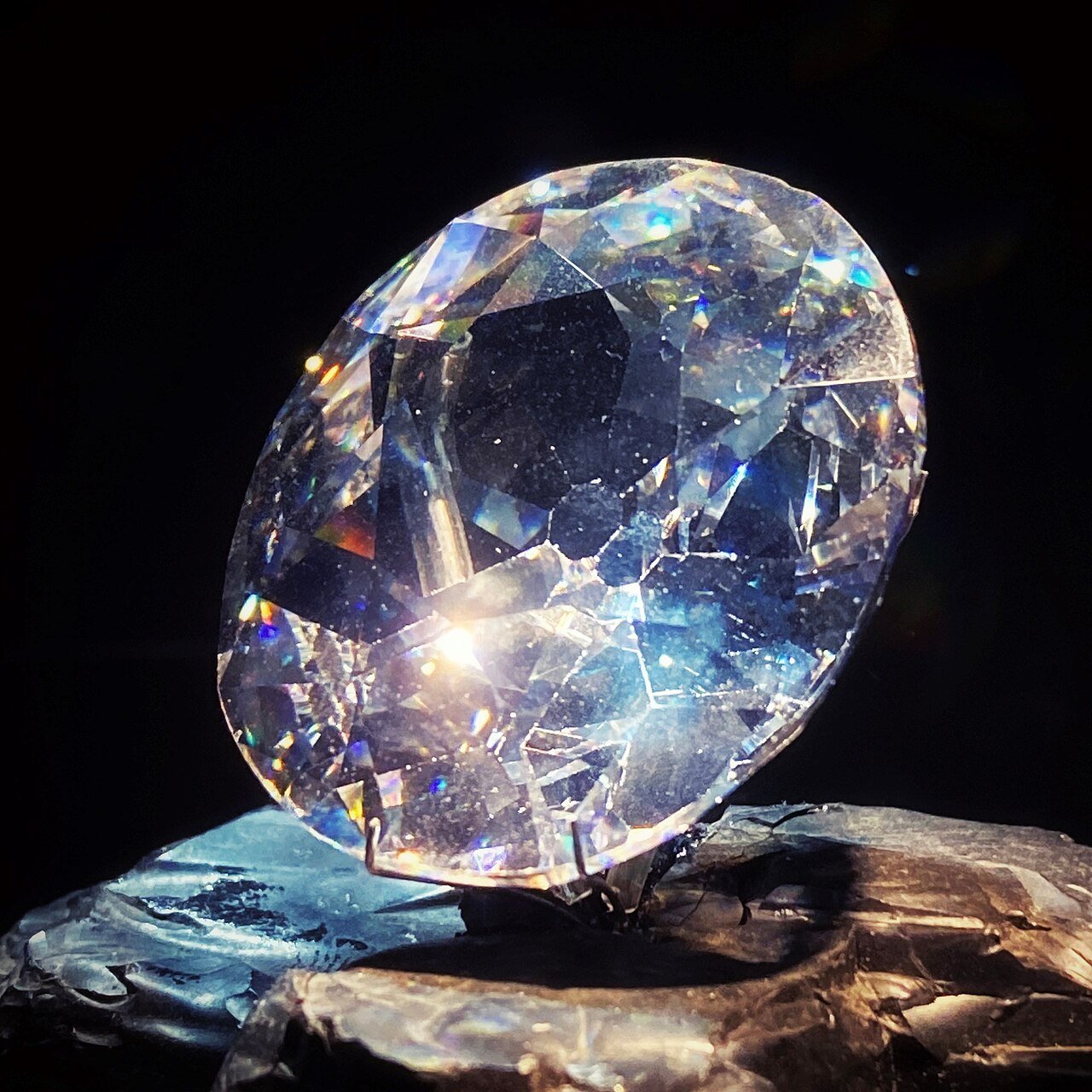
The Koh-i-Noor is one of the most famous diamonds ever discovered.
Today, it weighs approximately 105.6 carats after being recut in the nineteenth century.
Although smaller than several modern diamonds, its historical importance far exceeds its size.
Unlike many gemstones valued primarily for beauty, the Koh-i-Noor became a political symbol.
Possessing the diamond represented supreme royal authority.
Kings did not simply own it as jewelry.
They displayed it as proof of victory, legitimacy, and imperial power.
Its extraordinary reputation developed over hundreds of years, making it one of history’s most recognizable treasures.
What Does “Koh-i-Noor” Mean?
The name “Koh-i-Noor” comes from Persian.
It means “Mountain of Light.”
The diamond received this famous name in 1739 after the Persian ruler Nader Shah reportedly saw the gem and exclaimed that it resembled a mountain illuminated by brilliant light.
Although the diamond existed long before then, this dramatic name became permanently associated with it.
Today, few people know its earlier names, but almost everyone recognizes Koh-i-Noor.
Where Was the Diamond Found?
The exact origin of the Koh-i-Noor remains uncertain.
Most historians believe it was mined in southern India, likely from the famous Kollur Mine near the Krishna River in present-day Andhra Pradesh.
During the medieval period, India produced many of the world’s most celebrated diamonds.
Long before diamond mines were discovered in Africa or elsewhere, Indian mines supplied nearly all known diamonds.
Because historical records from the diamond’s earliest centuries are incomplete, scholars cannot identify the precise year or circumstances of its discovery.
Nevertheless, nearly all evidence points to India as its birthplace.
The Earliest Historical Records
The early history of the Koh-i-Noor is surrounded by uncertainty.
Many popular stories claim the diamond is over 5,000 years old or that it appears in ancient Sanskrit texts.
However, historians caution that there is no reliable evidence supporting these claims.
The first reasonably credible references emerge during the medieval period.
Some scholars believe the diamond belonged to the rulers of the Kakatiya dynasty in southern India during the thirteenth century.
Others argue that the earliest ownership cannot be established with certainty.
While legends connect the gem to ancient heroes and mythical kings, modern historical research relies only on evidence supported by documents and archaeology.
The Delhi Sultanate and Early Conquests
According to many historical accounts, the diamond entered northern India after military campaigns by the Delhi Sultanate in the early fourteenth century.
As kingdoms were conquered, enormous quantities of treasure changed hands.
Precious gems often became trophies of victory.
Unfortunately, surviving records from this period remain incomplete.
The Koh-i-Noor’s exact path through successive rulers cannot always be reconstructed with confidence.
Even so, its association with political conquest began early.
From that point onward, the diamond rarely changed owners peacefully.
The Mughal Empire
The Koh-i-Noor became especially famous during the Mughal Empire.
The Mughals ruled much of the Indian subcontinent between the sixteenth and eighteenth centuries.
Their courts ranked among the wealthiest in the world.
Gold, silver, pearls, emeralds, rubies, and diamonds decorated magnificent palaces.
The Koh-i-Noor became one of the empire’s greatest treasures.
The diamond likely entered Mughal possession after Babur’s victory at the First Battle of Panipat in 1526, although historians continue debating some details of this transition.
Babur himself described receiving an extraordinary diamond in his memoirs, though scholars differ on whether it was certainly the Koh-i-Noor.
By the reign of Shah Jahan, the builder of the Taj Mahal, the diamond formed part of the magnificent Peacock Throne.
This dazzling royal throne contained countless precious gems and symbolized Mughal imperial power.
The Peacock Throne
The Peacock Throne represented one of history’s greatest works of royal craftsmanship.
Constructed for Emperor Shah Jahan, it featured gold, pearls, emeralds, rubies, and many extraordinary diamonds.
The Koh-i-Noor occupied a prominent position among these treasures.
Visitors from around the world described the throne with amazement.
Its brilliance reflected the immense wealth of the Mughal Empire.
Yet this symbol of imperial glory would not remain secure forever.
Foreign invasion soon transformed its fate.
Nader Shah’s Invasion
In 1739, Persian ruler Nader Shah invaded northern India.
His forces defeated the Mughal army and entered Delhi.
The invasion proved devastating.
The city suffered widespread violence and looting.
Among the greatest prizes seized by Nader Shah were the Peacock Throne and the Koh-i-Noor Diamond.
According to popular tradition, the diamond had been hidden inside the Mughal emperor’s turban.
Nader Shah reportedly discovered this through a ceremonial exchange of turbans, a custom symbolizing friendship.
When he finally saw the gemstone, he is said to have exclaimed, “Koh-i-Noor!”
Whether every detail of this famous story is historically accurate remains uncertain, but the name endured.
The Beginning of the Curse Legend
Many people trace the curse legend to the violent history surrounding the diamond.
Nader Shah acquired one of history’s greatest treasures.
Yet only a few years later, in 1747, he was assassinated by members of his own army.
His enormous empire quickly began collapsing.
To believers in the curse, this marked another example of the diamond bringing disaster.
Historians, however, note that powerful conquerors often faced assassination regardless of the jewels they possessed.
Ahmad Shah Durrani
Following Nader Shah’s death, one of his generals, Ahmad Shah Durrani, took possession of the Koh-i-Noor.
He founded the Durrani Empire in present-day Afghanistan.
The diamond remained within his family for several generations.
Political struggles, succession disputes, and regional conflicts repeatedly threatened the dynasty.
Again, supporters of the curse pointed to these events as evidence.
Yet historians recognize that dynastic instability was common throughout the eighteenth century.
Shah Shuja Durrani
The Koh-i-Noor eventually passed to Shah Shuja Durrani.
His reign proved turbulent.
He lost power and spent years in exile.
Seeking assistance, he fled to the Sikh ruler Maharaja Ranjit Singh.
In exchange for protection and support, Shah Shuja surrendered the Koh-i-Noor.
This transfer once again linked the diamond with political downfall.
Maharaja Ranjit Singh
Maharaja Ranjit Singh established the powerful Sikh Empire in Punjab.
He regarded the Koh-i-Noor as one of his greatest possessions.
Unlike many previous owners, Ranjit Singh ruled successfully for many years.
However, after his death in 1839, the Sikh Empire entered a period of severe instability.
Internal conflicts weakened the kingdom.
Succession disputes divided the royal family.
Eventually, war with the British East India Company changed everything.
Supporters of the curse viewed these events as another chapter in the diamond’s tragic history.
British Annexation of Punjab
Following the Second Anglo-Sikh War, the British East India Company annexed Punjab in 1849.
As part of the Treaty of Lahore, the young Maharaja Duleep Singh formally surrendered the Koh-i-Noor to the British.
The diamond became property of Queen Victoria.
Its transfer remains deeply controversial.
Many historians describe it as a product of imperial conquest rather than a voluntary gift.
Modern debates over ownership often begin with this moment.
The Journey to Britain
Transporting the Koh-i-Noor to Britain was itself an extraordinary event.
The diamond traveled by sea under heavy security.
Newspapers followed its journey closely.
When it finally arrived in Britain, enormous public excitement surrounded the famous gem.
Many expected it to outshine every diamond ever seen.
Yet some viewers felt disappointed.
The stone lacked the brilliant sparkle expected by Victorian audiences.
Its traditional Indian cut emphasized weight rather than maximum light reflection.
Recutting the Diamond
In 1852, Prince Albert ordered the Koh-i-Noor to be recut.
Expert craftsmen reshaped the stone using modern European techniques.
The process significantly increased its brilliance.
However, it also dramatically reduced its size.
The original diamond likely weighed around 186 old carats before centuries of recutting.
After the Victorian recut, it weighed only 105.6 metric carats.
Many historians regret this decision because much of the original historical stone disappeared forever.
Others argue that the new cut better revealed the diamond’s beauty.
Queen Victoria and the Curse
By the time Queen Victoria received the Koh-i-Noor, stories about its curse had become widely known.
According to one version of the legend, only female rulers could safely wear the diamond.
Whether this belief genuinely influenced royal decisions remains debated.
Queen Victoria wore the gem without suffering unusual personal misfortune attributable to the diamond itself.
After her reign, the Koh-i-Noor was incorporated into crowns worn by British queens rather than reigning kings.
This practice has often been connected to the curse legend, although official historical evidence supporting such a policy is limited.
The Diamond in the Crown Jewels
Today, the Koh-i-Noor forms part of the British Crown Jewels.
It has appeared in the crowns of Queen Alexandra, Queen Mary, and Queen Elizabeth The Queen Mother.
The diamond is displayed in the Jewel House at the Tower of London.
Millions of visitors view it each year.
Its extraordinary history often attracts as much attention as its physical beauty.
Is the Koh-i-Noor Really Cursed?
The idea of the Koh-i-Noor curse remains one of history’s most famous legends.
Supporters point to its long list of unfortunate owners.
Kings lost kingdoms.
Emperors faced invasion.
Rulers were assassinated.
Dynasties collapsed.
Empires disappeared.
At first glance, the pattern appears remarkable.
However, historians urge caution.
The diamond spent centuries in the possession of some of the world’s most powerful rulers.
Such individuals naturally lived during periods of intense political competition.
Wars, rebellions, betrayals, and violent successions were common features of pre-modern monarchy.
Many rulers who never possessed the Koh-i-Noor experienced similar fates.
From a historical perspective, there is no evidence that the diamond itself caused these events.
The curse remains part of folklore rather than established fact.
Why the Curse Became So Popular
Humans naturally seek patterns.
When dramatic events occur repeatedly around the same object, stories emerge.
The Koh-i-Noor changed hands almost exclusively through conquest, revolution, assassination, or political collapse.
Peaceful transfers were extremely rare.
This unusual history encouraged supernatural explanations.
Legends grew stronger with each new tragedy.
Over generations, the curse became inseparable from the diamond itself.
Modern Ownership Disputes
Perhaps the greatest controversy surrounding the Koh-i-Noor today concerns ownership.
India has repeatedly argued that the diamond should be returned.
Pakistan has also claimed ownership, pointing to its connection with the Sikh Empire and the Treaty of Lahore.
Afghanistan has cited the period during which the diamond belonged to the Durrani rulers.
Some observers suggest that multiple nations possess historical connections to the gem.
The British government maintains that the acquisition occurred legally under the terms recognized at the time.
The debate remains unresolved.
For many people, the Koh-i-Noor symbolizes broader questions about colonial history, cultural heritage, and historical justice.
Cultural Importance
The Koh-i-Noor is much more than an expensive gemstone.
For millions of people, it represents national identity, cultural memory, and historical pride.
Its journey reflects centuries of changing empires across South Asia, Central Asia, Persia, and Britain.
Artists, filmmakers, writers, historians, and museum visitors continue finding inspiration in its remarkable story.
Few objects connect so many different civilizations across such a long span of history.
Separating Legend from History
Distinguishing historical evidence from legend is essential.
Many popular books repeat stories that cannot be verified.
Claims that the diamond belonged to ancient mythological figures lack reliable historical support.
Likewise, the curse remains folklore rather than documented reality.
At the same time, the genuine history of the Koh-i-Noor is dramatic enough without exaggeration.
Its journey through conquest, diplomacy, empire, exile, and political transformation represents one of history’s most extraordinary stories.
Why the Koh-i-Noor Still Fascinates the World
More than six centuries after its earliest documented appearances, the Koh-i-Noor continues capturing imaginations around the globe.
Part of its appeal lies in its beauty.
Another part lies in its mystery.
But perhaps its greatest attraction is its extraordinary human story.
Every owner hoped the diamond would symbolize lasting power.
Yet no empire lasted forever.
The rulers changed.
The borders changed.
The kingdoms disappeared.
Only the diamond continued its journey through history.
In many ways, the Koh-i-Noor reminds us that political power is temporary, while history itself endures.
Conclusion
The Koh-i-Noor Diamond is far more than one of the world’s most famous gemstones. It is a witness to centuries of conquest, ambition, political upheaval, and imperial change. From its likely origins in the diamond mines of southern India to the royal courts of the Mughals, the Persian Empire, the Afghan Durrani dynasty, the Sikh Empire, and finally the British Crown Jewels, its journey reflects some of the most dramatic chapters in Asian and British history.
The legend of the Koh-i-Noor’s curse has endured because so many of its owners experienced violent deaths, lost their kingdoms, or saw their empires collapse. Yet careful historical analysis suggests that these tragedies were far more likely the result of the dangerous nature of absolute power than of any supernatural force. Powerful rulers throughout history often faced assassination, invasion, rebellion, and political instability, whether they possessed the diamond or not. The curse, while captivating, belongs to the realm of folklore rather than historical fact.
Even today, the Koh-i-Noor remains surrounded by debate. Questions about its rightful ownership continue to spark international discussion, while its presence in the British Crown Jewels reminds many people of the complex legacy of empire and colonialism. For others, it stands as an irreplaceable historical artifact whose story belongs to the shared history of several nations.
Ultimately, the Koh-i-Noor’s greatest significance lies not in its brilliance or its supposed curse, but in the remarkable human story it carries. Across hundreds of years, countless rulers believed that possessing this extraordinary diamond would strengthen their power and secure their legacy. Instead, history showed that no empire lasts forever. Kings rise and fall, borders change, and dynasties disappear. Yet the Koh-i-Noor continues to survive, silently reflecting the triumphs, tragedies, and ambitions of the people who once called it their greatest treasure.