History is often described as the story of humanity. It tells us where we came from, how civilizations rose and fell, how cultures evolved, and how remarkable individuals changed the world. Through ancient inscriptions, archaeological discoveries, written records, and modern scientific techniques, historians have reconstructed much of humanity’s past with astonishing detail.
Yet history is not a complete story.
Scattered across deserts, hidden beneath jungles, buried beneath oceans, or preserved in forgotten manuscripts are mysteries that continue to challenge our understanding. Entire civilizations vanished without explanation. Kings disappeared. Enormous monuments were built using methods that remain debated. Strange manuscripts resist every attempt at translation. Legendary treasures have never been found. Some mysteries survive because evidence has been lost to time, while others endure because the available evidence can be interpreted in many different ways.
These unanswered questions captivate both scientists and the public because they remind us of an important truth: despite centuries of research, humanity still knows surprisingly little about its own past.
Unlike myths or conspiracy theories, genuine historical mysteries are grounded in real evidence. Archaeologists, historians, linguists, geneticists, geologists, and forensic scientists continue investigating them using increasingly sophisticated technologies. Every excavation, DNA analysis, satellite image, and laboratory test has the potential to reshape what we know.
Some mysteries may eventually be solved. Others may remain unanswered forever.
Why History Still Holds Mysteries
Many people assume that history is fixed—that every important event has already been documented. In reality, historical knowledge is often incomplete.
Ancient records were fragile. Wars destroyed libraries. Fires consumed archives. Floods buried cities beneath layers of mud. Languages disappeared when their last speakers died. Organic materials decayed over centuries, leaving only fragments behind.
Even when evidence survives, interpreting it can be extraordinarily difficult.
A single broken inscription may have multiple possible translations. An archaeological site may preserve only part of a civilization’s story. Human remains may reveal how people lived but not why they disappeared.
Scientific advances continually improve our ability to investigate the past. Radiocarbon dating establishes ages for ancient materials. DNA sequencing reconstructs population movements. Isotope analysis reveals ancient diets and migration patterns. Ground-penetrating radar detects buried structures without excavation. Artificial intelligence assists in reconstructing damaged texts.
Yet technology cannot recover evidence that no longer exists.
Many mysteries endure simply because history has erased too much of the original record.
The Enigma of the Voynich Manuscript
Few books have inspired as much fascination as the mysterious Voynich Manuscript.
Discovered in the early twentieth century, this illustrated manuscript is written in an unknown script that has resisted every serious attempt at decipherment. Its pages contain elaborate botanical drawings, unusual astronomical diagrams, mysterious human figures, and flowing text unlike any known language.
Radiocarbon dating indicates that the parchment dates to the early fifteenth century, suggesting the manuscript is genuinely medieval rather than a modern forgery.
Over the decades, professional cryptographers, linguists, mathematicians, historians, computer scientists, and artificial intelligence researchers have examined its contents.
Some believe it records an unknown natural language encoded in an elaborate cipher.
Others propose that it represents an invented language.
Still others argue that it could be an elaborate hoax.
Statistical analyses reveal that the writing possesses patterns resembling real languages rather than random symbols. Words repeat in structured ways, suggesting meaningful organization.
Yet despite hundreds of years of study, nobody has convincingly demonstrated what the manuscript actually says.
The Voynich Manuscript remains one of history’s greatest linguistic puzzles.
The Lost Colony of Roanoke
In the late sixteenth century, English settlers established a colony on Roanoke Island in what is now North Carolina.
When the colony’s governor returned from England after a delayed voyage, he found the settlement completely abandoned.
There were no bodies.
There were no signs of violent struggle.
The only major clue was the word “CROATOAN” carved into a wooden post.
What happened to the colonists?
Historians have proposed many explanations.
Some researchers believe they integrated peacefully with nearby Indigenous communities.
Others suggest famine, disease, conflict, or migration.
Archaeological discoveries indicate that some colonists may indeed have moved elsewhere rather than disappearing suddenly.
However, no single explanation has been confirmed.
The disappearance of Roanoke remains one of the earliest enduring mysteries in North American history.
The Fate of the Indus Valley Civilization
More than four thousand years ago, one of the world’s earliest urban civilizations flourished across parts of present-day Pakistan and northwestern India.
The cities of Harappa, Mohenjo-daro, Dholavira, and many others displayed remarkable urban planning. Streets followed organized grids. Sophisticated drainage systems carried wastewater away from homes. Standardized weights indicate complex trade networks extending across great distances.
Yet around 1900 BCE, these great cities gradually declined.
Unlike many ancient civilizations, there is little evidence of widespread warfare or catastrophic destruction.
Instead, archaeologists believe multiple environmental and social factors likely contributed.
Changing river systems may have disrupted agriculture.
Climate shifts may have weakened food production.
Trade networks declined.
Populations gradually dispersed into smaller rural settlements.
One of the greatest challenges is that the Indus script remains undeciphered.
Without readable written records, historians cannot fully understand how the civilization functioned or why its urban centers disappeared.
Who Built Great Zimbabwe?
Across southern Africa stand the magnificent stone ruins of Great Zimbabwe.
Constructed between roughly the eleventh and fifteenth centuries, the city contains enormous dry-stone walls built without mortar, towering enclosures, and impressive architectural achievements.
For centuries, European colonial writers falsely claimed that local African societies could not have built such a sophisticated city.
Modern archaeology has completely rejected these racist assumptions.
Scientific evidence overwhelmingly demonstrates that Great Zimbabwe was built by ancestors of the Shona people.
The real mystery is not who built it but exactly how its political system operated, how power was organized, and why the city eventually declined.
Environmental pressures, shifts in trade routes, resource depletion, and political changes have all been proposed.
Although much has been learned, many aspects of Great Zimbabwe’s history remain uncertain.
The Identity of Jack the Ripper
Few criminal mysteries have attracted more attention than the identity of Jack the Ripper.
In 1888, a series of brutal murders terrorized London’s Whitechapel district.
The killer was never identified.
Hundreds of suspects have been proposed over more than a century.
Modern forensic methods have occasionally been applied to surviving evidence, including DNA analysis of disputed artifacts.
However, historians caution that many alleged breakthroughs rely on contaminated samples, uncertain provenance, or incomplete evidence.
Without definitive forensic material, no suspect has been universally accepted.
The mystery survives because historical evidence is simply insufficient to reach certainty.
The Princes in the Tower
In 1483, two young princes—Edward V and his brother Richard—disappeared after being confined in the Tower of London.
Neither was publicly seen again.
For centuries, historians have debated what happened.
Some believe they were murdered.
Others suggest they died of illness.
Alternative theories claim one or both escaped.
King Richard III has often been accused, but definitive evidence has never emerged.
Skeletal remains discovered beneath the Tower in the seventeenth century are widely believed to belong to the princes, but their identities have never been conclusively established through modern DNA analysis.
Their disappearance remains one of England’s greatest historical mysteries.
The Lost Tomb of Alexander the Great
Alexander the Great died in 323 BCE after creating one of history’s largest empires.
Ancient writers carefully described his elaborate funeral procession and magnificent tomb.
Yet today, nobody knows where that tomb is.
Ancient sources suggest it eventually rested in Alexandria, Egypt.
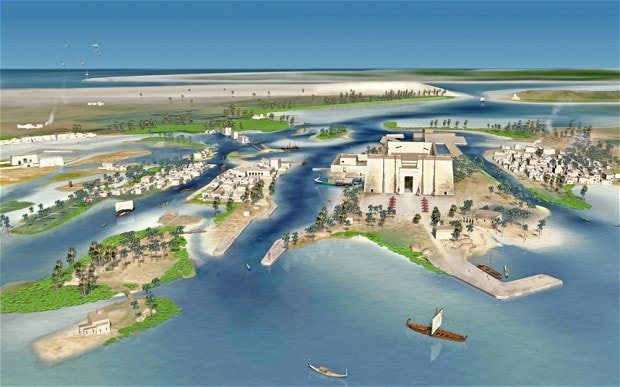
Over centuries, earthquakes, rising sea levels, urban development, and repeated rebuilding transformed the city.
Numerous archaeological expeditions have searched for Alexander’s burial place.
Many claims have generated excitement.
None has produced convincing proof.
Finding Alexander’s tomb would represent one of archaeology’s greatest discoveries.
The Disappearance of the Ninth Roman Legion
For generations, people believed that Rome’s Ninth Legion mysteriously vanished in Britain.
The idea inspired countless novels and films.
Modern scholarship paints a more cautious picture.
Evidence suggests the legion may instead have been transferred elsewhere within the Roman Empire, possibly to the eastern provinces.
The historical record becomes incomplete after a certain period, making its final fate uncertain.
Rather than a dramatic disappearance, the mystery reflects gaps in surviving Roman documentation.
This illustrates how historical mysteries often emerge not because extraordinary events occurred but because evidence has simply been lost.
The Nazca Lines
Across the deserts of Peru stretch enormous geometric figures, animal shapes, and straight lines visible primarily from above.
Created by the Nazca people between approximately 200 BCE and 600 CE, these geoglyphs remain among archaeology’s most extraordinary achievements.
How they were constructed is no longer mysterious.
Researchers have demonstrated that the lines were created by removing dark surface stones to expose lighter soil beneath.
The real question concerns their purpose.
Many archaeologists believe they played roles in ritual activities connected to water, fertility, astronomy, or ceremonial pathways.
Others emphasize their relationship with sacred landscapes.
Because no written records survive, certainty remains elusive.
The Nazca Lines continue inviting new interpretations.
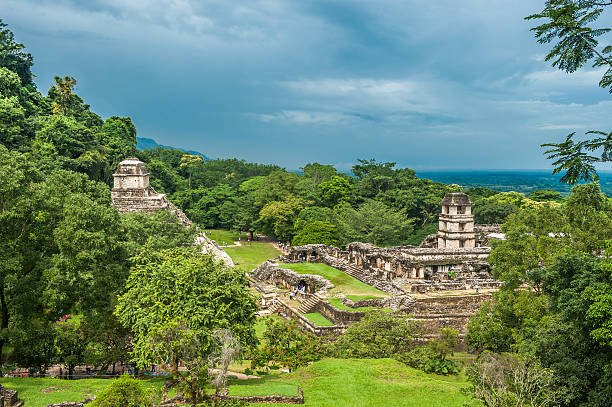
The Collapse of the Maya Cities
The ancient Maya built magnificent cities across Mesoamerica.
Towering pyramids, advanced astronomy, sophisticated mathematics, and a complex writing system characterized one of the world’s greatest civilizations.
Between the eighth and tenth centuries, many southern lowland cities experienced dramatic decline.
For years, scholars searched for a single explanation.
Modern research indicates no single cause existed.
Instead, prolonged droughts combined with warfare, political instability, environmental degradation, population pressure, and economic disruption.
Importantly, Maya civilization itself did not disappear.
Millions of Maya people continue living today, preserving languages and cultural traditions.
What declined were particular political centers rather than an entire civilization.
The Antikythera Mechanism
Recovered from a Roman-era shipwreck near the Greek island of Antikythera, a corroded bronze object puzzled researchers for decades.
Detailed imaging eventually revealed an astonishing discovery.
The mechanism was an extraordinarily sophisticated analog computer capable of predicting astronomical events.
Its gears modeled planetary movements, eclipses, and calendars with remarkable precision.
The greatest mystery is not what it did but how such advanced technology emerged.
No similarly complex mechanical device is known from the ancient world for many centuries afterward.
Was it unique?
Were others lost?
Did an entire tradition of precision engineering disappear?
Researchers continue exploring these fascinating questions.
The Purpose of Stonehenge
Stonehenge is among the world’s most famous prehistoric monuments.
Built over many centuries beginning around 3000 BCE, it consists of massive standing stones arranged in carefully planned circles.
Scientific research has answered many questions.
Archaeologists know approximately when different phases were constructed.
Geologists have traced the origins of many stones.
Excavations reveal surrounding ceremonial landscapes.
Yet the monument’s precise purpose remains debated.
Evidence indicates ceremonial importance.
Its alignment with the summer solstice sunrise and winter solstice sunset suggests astronomical significance.
Burials discovered nearby indicate funerary functions.
It may also have served political, religious, and social purposes simultaneously.
Rather than having one single function, Stonehenge likely evolved over centuries.
The Secret of the Sea Peoples
Around the late Bronze Age, powerful civilizations across the eastern Mediterranean experienced widespread collapse.
Ancient Egyptian inscriptions describe mysterious invaders called the Sea Peoples.
Who were they?
Were they migrating populations displaced by environmental crises?
Were they pirates?
Were they alliances of multiple groups?
Modern archaeology suggests the Bronze Age collapse resulted from multiple interacting causes including drought, earthquakes, economic disruption, internal political instability, warfare, and migration.
The Sea Peoples were probably one part of this much larger historical transformation.
Their exact identities remain uncertain.
The Ark of the Covenant
According to the Hebrew Bible, the Ark of the Covenant was a sacred chest containing the stone tablets associated with the Ten Commandments.
It held profound religious significance for ancient Israel.
Its ultimate fate remains unknown.
Some traditions suggest it was hidden before the Babylonian conquest of Jerusalem.
Others claim it was carried elsewhere.
Still others believe it was destroyed.
No verified archaeological evidence has identified the Ark’s location.
Its disappearance has inspired centuries of speculation, but historians distinguish carefully between religious tradition, legend, and verifiable historical evidence.
The True Location of Atlantis
Perhaps no lost civilization has captured the imagination more than Atlantis.
The philosopher Plato described Atlantis as a powerful island civilization that supposedly disappeared beneath the sea.
Most historians regard Plato’s account as a philosophical allegory rather than literal history.
Nevertheless, countless locations have been proposed, from the Mediterranean to the Atlantic Ocean.
No archaeological evidence confirms Atlantis as a real civilization matching Plato’s description.
Its enduring appeal reflects humanity’s fascination with lost worlds rather than established historical fact.
The Missing Amber Room
During the Second World War, one of Europe’s greatest artistic treasures disappeared.
The Amber Room, a magnificent chamber decorated with amber panels, gold leaf, and mirrors, vanished after being removed by German forces from Russia.
Its fate remains uncertain.
Some believe it was destroyed during wartime bombing.
Others suspect it remains hidden in underground bunkers, shipwrecks, or forgotten castles.
Despite numerous searches, no verified trace has been found.
The mystery continues to inspire treasure hunters and historians alike.
Why Some Mysteries May Never Be Solved
Every year, archaeologists make discoveries that rewrite history.
New inscriptions are translated.
Ancient genomes are sequenced.
Remote sensing reveals buried cities hidden beneath forests and deserts.
Underwater archaeology uncovers long-lost shipwrecks.
Artificial intelligence assists scholars in reconstructing damaged texts.
Despite these remarkable advances, some mysteries may never yield complete answers.
History depends on evidence.
If documents have burned, if bodies have decayed, if languages have vanished without descendants, or if archaeological sites have been destroyed by erosion or human activity, the missing information may be impossible to recover.
Historians must therefore distinguish between plausible hypotheses and demonstrated facts.
Good historical research accepts uncertainty when certainty cannot honestly be achieved.
The Role of Science in Solving Historical Mysteries
Modern science has transformed historical investigation.
Radiocarbon dating determines the ages of ancient organic materials.
Tree-ring analysis reconstructs past climates.
Ancient DNA reveals relationships among long-dead populations.
Stable isotope analysis uncovers migration patterns and diets.
Satellite imagery identifies buried settlements invisible from ground level.
Three-dimensional scanning preserves fragile artifacts in extraordinary detail.
Microscopic residue analysis identifies ancient foods, medicines, pigments, and manufacturing techniques.
These methods allow researchers to answer questions that previous generations could scarcely imagine asking.
Many mysteries once considered impossible are gradually becoming clearer.
Why Historical Mysteries Continue to Fascinate Us
People are naturally drawn to unanswered questions.
A solved puzzle satisfies curiosity.
An unsolved mystery keeps imagination alive.
Historical mysteries are especially compelling because they concern real people who once lived, loved, struggled, and dreamed. Somewhere beneath layers of soil or hidden within forgotten archives may lie the final clue that transforms speculation into certainty.
Yet perhaps their greatest value lies not in the possibility of solving them but in what they teach us about knowledge itself.
They remind us that history is not merely a collection of fixed dates and established facts. It is an ongoing investigation, continually refined as new evidence emerges.
Every generation inherits questions from the one before it. Some are answered. Others deepen. Still others evolve into entirely new mysteries.
In that sense, history is less like a completed book and more like a vast library with countless missing pages. Archaeologists continue searching for those pages beneath ancient cities. Historians continue piecing together forgotten stories from faded manuscripts. Scientists continue applying new technologies to old questions.
The greatest unsolved mysteries of history endure because they stand at the meeting point of evidence and imagination. They challenge us to remain curious, to respect uncertainty, and to recognize that humanity’s past is far richer—and far more mysterious—than we have yet discovered.