There are few questions as ancient, haunting, and beautiful as this: Does everything have a beginning and an end? It is the kind of question that has followed humanity from the dawn of consciousness—when our ancestors first looked up at the stars and wondered what lay beyond the veil of night. From the birth of the cosmos to the flicker of a flame, from the beating of a heart to the lifespan of a star, everything seems to rise and fade, emerge and vanish. Yet behind this pattern lies a deeper mystery—one that challenges the very nature of time, reality, and existence itself.
To ask whether everything begins and ends is to question the architecture of the universe and the destiny of all things within it. It is to step beyond the boundary of physics into the realms of philosophy, cosmology, and metaphysics. Every scientific law and every spiritual tradition has offered an answer, but none can escape the paradox completely. For while science describes beginnings and endings with precision, it also reveals cycles that seem eternal, transformations that blur the line between creation and destruction.
In this inquiry lies a profound tension: if everything begins and ends, what lies beyond those boundaries? And if something has no beginning or end, what does that mean for time itself? To explore this question is to journey to the limits of human thought—to the edge of the cosmos, to the heart of atoms, and to the origin of consciousness.
The Nature of Beginnings
A beginning is more than just a starting point—it is a transformation. It marks the moment when potential becomes reality, when chaos yields to order, when something emerges from what seems like nothing. Yet, what we call a “beginning” is often just a change in form. When a seed sprouts, we say a plant is born, though its material—the carbon, hydrogen, oxygen—has existed for billions of years, forged in the hearts of dying stars.
Science teaches us that in nature, beginnings are rarely absolute. The birth of a star arises from collapsing clouds of gas and dust; a galaxy forms from the merger of smaller systems; even our own bodies are made of atoms recycled from countless cosmic events. What seems like a beginning is usually the continuation of something older.
Still, the human mind craves an origin story. We yearn to trace everything back to a first cause, a point beyond which there was nothing. This desire reaches its climax in the scientific quest to understand the birth of the universe—the greatest beginning of all.
The Birth of the Universe
According to modern cosmology, our universe began approximately 13.8 billion years ago in an event known as the Big Bang. From an unimaginably hot and dense state, space itself began to expand, carrying matter, energy, and time into being. The Big Bang was not an explosion in space; it was an explosion of space—a sudden stretching of the very fabric of reality.
For centuries, thinkers debated whether the universe had a beginning or had existed forever. Aristotle believed it was eternal; many ancient cosmologies envisioned endless cycles of creation and destruction. The idea of a definite beginning was controversial until the 20th century, when astronomers like Edwin Hubble observed that galaxies are receding from one another—the farther they are, the faster they move. This discovery, along with the cosmic microwave background radiation left over from the early universe, confirmed that space itself is expanding.
Yet the Big Bang raises as many questions as it answers. If time and space began with the Big Bang, what existed before it? Was there a “before” at all? Most physicists argue that the concept of “before” loses meaning because time itself emerged in that instant. Asking what came before the Big Bang is like asking what lies north of the North Pole—it is a question that breaks the very framework it uses.
Still, some theories venture beyond. Quantum cosmology and string theory propose that our universe might have arisen from fluctuations in a quantum vacuum or from a higher-dimensional landscape of other universes. In this view, the Big Bang was not the absolute beginning but one moment in an eternal multiverse—an endless sea of creation, where universes are born and die like cosmic waves.
The Nature of Endings
If beginnings are transformations, then endings are too. In physics, nothing truly disappears; it merely changes form. Matter becomes energy, energy becomes radiation, radiation disperses into space. The first law of thermodynamics—the conservation of energy—tells us that energy cannot be created or destroyed. What ends for one form of existence continues for another.
Yet endings are real in their consequences. A star exhausts its fuel and collapses. A species vanishes in extinction. A human life reaches its final breath. The universe itself may one day end in darkness. Every structure, however grand, is subject to entropy—the gradual decline into disorder.
The second law of thermodynamics governs this inexorable process. It states that in any closed system, entropy tends to increase. Energy spreads, differences equalize, and usable energy diminishes over time. This is why stars burn out, why machines wear down, and why the universe drifts toward thermodynamic equilibrium. The arrow of time—the reason we remember the past but not the future—is driven by this expansion of entropy.
In this light, endings are not merely tragic—they are the inevitable unfolding of natural law. Yet, just as in beginnings, they are not final in an absolute sense. What ends for one system may give rise to another. The death of a star seeds new worlds; the decay of matter releases energy that shapes new structures. Every end hides the seed of a new beginning.
The Cycles of Nature
When we look closer at the world, we find that beginnings and endings rarely stand alone—they are part of cycles. The Earth spins, bringing day and night; it orbits the Sun, creating seasons. Water evaporates from oceans, falls as rain, and returns to the sea. Life itself is cyclic—birth, growth, decay, and renewal.
These patterns suggest that endings are transformations rather than terminations. The atoms that form a tree become part of the soil; the soil nourishes new life. The carbon in your breath once belonged to ancient forests, to oceans, to stars. On a cosmic scale, galaxies collide and merge, stars die and are reborn, black holes evaporate over eons. The universe itself may follow a cycle of expansion and contraction—the so-called “Big Bounce” model—where each cosmic death gives birth to a new universe.
Even in human experience, cycles dominate. The mind renews with each thought, each dream. Civilizations rise, fall, and rise again. Ideas perish only to be rediscovered in new forms. In the great rhythm of existence, perhaps nothing truly begins or ends—it merely changes its song.
Time: The Illusion of Boundaries
The concept of beginnings and endings presupposes the existence of time. Without time, such distinctions are meaningless. Yet modern physics reveals that time is not an independent, universal flow—it is part of the structure of the universe, shaped by matter, energy, and gravity.
Einstein’s theory of relativity showed that time is elastic. It stretches and contracts depending on speed and gravity. Near a massive object, time slows; at the speed of light, it halts. This means that the idea of a single, universal “now” is an illusion. The past, present, and future are not absolute but relative to each observer.
Some physicists go even further, suggesting that time itself may be emergent—a byproduct of more fundamental physical laws. In certain formulations of quantum gravity, the equations governing the universe do not include time as a basic variable. Instead, time arises from entanglement and change, from the relationships between quantum states.
If time is not fundamental, then beginnings and endings may be artifacts of human perception. To us, reality unfolds sequentially because our consciousness experiences it that way. But from the perspective of the universe—if such a perspective exists—everything may exist simultaneously, as a timeless whole.
The Beginning and End of Life
Nowhere does the tension between beginning and end feel more personal than in life and death. Every living thing begins with a spark—an embryo, a seed, a cell—and ends in decay. Yet life’s essence transcends these boundaries.
From a biological perspective, life is a process, not a static entity. It is the continuous flow of energy through matter, the unbroken chain of replication and mutation stretching back billions of years. The first life on Earth emerged from chemistry—simple molecules that began to store information, replicate, and evolve. Every organism alive today is part of that same lineage. In that sense, life never truly began with one creature, nor will it end with another. It persists through transformation.
Death, too, is not a negation but a recycling. When an organism dies, its elements return to the Earth, becoming nutrients for others. In this endless exchange, life feeds on death, and death sustains life. The boundary between them blurs, revealing a deeper continuity.
From the perspective of consciousness, the question becomes even more mysterious. What happens to awareness when the body ceases to function? Neuroscience explains consciousness as an emergent property of the brain’s physical processes, suggesting that it ends with brain death. Yet subjective experience—the feeling of existence—remains one of the greatest enigmas in science. Some philosophers and physicists propose that consciousness is a fundamental aspect of reality, not confined to the body. If so, then its “end” may not be as simple as we think.
Stars, Galaxies, and the Death of the Cosmos
To understand beginnings and endings on the grandest scale, we look to the stars. Stars are born in clouds of dust and gas, where gravity pulls matter together until nuclear fusion ignites. They live for millions or billions of years, balancing the inward pull of gravity with the outward pressure of radiation.
When the fuel runs out, the balance breaks. Small stars like our Sun expand into red giants, shedding their outer layers and leaving behind white dwarfs—dense remnants that cool for eons. Massive stars die more dramatically, exploding as supernovae that forge heavy elements and scatter them into space. From these ashes, new stars and planets form. The carbon in our bodies, the iron in our blood, the calcium in our bones—all were born in such explosions.
Even galaxies are mortal. Over cosmic time, they collide, merge, and evolve. The Milky Way itself is on course to merge with the Andromeda Galaxy billions of years from now. And beyond individual stars and galaxies lies the fate of the universe itself.
Current observations suggest that the universe’s expansion is accelerating, driven by a mysterious force called dark energy. If this continues indefinitely, galaxies will drift apart until no light from distant stars reaches us. Stars will die, black holes will evaporate, and the universe will fade into a cold, dark void—a scenario known as the heat death or Big Freeze.
In this vision, everything ends—not in fire, but in silence. Yet some theories propose alternatives: a Big Crunch, where gravity reverses the expansion, or a Big Rip, where dark energy tears the universe apart. In each case, the question lingers: is that truly the end, or the prelude to another beginning?
The Quantum View: The End of Endings
At the smallest scales, quantum physics complicates our intuitions about beginnings and endings. Particles can appear and disappear spontaneously, borrowed from the quantum vacuum as “virtual particles.” Energy can fluctuate briefly in apparent violation of conservation, as long as it is balanced over time.
The quantum vacuum itself is not empty—it seethes with potential. It may be the ultimate source of everything we see, a sea of possibility from which particles, fields, and even universes can arise. If so, then the universe did not begin from “nothing” but from a quantum state that eternally gives rise to something.
Quantum mechanics also challenges the finality of death and decay. Information, according to the laws of physics, can never be destroyed. Even when matter falls into a black hole, its information must somehow persist, perhaps encoded on the event horizon or released as radiation. This principle, known as unitarity, suggests that endings are never total—the universe remembers.
In this quantum view, every beginning and end is a rearrangement of probabilities, a shift in the wave of potential that underlies reality. Existence itself may be an infinite fluctuation, without an ultimate start or finish.
The Philosophy of Eternity
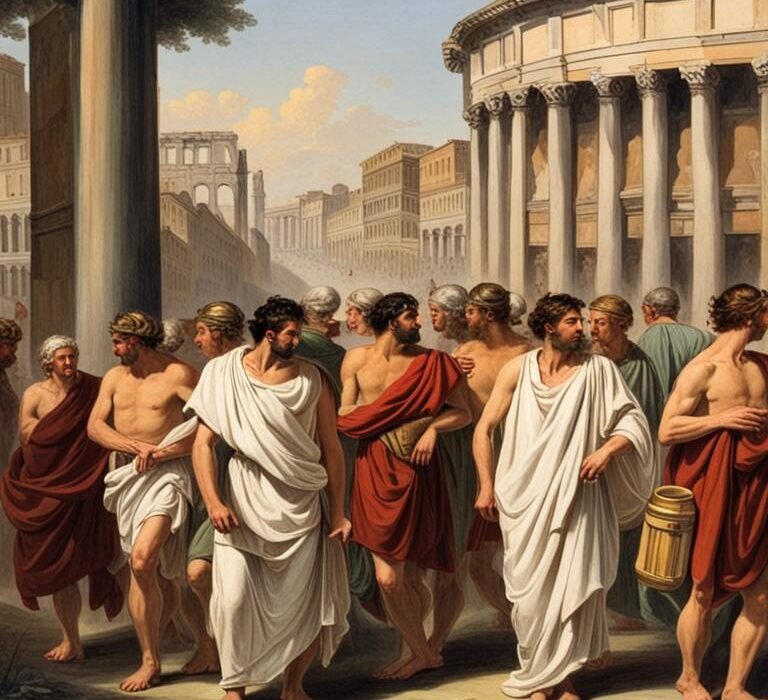
Throughout history, philosophers have wrestled with the idea of eternity. Some, like Aristotle, saw the cosmos as eternal, with no first cause or final end. Others, like Augustine, believed time itself began with creation, that the universe is finite in both duration and purpose.
Modern thinkers have added new layers. In the cyclic cosmologies of Hinduism and Buddhism, the universe undergoes endless cycles of creation, destruction, and rebirth. Time has no ultimate beginning or end—it is a wheel, not a line. In contrast, Western monotheistic traditions often describe a linear timeline: a divine creation, a finite existence, and an ultimate end or renewal.
Even in science, echoes of both views persist. The Big Bang suggests a beginning; the heat death implies an end. Yet quantum cosmology, cyclic models, and multiverse theories hint at eternity—a continuum where universes arise endlessly, each with its own beginning and end, yet none being the first or last.
In contemplating these ideas, one confronts a paradox: perhaps beginnings and endings exist only within the limits of perception. To beings bound by time, they appear real. But from a cosmic or metaphysical standpoint, existence may be infinite—always transforming, never ceasing.
The Human Perspective
For humans, beginnings and endings define the rhythm of life. Birth and death shape our stories, relationships, and meaning. We measure time in milestones, in firsts and lasts. Yet our awareness also glimpses the eternal. When we gaze at the stars, we see light that left its source millions of years ago, bridging time itself. In that light, beginnings and endings dissolve into a single continuum of existence.
The question does everything have a beginning and an end? reflects not only a curiosity about the universe but a yearning to understand our place within it. We fear endings because they seem to mark the boundary of being, yet we crave beginnings because they promise renewal. The truth may lie between them: existence is an endless cycle of transformation, where every end births a new start, and every start carries the memory of what came before.
The Eternal Flow
If the universe is a river of change, then beginnings and endings are the ripples on its surface. Each moment arises, evolves, and dissolves into the next, yet the flow itself never ceases. Energy transforms, matter recycles, consciousness perceives. Nothing stays, yet nothing is ever truly lost.
In this sense, the cosmos itself may be immortal—not in the static sense of permanence, but in the dynamic sense of perpetual transformation. Everything begins and ends only to begin again. The stars die so that new worlds may form; humans pass so that others may live; the universe expands, cools, and perhaps one day blooms anew.
The great physicist and philosopher Erwin Schrödinger once wrote, “What is death but a change of state?” If existence is an eternal interplay of change, then beginnings and endings are but phases in the infinite rhythm of being.
The Infinite Horizon
Perhaps the question itself is incomplete. Rather than asking whether everything has a beginning and an end, we might ask: Does existence itself ever cease? Every known phenomenon emerges from something and returns to something. Even if universes begin and end, the totality—the underlying reality that gives rise to them—may have neither birth nor death.
In the deepest sense, there may be no true nothingness, no final void, only transformation. The energy that fuels the stars, the consciousness that wonders about its own origins, the space that expands into infinity—all may be expressions of the same eternal principle.
When we look at the universe in this light, beginnings and endings are not opposites but reflections of one continuous truth: existence is the act of becoming.
The Endless Beginning
In the end—or perhaps the beginning—everything flows. The universe began in fire and will end in silence, or perhaps it will begin anew. Life rises and falls, consciousness awakens and fades, stars ignite and die, but the song of existence continues in endless variation.
Beginnings and endings give meaning to our finite lives, but beyond them lies a greater continuity. Every birth is made of ancient matter; every death returns that matter to the cosmos. Every thought, every breath, every heartbeat is part of a chain stretching back to the first atoms that ever existed—and perhaps forward into futures we cannot imagine.
So does everything have a beginning and an end? In a sense, yes. But in another, deeper sense—perhaps the only one that matters—nothing truly begins or ends. Everything changes, everything becomes, everything continues.
We are part of that eternal unfolding, that cosmic cycle without boundary, where every ending is the dawn of something new, and every beginning carries within it the echo of all that has ever been.