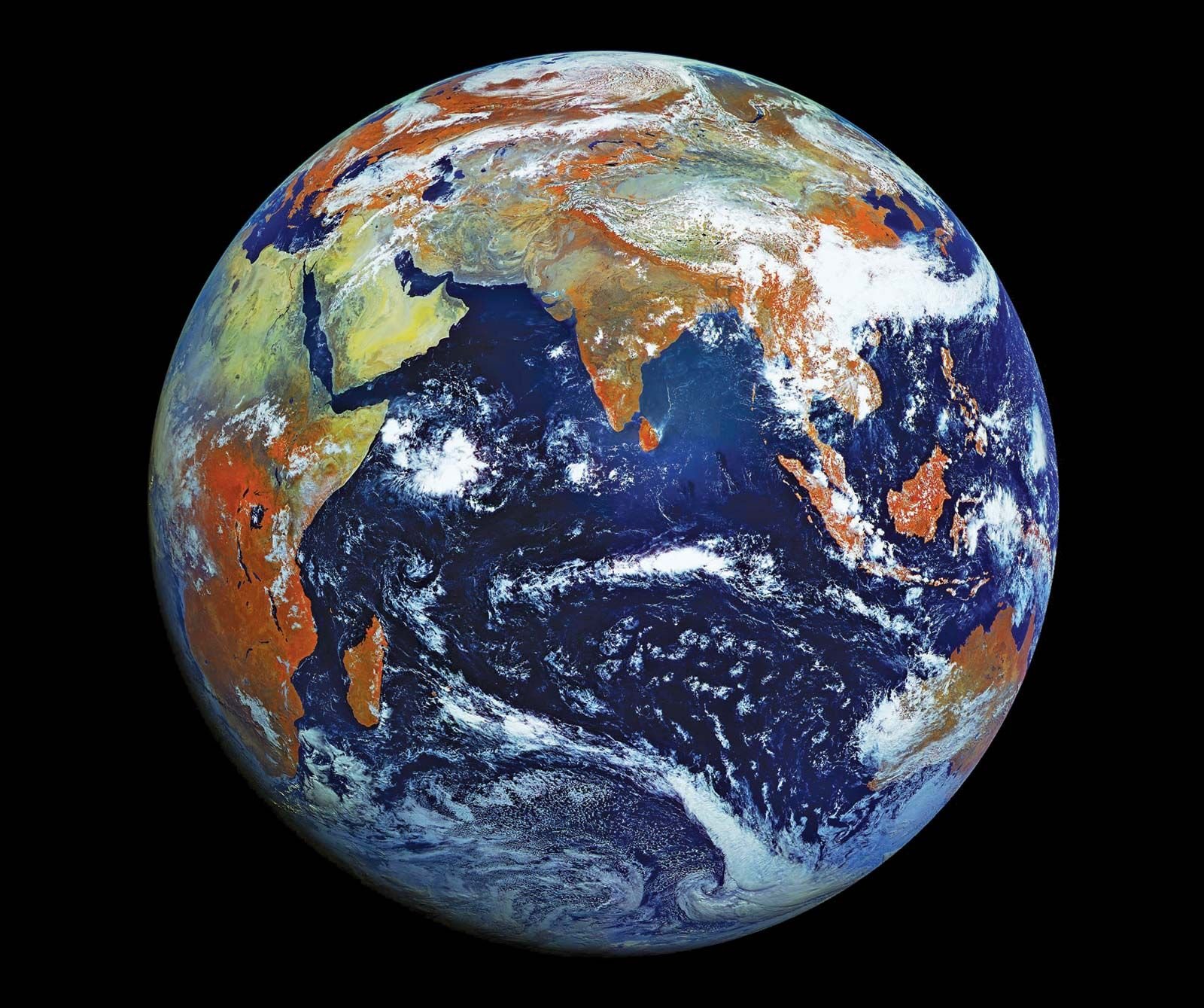
In the infinite darkness of the cosmos, one world glows with a serene, shimmering blue—a fragile orb suspended in the black ocean of space. That world is Earth, our home, our cradle, our everything. To the distant eye, Earth seems small, delicate, almost insignificant against the immensity of the universe. Yet within this tiny sphere unfolds the grandest story ever told: the story of life, consciousness, and the fragile miracle of existence.
Earth is not merely a planet—it is a living entity, a symphony of water, rock, air, and fire that together compose a harmony so perfect it has given rise to forests, oceans, and thinking beings capable of pondering the stars. It is a masterpiece sculpted by time and chance, nurtured by the delicate balance between chaos and order.
When the Apollo 8 astronauts first looked back at Earth from the Moon in 1968, they saw what no human had ever truly seen before—a glowing marble of blue and white, rising over a gray horizon. That single image changed our understanding of ourselves. We realized that all our history, all our wars, all our art, and all our dreams take place upon a single, fragile world floating in the void.
To understand Earth is to understand ourselves. For we are not separate from it; we are its children, its creation, its voice.
The Birth of a World
About 4.54 billion years ago, in a swirling disk of dust and gas surrounding the newborn Sun, countless particles collided, stuck together, and began to form larger and larger clumps. Gravity, the universe’s sculptor, drew these fragments into spherical worlds. Among them was a small, rocky planet destined to become Earth.
The young planet was a violent place—a molten ball constantly bombarded by asteroids and comets. Volcanoes belched fire, and the surface churned with liquid rock. Yet these destructive forces were also creative. The impacts delivered water and organic molecules—the building blocks of life. The volcanoes released gases that would form the early atmosphere.
Gradually, Earth cooled. A thin crust solidified over the molten depths, and rain began to fall for the first time. It rained for millions of years, filling basins, forming the first oceans. Lightning flickered across the skies, and in that restless water-chemistry, something astonishing occurred: life began.
We do not know exactly how or when the first living molecules emerged, but by 3.8 billion years ago, the earliest microbes were thriving in Earth’s oceans. The dead world had awoken.
The Fragile Balance of a Living Planet
Earth’s most remarkable quality is balance. Against the odds, it maintains conditions stable enough for life to persist and evolve. This balance depends on a delicate interplay between the Sun, the atmosphere, and the planet’s internal energy.
Our atmosphere, a thin veil of gases, shields us from deadly radiation and keeps the surface warm through the greenhouse effect. Without it, Earth would be a frozen wasteland. Yet too much greenhouse gas would turn our home into a furnace like Venus.
The planet’s rotation distributes heat and light evenly, creating day and night. The tilt of its axis gives us seasons, allowing life to adapt and diversify. The magnetic field, generated by Earth’s molten iron core, deflects the solar wind, preventing the atmosphere from being stripped away.
And then there is water—the true soul of Earth. Liquid water covers over 70% of the planet’s surface, regulating temperature, sculpting continents, and serving as the medium in which life evolved. Nowhere else in the solar system does water flow so freely, shimmering under sunlight and falling from clouds in endless cycles of renewal.
It is this intricate equilibrium, maintained through cosmic precision, that makes Earth the only known haven for life in the universe.
The Breath of Life: Earth’s Atmosphere
The air we breathe is ancient. Every molecule of oxygen, nitrogen, and carbon dioxide has cycled through countless lungs, leaves, and oceans over billions of years. Earth’s atmosphere is a living entity—a dynamic system constantly shaped by the processes of life itself.
In its earliest days, the atmosphere was toxic, filled with methane, carbon dioxide, and sulfur gases. But tiny organisms known as cyanobacteria changed everything. Around 2.4 billion years ago, through photosynthesis, they began releasing oxygen into the air. This “Great Oxidation Event” transformed the planet’s chemistry and paved the way for complex life.
Today, Earth’s atmosphere is roughly 78% nitrogen, 21% oxygen, and less than 1% trace gases, including carbon dioxide, argon, and water vapor. The balance between these gases sustains all ecosystems. Oxygen fuels metabolism. Carbon dioxide feeds plants. Nitrogen forms the proteins that build life.
From the gentle breeze that stirs the leaves to the roaring jet streams that drive our weather, the atmosphere is in constant motion—a vast ocean of air connecting every living thing. It carries pollen and seeds, distributes warmth, and erases borders.
Every breath we take is a reminder that we are part of this grand, invisible circulation—the lungs of the planet breathing with us.
The Ocean: The Heartbeat of the Blue Planet
When we call Earth the “Blue Planet,” it is because of the oceans. They cover more than two-thirds of the surface and hold 97% of the planet’s water. They are vast beyond comprehension—deep, ancient, and full of secrets still unknown.
The oceans are the engine of life and climate. They absorb heat from the Sun, store it, and slowly release it, stabilizing global temperatures. They generate clouds, shape weather patterns, and feed the atmosphere with moisture.
Beneath their surface lies an entire world—a realm of strange beauty and unimaginable diversity. From coral reefs teeming with color to abyssal plains bathed in eternal darkness, life thrives in every corner. Tiny plankton floating near the surface produce most of Earth’s oxygen. In the deep trenches, bizarre creatures glow with bioluminescence, creating alien light shows in the dark.
The ocean is also a memory of our origin. All life began here, and even today, our blood carries the salt of those ancient seas. When we stand at the shore and watch the waves crash against the rocks, we are witnessing the pulse of the planet itself.
The Continents: Sculpted by Fire and Time
Earth’s surface is in constant motion. Beneath our feet, colossal plates of rock drift slowly across the molten mantle. This movement—known as plate tectonics—reshapes the continents, raises mountains, opens oceans, and triggers earthquakes and volcanoes.
It is this restless geology that makes Earth unique among known worlds. Without it, there would be no continents, no carbon cycle, and perhaps no life. The shifting plates recycle materials, drawing carbon dioxide from the atmosphere through weathering and releasing it again through volcanic eruptions. This process has kept Earth’s climate stable for billions of years.
The continents themselves tell the story of time. The Himalayas, born from the collision of India and Asia, continue to rise each year. The Andes trace the boundary between oceanic and continental plates. The African Rift Valley hints at the birth of a new ocean.
Rocks, mountains, and valleys are the pages of Earth’s autobiography—written in the slow, deliberate language of geology. To read them is to read deep time, to see epochs unfold across billions of years.
The Miracle of Life
Life on Earth is not a single phenomenon but an endless web of interconnected miracles. From the tiniest bacterium to the vast forests and whales, every organism is a thread in a living tapestry.
What makes life so extraordinary is not just its diversity, but its adaptability. Life has colonized every corner of the planet—from frozen tundras to boiling hot springs, from mountain peaks to ocean trenches. Some organisms thrive in acid, others in radiation, others in complete darkness.
At its heart, all life shares a common language—the DNA molecule, a code of four letters that writes the instructions for every living being. From this simple alphabet, evolution has composed infinite forms, each one sculpted by the hand of natural selection.
The story of life is one of resilience and creativity. Through mass extinctions, asteroid impacts, and ice ages, life has endured, adapted, and rebounded. It has transformed the atmosphere, shaped the continents, and even altered the chemistry of the oceans.
Every bird that sings, every leaf that turns toward the Sun, every breath we take is a continuation of that four-billion-year saga—a single, unbroken thread connecting us to the first spark of existence.
The Dance of Day and Night
One of Earth’s most poetic rhythms is the cycle of day and night. Every twenty-four hours, the planet spins once on its axis, giving us sunrise and sunset—the universal heartbeat of time.
This rotation shapes every aspect of life. Plants open and close their leaves in response to light. Animals hunt or rest according to the cycle of day. Even humans, with our cities and clocks, remain bound to the rhythm of the turning Earth.
The beauty of this dance is universal. Wherever you stand on the planet, dawn always brings renewal, and dusk always brings peace. The same Sun that rises over the Sahara deserts sets over the Pacific Ocean. It is the one thread that unites all living things under its golden light.
Without this rotation, one side of Earth would bake under eternal sunlight while the other froze in endless night. Instead, our world moves gracefully between extremes, spinning through the balance of warmth and cool, light and dark—a perfect rhythm that has guided life since its beginning.
The Seasons of Change
Earth’s axis is tilted about 23.5 degrees relative to its orbit around the Sun. This tilt gives rise to the seasons—a subtle yet powerful phenomenon that governs climate, agriculture, and migration.
As Earth travels around the Sun, different regions receive varying amounts of sunlight. When the Northern Hemisphere tilts toward the Sun, it experiences summer, while the Southern Hemisphere faces winter, and vice versa.
This rhythmic change transforms the planet’s surface. Forests bloom and fade. Animals migrate across continents. Oceans shift with changing winds and currents. Humanity itself learned to plant, harvest, and live according to these celestial cycles.
The seasons remind us that change is natural, inevitable, and beautiful. They are the heartbeat of the biosphere—the gentle pulse that keeps the planet alive.
The Moon: Earth’s Eternal Companion
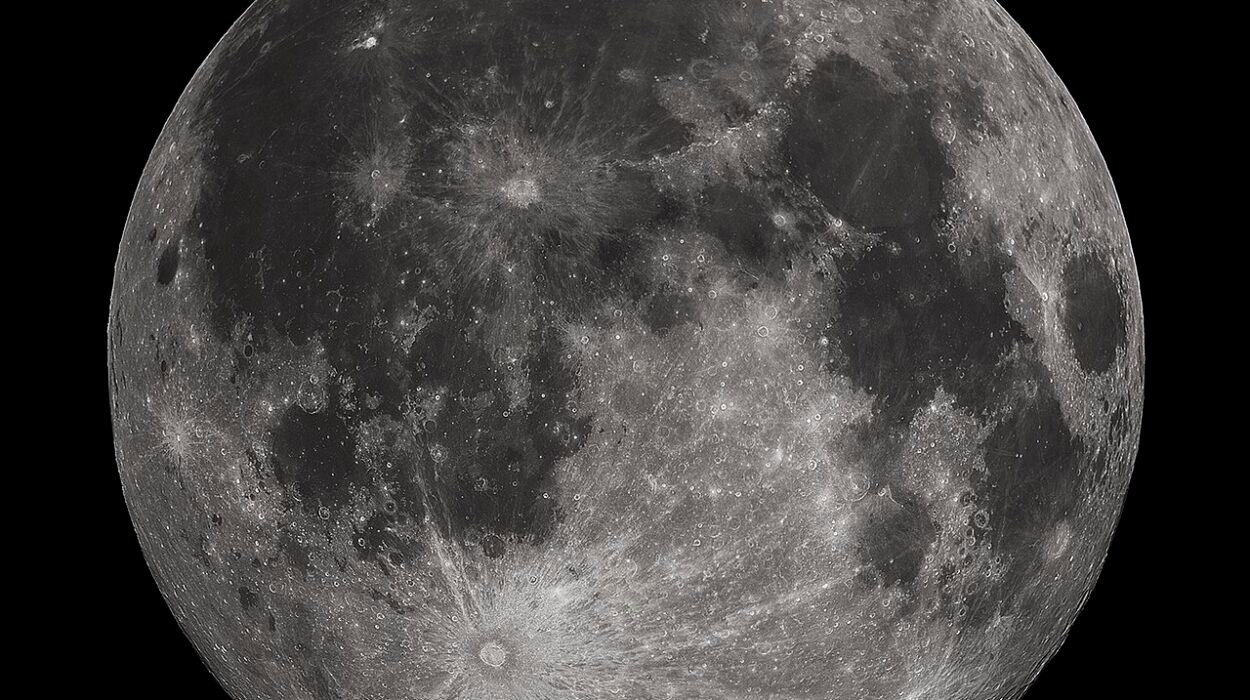
Orbiting Earth is our constant companion, the Moon—a silent guardian that has shaped our planet’s destiny. Formed over 4 billion years ago, likely from the debris of a massive collision between the young Earth and a Mars-sized body, the Moon has ever since been locked in a gravitational embrace with its parent world.
The Moon’s pull creates tides, drawing the oceans rhythmically across the shorelines. These tides have influenced evolution itself, nurturing early life in coastal pools and shaping the cycles of countless species.
The Moon also stabilizes Earth’s tilt, preventing wild swings in climate. Without it, our planet’s axis could wobble chaotically, leading to extreme and unpredictable changes in temperature and weather.
Beyond science, the Moon has been a muse for humanity—a mirror for our dreams. Its silver glow has inspired art, music, and myth in every culture. When we look at it, we are reminded that we are not alone in space, but part of a celestial partnership that has endured for eons.
The Symphony of Weather and Climate
Earth’s atmosphere and oceans together create a dynamic system we call weather. This ever-changing ballet of air and water shapes our daily lives and sustains ecosystems around the globe.
Winds carry moisture from the seas to the continents, forming clouds that release rain and snow. Ocean currents, like the Gulf Stream, transport heat across vast distances, regulating regional climates. Thunderstorms, hurricanes, and monsoons are dramatic expressions of this ceaseless motion—a balance between energy, water, and air.
Climate, on the other hand, is the long-term pattern of weather. Over millions of years, Earth’s climate has shifted from ice ages to tropical epochs. These changes have sculpted evolution, driving species to adapt or perish.
Today, we are witnessing another profound change—this time driven by ourselves. Human activity has increased greenhouse gases, altering the balance that once kept Earth stable. As temperatures rise and ice melts, we are reminded of Venus’s fate—a haunting warning of how fragile climate equilibrium truly is.
Yet even amid these challenges, the Earth remains resilient. It has endured meteors, supervolcanoes, and frozen epochs. Life has always found a way. The question is whether humanity will choose to live in harmony with this living system—or against it.
The Web of Life and Interconnection
Nothing on Earth exists in isolation. Every organism, from the smallest microbe to the largest whale, depends on countless others. This interdependence forms the biosphere—a global web of relationships that sustains the planet’s health.
Forests breathe out oxygen and draw in carbon dioxide, balancing the atmosphere. Bees pollinate flowers, enabling fruits and crops to grow. Rivers carry nutrients from mountains to seas, feeding plankton that nourish the entire marine food chain.
Even death is part of the cycle. Decomposers return nutrients to the soil, feeding the next generation of life. Energy flows through this web in a continuous loop, powered by sunlight and bound by balance.
Humanity, too, is woven into this network. We depend on clean air, fertile soil, stable climate, and healthy ecosystems. To harm them is to harm ourselves. The more deeply we understand this truth, the more clearly we see that Earth is not a resource—it is a relationship.
The Human Era: Custodians or Conquerors
No species has transformed Earth as profoundly as humanity. From the first fires lit by early humans to the vast cities that now glitter across the continents, we have reshaped landscapes, diverted rivers, and altered the atmosphere itself.
Our intelligence and creativity have brought both wonders and dangers. We have cured diseases and walked on the Moon, yet we have also deforested vast regions, polluted oceans, and warmed the planet. Scientists now call our age the Anthropocene—the epoch of human influence.
This power places upon us an immense responsibility. We are no longer just inhabitants of Earth; we are its caretakers. The choices we make in this century will determine the fate of life for millennia to come.
But hope remains. Renewable energy, conservation efforts, and growing awareness are signs that humanity can learn to live in harmony with its home. We are the first species capable of understanding the full scope of planetary systems—and perhaps the first capable of protecting them.
The Planet of Beauty and Mystery
Beyond science, Earth is a planet of wonder. It dazzles not only with life but with its aesthetic perfection. The emerald forests, golden deserts, sapphire oceans, and white clouds together form a masterpiece of color and light.
From space, the view is breathtaking—a blue marble wrapped in thin veils of white, glowing against the blackness. No other world we know shines like this. The colors are not illusion; they are expressions of life itself.
Every landscape tells a story. The Grand Canyon whispers of ancient rivers. The Amazon breathes with the pulse of evolution. The Antarctic ice sings of time frozen in crystal. The planet is not a static stage for life—it is a living mosaic that changes and evolves with us.
To love Earth is to love mystery, to see the divine in the mundane, the eternal in the everyday sunrise.
Earth and the Cosmos
Earth is a cosmic rarity—a small planet at the right distance from its star, with the right atmosphere, the right chemistry, and the right companions. It orbits within the Sun’s “habitable zone,” where temperatures allow liquid water to exist. Its magnetic field shields it from radiation, and its Moon stabilizes its climate.
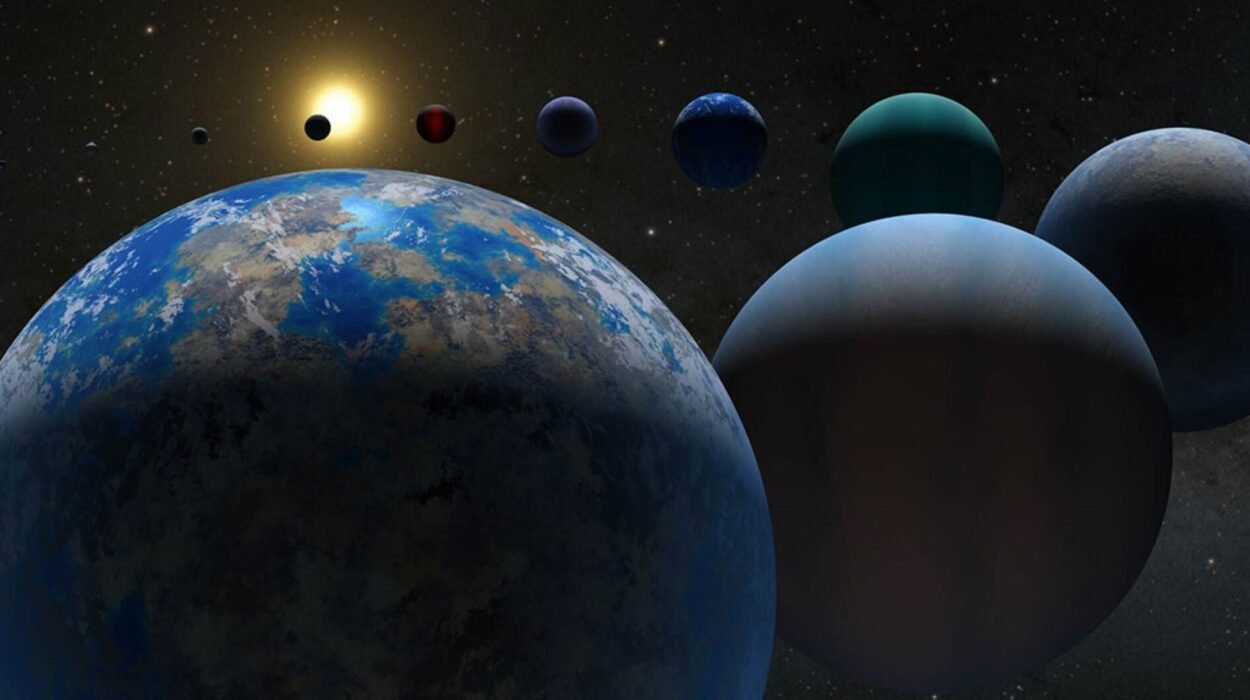
In a universe filled with billions of galaxies, each containing billions of stars, Earth may be one of countless habitable worlds—or one of very few. We do not yet know. But in all our searching, we have yet to find another planet quite like this one.
Every photograph taken of Earth from space—by Voyager, Apollo, or the International Space Station—reminds us of how small yet significant we are. We are a single species living on a single world, bound together by shared destiny.
The cosmos is vast, cold, and indifferent. Yet within it, Earth burns with warmth and meaning—a rare flame of life in the darkness.
The Future of the Blue Jewel
What lies ahead for our planet depends on us. The Earth will survive, but will its beauty? Will its forests, oceans, and creatures endure, or will they fade into memory?
If we learn from the past, if we listen to the lessons written in stone, water, and wind, we may yet preserve this world for generations to come. The technology that threatens balance can also restore it—through renewable energy, reforestation, and sustainable living.
Our greatest challenge is not scientific but spiritual: to see Earth not as a possession, but as a partner. The planet does not belong to us—we belong to it.
The Blue Jewel in Eternal Motion
Even as we ponder its fragility, Earth continues its cosmic dance—spinning, orbiting, breathing. Continents drift. Oceans rise and fall. Life evolves. The planet endures.
It has witnessed the birth of mountains, the extinction of species, the rise of civilizations, and the birth of minds capable of dreaming beyond the stars.
We are part of that story—born of stardust, sustained by water and light, destined to return to the Earth that made us.
The Home That Made Us Human
Every heartbeat, every song, every act of love that has ever existed has unfolded beneath Earth’s sky. It is the only home we have ever known, and perhaps the only one we ever will.
When astronauts look back at the planet from orbit, they see no borders, no divisions—only a single, unified world. That is the truest vision of Earth: one planet, one humanity, one fragile miracle of life adrift in a cosmic sea.
We are the consciousness of this planet, the part of the Earth that looks back at itself and wonders.
The Eternal Message of Earth
Earth teaches us that life is rare and precious, that balance is fragile, and that beauty arises from cooperation. It reminds us that we are not separate from nature but expressions of it.
In every wave and mountain, in every gust of wind and drop of rain, the planet speaks. It tells us that we belong here—not as rulers, but as caretakers.
When we finally understand this truth, we may realize that the greatest adventure is not to conquer the stars, but to cherish the world that gave us the ability to dream of them.
The Blue Jewel Forever Turning
In the end, Earth is more than a planet. It is a poem written in oceans and clouds, a song sung by forests and winds, a living sculpture shaped by time and love.
It is the rarest of treasures—the blue jewel of life in the vastness of space.
And as it turns, endlessly and gracefully through the black cosmos, it carries all our stories, all our hopes, and all the fragile brilliance of life.
We are its witnesses, its children, and its stewards.
And so long as we remember that, the blue light of Earth will never fade.