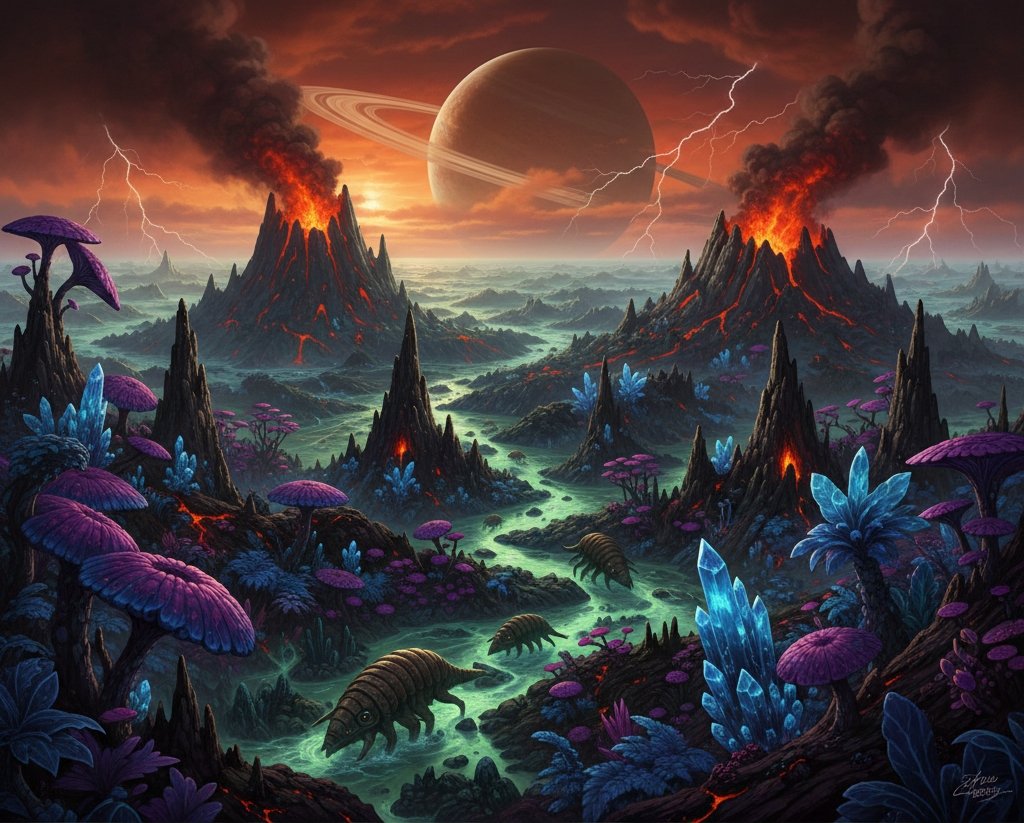
To look at Earth today is to see a planet that feels stable and familiar. Blue oceans stretch across vast basins, continents rise with recognizable shapes, and life thrives in countless forms. Yet this sense of permanence is an illusion born of short human lifespans. Earth has not always been this way. For most of its history, our planet would have been utterly alien to modern eyes—its skies toxic, its oceans hostile, its surface scarred by fire, ice, and impacts from space. The rocks beneath our feet carry faint but powerful echoes of these earlier worlds, whispering stories of transformation on a scale that defies ordinary imagination.
Understanding these ancient Earths is not an exercise in fantasy. It is a scientific journey grounded in geology, chemistry, physics, and biology, built from evidence painstakingly extracted from minerals, isotopes, fossils, and planetary dynamics. These echoes tell us not only where Earth has been, but why it looks the way it does today—and why it may yet change again.
The Birth of a Violent World
Earth formed about 4.54 billion years ago from the swirling disk of gas and dust left behind by the birth of the Sun. In this early solar system, collisions were not rare events but the dominant process shaping planets. Proto-Earth grew through countless impacts with planetesimals, each collision releasing immense energy. The young planet was repeatedly melted, its surface transformed into vast oceans of magma.
This early Earth bore little resemblance to a habitable world. Temperatures were extreme, and the surface was constantly reshaped by impacts large enough to vaporize rock. One such collision, involving a Mars-sized body often called Theia, is thought to have given rise to the Moon. The debris from this impact coalesced into our satellite, while Earth itself was left partially molten, its interior thoroughly mixed.
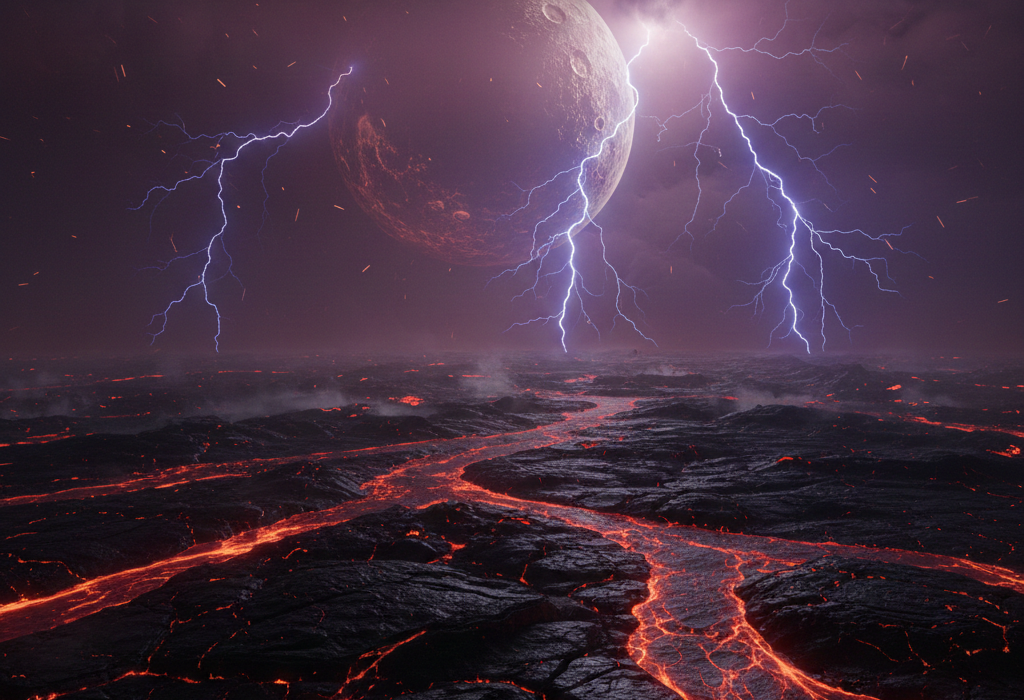
The atmosphere at this time was not breathable. It formed primarily through volcanic outgassing, releasing gases such as carbon dioxide, water vapor, nitrogen, and sulfur compounds. Free oxygen was virtually absent. Lightning flashed through skies thick with volcanic aerosols, while meteorites continued to rain down. This was Earth’s first face: a fiery, chaotic world governed by astrophysical violence rather than biological balance.
Oceans from Fire and Stone
Despite the inferno-like conditions, the foundations of Earth’s oceans were already taking shape. As the planet cooled, water vapor in the atmosphere began to condense, falling as rain for millions of years. Additional water was delivered by water-rich asteroids and possibly comets, contributing to the growing surface reservoirs.
The first oceans were not the gentle blue expanses we know today. They were likely hot, acidic, and rich in dissolved metals. Iron, abundant in Earth’s crust, readily dissolved in the oxygen-poor waters, giving them a greenish or murky appearance. Hydrothermal vents dotted the ocean floor, pumping heat and chemicals into the water, creating steep gradients in temperature and chemistry.
These early oceans played a crucial role in stabilizing Earth’s climate. Water is an efficient absorber of heat, and its presence helped moderate temperature extremes. At the same time, chemical reactions between seawater and newly formed crust began cycling elements between the surface and the interior, setting the stage for long-term geochemical regulation.
A Sky Without Oxygen
For nearly half of Earth’s history, oxygen was a trace gas at best. The early atmosphere, often called a reducing atmosphere, was dominated by nitrogen, carbon dioxide, methane, and other volcanic gases. To modern humans, such air would be deadly within minutes.
Yet this oxygen-poor environment was not static. Chemical reactions driven by sunlight, lightning, and volcanic activity continually altered atmospheric composition. Methane, produced both abiotically and later biologically, played a particularly important role. As a potent greenhouse gas, methane helped keep Earth warm under a fainter young Sun, preventing the oceans from freezing solid.
The absence of oxygen profoundly shaped the chemistry of Earth’s surface. Iron remained soluble in the oceans, sulfur followed different reaction pathways, and organic molecules could persist in forms that would be rapidly destroyed today. These conditions were not hostile to life as a whole, but they defined what kinds of life could exist.
The Emergence of Life in an Alien World
Life appears to have arisen remarkably early in Earth’s history, perhaps as early as 3.8 billion years ago. The earliest evidence comes from isotopic signatures in ancient rocks, suggesting biological processing of carbon. These first life forms were simple, single-celled organisms, lacking nuclei and complex internal structures.
They lived in a world utterly unlike today’s biosphere. Energy came not from oxygen-based metabolism, but from chemical reactions involving hydrogen, sulfur, iron, and other elements. Some organisms harnessed sunlight through primitive photosynthesis, but without producing oxygen as a byproduct.
The origin of life remains one of science’s deepest mysteries, but whatever pathways led to it were shaped by the extreme conditions of early Earth. High temperatures, abundant chemical energy, and dynamic environments may have provided both the challenges and opportunities necessary for life to emerge.
The Great Oxygenation: A Planet Transformed
One of the most dramatic transitions in Earth’s history occurred around 2.4 billion years ago, during an event known as the Great Oxygenation Event. This was not a sudden moment, but a prolonged shift driven primarily by the evolution of oxygen-producing photosynthesis, likely carried out by cyanobacteria.
These microorganisms used sunlight to split water molecules, releasing oxygen as a waste product. For millions of years, this oxygen reacted with iron and other reduced substances in the oceans and crust, preventing it from accumulating in the atmosphere. The result was the deposition of vast banded iron formations, layered rocks that still serve as important iron ore deposits today.
Eventually, the available sinks were saturated, and oxygen began to build up in the atmosphere. This accumulation transformed Earth’s chemistry. Oxygen reacted with methane, reducing its greenhouse effect and triggering global cooling. Evidence suggests that Earth may have experienced severe glaciations during this time, possibly freezing over nearly entirely.
For anaerobic organisms, oxygen was toxic. The rise of oxygen caused widespread extinction among early life forms, making it one of the first global biological crises. Yet it also opened new possibilities. Oxygen-based metabolism is far more efficient, enabling the evolution of larger, more complex organisms. The planet had crossed a threshold from which there was no return.
Snowball Earth and the Edge of Habitability
Several times in Earth’s history, particularly during the Proterozoic Eon, the planet may have entered states known as Snowball Earth episodes. During these intervals, ice appears to have extended from the poles to near the equator, covering oceans and continents alike.
Geological evidence for these events includes glacial deposits found at low latitudes and distinctive chemical signatures in sedimentary rocks. Such a frozen world would have been almost unrecognizable, a planet dominated by white ice reflecting sunlight back into space.
The persistence of life during these episodes speaks to its resilience. Microbial ecosystems likely survived in refuges such as hydrothermal vents, thin layers of liquid water beneath ice, or isolated equatorial regions. Volcanic activity continued beneath the ice, slowly releasing carbon dioxide into the atmosphere. Over time, this buildup would have intensified the greenhouse effect, eventually melting the ice and returning Earth to a warmer state.
These extreme climate swings highlight the delicate balance of Earth’s systems. Small changes in atmospheric composition or solar input can push the planet toward radically different states, each with profound implications for life.
The Cambrian Explosion and a New World of Life
Around 541 million years ago, Earth experienced a biological transformation known as the Cambrian Explosion. In a relatively short geological span, most major animal groups appeared in the fossil record. Bodies became larger, more complex, and more specialized.
This explosion of life coincided with changes in ocean chemistry, rising oxygen levels, and shifts in nutrient availability. The seafloor, once largely undisturbed, became churned by burrowing organisms, altering sediment structure and chemical gradients. Predator-prey relationships intensified, driving evolutionary innovation.
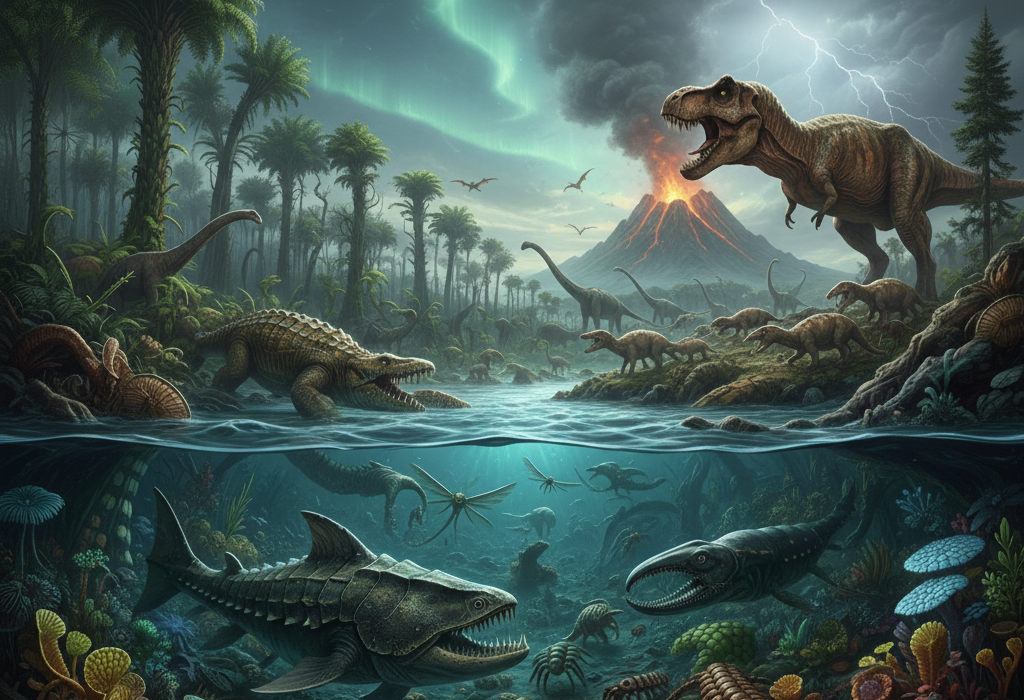
The Earth of the Cambrian was still alien in many ways. Continents were arranged differently, sea levels were high, and life was largely confined to the oceans. Yet the foundations of modern ecosystems were being laid. The echoes of this time are preserved in fossils that capture the first appearances of eyes, limbs, and complex nervous systems.
Shifting Continents and Changing Climates
Earth’s surface has never been static. Driven by plate tectonics, continents drift, collide, and break apart over hundreds of millions of years. These movements reshape ocean basins, alter climate patterns, and influence the evolution of life.
At various times, Earth’s landmasses have assembled into supercontinents, such as Rodinia and later Pangaea. These configurations profoundly affected atmospheric circulation and ocean currents, leading to extreme climates in continental interiors and dynamic conditions along coastlines.
The breakup of supercontinents opened new seaways and created isolated environments, promoting diversification of species. Mountain building during continental collisions influenced weathering rates, drawing down carbon dioxide and contributing to long-term climate cooling. The familiar geography of today is merely a snapshot in this endless tectonic dance.
Mass Extinctions and the Fragility of Life
Throughout Earth’s history, life has been repeatedly reshaped by mass extinctions. These events, caused by factors such as volcanic eruptions, climate change, and asteroid impacts, eliminated large fractions of existing species in relatively short periods.
The most severe of these, the end-Permian extinction around 252 million years ago, wiped out the majority of marine species and a significant portion of terrestrial life. Massive volcanic eruptions released enormous amounts of greenhouse gases, acidifying oceans and destabilizing climate.
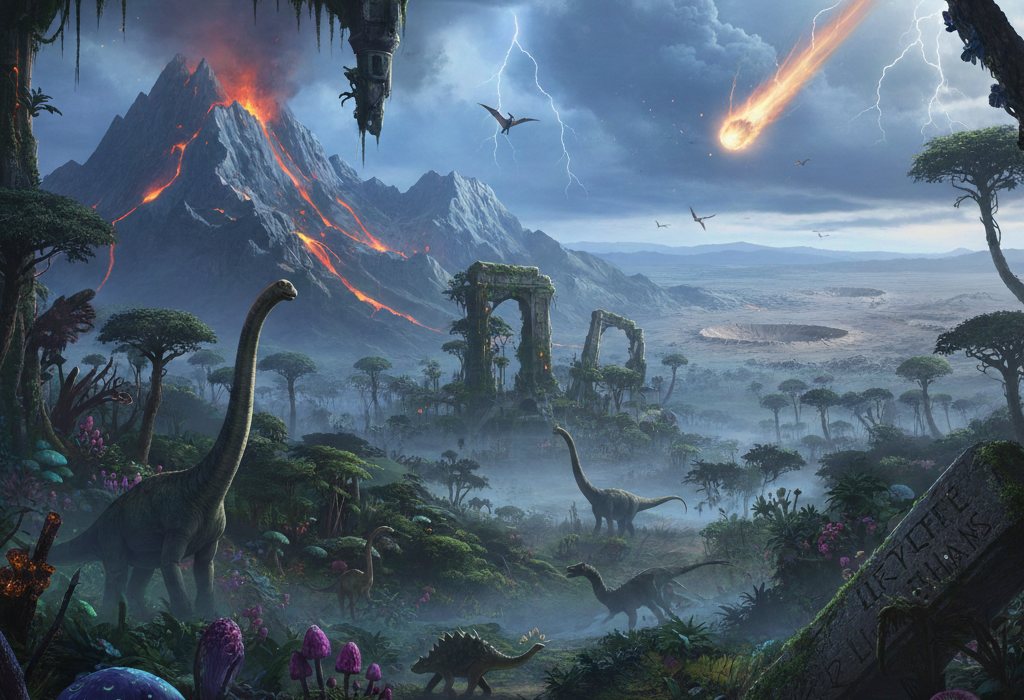
Perhaps the most famous extinction, the one that ended the age of non-avian dinosaurs 66 million years ago, was triggered by a large asteroid impact. The resulting environmental upheaval reshaped ecosystems and opened ecological niches that mammals would eventually fill.
Each extinction transformed Earth into a world that would have seemed unfamiliar to the life forms that preceded it. Yet from each crisis emerged new evolutionary pathways, demonstrating both the vulnerability and resilience of life.
Earth as a System in Constant Flux
What emerges from the deep history of Earth is not a story of steady progress toward the present, but one of continual transformation. Atmosphere, oceans, crust, and life are deeply interconnected, forming a complex system driven by energy from the Sun and Earth’s interior.
Feedback mechanisms link these components. Biological activity alters atmospheric composition, which influences climate, which affects weathering and nutrient cycling, which in turn shapes biological evolution. These interactions can stabilize conditions for long periods or amplify changes into dramatic transitions.
The Earth we know is the product of countless such interactions over billions of years. Its current habitability is not guaranteed by any fundamental law, but maintained by a balance that has been disrupted many times before.
Echoes Preserved in Stone and Ice
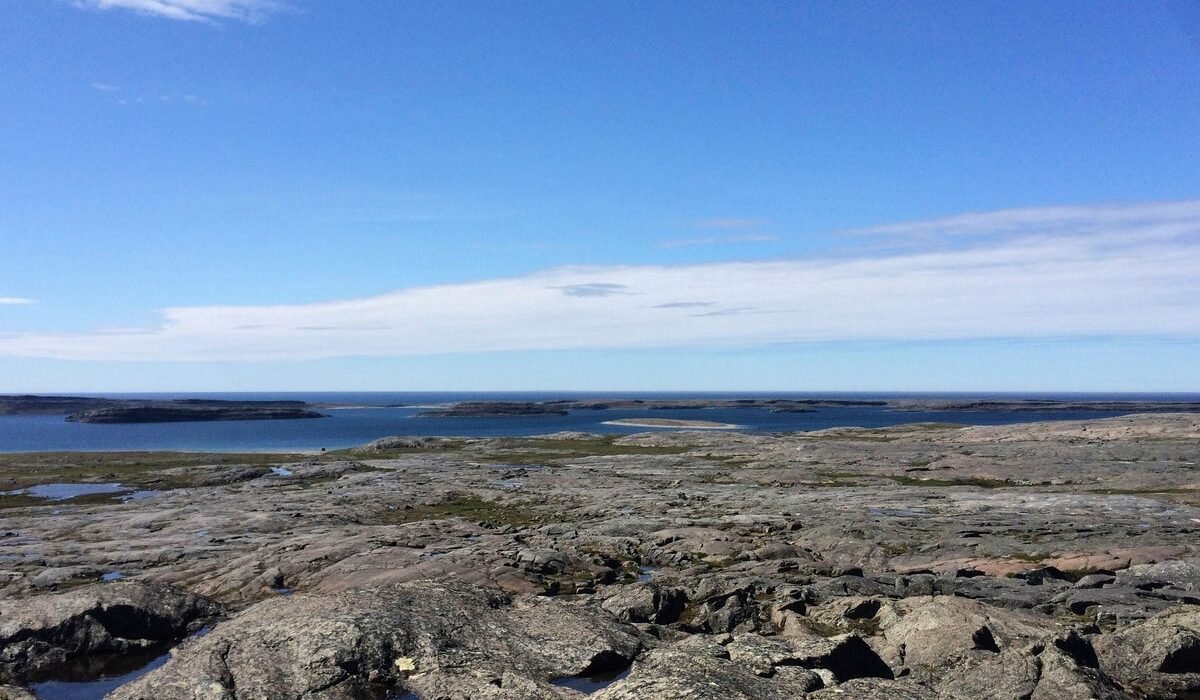
The ancient Earths of the past are gone, but their echoes remain. Rocks record the chemistry of ancient oceans, the composition of long-vanished atmospheres, and the scars of catastrophic events. Ice cores preserve snapshots of more recent climate changes, trapping bubbles of ancient air.
By decoding these records, scientists reconstruct worlds that no human ever witnessed. Each discovery adds depth to our understanding of Earth’s capacity for change. These echoes remind us that the familiar planet beneath our feet is the outcome of extraordinary and often violent processes.
Why Earth’s Past Matters Today
Studying times when Earth was almost unrecognizable is not merely an academic pursuit. It provides crucial context for understanding present and future changes. By examining how Earth responded to past shifts in greenhouse gases, solar input, and biological innovation, scientists gain insight into the planet’s sensitivity and resilience.
This perspective is especially important in an era of rapid human-driven change. The geological record shows that Earth can undergo dramatic transformations, but also that recovery often takes millions of years. Life persists, but not always in forms that support human civilization.
A Planet Defined by Change
Earth’s history teaches a humbling lesson. Stability is the exception, not the rule. The blue planet we call home is a temporary configuration in a long sequence of worlds, each shaped by forces far larger than any single species.
The echoes of those ancient Earths—fiery, frozen, toxic, and strange—resonate through the rocks and through our scientific understanding. They tell us that Earth is not a finished product, but an evolving system. To understand our planet is to accept its capacity for profound change, and to recognize that the world we know is both a gift and a responsibility, shaped by deep time and still unfolding.