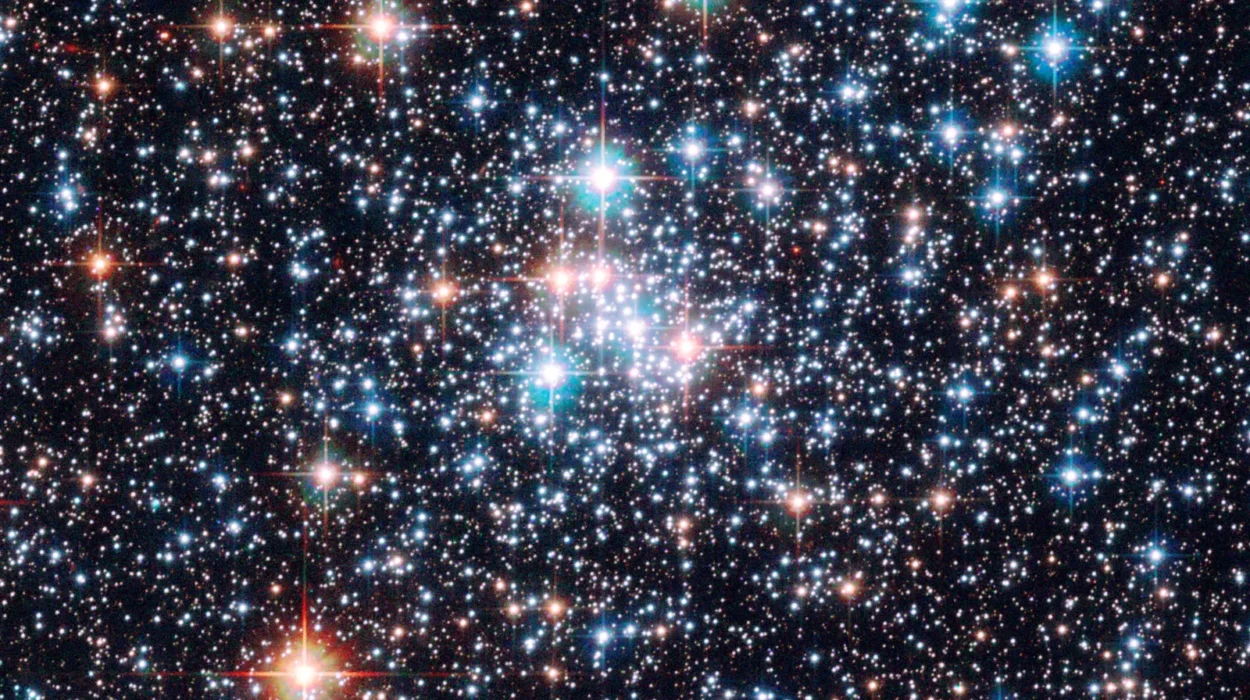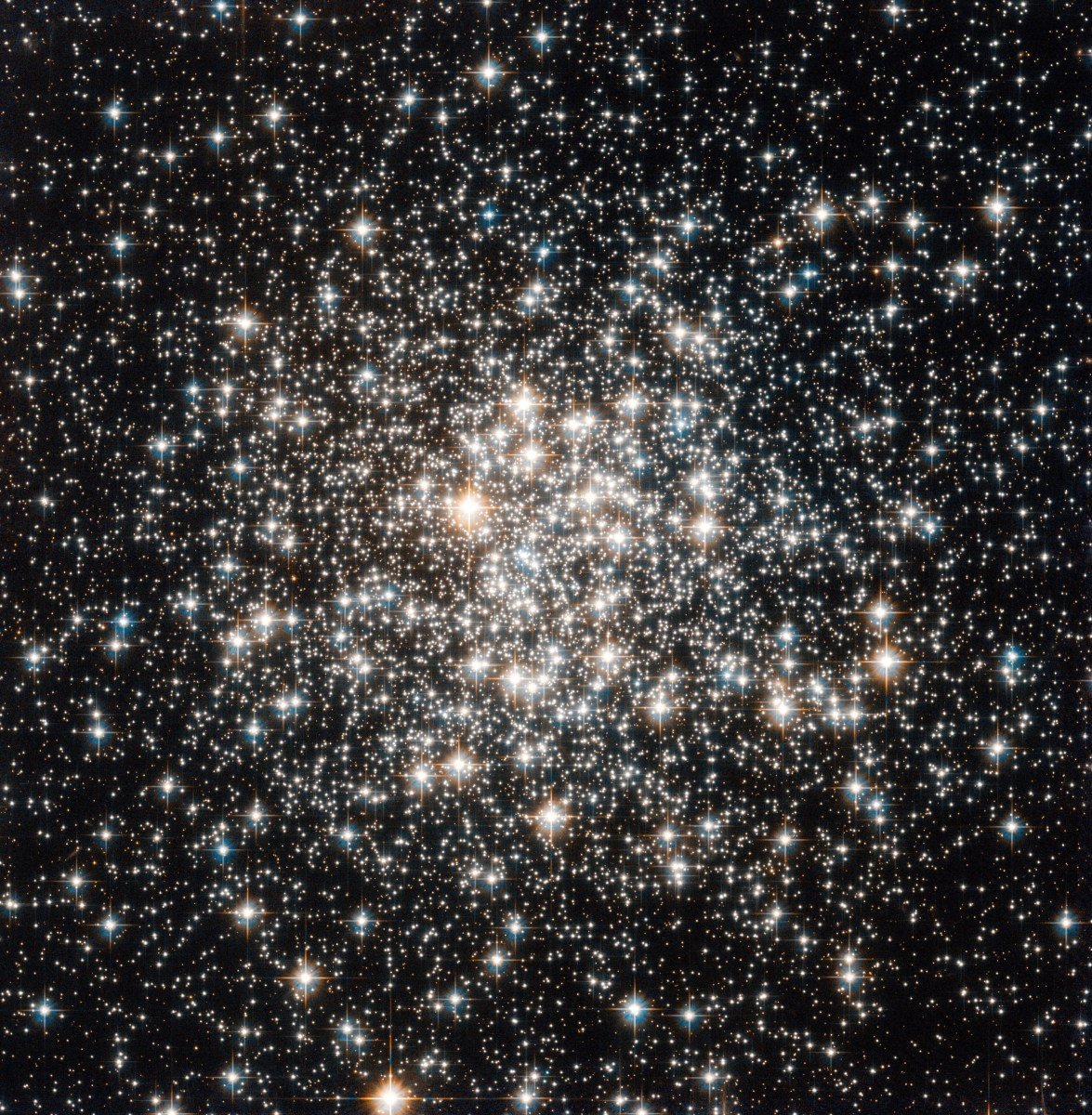
Every night, when you lift your eyes to the sky and see the stars scattered like diamonds across the dark canvas of space, you are witnessing the universe telling its oldest story—a story of birth, struggle, and death. Each of those points of light is a sun, some young and fierce, others old and fading, each one living through a cosmic cycle that has repeated for billions of years. The life of a star is the heartbeat of the cosmos itself. It is a process of creation so powerful that it forges the elements of life from the raw hydrogen of the early universe.
Stars are not eternal, yet they leave eternal imprints. The carbon in your body, the oxygen you breathe, the iron in your blood—all were created in the hearts of ancient stars that lived and died long before the Sun was born. To understand how stars are born, live, and die is to understand the very origin of life and matter in the universe.
The Birthplace of Stars: The Cosmic Cradle
Stars begin their lives not in brilliance but in darkness. They are born in vast, cold clouds of gas and dust called nebulae—regions that drift silently through galaxies like ghostly veils. These clouds are mostly hydrogen, with traces of helium and heavier elements left behind by earlier generations of stars.
Within these clouds, the story of a star begins when gravity whispers. Over time, small regions of the nebula become denser than their surroundings. The balance between pressure and gravity tips, and the cloud begins to collapse under its own weight. As the gas falls inward, it heats up, and a dense core begins to form at the center. This is the first heartbeat of a star.
From the outside, this process is invisible. Deep within the cloud, hidden from light, molecules collide, compress, and release heat. As the temperature in the core rises to thousands of degrees, the cloud flattens into a rotating disk of gas and dust. In the center, a glowing object forms—a protostar, the embryonic stage of a star.
Protostars are like cosmic infants wrapped in blankets of dust. They shine not because of nuclear fusion but because of the heat generated by gravitational contraction. Over millions of years, the protostar continues to gather material from its surroundings, growing more massive and hotter until its core temperature reaches about 10 million degrees Kelvin. At that moment, a miraculous transformation occurs: hydrogen nuclei begin to fuse into helium, releasing vast amounts of energy.
That first spark of fusion marks the true birth of a star. A new light ignites in the cosmos, joining the eternal constellation of existence.
The Balance of Power: Main Sequence Life
Once nuclear fusion begins, a star enters the longest and most stable phase of its life—the main sequence. In this stage, the inward pull of gravity is perfectly balanced by the outward push of radiation from fusion in the core. This delicate equilibrium, known as hydrostatic balance, allows a star to shine steadily for millions or even billions of years.
The Sun, for example, is a main-sequence star. Every second, it converts around 600 million tons of hydrogen into helium, releasing energy that travels outward and eventually bathes Earth in light and warmth. Yet even with that incredible output, it has enough fuel to shine for about 10 billion years.
Main-sequence stars come in a dazzling variety of sizes and colors. The smallest stars, known as red dwarfs, burn their fuel slowly, glowing dimly for trillions of years. Massive stars, by contrast, live fast and die young. Their immense gravitational pressure causes fusion to proceed at a furious rate, making them hotter, brighter, and shorter-lived.
A star’s color reveals its temperature and age. Blue stars are the hottest, their surfaces searing at over 30,000 degrees Kelvin. Yellow stars, like the Sun, are cooler, around 6,000 degrees, while red stars are cooler still, at about 3,000 degrees.
Though seemingly eternal from our human perspective, every star’s main-sequence life is a slow countdown to transformation. When the hydrogen in the core begins to run out, the star’s stable balance begins to crumble, and the next chapter of its life begins.
The End of Youth: The Core’s Collapse
When a star exhausts the hydrogen fuel in its core, it faces an identity crisis. Without fusion to counteract gravity, the core begins to contract under its own weight. This contraction raises the core’s temperature and pressure, igniting new fusion reactions in the surrounding layers of hydrogen.
As the outer layers expand and cool, the star swells into a red giant. What was once a modest sun-like star can grow to hundreds of times its original size. The outer envelope glows with a ruddy hue, while deep inside, the core grows hotter and denser, preparing for the next phase of fusion.
In the case of stars like our Sun, the core becomes hot enough to begin fusing helium into heavier elements like carbon and oxygen. These reactions release energy, temporarily stabilizing the star once again. But helium doesn’t last forever, and as it runs out, the fusion process falters once more.
The star’s outer layers grow unstable, pulsing and shedding material into space. Each pulse releases dust and gas that will someday become part of new stars, planets, and perhaps even life.
Meanwhile, the exhausted core continues to contract, reaching extraordinary densities. Gravity and quantum mechanics wage a silent battle at the heart of the dying star. What happens next depends entirely on how massive the star is.
The Quiet Death: White Dwarfs and Planetary Nebulae
For stars with masses similar to the Sun or smaller, death comes with quiet grace rather than violence. As helium fusion ends, the outer layers drift away into space, forming a glowing shell of gas called a planetary nebula. Despite the name, these nebulae have nothing to do with planets; early astronomers simply found their rounded shapes reminiscent of them.
At the center of this nebula remains the white dwarf—the exposed core of the star. This remnant is roughly the size of Earth but with a mass comparable to that of the Sun. It no longer undergoes fusion but glows with the residual heat of its former life.
Over billions of years, the white dwarf cools and fades, eventually becoming a black dwarf—a cold, dark ember floating silently through space. No such objects yet exist, as the universe itself isn’t old enough for any white dwarf to have cooled that much.
This gentle end marks the final stage for the majority of stars. But for the most massive stars, their deaths are anything but peaceful.
The Titans’ Fate: Supernovae and Neutron Stars
Massive stars live under the constant strain of their own gravity. When such a star runs out of fuel, its core collapses in a catastrophic implosion. In less than a second, the inner layers of the star fall inward at a quarter of the speed of light, slamming into the dense core. The result is a supernova—one of the most violent explosions in the universe.
A supernova releases more energy in a few seconds than the Sun will emit in its entire lifetime. The blast tears the star apart, flinging its outer layers into space at incredible speeds. The shockwaves enrich the surrounding cosmos with heavy elements—iron, gold, silver, and uranium—born from the intense nuclear reactions of the explosion.
These supernovae are not mere endings; they are beginnings. The debris they scatter becomes the raw material for new stars, planets, and life. Every atom of iron in your blood was once part of a supernova’s heart.
What remains after the explosion depends again on mass. For stars up to about three times the mass of the Sun, the core is crushed into a neutron star—an object so dense that a teaspoon of its material would weigh billions of tons. Neutron stars are extraordinary: they spin rapidly, sometimes hundreds of times per second, emitting beams of radiation that sweep across space like cosmic lighthouses. These are pulsars, the ticking clocks of the universe.
The Point of No Return: Black Holes
If the collapsing core of a massive star exceeds about three solar masses, not even neutron pressure can halt gravity’s pull. The core continues to collapse until it becomes a black hole—a region of spacetime so warped that nothing, not even light, can escape its gravity.
At the heart of a black hole lies the singularity, a point of infinite density where the known laws of physics break down. Surrounding it is the event horizon, the boundary beyond which no information can return. To an outside observer, time appears to slow near this boundary, as if frozen.
Black holes are not merely cosmic monsters; they are also engines of creation. The immense gravitational energy around them can power quasars and gamma-ray bursts—the brightest phenomena in the universe. They can bend light, distort time, and shape galaxies.
Even in death, a star’s legacy continues. Black holes are not the end of matter, but a transformation—a doorway to mysteries we have only begun to understand.
The Recycling of Stardust
Every time a star dies—whether in a quiet release of a planetary nebula or a furious supernova explosion—it gives back to the cosmos the materials it once borrowed. The gas and dust ejected into space enrich the interstellar medium with heavy elements. Over millions of years, these elements mix with cold clouds, seeding them with the ingredients for future generations of stars.
This cycle of birth, death, and rebirth is the cosmic heartbeat of the universe. The calcium in your bones, the nitrogen in your DNA, and the oxygen in your lungs were all forged in stars that lived and died long before Earth existed. Carl Sagan captured this truth beautifully when he said, “We are made of star stuff.”
In this endless process, the universe renews itself. The death of one star sows the seeds for countless others. It is a cosmic reincarnation, a reminder that creation and destruction are not opposites but partners in an eternal dance.
The Story of Our Sun
Our own Sun, the life-giver of Earth, is a middle-aged star, about 4.6 billion years old. It has been on the main sequence for nearly half its expected lifetime, steadily converting hydrogen into helium.
In about 5 billion years, it will exhaust the hydrogen in its core and swell into a red giant. Its outer layers will expand beyond Mercury and Venus, and perhaps even engulf Earth. Eventually, it will shed those layers, forming a glowing planetary nebula. What remains will be a white dwarf—a hot, dense core slowly cooling in the dark.
Though this ending may sound somber, it is also beautiful. The material the Sun releases will one day form new stars, new worlds, and perhaps new forms of life. Even in death, the Sun will continue to give.
The Life Cycle Across the Cosmos
Every galaxy is a theater of stellar evolution. In the spiral arms of galaxies like the Milky Way, dense clouds collapse into clusters of newborn stars. These regions, known as stellar nurseries, glow with the light of thousands of young suns.
Elsewhere, in the calm outskirts, older stars drift in solitude, nearing the ends of their lives. Supernovae punctuate the darkness, lighting up the galactic night like cosmic fireworks. Each explosion triggers new waves of star formation, continuing the cycle.
From the faintest red dwarfs to the most luminous blue giants, every star plays a part in this ongoing narrative. The universe, it seems, is a self-sustaining ecosystem of creation—an endless interplay of energy and matter, birth and death.
The Physics of Stellar Evolution
Behind the poetry of the stars lies the precision of physics. Stellar evolution is governed by a few fundamental principles: gravity, pressure, thermodynamics, and nuclear fusion.
Gravity gathers matter and holds it together. Pressure resists collapse, created by the energy released from nuclear fusion. As a star’s core contracts and heats, new fusion reactions ignite in layers—hydrogen to helium, helium to carbon, carbon to oxygen, and so on—each stage producing heavier elements.
In massive stars, this layering resembles an onion, with fusion shells burning different elements simultaneously. When the core becomes iron, fusion stops, for iron cannot release energy through fusion. That moment marks the star’s final collapse and explosive death.
Through equations and observations, physicists can now model the entire life cycle of a star with astonishing accuracy. Yet the underlying beauty remains as compelling as ever: from the equations of fusion arises the light that warms worlds and gives life to entire planets.
The Emotional Language of the Cosmos
To study the life of stars is to glimpse the soul of the universe. It is impossible to look at the night sky and not feel a sense of belonging. Every twinkling point is a story, every constellation a memory written in light years.
Stars remind us that creation and destruction are not enemies but partners. They remind us that endings are beginnings in disguise. They remind us that beauty can be born from chaos, and that from darkness comes light.
When you look at the stars, you are not looking at something distant—you are looking at your own ancestry. You are stardust contemplating the stars.
The Final Whisper of Light
The life cycle of a star is the universe’s most eloquent poem. It begins in silence, in the cold embrace of interstellar clouds, and ends in brilliance, scattering the seeds of future creation. From that cycle come the galaxies, the planets, and the possibility of consciousness.
Stars are not just physical objects—they are metaphors for existence itself. They teach us about impermanence, transformation, and renewal. Their light travels across the darkness of space for millions of years, reaching our eyes long after they have died.
And yet, in that light, they live again.
The story of stars is, ultimately, the story of us. From their fiery hearts came the atoms that built our bodies, our world, and our dreams. When we gaze upward, we are not merely observing distant suns—we are remembering where we came from and where we will one day return.
For in the grandest truth of all, when a star dies, the universe does not mourn. It creates. And in that creation, life begins anew, forever written in the glow of distant light.