Long before Zeus ruled Olympus, before the seas had names and the stars had stories, there was only chaos. Not chaos in the sense of confusion or noise, but a yawning void, a deep, silent expanse of potential—limitless, formless, and alive with possibility. It was from this void that all things emerged, the cosmos awakening from a dreamless sleep.
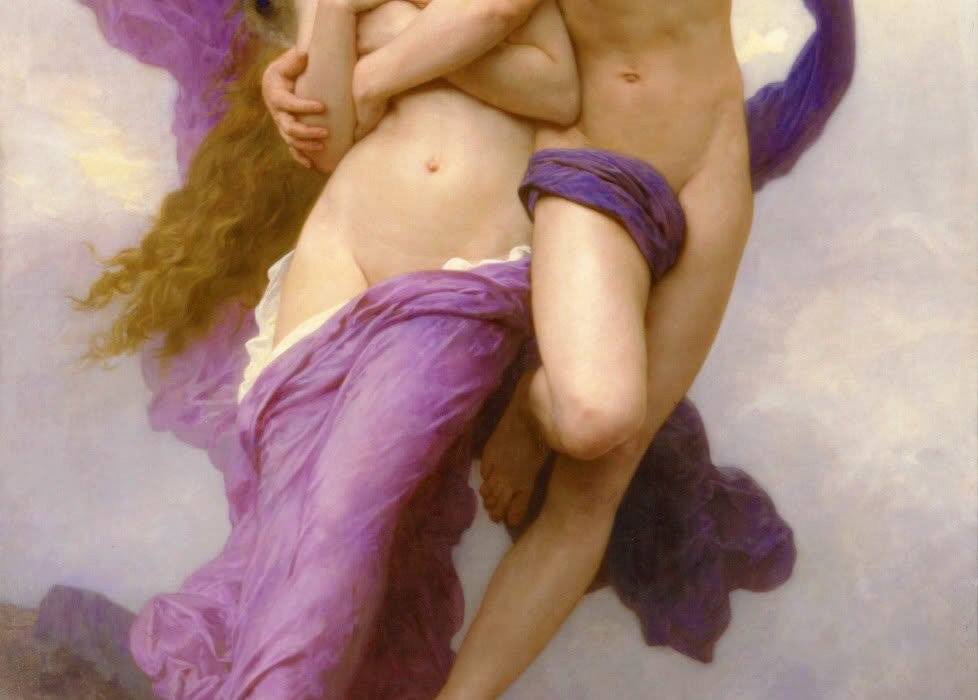
In the beginning, there were no heavens, no earth, no sea—only the vast emptiness of Chaos. Yet within that darkness stirred the first breath of existence. From the womb of Chaos came Gaia, the Earth herself, firm and eternal. She was the first mother, the stable ground upon which all life would stand. Soon after her came Tartarus, the abyss beneath the world, a shadowed realm where light could never reach. Then came Eros, the spirit of love and desire, whose invisible force would bind creation together.
These first beings were not born of flesh and blood but of essence and energy. They represented the cosmic principles—the Earth, the Underworld, the Sky, and the power that moves all life. Thus began the Greek vision of creation, a symphony of divine forces emerging from nothingness, shaping the world through both harmony and strife.
The Birth of Gaia and Uranus
Gaia, the great mother, looked upon the emptiness around her and longed for companionship. From her own body, she gave birth to Uranus, the starry sky, to blanket her in beauty. He stretched above her, radiant and infinite, and the two became inseparable—Earth and Sky locked in an eternal embrace.
From their union came the first children of form and substance: the Titans, vast and powerful beings who embodied the primal elements of nature and the cosmos. Among them were Oceanus, the endless sea that circled the Earth; Hyperion, who brought the sun; Theia, mother of the moon and dawn; and Cronus, who would one day wield the sickle of rebellion.
But Gaia’s children were not all graceful or kind. She also bore the Cyclopes, one-eyed giants with the power to forge thunder and lightning, and the Hecatoncheires, monstrous beings with a hundred hands and fifty heads—symbols of the chaotic power still lurking in the fabric of creation.
Uranus, seeing the fearsome shapes of these latter children, was horrified. He banished them to the depths of Tartarus, far from the light of day. Gaia, grieving and enraged, felt her maternal heart twist into bitterness. From her anguish, rebellion was born.
The First Rebellion: Cronus and the Fall of Uranus
Gaia, determined to end Uranus’s tyranny, forged a great sickle of flint and called upon her Titan sons to aid her. Only Cronus, the youngest and most cunning, dared to answer her call. Guided by his mother’s resolve, Cronus ambushed Uranus as he descended to Earth. With one swift stroke of the sickle, Cronus severed his father’s power, and the Sky recoiled from the Earth.
From the blood of Uranus that fell upon Gaia sprang new beings—the Erinyes, spirits of vengeance; the Giants, fierce and unyielding; and the Meliae, nymphs of the ash tree, from which the race of men would one day draw their strength. From the sea foam that gathered around Uranus’s cast-off essence arose Aphrodite, the goddess of love, her beauty both terrible and divine, born from violence yet destined to rule through desire.
Thus the age of Uranus ended, and Cronus took his father’s throne. The cycle of creation and destruction had begun—a rhythm that would echo throughout Greek mythology, where each generation of gods would rise, rule, and fall.
The Golden Age of Cronus
With Uranus overthrown, Cronus ruled the cosmos. He took his sister Rhea as his queen, and together they brought forth the second generation of gods: Hestia, Demeter, Hera, Hades, Poseidon, and Zeus. Under Cronus’s reign, the world flourished. This was the Golden Age—a time of peace, abundance, and eternal youth. Humans, still close to the divine, lived without toil or suffering. The Earth gave freely, the seasons were gentle, and no wars disturbed the harmony of life.
But shadows grew in Cronus’s heart. Gaia and Uranus had warned him that he, too, would be overthrown by one of his children. Terrified of his fate, Cronus resolved to prevent it. Each time Rhea bore a child, he swallowed the newborn whole, imprisoning them within himself, as if by consuming them he could devour destiny itself.
Rhea’s grief was unbearable. The goddess of motherhood could not watch her children vanish into darkness forever. When her youngest, Zeus, was born, she devised a plan. She gave birth in secret upon the island of Crete, hiding the infant in a cave on Mount Ida. There, nymphs and spirits cared for the child, feeding him honey and milk from the sacred goat Amalthea.
Rhea then presented Cronus with a stone wrapped in swaddling clothes, and he, blinded by fear, swallowed it without suspicion. Thus the seed of rebellion was hidden in the heart of his own house, waiting to bloom.
The Rise of Zeus and the War of the Titans
When Zeus grew to manhood, he returned to confront his father. With the help of the goddess Metis, he crafted a potion that forced Cronus to regurgitate his swallowed children. One by one, Zeus’s siblings—Poseidon, Hades, Hera, Demeter, and Hestia—were freed, reborn into the light.
Together, they waged war against Cronus and the Titans in a battle that shook the very foundations of the cosmos. For ten years, the war raged—Titan against Olympian, brother against brother, lightning against stone. The Earth groaned under the weight of their struggle, mountains shattered, and the sky burned with fire.
Zeus, seeking victory, released the Cyclopes and the Hecatoncheires from their ancient prisons. In gratitude, the Cyclopes forged weapons for the gods: thunder and lightning for Zeus, a trident for Poseidon, and a helmet of invisibility for Hades. With these divine tools, the Olympians gained the upper hand.
In the final battle, Zeus hurled his thunderbolts in blinding fury, Poseidon shook the seas, and Hades summoned the darkness below. The Hecatoncheires hurled mountains as if they were stones. The Titans fell, defeated, and were cast into Tartarus, bound in chains forged by their own kin.
The rule of the Olympians had begun. The cosmos had found a new order, and Zeus, king of gods and men, sat upon his throne atop Mount Olympus. Yet the echoes of rebellion lingered in the air, for the cycle of creation was never one of peace alone—it was a story of balance between chaos and order, between the eternal and the ever-changing.
The Shaping of the World
With the Titans defeated, the gods turned to the shaping of the world. Poseidon claimed the seas, his trident stirring the waves into life. Hades took the underworld, where he would rule over the dead and guard the secrets of mortality. Zeus claimed the sky, his thunderbolts illuminating the heavens.
The Earth, under Gaia’s nurturing hand, flourished anew. Rivers flowed, mountains rose, and forests spread across her body. The sun rode across the sky, guided by Helios, and the moon followed in silver silence, tended by Selene. The dawn and dusk, born of light and shadow, painted the world in eternal rhythm.
But even amid divine order, imperfection lingered. The Earth needed beings to inhabit it—to love, to struggle, to dream. Thus began the creation of mankind.
Prometheus and the Birth of Humanity
Among the Titans who had sided with Zeus during the great war was Prometheus, whose name means “forethought.” He was wise, compassionate, and bold—a friend to humankind even before humanity truly existed.
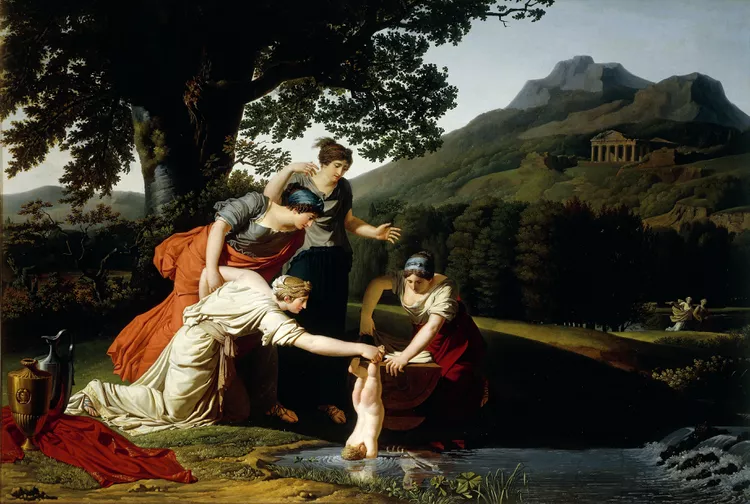
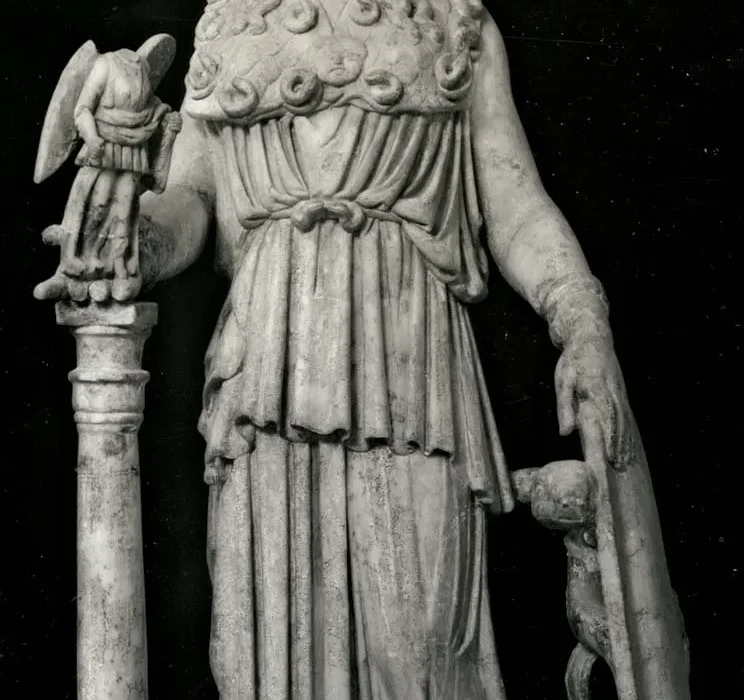
When the gods set about creating mortals, Prometheus shaped men from clay, molding them in the image of the divine. Athena, goddess of wisdom, breathed life into these figures, and they rose, trembling but alive, their eyes opening to a world of wonder.
Prometheus loved his creation deeply. He taught humans how to build shelters, fashion tools, and understand the patterns of the stars. But Zeus looked upon them with cold indifference. He saw humans as frail creatures, unworthy of divine favor. When Prometheus sought to give them the gift of fire—the flame of knowledge and progress—Zeus forbade it.
But Prometheus, unwilling to see his children suffer, defied the king of gods. He stole fire from Olympus, hiding it in a hollow reed, and brought it down to humankind. With fire, humans gained warmth, light, and the power to forge their destiny.
Zeus’s wrath was swift. To punish Prometheus, he chained the Titan to a lonely rock in the Caucasus Mountains. Each day, an eagle came to devour his liver, and each night it grew back, condemning him to endless agony. Yet Prometheus did not repent. His defiance became a symbol of humanity’s eternal struggle against tyranny—a reminder that progress is born of rebellion and compassion alike.
To punish mankind for Prometheus’s gift, Zeus created Pandora, the first woman, whose name means “all-gifted.” The gods adorned her with beauty, charm, and cunning. They gave her a jar, warning her never to open it. But curiosity, another divine gift, could not be restrained. When Pandora lifted the lid, all the evils of the world—sickness, sorrow, jealousy, and pain—flew out to plague humanity forever. Only hope remained inside, the one light that would never be extinguished.
The Ages of Man
Greek tradition tells that humanity passed through a series of ages, each one descending further from divine perfection. The first was the Golden Age, under the rule of Cronus, when humans lived in harmony, needing neither law nor labor. The Earth provided everything freely, and death was gentle, like sleep.
The Silver Age followed, ruled by Zeus, when humans became less noble, less wise. They lived for a hundred years as children, but when they grew to adulthood, arrogance consumed them. They refused to honor the gods, and Zeus destroyed them in his wrath.
Then came the Bronze Age, when men were strong but violent, obsessed with war. Their weapons were of bronze, their hearts as hard as metal. They perished by their own hands, leaving no legacy but destruction.
After them arose the Heroic Age—a brief return to glory, when demigods and heroes like Heracles, Perseus, and Achilles walked the Earth. They performed great deeds, bridging the gap between mortals and the divine.
Finally came the Iron Age, the age of toil and sorrow, the age of humanity as it exists now. In this age, labor is constant, justice falters, and the gods grow distant. Yet even amid suffering, hope persists—the final gift of Pandora’s jar.
The Cosmic Order and the Power of Fate
The Greek vision of creation is not a tale of a single moment of birth but a cycle—a dance between chaos and order, destruction and renewal. At the heart of this cycle lies Moira, or Fate, the mysterious power that governs gods and men alike. Not even Zeus, with all his thunderbolts, can defy the threads woven by the three Moirai, the Fates: Clotho, who spins the thread of life; Lachesis, who measures its length; and Atropos, who cuts it when the time comes.
In Greek thought, creation was not the act of a benevolent creator shaping a perfect world—it was the unfolding of necessity. The cosmos was born from struggle, sustained by balance, and destined for change. Each generation of gods represented a new order, each rebellion a step toward understanding.
This cyclical view of time and existence reflects the Greeks’ deep intuition about nature. They saw the universe as alive, self-renewing, and eternal—a story without a true beginning or end, only transformation.
The Legacy of Chaos and the Eternal Return
Even in the age of the Olympians, Chaos remained at the edge of all things—the dark ocean beyond the stars, the silence beneath creation’s hum. To the Greeks, chaos was not evil but essential. It was the raw potential from which form arises, the reminder that order is born from the void and will one day return to it.
The myths of creation are therefore not merely stories about gods and monsters; they are mirrors of human experience. They speak of our origins, our struggles against fate, and our search for meaning in a world both beautiful and cruel. The fall of Uranus, the defiance of Prometheus, the hope trapped in Pandora’s jar—all echo the human condition: our yearning for knowledge, our capacity for rebellion, and our unbreakable hope in the face of suffering.
The Eternal Fire of Imagination
The Greek creation myths endure not because they offer scientific explanations, but because they capture emotional truth. They express the tension between love and power, chaos and creation, fate and freedom. In them, the cosmos is not a machine—it is a living drama, filled with characters who embody the forces of existence itself.
When we read these myths today, we glimpse the same wonder that filled the hearts of the ancients who first looked up at the night sky. The constellations still trace the outlines of their gods; the mountains and seas still whisper their names. The myths remind us that creation is not an event in the distant past—it is an ongoing process, happening every moment, within and around us.
The Meaning Beneath the Myths
At their deepest level, Greek creation myths are not just tales of divine birth—they are reflections on human consciousness. Chaos represents the unknown, the infinite potential before awareness arises. Gaia and Uranus embody the union of matter and space, form and possibility. The Titans symbolize the primal forces of nature, vast and untamed. The Olympians, in turn, represent order, reason, and civilization—the triumph of mind over matter.
But even Zeus, the king of gods, cannot banish chaos completely. It remains, eternal and necessary, a reminder that no order can exist without its shadow. Creation is not a conquest but a balance, a constant negotiation between the forces that build and those that destroy.
To the Greeks, this was the essence of life itself—a universe where beauty and terror coexist, where every birth carries the seed of death, and every ending gives rise to a new beginning.
The Living Myth
Though millennia have passed since the poets of Greece first sang these stories, their echoes remain alive. They live in art, in literature, in philosophy, and in the human heart. Every time we wonder how the universe began, every time we reach for knowledge forbidden or divine, we replay the ancient myths in new forms.
We are all children of Gaia and Uranus, inheritors of their rebellion and their love. We are all sparks of Prometheus’s fire, bearers of knowledge and defiance. And within each of us, Pandora’s hope still glows—a quiet light that survives every catastrophe, reminding us that creation is never complete.
The Song of the Cosmos
In the end, the myths of creation in Greek tradition are not about gods alone—they are about us. They reveal that the world was not made for humanity but with humanity, that our struggles mirror those of the cosmos itself.
From chaos to cosmos, from darkness to dawn, the Greek vision of creation is a song of becoming—a hymn to the eternal dance of life. It tells us that we are part of a vast, unfolding story, one that began long before our birth and will continue long after.
For even when the stars fade and the seas grow silent, the essence of creation—the longing to exist, to love, to understand—will remain.
That longing is the true fire of the gods. And it burns still, within every human soul, as bright and eternal as the first spark that leapt from the heart of Chaos and called the universe into being.