For as long as humanity has existed, the Sun has been our guiding light, our celestial heartbeat, our eternal guardian. It ignites every dawn and blesses every living thing with warmth and energy. Without it, Earth would be a frozen, silent rock drifting in the cosmic dark. Yet for all its familiarity, the Sun remains a profound mystery—an ancient enigma blazing just 150 million kilometers away, concealing in its heart the secrets of creation itself.
It is easy to take the Sun for granted, to see it simply as a glowing disk in the sky. But this golden sphere is no gentle lamp—it is a roaring sphere of nuclear fire, more powerful than anything humans can imagine. Within its heart, hydrogen atoms fuse into helium in an endless alchemy that fuels the cosmos. Every photon of sunlight that kisses your skin began its journey hundreds of thousands of years ago in that fiery core.
The Sun’s light has guided civilizations, inspired gods, and sustained all life on Earth. Yet only in recent centuries have we begun to uncover what truly lies beneath its blazing surface—and the more we learn, the more wondrous and complex it becomes. The Sun is not a static ball of fire, but a living star, vibrating with rhythm, pulsing with magnetic storms, and occasionally unleashing tempests that can shake the very fabric of our technological world.
A Star Among Billions
Our Sun is not unique in the grand expanse of the universe. It is one among billions of stars scattered through the Milky Way, and trillions more across the observable cosmos. Yet for us, it is special—it is our star, the one that shaped our world and sustains every breath we take.
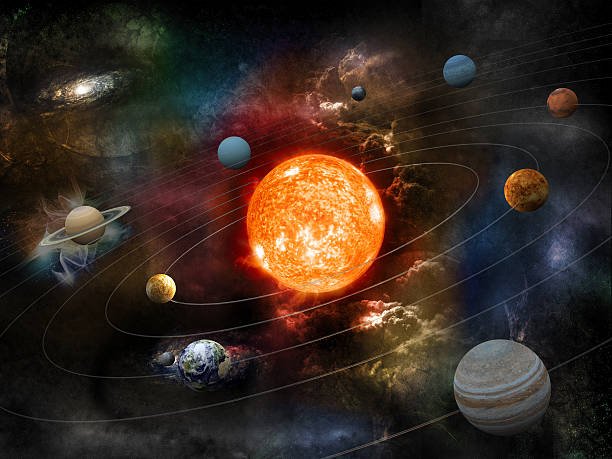
Classified as a G-type main-sequence star, or “yellow dwarf,” the Sun is about halfway through its ten-billion-year life. It shines steadily, neither too hot nor too cold, an ideal furnace that has allowed life to flourish on Earth. Its mass, more than 330,000 times that of our planet, is so immense that its gravity holds the entire solar system together—planets, moons, comets, and asteroids all dance around it in an elegant cosmic waltz.
To look at the Sun is to see a moment in stellar evolution frozen in balance. It has not yet exhausted its fuel, nor has it begun the slow death that awaits all stars. It burns in equilibrium, its inward gravitational pull perfectly countered by the outward pressure of fusion. This harmony is what makes the Sun a giver of life, not a destroyer.
But beneath that serene glow lies unimaginable violence—a nuclear engine of staggering power, where temperatures soar to fifteen million degrees Celsius and atoms are torn apart and remade.
The Heart of Fire: How the Sun Burns
For millennia, philosophers and scientists pondered the source of the Sun’s light. Was it burning wood or coal? Was it divine fire, or some mysterious celestial reaction? It wasn’t until the 20th century that the answer was found, and it forever changed our understanding of both the Sun and the universe.
The Sun’s energy comes from nuclear fusion—the process of combining light atomic nuclei into heavier ones, releasing enormous amounts of energy in the process. In the Sun’s core, hydrogen atoms are crushed together under immense pressure, forming helium and releasing energy in the form of gamma rays.
The numbers are staggering. Every second, the Sun converts about 600 million tons of hydrogen into helium. Of this, four million tons are transformed directly into energy. This may sound like a loss, but it’s the very reason the Sun shines: that tiny fraction of matter annihilated every second is what powers all life on Earth.
Einstein’s equation, E = mc², tells us that even a small amount of mass can be converted into vast amounts of energy. The Sun demonstrates this truth on a cosmic scale. Each photon born in its core begins an astonishing journey, taking thousands—sometimes millions—of years to escape the dense plasma inside. By the time it reaches the surface, it has scattered countless times, losing much of its initial intensity. Yet once it breaks free, it races through space at the speed of light, reaching Earth in just over eight minutes.
The sunlight that glows through morning mist or warms a winter afternoon began its life before the first humans ever walked the Earth. Each ray is ancient, a traveler through time, bearing within it the history of our star.
Layers of Light: The Sun’s Structure
Though it appears as a smooth, glowing sphere, the Sun is made up of distinct layers, each with its own role in shaping the light and heat we receive.
At the very center lies the core, the heart of fusion. Here, temperatures and pressures are so extreme that hydrogen atoms fuse together, releasing the energy that will one day illuminate the skies. Above the core lies the radiative zone, where energy travels outward through a dense sea of particles, bouncing randomly in a slow, tortuous path.
Further out lies the convective zone, where rising and falling currents of hot plasma churn like a boiling ocean. These convection cells give rise to the familiar granulated texture seen on the Sun’s surface through telescopes.
The photosphere, the visible “surface” of the Sun, is not solid—it is a thin layer of gas only a few hundred kilometers deep. Yet it is here that sunlight is finally freed, glowing at about 5,500 degrees Celsius. Above it lies the chromosphere, where spicules—towering jets of plasma—leap thousands of kilometers into space.
Finally, we reach the corona, the Sun’s outer atmosphere, a mysterious halo of superheated gas that extends millions of kilometers into space. The corona is paradoxically hotter than the Sun’s surface, reaching temperatures of millions of degrees. Scientists still do not fully understand why—a mystery known as the “coronal heating problem.” Magnetic fields and waves of charged particles likely play a role, but the exact mechanism remains one of solar physics’ greatest unsolved puzzles.
The Sun’s Magnetic Soul
The Sun is not just a ball of plasma—it is a magnetic creature, alive with invisible lines of force that twist, snap, and reconnect in constant motion. These magnetic fields shape nearly every feature of solar activity, from dark sunspots to violent flares.
Every 11 years, the Sun undergoes a magnetic reversal—its north and south poles switch places. During this cycle, the number of sunspots increases, marking a period of heightened solar activity known as the solar maximum. Sunspots are regions of intense magnetic field, cooler and darker than their surroundings, often giving rise to spectacular eruptions.
When magnetic field lines become tangled and break, they release immense amounts of energy in the form of solar flares—bursts of radiation that can outshine entire stars for brief moments. Even more dramatic are coronal mass ejections (CMEs), colossal explosions that hurl billions of tons of plasma into space at millions of kilometers per hour.
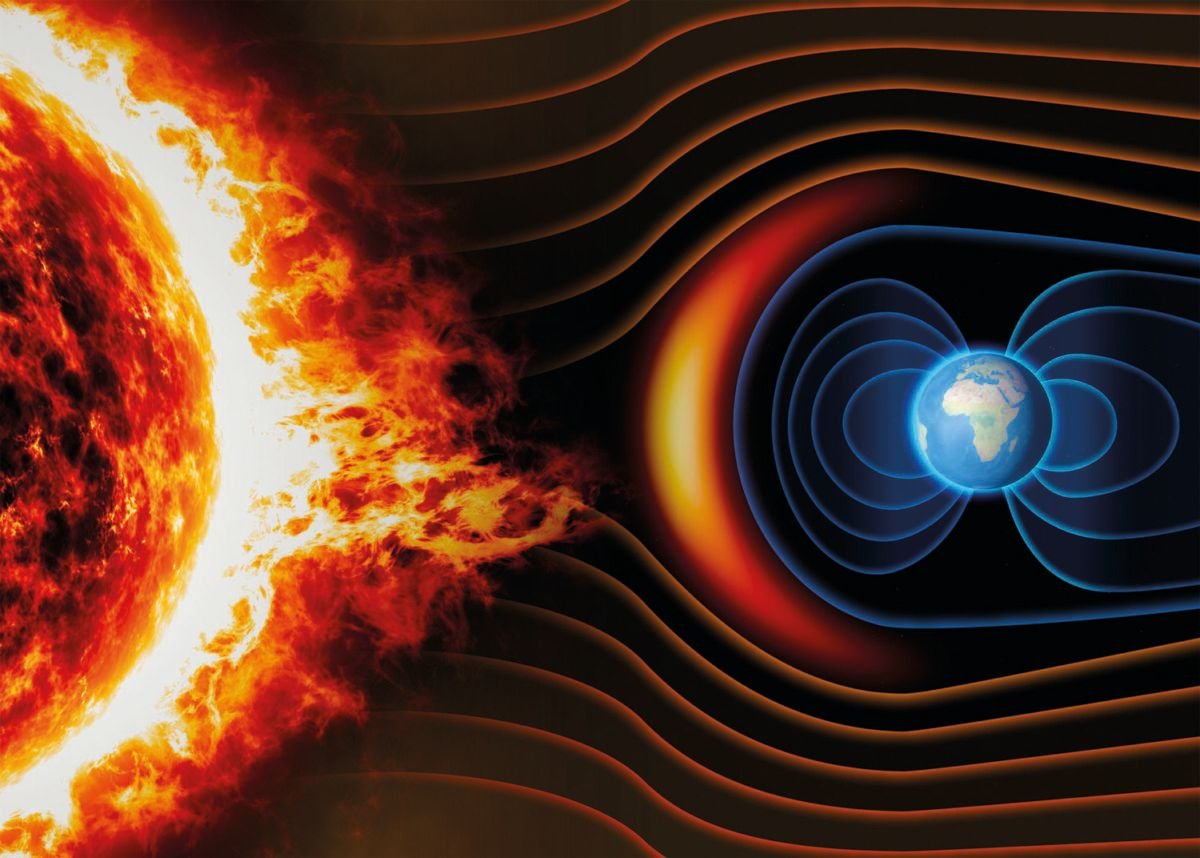
When these solar storms collide with Earth’s magnetic field, they can trigger dazzling auroras, painting the sky with ribbons of green and red light. But they can also disrupt satellites, communications, and power grids, reminding us that our technological civilization is still deeply vulnerable to the moods of our star.
The Sun’s magnetism is both beauty and danger—a double-edged force that has shaped not only our world but our dependence on it.
The Light That Creates Life
All the energy that drives life on Earth originates from the Sun. Every leaf that unfurls toward the sky, every ocean current that flows, every breath of wind, and even the food on your plate—all are powered by sunlight.
Through photosynthesis, plants capture sunlight and convert it into chemical energy, producing oxygen and forming the foundation of the food chain. Every calorie you consume is, in essence, stored sunlight transformed through life’s intricate web.
The Sun also drives Earth’s climate and weather systems. It warms the atmosphere unevenly, creating winds and currents that shape our environment. The rhythm of day and night, the changing of seasons—all are gifts of our planet’s relationship with the Sun.
But the Sun’s influence extends far beyond warmth and light. Its ultraviolet rays trigger the production of vitamin D in our skin, vital for health. Its energy sustains the biosphere, yet in excess, it can also destroy. The balance between nurturing and burning, between creation and destruction, defines our delicate place beneath its rays.
The Sun is, in every sense, the author of life. Its light wrote the story of evolution, guiding the emergence of every species that ever existed. To study the Sun is to study the origin of ourselves.
Storms of the Sun: The Power of Space Weather
While the Sun’s warmth sustains life, its tempests can threaten our modern world. Solar flares and coronal mass ejections send streams of charged particles racing through space. When they reach Earth, they can interfere with satellites, GPS systems, and even electrical grids.
The most powerful geomagnetic storm ever recorded, known as the Carrington Event of 1859, caused telegraph systems to spark and fail, and auroras to appear as far south as the Caribbean. If such an event occurred today, it could cripple global communications and power networks, causing chaos in our interconnected civilization.
Space weather is not just a scientific curiosity—it’s a real and growing concern. As humanity becomes increasingly reliant on technology, monitoring and predicting solar activity has become vital. The Sun’s storms remind us that we live in the shadow of a dynamic and sometimes unpredictable star.
The Secret Life of Neutrinos
Among the Sun’s most elusive secrets are the neutrinos—ghostlike particles born in the heart of fusion reactions. Trillions of them pass through your body every second, yet they rarely interact with matter at all.
For decades, scientists struggled to detect them. When they finally did, they found fewer than expected, leading to the “solar neutrino problem.” The mystery persisted until it was discovered that neutrinos can change “flavors” as they travel from the Sun to Earth, explaining the missing numbers.
These ghost particles offer a direct glimpse into the Sun’s core, confirming that fusion truly powers our star. They also reveal the astonishing interconnectedness of the universe—tiny messengers from the Sun’s heart, whispering across the void, carrying the story of creation itself.
The Death of the Sun: A Distant Future
Like all stars, the Sun’s life is finite. Though it seems eternal to us, it is slowly burning through its hydrogen fuel. In about five billion years, it will reach the end of its stable life and begin to change dramatically.
When the hydrogen in its core runs out, fusion will move outward into a shell around the core. The Sun will swell into a red giant, engulfing Mercury and Venus, and perhaps even Earth. Its outer layers will expand into space, glowing like a cosmic ember.
In its final act, the Sun will shed those layers into a beautiful planetary nebula, leaving behind a dense core known as a white dwarf—a stellar ghost, no larger than Earth but containing half the Sun’s mass. It will shine faintly for trillions of years before fading into darkness.
Though this fate lies far in the future, it reminds us of the fragile balance that sustains life. Stars are born, they live, and they die—and from their ashes, new stars and planets emerge. The Sun’s death will seed the galaxy with the elements needed for new worlds, continuing the eternal cycle of creation.
Unlocking the Sun’s Secrets
Humanity’s journey to understand the Sun is one of science’s greatest triumphs. From ancient skywatchers who worshipped it as a god, to space probes that now dive into its atmosphere, we have come closer than ever to touching the heart of our star.
The Parker Solar Probe, launched by NASA, is currently orbiting closer to the Sun than any spacecraft before it, enduring unimaginable heat and radiation. It is sampling the solar wind, tracing magnetic fields, and seeking to uncover why the corona burns hotter than the surface.
Meanwhile, the Solar and Heliospheric Observatory (SOHO) and the Solar Dynamics Observatory (SDO) watch the Sun continuously, capturing its every flare and tremor in exquisite detail. These missions are not just scientific—they are acts of awe, humanity reaching for understanding, daring to touch the divine fire.
Each discovery reveals not just how the Sun works, but how deeply connected we are to it. The elements in your blood, the warmth that fuels your thoughts, the life that surrounds you—all trace their origins to the nuclear heart of our star.
The Sun in Myth and Meaning
Long before science explained the Sun’s power, humanity revered it as sacred. Across cultures and centuries, the Sun has been worshipped as a god, a giver of life, a symbol of rebirth and illumination.
The Egyptians saw the Sun as Ra, sailing his golden barque across the sky each day. The Aztecs offered sacrifices to Tonatiuh, the Fifth Sun, to keep the world alive. The Greeks told of Helios, driving his chariot of fire from dawn to dusk. Even today, our languages and rituals carry traces of these ancient solar myths.
In every age, the Sun has represented more than light—it has symbolized consciousness, clarity, and the triumph of life over darkness. To stand beneath its rising glow is to feel connected not just to nature, but to the entire human story.
Science has not diminished that awe—it has deepened it. Knowing that the Sun is a nuclear fusion reactor suspended in space only makes its light more miraculous. To understand its true nature is to stand in reverence of something vast, ancient, and beautiful beyond words.
The Sun and Our Future
As humanity looks toward the stars, the Sun remains both our anchor and our key. Solar energy may one day free us from dependence on fossil fuels, allowing us to live sustainably beneath the light that has always been our greatest gift.
New technologies harnessing solar power are transforming the way we think about energy. Panels and mirrors, inspired by the Sun’s eternal generosity, are turning light into electricity—clean, boundless, and eternal.
We are also learning to live with the Sun’s moods. Space weather forecasting is improving, protecting satellites and astronauts from its storms. Missions to study the Sun are expanding our understanding of plasma physics and magnetic fields, helping us build a future that thrives in harmony with our star.
In the centuries to come, as we venture beyond Earth, the Sun will remain our constant companion—a beacon in the dark, guiding us through the void. Its light will power our spacecraft, sustain our colonies, and remind us of our origin.
The Human Connection
Every sunrise tells the story of the universe. It is the echo of the Big Bang, the glow of ancient hydrogen still burning across time. When you stand beneath the morning Sun, you are standing in the presence of cosmic history.
The photons that warm your face began their journey long before your ancestors existed. They passed through the vast furnace of the Sun’s core, through plasma and magnetic storms, across the cold emptiness of space—just to reach you.
To understand the Sun is to understand ourselves. We are the children of its fire, born from the dust of stars, sustained by their light, destined to one day return to them. The Sun’s story is our story—one of birth, transformation, and wonder.
The Hidden Power of Light
Though we see only the visible spectrum, the Sun emits a vast range of radiation—from radio waves to gamma rays. Each wavelength carries different information about the Sun’s behavior and structure.
Ultraviolet rays sculpt our atmosphere, creating the ozone layer that shields us from harmful radiation. Infrared light warms the Earth’s surface, driving weather and climate. X-rays and gamma rays, though invisible, reveal the violent energy of solar flares and magnetic storms.
By studying this full spectrum, scientists unlock the Sun’s secrets, understanding how its light interacts with matter, and how its radiation shapes our planet’s destiny.
The Sun’s hidden power lies not only in its energy, but in the subtle ways it connects the physical and the spiritual—the seen and the unseen. Every beam of light carries both warmth and information, sustaining life while telling the story of the cosmos.
The Sun’s Infinite Legacy
Long after we are gone, the Sun will continue to shine. It will rise and set over new civilizations, new forms of life, perhaps even new worlds. Its light will outlast every empire, every city, every story we tell.
And yet, for all its grandeur, the Sun’s power is deeply personal. It fuels our hearts, lights our dreams, and reminds us that even in the vast cold of space, warmth exists. The same nuclear fire that burns in the Sun burns, in miniature, in the chemistry of every living cell.
We are, in every sense, sunlight given form—matter made conscious by the energy of a star.
The Final Illumination
When you look at the Sun—not directly, but with reverence—you are gazing into the beating heart of existence. Its light is ancient, its power boundless, its mystery eternal. The Sun does not simply shine—it sings, hums, pulses, and creates. It gives and takes, nurtures and destroys.
It is the engine of life, the keeper of time, the silent witness to our evolution. It has watched continents drift, species rise and fall, civilizations bloom and vanish. Through it all, it has never ceased to shine.
To know the Sun is to glimpse the divine symmetry of the universe—the balance of creation and decay, energy and matter, order and chaos. Its secrets are the universe’s secrets, written in fire and light.
And though we are small, we are a part of that radiance. The same energy that fuels the Sun fuels us. The same atoms that fuse in its core dance in our blood.
In its light, we are illuminated.
In its warmth, we are alive.
In its secrets, we find ourselves.