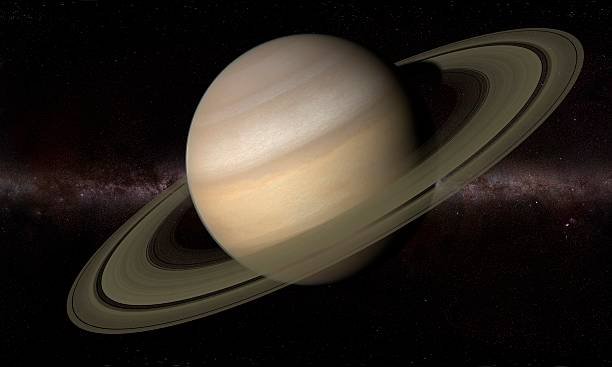
On a clear, moonless night—far from the glare of cities—there stretches across the heavens a pale, misty band of light. It arches from horizon to horizon like a ghostly river flowing through the darkness. This is the Milky Way, our galaxy—our home adrift in the cosmic ocean. For thousands of years, it has inspired myth, wonder, and questions as old as humanity itself.
Ancient peoples gazed upon that glowing ribbon and gave it names that reflected their dreams and fears. The Greeks called it Galaxias Kyklos, the “Milky Circle,” imagining it as the spilled milk of the goddess Hera. The Chinese saw it as the “Silver River,” a celestial pathway separating lovers across the heavens. The indigenous peoples of Australia, Africa, and the Americas found in it stories of creation, life, and the spirits of the departed. Long before telescopes, the Milky Way connected us to the mystery of existence.
Today, science reveals that this shimmering band is not a single cloud but the collective light of hundreds of billions of stars. Each speck is a sun, many with planets of their own, possibly with worlds where other beings look up at their sky and wonder about us. The Milky Way is more than a structure of stars and dust—it is the vast, living city of cosmic time that gave birth to Earth, to life, and to every atom within us.
The Galactic Home We Inhabit
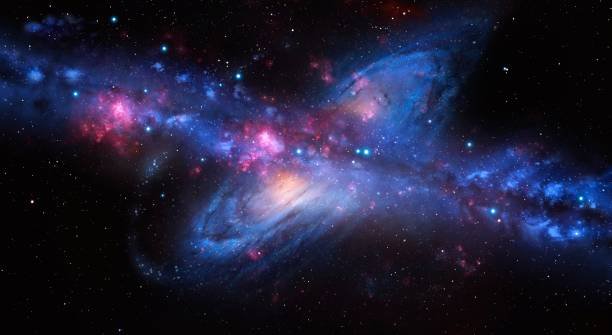
Our Milky Way is a barred spiral galaxy—a vast, rotating disk of stars, gas, and dark matter about 100,000 light-years across. To grasp that scale is to stretch the imagination. One light-year—the distance light travels in a year—is nearly 10 trillion kilometers. Even moving at the speed of light, it would take 100,000 years to cross from one edge of our galaxy to the other.
In that immense expanse lie perhaps 400 billion stars, along with giant clouds of hydrogen, fields of cosmic dust, and invisible dark matter that makes up most of its mass. From a distance, the Milky Way would appear as a glowing whirlpool—four majestic spiral arms coiling around a bright central bulge. Within this grand design, our own Sun is a rather ordinary star, residing in one of the spiral arms called the Orion Arm, about 27,000 light-years from the galactic center.
We orbit the Milky Way once every 230 million years—a journey so vast that since the time of the dinosaurs, the Sun has completed only a single revolution around the galaxy. Every star, every cloud, every planet is part of this slow, graceful dance, moving together under the influence of gravity in a cosmic choreography that has been unfolding for billions of years.
The Hidden Heart of Darkness
At the center of our galaxy lies one of the most mysterious and powerful entities in the universe: a supermassive black hole named Sagittarius A*. It is about four million times more massive than the Sun, yet confined within a space smaller than our solar system.
For centuries, we could not see it. The dense clouds of dust and gas that fill the inner galaxy hid its light. Only with the development of infrared and radio astronomy did we begin to peer into the core, discovering stars orbiting an invisible point at astonishing speeds. Their motion betrayed the presence of an object so massive and compact that nothing but a black hole could explain it.
In 2019, the Event Horizon Telescope—a network of observatories spread across the globe—captured the first image of a black hole’s shadow. Though that image was from a different galaxy, it confirmed what our theories predicted. In 2022, astronomers finally revealed the image of Sagittarius A* itself: a glowing ring of superheated gas spiraling into darkness, the beating heart of our Milky Way.
This black hole is not a monster consuming everything around it but rather a stabilizing anchor for the galaxy’s structure. Its immense gravity helps shape the orbits of nearby stars and influences the flow of matter and energy through the galactic core. Around it, entire clusters of stars whirl in silent reverence, their light flickering like embers drawn toward the cosmic abyss.
The Stars That Build Our Sky
Every point of light you see on a dark night belongs to our Milky Way. The stars that paint our sky are our closest neighbors, strewn across thousands of light-years. They vary in size, temperature, and color—some small and dim like red dwarfs, others enormous and blazing blue giants.
Our own Sun is a middle-aged, medium-sized yellow star, quietly burning hydrogen into helium in its core. It is just one among billions, yet it holds a special place for us because it nurtures the only known world where life has awakened to wonder.
Stars are not eternal. They are born, live, and die, each stage contributing to the galaxy’s evolution. Deep within the spiral arms, giant molecular clouds collapse under gravity to form new stars—stellar nurseries illuminated by the fierce light of newborn suns. When massive stars reach the end of their lives, they explode as supernovae, seeding space with heavy elements like carbon, oxygen, iron, and gold.
Every atom in your body—every carbon in your cells, every oxygen in your lungs, every iron molecule in your blood—was forged in the heart of an ancient star that died long before the Sun was born. We are, in a very real sense, children of the Milky Way—made from its dust, shaped by its forces, and destined to return to it.
The Cosmic Architecture of the Milky Way
The Milky Way’s structure is layered and complex, like a celestial metropolis built over eons. At its heart lies the galactic bulge, a dense region packed with old stars and threaded with lanes of dust. Surrounding it is the bar, a central elongated feature made of stars that channels gas toward the core, fueling both star formation and the black hole’s appetite.
Spiraling outward from the bar are the spiral arms, immense curving rivers of gas and stars. These are not rigid structures but waves of density moving through the disk, compressing gas clouds as they pass and triggering the birth of new stars. The Orion Arm, where our Sun resides, is a minor spur between two major arms—the Sagittarius and Perseus Arms. Yet it is home to countless wonders: the Pleiades cluster, the Orion Nebula, and the great clouds where new suns are forming even now.
Beyond the bright disk lies the halo, a vast, spherical region extending far above and below the galactic plane. Here drift ancient stars and globular clusters—dense swarms of hundreds of thousands of stars bound together like cosmic fossils from the galaxy’s youth. The halo also holds the elusive dark matter that outweighs all visible material. Though invisible, dark matter’s gravity shapes the galaxy, keeping its stars from flying apart as it spins.
The Dark Side of the Galaxy
Despite all we know, most of the Milky Way remains unseen. About 85% of its total mass is dark matter—an invisible substance that does not emit or absorb light, yet reveals itself through its gravitational pull. Without it, the galaxy’s stars would not move as they do; the Milky Way would have long ago torn itself apart.
Dark matter is one of modern science’s greatest mysteries. It may consist of exotic particles that barely interact with ordinary matter, or it might represent something entirely new—perhaps a hidden property of space itself. Whatever it is, it forms a vast, invisible halo enveloping the Milky Way and every galaxy in the cosmos.
Then there is dark energy, an even stranger phenomenon driving the accelerated expansion of the universe. It may not play a direct role within our galaxy, but it determines the fate of all galaxies together, stretching the cosmic web and pushing distant worlds farther and farther away.
Thus, we live in a universe where the visible stars—the radiant beauty we can see—are only a small fraction of reality. Most of the cosmos is hidden, silent, and unseen, reminding us that our knowledge, though vast, is still incomplete.
The Galactic Ecosystem
The Milky Way is not static—it breathes, evolves, and transforms. Stars are born and die, gas clouds collapse and disperse, and spiral arms drift and reform. Supernova explosions enrich the interstellar medium with new elements, while shockwaves from dying stars trigger new generations of stellar birth.
The galaxy is also filled with cosmic dust—tiny particles of carbon and silicates that absorb starlight and re-emit it as faint infrared glow. Though it obscures our view, this dust is essential for creation. It provides the building blocks for planets, moons, and life itself. Without it, there would be no Earth, no oceans, and no humans to gaze upward in wonder.
The interstellar medium—the thin gas and dust between stars—is the galaxy’s circulatory system. Through it flows a continual exchange of material, recycled from dying stars into new ones. The Milky Way, in this sense, is alive—a vast, self-renewing organism whose heartbeat spans billions of years.
The Companions of the Milky Way
Our galaxy is not alone in the cosmic night. It belongs to a small community known as the Local Group, a collection of more than fifty galaxies bound together by gravity. The two largest members are the Milky Way and the Andromeda Galaxy, each with its own entourage of smaller companions.
Orbiting the Milky Way are dozens of dwarf galaxies—tiny, faint clusters of stars that move like moons around a planet. The most prominent are the Large and Small Magellanic Clouds, visible from the Southern Hemisphere as luminous patches in the sky. They are irregular galaxies, possibly remnants of larger systems torn apart by the Milky Way’s gravity.
In about 4 billion years, our galaxy and Andromeda will begin to merge. They will swirl together in a slow cosmic ballet, their stars passing harmlessly through each other while their mutual gravity reshapes both. Over time, their gas will ignite in bursts of star formation, and the two spiral galaxies will settle into a single, massive elliptical galaxy. The Milky Way’s story will continue—but in a new form, under a new name.
The Origin and Evolution of the Milky Way
The Milky Way was not always as we see it today. It began more than 13 billion years ago, forming soon after the Big Bang. In the early universe, matter began to clump under gravity, forming small protogalaxies. These merged over time, growing larger and more complex. The Milky Way was born from this process—a survivor of countless collisions and cosmic transformations.
Its oldest stars, found in the halo and globular clusters, date back to the dawn of star formation itself. Over billions of years, the galaxy grew by consuming smaller ones, each merger leaving behind traces in the form of star streams and ripples in the halo. Even today, the Milky Way continues to devour its neighbors—the Sagittarius Dwarf Galaxy, for instance, is currently being absorbed into our disk.
This slow, steady evolution has shaped the galaxy into its current spiral form. It is not the work of chaos but of cosmic artistry, guided by the laws of gravity and motion that weave complexity from simplicity.
The Milky Way Through Human Eyes
Long before science, the Milky Way lived in the human imagination. To the Greeks, it was divine milk spilled across the heavens. To the Egyptians, it was the celestial Nile, mirroring the river of life below. In the stories of the Maya, it was the World Tree—the bridge between realms of gods, humans, and ancestors.
These myths reflected the same awe that still stirs within us today. When Galileo first turned his telescope toward the Milky Way in 1610, he saw not a cloud but countless stars. That revelation shattered the ancient view of the heavens and began our modern journey of discovery.
In the centuries since, astronomers have mapped our galaxy, measured its structure, and uncovered its history. Radio telescopes have revealed its spiral arms hidden behind dust. Space probes like Gaia have charted the positions and motions of over a billion stars, creating the most detailed portrait of the Milky Way ever made.
Yet for all our instruments and equations, the sight of that soft, glowing river of light still fills us with the same wonder it gave our ancestors. Science has not diminished its mystery—it has deepened it.
The Milky Way and the Story of Life
If the galaxy is a city of stars, then our solar system is one of its smallest homes—a quiet neighborhood on the galactic outskirts. Yet it is here, in this unremarkable corner, that life has arisen, consciousness has bloomed, and curiosity has turned inward toward the stars.
Life on Earth depends on the Milky Way in countless ways. The Sun was born in a stellar nursery within the galaxy, surrounded by thousands of sibling stars. The elements that compose us were forged in earlier generations of stars, scattered across space, and later gathered into the cloud that became our solar system.
Even the rhythm of our planet’s history—mass extinctions, ice ages, and bursts of evolution—may have been influenced by our movement through the Milky Way’s spiral arms. As the solar system drifts through regions of higher radiation and cosmic dust, conditions on Earth subtly shift, shaping the story of life itself.
The Milky Way, therefore, is not just our cosmic address—it is the cradle of our existence. To understand it is to understand the forces that made us possible.
The Future of Our Galactic Journey
As we gaze into the night sky, we see the Milky Way as it was thousands of years ago. But what lies ahead for our galaxy—and for us?
In about 4 billion years, the Andromeda Galaxy will approach, its spiral arms growing larger in our sky. Over hundreds of millions of years, the two galaxies will collide, their stars mingling in a grand cosmic merger. The night sky of that distant future will blaze with countless new suns and nebulae, a spectacle beyond imagination.
Eventually, the Milky Way and Andromeda will merge into a single, massive galaxy—sometimes called “Milkomeda.” Its new form will likely be elliptical, filled with older stars, and surrounded by remnants of its past structure. The black holes at the centers of both galaxies will spiral together, merging into one colossal singularity.
Long after humanity is gone—or perhaps having ventured to the stars—our galaxy will continue its journey through space and time. It will evolve, fade, and transform, as all things in the universe do.
The Milky Way as a Mirror of Ourselves
There is something deeply human about our fascination with the Milky Way. To look up at it is to see the source of our atoms, the history of our creation, and the stage of our destiny. Every light we see is a message from the past, traveling across time to remind us of our place in the grand design.
Physics tells us the Milky Way is a natural phenomenon—a collection of stars and matter bound by gravity. But to the human spirit, it is much more. It is the symbol of unity, of belonging, of the unbroken thread that ties us to the cosmos.
When astronauts see the Milky Way from orbit, they often describe an overwhelming sense of connection—a realization that every problem, every dream, every moment of love and fear exists within one fragile world floating in a galaxy among billions. The Milky Way, in its luminous vastness, humbles and exalts us at once.
The Endless River of Light
The Milky Way is not merely a galaxy—it is a story written in stars. It is the chronicle of birth and death, of time and transformation, of energy and matter woven together by the hand of nature. It has existed for more than 13 billion years, and it will continue long after our brief flicker of existence.
When we look up and see that faint, glowing band, we are not just seeing the past—we are seeing ourselves. We are looking into the very substance that made us, into the vastness that gave rise to every dream, every thought, and every heartbeat.
We are not outside the Milky Way, observing it from afar. We are within it—one tiny consciousness in an ocean of stars, part of a galactic symphony whose music will play long after we are gone.
To understand the Milky Way is to understand that the universe is not a place we inhabit—it is something we are.
And as we gaze upon that river of light, crossing the silent heavens, we are reminded that we are travelers of the galaxy, born from stardust, destined to wander forever in the infinite beauty of our cosmic home.