From the moment human beings began to think, they have asked the same question: What is the good life? Is it wealth, power, pleasure, or peace? Is it success in the eyes of others, or integrity within one’s own soul? Across ages and civilizations, countless answers have been offered. Yet beneath the surface of all philosophies and faiths lies one unshakable truth—the good life cannot exist without morality.
Morality is the invisible architecture of civilization and the compass of every conscience. It governs not only how we treat others but also how we understand ourselves. A society without moral principle may achieve temporary power, but it collapses in decay. A person without moral direction may taste fleeting pleasure, but cannot sustain peace.
To live morally is to live meaningfully—to align one’s life with the deeper logic of empathy, justice, and truth. And though morality has been defined in many ways—by religion, by reason, by culture—its essence remains the same: it is the art of living in harmony with the good.
The pursuit of morality is not merely a spiritual or philosophical endeavor; it is a scientific one as well. Modern psychology, neuroscience, and evolutionary biology have begun to uncover the biological roots of moral feeling. They reveal that our capacity for empathy and fairness is not a social illusion, but a product of natural selection—a force that allowed human beings to thrive as cooperative, caring, and conscious creatures.
The Evolution of Moral Instinct
Morality, like language, did not appear overnight. It emerged slowly, shaped by the pressures of survival and the needs of community. Long before humans codified laws or wrote scriptures, our ancestors learned that cooperation was more powerful than isolation.
Evolution favored those who could share food, protect one another, and nurture offspring. Over thousands of generations, emotions such as compassion, guilt, and indignation evolved as biological mechanisms to sustain social bonds. Empathy—our ability to feel what others feel—allowed early humans to predict behavior, avoid conflict, and form trust. In this sense, morality is not a supernatural gift, but a natural inheritance—a product of the same evolutionary logic that gave us opposable thumbs and complex brains.
Neuroscientific studies have identified regions in the brain, such as the prefrontal cortex and amygdala, that are deeply involved in moral reasoning and emotion. When we witness suffering, these regions activate, generating the visceral feeling of distress that drives altruism. Mirror neurons—cells that fire both when we act and when we observe others acting—form the neurological basis of empathy.
Thus, morality begins not in abstract principles, but in the body itself. It is rooted in the heartbeat that quickens when we see another in pain, the unease we feel when we deceive, and the satisfaction that follows an act of kindness. Biology and ethics, far from being separate realms, are intertwined in the fabric of our humanity.
The Birth of Moral Philosophy
While moral emotions evolved naturally, moral philosophy arose as humanity sought to understand and refine them. When societies grew complex, instinct alone was not enough. Laws were written, religions flourished, and philosophers began to ask not just how we act morally, but why.
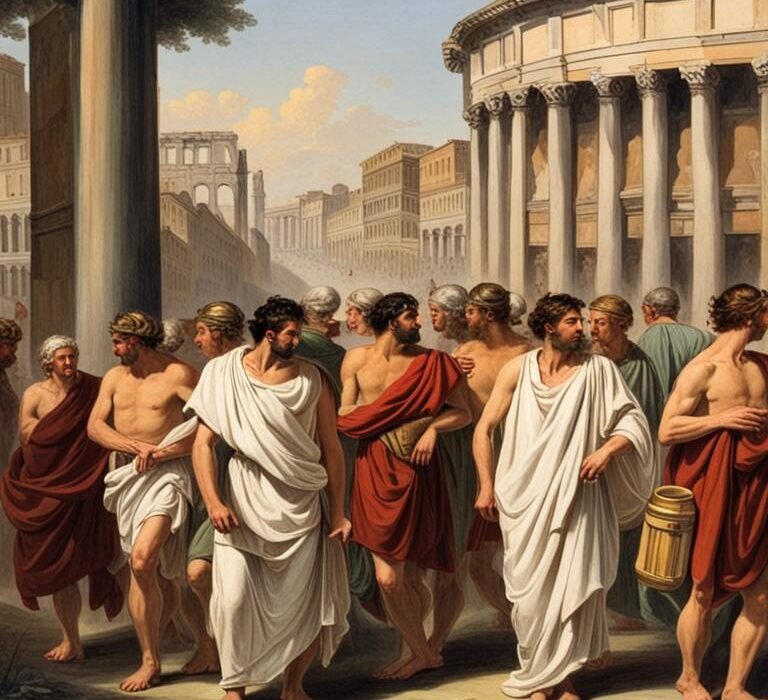
In ancient Greece, Socrates posed the radical question: What is virtue? He believed morality was not obedience to authority but a form of knowledge—the understanding of what truly benefits the soul. Plato extended this idea, teaching that justice is harmony within both the individual and the state. Aristotle, in turn, grounded morality in habit and character, arguing that the good life is the life of eudaimonia—flourishing through virtue.
In Asia, Confucius emphasized moral duty and social harmony, teaching that personal integrity sustains public order. In India, the Buddha framed morality as compassion and mindfulness—the recognition that harming others harms oneself.
Centuries later, Immanuel Kant defined morality as a matter of rational duty: to act only according to principles we would will as universal law. For him, morality was autonomy—the power of reason to command itself against selfish desire. At the same time, utilitarians like Jeremy Bentham and John Stuart Mill argued that the foundation of morality is happiness: actions are right insofar as they promote the greatest good for the greatest number.
Though these thinkers differed in method, their common goal was the same: to find a universal standard by which human life could be judged meaningful. Whether through virtue, duty, or consequence, they sought to anchor morality in reason, not whim—in principle, not power.
The Science of Moral Emotion
For centuries, morality was treated as the realm of philosophy and theology. But in recent decades, science has entered the conversation. Psychologists, neuroscientists, and evolutionary theorists now study morality not as divine revelation but as a cognitive process—one that can be mapped, measured, and even manipulated.
Studies in moral psychology show that moral judgment is not purely rational. It arises from a dialogue between intuition and reason. When people face moral dilemmas—such as whether to sacrifice one life to save many—brain imaging reveals an emotional tug-of-war between empathy and logic. Our gut reactions, shaped by evolution, often clash with our reflective reasoning, shaped by culture and education.
Jonathan Haidt’s research on moral foundations theory identifies several innate moral instincts—care, fairness, loyalty, authority, and purity—that evolved to sustain social cooperation. Different cultures emphasize these instincts differently, leading to moral diversity across the world. Yet beneath the diversity lies a shared substrate: the human capacity to value others’ well-being.
Neuroscience further demonstrates that morality is embodied. Acts of generosity release oxytocin and dopamine, producing the same neural reward as pleasure or food. Conversely, dishonesty or cruelty can activate stress responses, increasing cortisol levels. In short, morality is not merely a set of rules—it is a physiological equilibrium between self and other.
The Fragility of Moral Order
Despite its natural and cultural foundations, morality is fragile. It requires constant reinforcement through education, empathy, and social trust. History shows that when morality collapses—when empathy is stifled, when truth is silenced—civilization descends into cruelty.
The twentieth century’s wars and genocides remind us that technological progress alone cannot ensure moral progress. The same intellect that builds hospitals can build concentration camps. Science gives us power, but morality gives us direction. Without ethics, knowledge becomes weaponized; without compassion, reason becomes tyranny.
Psychological studies, such as Stanley Milgram’s obedience experiments and Philip Zimbardo’s prison simulation, reveal the unsettling ease with which ordinary people can commit harm when authority or conformity suppresses conscience. These findings underscore a sobering truth: morality must be cultivated consciously. It is not guaranteed by nature or law but must be chosen, day after day.
Morality and the Self
To understand why morality is the foundation of the good life, we must see that it is not simply about others—it is about ourselves. To act morally is to align one’s actions with one’s higher nature, to transcend the tyranny of impulse.
When we lie, cheat, or exploit, we fracture the unity between thought and action. We betray our own integrity, creating inner dissonance. Neuroscience confirms that moral conflict activates the same brain regions involved in physical pain. Dishonesty corrodes psychological well-being, while altruism strengthens it. Studies consistently show that people who live ethically—who cultivate gratitude, honesty, and compassion—report higher life satisfaction and lower stress.
Morality, then, is not merely self-sacrifice; it is self-realization. It is the alignment of behavior with conscience, the harmonization of inner and outer life. The philosopher Albert Schweitzer called this “reverence for life”—a moral awareness that recognizes the intrinsic worth of all beings. When we live morally, we do not lose ourselves in others; we discover a larger version of the self, one that includes others within it.
The Moral Brain and Empathy
At the heart of morality lies empathy—the ability to imagine another’s experience as our own. Neuroscientific research has shown that empathy is not a metaphorical capacity but a measurable function of the brain. When we see someone in distress, the same neural circuits involved in experiencing pain are activated in us. This shared neural resonance forms the biological basis of compassion.
Yet empathy is not automatic or infinite. It can be expanded through experience or shrunk through fear and prejudice. Propaganda and dehumanization, for instance, work precisely by shutting down empathic response—by making the other seem less real. Education, literature, and art, on the other hand, can enlarge our circle of empathy by allowing us to inhabit perspectives beyond our own.
The challenge of modern moral life is not a lack of knowledge, but a crisis of empathy. In a world connected by technology but divided by ideology, the moral imagination must grow faster than our capacity for power. To live morally is to resist the temptation of indifference—to feel the weight of another’s suffering as one’s own.
The Role of Reason in Morality
While emotion roots morality in empathy, reason refines it into justice. Compassion without reason can become sentimental; reason without compassion can become cruel. The harmony of both is what produces moral wisdom.
Rational moral systems, from Kant’s categorical imperative to John Rawls’s “veil of ignorance,” seek to establish principles that transcend bias and emotion. They remind us that morality is not merely about feeling good, but about doing what is right—even when it is difficult.
Yet pure reason alone cannot sustain moral life. The Holocaust was not committed by irrational mobs, but by bureaucratic rationality stripped of empathy. The moral challenge, therefore, is to unite heart and mind—to reason compassionately and feel intelligently. This balance is what philosopher Martha Nussbaum calls “the intelligent emotions”—feelings guided by understanding rather than impulse.
Morality as the Foundation of Society
Every civilization rests upon moral trust. Laws, markets, and governments are not sustained by force alone, but by the shared belief that people will act with a basic sense of fairness.
Economists have demonstrated that societies with higher levels of trust and moral cohesion experience greater prosperity and stability. Where corruption prevails, institutions decay; where honesty and empathy thrive, innovation flourishes. The social contract, as described by thinkers like Hobbes, Locke, and Rousseau, depends not only on external enforcement but on internal conscience.
Morality also underlies democracy itself. Freedom without ethics becomes license; equality without justice becomes chaos. The moral citizen recognizes that rights come with responsibilities, that freedom requires restraint, and that progress must serve human dignity, not merely profit or power.
The Illusion of Moral Relativism
In the modern age, many argue that morality is relative—that what is right for one culture or person may be wrong for another. While it is true that moral customs vary, moral principles do not. Across all societies, humans value fairness, kindness, and the avoidance of harm. These universals reflect our shared biology and interdependence.
Relativism, when taken to extremes, becomes moral paralysis. If all values are equal, then cruelty and compassion have the same worth. Science and philosophy alike refute this. Ethical universals arise from the conditions that make life possible. Just as the laws of physics shape the universe, the laws of morality shape the human world.
Morality is not an arbitrary code; it is the natural logic of coexistence. To deny morality’s universality is to deny the possibility of justice itself.
The Neuroscience of Moral Reward
Why do moral actions feel good? Because they are biologically rewarding. Studies using brain imaging show that altruistic behavior activates the brain’s reward circuits, releasing dopamine and endorphins. Acts of generosity light up the same areas as food, music, or love.
This neurological reward system evolved to reinforce cooperation. It ensures that helping others is not just socially beneficial but personally fulfilling. The “helper’s high” reported after volunteering or donating reflects the ancient link between morality and well-being.
Moreover, chronic moral dissonance—such as living deceitfully or exploiting others—correlates with anxiety, guilt, and even physical illness. The connection between morality and health is not mystical but biological: harmony between behavior and conscience supports physiological balance.
The Ethics of Modern Civilization
As technology expands human power, the moral imperative becomes ever more urgent. Artificial intelligence, genetic engineering, and environmental change confront us with choices that previous generations could scarcely imagine. The question is no longer merely Can we do this? but Should we?
Science gives us the means to reshape life, but only morality can guide its purpose. Without moral vision, our inventions become threats. The ethical dilemmas of the 21st century—climate responsibility, privacy, justice, inequality—are not technical problems but moral ones.
The philosopher Hans Jonas warned that in the age of technology, the scope of human action exceeds the reach of traditional ethics. We must therefore cultivate a “new ethics of responsibility”—one that considers not only immediate consequences but the long-term fate of humanity and the planet. The moral imperative, in this sense, is not confined to personal virtue; it is a planetary duty.
The Inner Peace of the Moral Life
At the heart of all this lies a simple truth: morality brings peace. Not merely social peace, but inner peace—the serenity that arises from coherence between one’s actions and one’s values.
To live morally is to free oneself from the chaos of guilt and the emptiness of selfish pursuit. The moral life is not easy; it demands courage, humility, and self-examination. But it is the only life that allows for genuine joy—the joy that comes not from indulgence, but from meaning.
Great moral teachers, from Socrates to Jesus, from the Buddha to Gandhi, have shown that happiness cannot be separated from goodness. Wealth fades, fame dies, pleasure dulls—but moral integrity endures. It is the one possession that cannot be lost except by one’s own choice.
Morality and the Search for Meaning
In an age of uncertainty, morality offers something that science alone cannot: purpose. Science can tell us how life works, but not why it matters. Morality fills that void by connecting personal existence to universal values.
When we act morally, we affirm that life has meaning—that compassion, justice, and truth are not illusions, but the essence of what it means to be human. This is not sentimentality; it is an evolutionary truth. Our species survived not by dominance alone, but by cooperation and care. The moral sense is not an ornament of civilization—it is its foundation.
The Moral Imperative
To live morally is to live consciously—to act as if every choice shapes not only one’s life but the world itself. The moral imperative is the recognition that our freedom carries responsibility, that our existence entails duty, and that the good life is impossible without the good heart.
Morality is not an abstract code imposed from above; it is the alignment of being with truth. It is the bridge between science and spirit, reason and love. It is what makes civilization humane and the individual whole.
The moral life does not promise perfection or reward. It promises only this: that we may live in harmony with ourselves, with others, and with the universe. It is the path that transforms existence into meaning and survival into dignity.
For in the end, morality is not about rules—it is about relationship. It is the art of living rightly in a world shared with others. It is the thread that binds the individual to the cosmos, the fleeting moment to the eternal truth.
To live morally is to choose light over darkness, understanding over indifference, love over fear. It is to say, with every act, that the good life is not a matter of fortune, but of conscience.
And in that choice—repeated each day, quietly, steadfastly—humanity finds its noblest definition.