Life on Earth did not creep quietly into existence. It burst onto the stage of our planet’s history in a way that still astonishes scientists today. For billions of years, Earth was a world of rock, water, fire, and chemistry, shaped by volcanic fury and cosmic impacts. Then, in what appears to be a relatively brief window of geological time, life diversified with astonishing speed and creativity. This moment, often described as life’s first great explosion, marks one of the deepest mysteries in science. How did simple chemistry give rise to complex living systems, and why did life expand so dramatically once it began?
This story is not only about fossils and ancient oceans. It is about the origin of complexity, the conditions that make life possible, and the fragile chain of events that eventually led to every living organism today, including us. To explore life’s first big explosion is to peer into the deep past and confront questions that blur the boundary between biology, chemistry, geology, and physics.
A Silent Planet Before Life
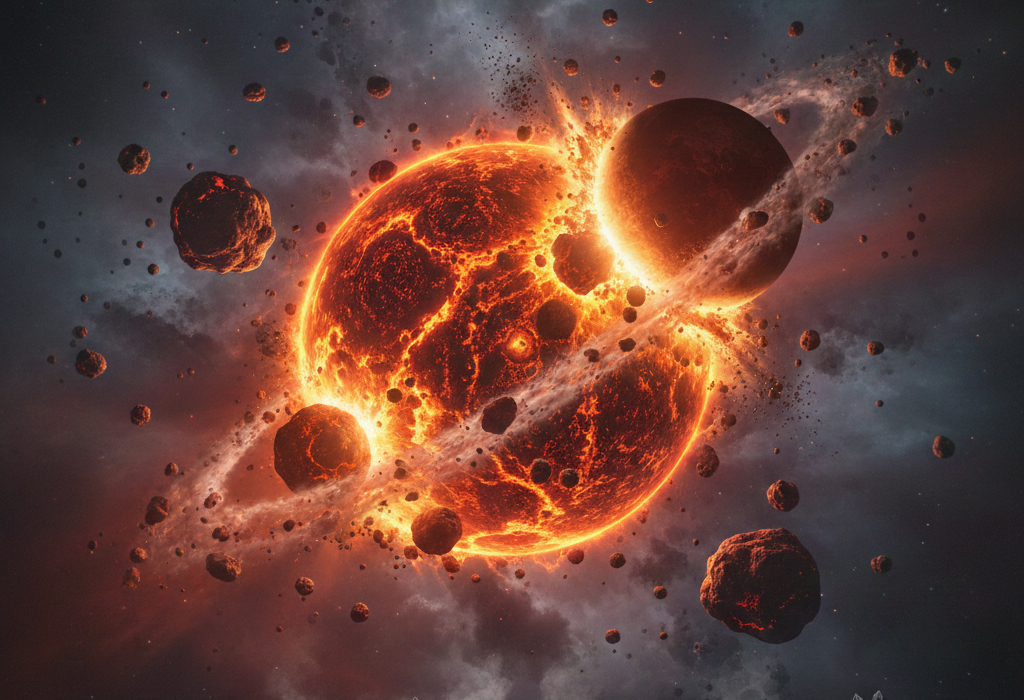
For nearly half of Earth’s history, our planet was lifeless, at least in any recognizable biological sense. Formed about 4.54 billion years ago, Earth began as a molten world, constantly reshaped by asteroid impacts and internal heat. Its surface cooled slowly, oceans condensed from steam, and the atmosphere evolved through volcanic outgassing and chemical reactions.
This early Earth was not a gentle place. Ultraviolet radiation bombarded the surface, lightning cracked through dense clouds, and volcanoes poured gases into the air. Yet within this apparent chaos, the ingredients of life were assembling. Carbon, hydrogen, oxygen, nitrogen, phosphorus, and sulfur circulated through oceans and rocks, forming increasingly complex molecules.
For hundreds of millions of years, chemistry ruled alone. Molecules formed, broke apart, and reformed in endless cycles. Somewhere in this vast chemical experiment, a profound transition occurred. Matter began to organize itself in a way that could grow, reproduce, and evolve. That transition marked the birth of life, but it did not immediately lead to the explosion of diversity that would later reshape the planet.
The First Living Systems and the Long Quiet Era
The earliest life forms were almost certainly microscopic. They left no shells, bones, or obvious structures behind. Their existence is inferred from subtle chemical signatures in ancient rocks and from the universal features shared by all life today.
These primordial organisms were simple compared to modern life. They likely relied on chemical energy rather than sunlight, thriving in environments such as hydrothermal vents or shallow, mineral-rich waters. They reproduced by copying their molecular components, with small variations that allowed evolution to begin its slow work.
For a very long time, life remained invisible on a planetary scale. Microbes dominated Earth for billions of years, shaping the environment in quiet but profound ways. They altered the chemistry of the oceans, interacted with minerals, and slowly transformed the atmosphere.
This long microbial era was not static. Evolution was constantly at work, experimenting with new metabolic strategies and molecular tools. But the pace of visible change was slow. Complex multicellular life had not yet emerged, and the planet still looked barren from afar.
The Rise of Oxygen and a Planetary Transformation
One of the most consequential developments in Earth’s history was the rise of oxygen. Early life forms did not use oxygen; in fact, oxygen was toxic to them. But some microbes evolved the ability to harness sunlight through photosynthesis, splitting water molecules and releasing oxygen as a byproduct.
Over time, this oxygen began to accumulate in the oceans and atmosphere, triggering what scientists call the Great Oxidation Event, around 2.4 billion years ago. This was a catastrophe for many anaerobic organisms, which either adapted or perished. Yet it also opened the door to new forms of metabolism that could extract far more energy from organic molecules.
Oxygen changed the planet in fundamental ways. It altered the chemistry of rocks, influenced climate, and made possible the evolution of complex cells. This transformation was slow and uneven, but it laid critical groundwork for life’s future expansion.
Still, even after oxygen became abundant, life did not immediately explode into diversity. Another long chapter of microbial dominance followed, suggesting that additional barriers stood between simple life and the complex ecosystems we recognize today.
The Emergence of Complex Cells
A major leap in biological complexity occurred with the emergence of eukaryotic cells, which contain a nucleus and specialized internal structures. Unlike simpler prokaryotic cells, eukaryotes are highly organized, with compartments that perform specific functions.
The origin of eukaryotes is itself a story of cooperation and integration. Evidence suggests that key components of eukaryotic cells, such as mitochondria, originated as independent bacteria that entered into symbiotic relationships with larger host cells. Over time, these partnerships became so intimate that the separate organisms merged into a single, more complex entity.
This innovation dramatically expanded the possibilities for life. Eukaryotic cells could grow larger, manage energy more efficiently, and support greater genetic complexity. Yet even with these advantages, complex life remained relatively rare for hundreds of millions of years.
The stage was being set, but the main act had not yet begun.
The Enigmatic Prelude to Explosion
In the late Precambrian era, Earth experienced dramatic environmental changes. Global glaciations may have covered much of the planet in ice, a period sometimes referred to as “Snowball Earth.” These extreme conditions would have placed immense pressure on living organisms, favoring adaptability and innovation.
As the ice retreated, nutrient-rich waters flooded the oceans, potentially fueling biological productivity. Oxygen levels may have risen further, crossing thresholds that allowed new forms of life to flourish. Genetic innovations accumulated, including new ways of regulating development and building tissues.
This period remains enigmatic because direct evidence is scarce. Soft-bodied organisms rarely fossilize, leaving only faint traces of life’s experiments. Yet these hidden developments were crucial, preparing life for its first great visible explosion.
The Cambrian Explosion and Its Astonishing Diversity
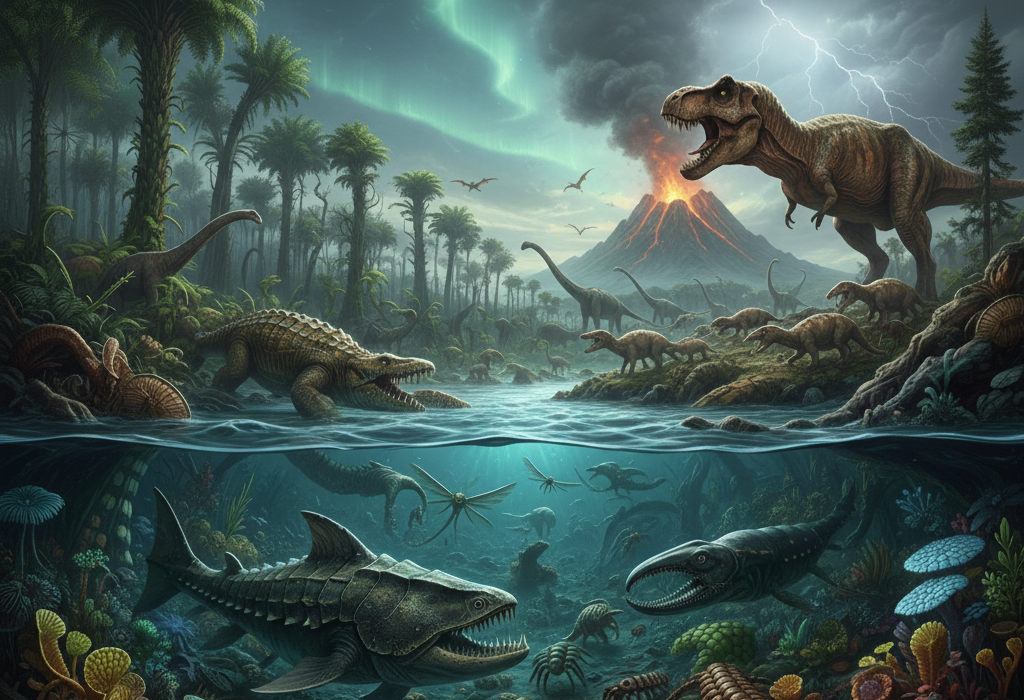
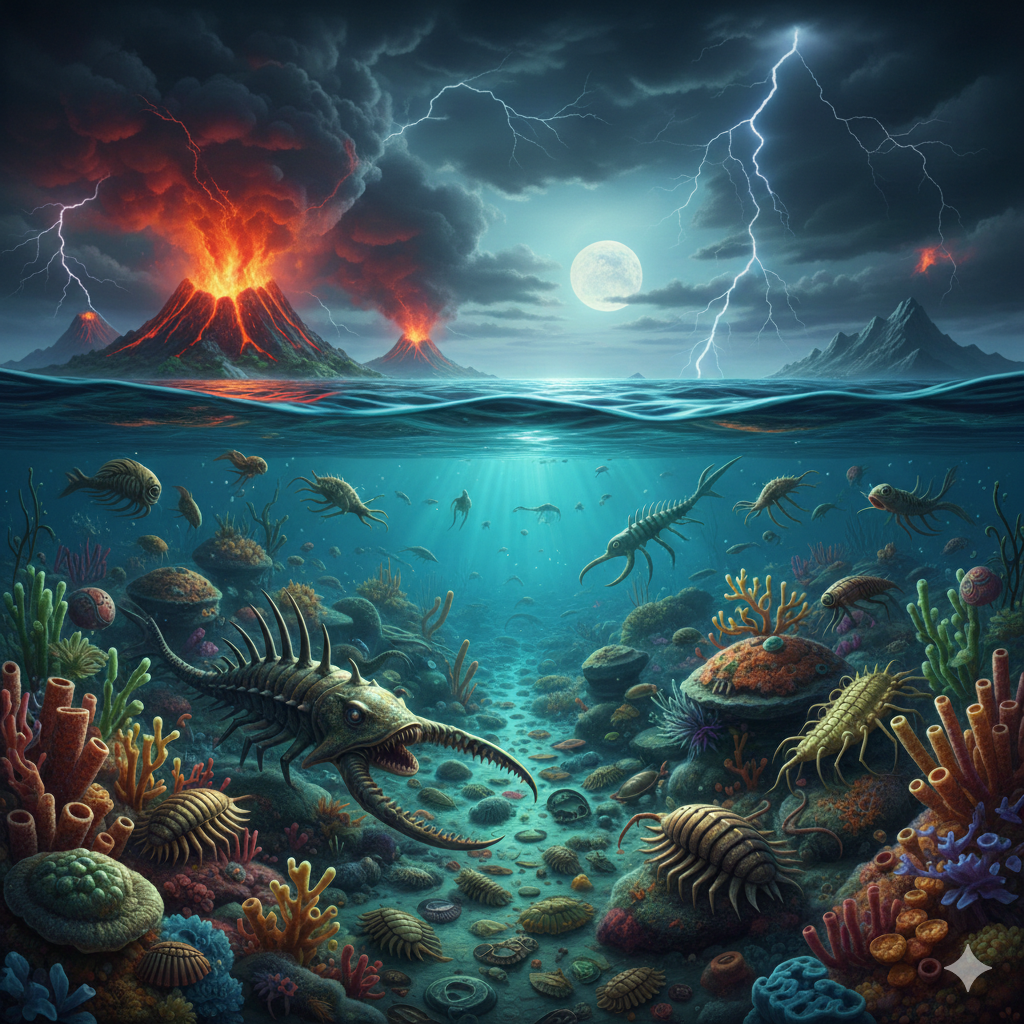
Around 541 million years ago, the fossil record reveals a sudden and dramatic increase in the diversity of life forms. This event, known as the Cambrian Explosion, marks the first appearance of most major animal groups known today.
In a relatively short geological span, creatures with shells, limbs, eyes, and complex body plans emerged. Predators and prey appeared together, setting off evolutionary arms races that accelerated diversification. Ecosystems became more structured, with organisms occupying specialized roles.
The term “explosion” can be misleading, as the process still unfolded over millions of years. Yet compared to the slow pace of earlier evolution, it was astonishingly rapid. Life seemed to discover a vast new landscape of possibilities almost all at once.
The mystery lies in why this happened when it did. The genetic and cellular tools required for complexity likely existed earlier, yet they only manifested in such dramatic fashion during this period. Understanding this timing remains one of the central challenges in evolutionary biology.
The Role of Environment in Life’s Expansion
Environmental change appears to have played a crucial role in life’s first big explosion. Rising oxygen levels would have allowed organisms to sustain higher metabolic rates, supporting active movement and larger bodies. Changes in ocean chemistry may have enabled the formation of hard shells, increasing fossilization and ecological interactions.
Climate stability may also have mattered. After periods of extreme fluctuation, a more stable environment could have allowed complex ecosystems to persist and diversify. The interplay between organisms and their surroundings created feedback loops, where biological activity reshaped the environment, which in turn influenced evolution.
Life was no longer merely surviving. It was transforming the planet, carving out niches and altering the flow of energy and matter on a global scale.
Genetic Innovation and the Architecture of Life
Behind the visible diversity of the Cambrian Explosion lay invisible genetic changes. Advances in developmental biology suggest that key regulatory genes, which control how organisms grow and differentiate, played a decisive role.
These genes act like switches and dials, turning other genes on or off at precise times and locations. Small changes in their regulation can produce dramatic differences in body form. Once such genetic systems were in place, evolution could explore a wide range of shapes and structures without reinventing life from scratch.
This genetic flexibility helps explain how such diversity could arise relatively quickly. Evolution was no longer limited to incremental tweaks. It could experiment boldly, producing new body plans that either succeeded spectacularly or vanished into extinction.
Predation, Competition, and Evolutionary Pressure
The emergence of predators may have been a powerful driver of life’s explosion. Once some organisms evolved the ability to hunt others, intense selective pressures followed. Prey species developed defenses such as shells, spines, or burrowing behaviors. Predators, in turn, evolved new strategies to overcome these defenses.
This evolutionary arms race fueled rapid innovation. Vision, mobility, and sensory systems became increasingly important. Life was no longer passive; it became dynamic, interactive, and often violent.
Competition for resources also intensified. As ecosystems grew more crowded, organisms specialized, exploiting specific food sources or habitats. This specialization further increased diversity, as even small ecological differences could support distinct forms of life.
The Fossil Record and Its Limits
Our understanding of life’s first big explosion relies heavily on fossils, but the fossil record is incomplete. Hard parts like shells and bones fossilize more readily than soft tissues, biasing what we see. Some lineages may have existed long before they appear in fossils, hidden by their fragile bodies.
Despite these limitations, fossil sites around the world provide remarkable windows into this pivotal era. They reveal not just isolated organisms but entire communities, preserving snapshots of ancient ecosystems.
Each new discovery adds detail and complexity to the story, sometimes confirming existing ideas and sometimes overturning them. The fossil record reminds us that science is an ongoing process, shaped by new evidence and reinterpretation.
Life’s Explosion as a Turning Point for the Planet
The diversification of life transformed Earth in lasting ways. Complex organisms reshaped food webs, altered sedimentation patterns, and influenced the cycling of nutrients. The interactions between life and the environment became more intricate and powerful.
This transformation set the stage for later evolutionary milestones, including the colonization of land, the rise of forests, and the emergence of vertebrates. Without life’s first big explosion, the world we know today would be unrecognizable.
The event also underscores the contingency of history. Had conditions been slightly different, life might have remained microbial, or taken a radically different path. The richness of Earth’s biosphere is not an inevitability but the outcome of a unique sequence of events.
Reflections on the Meaning of the Explosion
Beyond its scientific importance, life’s first big explosion carries deep philosophical weight. It challenges us to think about the nature of complexity, the role of chance, and the relationship between simplicity and diversity.
From a planet of microbes emerged a world of animals, plants, and eventually conscious beings capable of reflecting on their own origins. This transition was not guided by foresight or purpose, yet it produced outcomes of extraordinary beauty and intricacy.
The mystery lies not only in the mechanisms but in the improbability of it all. Life crossed thresholds that allowed it to flourish, and once it did, it transformed everything in its path.
Life’s First Big Explosion and the Search Beyond Earth
Understanding how life exploded into diversity on Earth informs the search for life elsewhere in the universe. If similar conditions exist on other planets, could life undergo comparable transitions? Or was Earth’s experience unique?
Astrobiology draws heavily on lessons from Earth’s history. It suggests that simple life may be common, while complex life requires a rare combination of factors. The timing, environment, and evolutionary pathways that led to Earth’s explosion may not be easily replicated.
Yet the very existence of such an event offers hope. It shows that under the right circumstances, life can transcend simplicity and generate astonishing complexity.
The Ongoing Mystery
Despite decades of research, life’s first big explosion remains only partially understood. Scientists continue to debate the relative importance of oxygen, genetics, environment, and ecological interactions. New technologies, from genomic analysis to advanced imaging, are revealing details once thought inaccessible.
Each answer raises new questions, deepening the mystery rather than closing it. This is not a failure of science but a testament to the richness of the problem. The origin and expansion of life touch on fundamental aspects of nature that resist simple explanation.
A Story Still Unfolding
The mystery of life’s first big explosion is not confined to the past. Its legacy lives on in every ecosystem, every organism, and every evolutionary experiment unfolding today. Life continues to diversify, adapt, and surprise, echoing that ancient burst of creativity.
By studying this pivotal moment, we learn not only about where we came from but about the processes that shape all living systems. It is a story of patience and sudden change, of quiet preparation followed by dramatic transformation.
In the end, life’s first big explosion reminds us that the universe is capable of producing complexity beyond imagination, and that from the simplest beginnings can arise worlds of astonishing richness.