Every night, when darkness unfolds across the vast canvas of the sky, the stars awaken. They shimmer with an ancient light, crossing oceans of time to reach our eyes. To look at a star is to look backward through history, into a past older than life, older than Earth itself. Each star is a blazing furnace, a beacon of creation, and a silent storyteller of cosmic evolution.
The stars are not merely distant points of light. They are the engines of existence—the cosmic forges that created every atom in our bodies. The carbon in your cells, the oxygen you breathe, the calcium in your bones—all were born in the fiery hearts of stars. Every human being, every planet, every living thing is, in a literal sense, made of stardust.
To understand stars is to understand ourselves. They are the beginning and the end of everything that exists, and their light is the poetry of the universe written across eternity.
The Birth of a Star
The story of a star begins in darkness. In the cold void of interstellar space, immense clouds of gas and dust—called nebulae—drift silently. These clouds may stretch across light-years, filled with hydrogen, helium, and the remnants of long-dead stars. Within these vast clouds, gravity slowly begins its patient work.
A slight disturbance—a passing shockwave from a nearby supernova, or the collision of clouds—can cause regions within the nebula to collapse under their own weight. As the gas compresses, it grows denser and hotter, forming a protostar at its core. Gravity pulls inward; pressure pushes outward; and a delicate balance begins to form.
At first, the protostar shines faintly, heated by the friction of collapsing material. But deep in its heart, as the temperature rises to millions of degrees, an astonishing transformation occurs. Hydrogen atoms begin to fuse into helium, releasing an immense amount of energy. In that moment, a star is born—a self-sustaining sphere of plasma, igniting its eternal fire.
The birth of a star is not a silent event; it is a cosmic dawn, a spark of creation that transforms a cloud of gas into a shining sun. The light from this newborn star pierces through the darkness, illuminating the nebula that gave it life. The universe, once again, gives birth to its own brilliance.
The Anatomy of a Star
A star may seem like a simple glowing sphere, but within it lies a magnificent complexity. The outer glow we see is only the surface, known as the photosphere—the visible “skin” of the star. Beneath this surface lies layer upon layer of physics, where matter and energy dance in constant tension.
At its core, nuclear fusion burns relentlessly. Here, under unimaginable pressure and heat—often tens of millions of degrees—hydrogen atoms are crushed together to form helium. This process releases vast amounts of energy, carried outward by radiation and convection until it finally escapes as light.
Surrounding the core is the radiative zone, where energy moves slowly, taking thousands or even millions of years to travel outward. Beyond that lies the convective zone, where hot plasma rises and cool gas sinks, creating currents that churn like boiling water.
At the surface, photons finally break free, racing across space at the speed of light. From that moment, it may take thousands or even billions of years for that light to reach the eyes of a distant observer—perhaps one standing on a small planet orbiting an ordinary yellow star called the Sun.
Every star is a universe unto itself—a delicate balance between gravity pulling inward and energy pushing outward. As long as fusion continues, this balance holds, and the star lives in a state of luminous harmony.
The Spectrum of Starlight
Not all stars are the same. Some burn cool and red, like embers at the edge of dying fire. Others blaze blue and white, so hot they could outshine thousands of Suns. The color of a star is not a trick of distance—it is a fingerprint of its temperature and energy.
Red stars, known as M-type stars, are the coolest, with surface temperatures around 3,000 degrees Celsius. They are small and dim, but they live for trillions of years, burning their fuel slowly and steadily. Blue stars, by contrast, can exceed 30,000 degrees Celsius and shine with ferocious intensity. Yet their lives are tragically short—mere millions of years before they explode in magnificent deaths.
The Sun, our life-giving star, lies comfortably in between—a G-type star, golden and stable, its warmth gentle enough to nurture life. It is not the biggest or the brightest star, but it is perfect for us. Around countless other stars, other worlds may exist—some barren, some perhaps alive.
When astronomers look at starlight through a spectroscope, they see rainbows marked with dark lines—each line a signature of elements within the star. Hydrogen, helium, carbon, oxygen, iron—these are the building blocks of the cosmos, each with its own spectral fingerprint. From the light of a star, scientists can tell what it is made of, how hot it is, how fast it moves, and even whether it hosts planets.
A star’s light is its biography—written in color, carved in wavelength.
The Life Cycle of a Star
Like all living things, stars are born, live, and die. Yet their lifespans are measured not in years, but in eons. A star’s fate depends entirely on its mass—the more massive the star, the faster it burns its fuel and the shorter its life.
A small star, like a red dwarf, may live for trillions of years. These quiet stars sip their hydrogen carefully, burning slowly in the darkness. No red dwarf has ever died in the history of the universe, for the cosmos is not yet old enough to witness such an ending.
A medium star, like our Sun, will live for about ten billion years. After spending most of its life fusing hydrogen into helium, it will eventually run out of fuel. Its core will contract, its outer layers will expand, and it will swell into a red giant, engulfing its inner planets. The Sun will one day turn Earth’s oceans to vapor and strip the skies bare before casting off its outer layers into space, forming a shimmering planetary nebula. What remains at its heart will be a white dwarf—a small, dense ember the size of Earth but with the mass of a star, slowly cooling for eternity.
But for the most massive stars, the story ends in fire and fury. When fusion can no longer sustain them, their cores collapse under their own immense gravity, triggering a cataclysmic explosion—a supernova. In that brief, brilliant moment, the star outshines entire galaxies, scattering heavy elements into space. Gold, silver, uranium, and the very iron in our blood are born in such cosmic funerals.
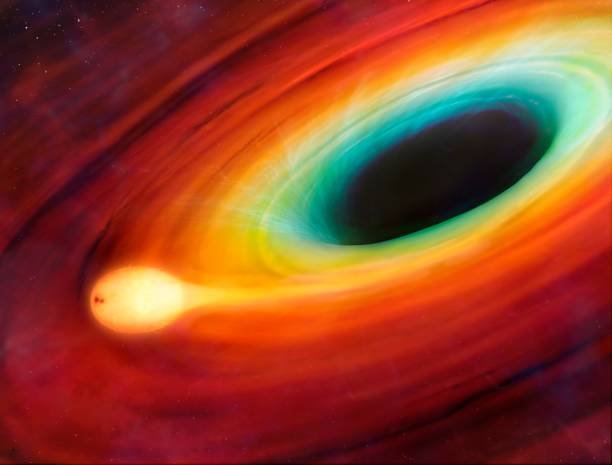
Sometimes, the core left behind after the explosion collapses further into a neutron star—a city-sized sphere so dense that a teaspoon of it would weigh billions of tons. And if the mass is even greater, gravity crushes it beyond comprehension, creating a black hole—a region where spacetime itself is warped into a one-way abyss.
Thus, the death of a star is never truly an end. It is a transformation, a rebirth. The ashes of old stars seed new ones, forming planets, life, and eventually beings capable of looking up and wondering how it all began.
The Constellations and the Human Story
Long before humanity understood the physics of stars, we saw them as divine messengers. Our ancestors looked at the night sky and found meaning in its patterns. They connected the dots into constellations—celestial myths written across the heavens.
The Greeks saw Orion the hunter, forever chasing the Pleiades. The Egyptians aligned their pyramids with the stars of Osiris. The Chinese mapped their imperial courts into constellations, and the Polynesians navigated entire oceans using only the stars.
The constellations became calendars, compasses, and stories. They were our first textbooks, our first sacred texts. To the ancient mind, the stars were eternal watchers, guiding lives and destinies. Even today, when science has replaced myth with understanding, their symbolic power remains.
When you gaze at Orion’s belt or the North Star, you share the same sight as countless generations before you. Across time, humanity has always been bound by this universal connection—the shared awe of looking up at the same sky.
The Sun: Our Star of Life
Though we often think of stars as distant, one star dominates our existence—the Sun. It is our constant companion, the source of light, warmth, and life itself. Without it, Earth would be a frozen, lifeless rock adrift in darkness.
At its core, the Sun fuses 600 million tons of hydrogen every second, producing 4 million tons of energy—enough to illuminate and sustain an entire solar system. This fusion creates a perfect balance between the inward pull of gravity and the outward push of energy.
The sunlight that warms your skin today began its journey deep within the Sun’s core thousands of years ago, moving through layers of plasma before escaping into space. It then traveled 150 million kilometers to reach Earth in just eight minutes. Every sunrise is, in truth, ancient light reborn.
The Sun’s magnetism drives solar flares and sunspots, occasionally sending out vast waves of charged particles that dance with Earth’s magnetic field to create the auroras—the shimmering curtains of light that illuminate polar skies.
To ancient civilizations, the Sun was a god. To modern science, it is a star—a middle-aged, main-sequence G-type star, burning quietly halfway through its life. But to us, it remains far more: it is the heartbeat of our world, the reason we exist.
The Death and Rebirth of Light
When a massive star dies in a supernova, the violence of its death sows new beginnings. The explosion scatters elements across space, enriching interstellar clouds with the raw materials for future worlds. In time, gravity will gather this debris again, forming new stars and planets.
In this endless cycle of creation and destruction, the universe renews itself. The atoms that were once part of ancient stars now flow through rivers, plants, and human veins. We are not merely observers of the cosmos; we are its continuation.
Each star’s death is a promise that the universe will not grow cold and empty too quickly. As long as stars are born, there will be light—there will be creation.
The Stars Beyond Sight
Our eyes can see only a fraction of the stars that fill the universe. With telescopes, we peer deeper into space and uncover realms of unimaginable beauty: binary systems where two stars dance around each other; clusters containing thousands of newborn suns; supergiant stars glowing like cosmic beacons; and galaxies—billions of them—each filled with hundreds of billions of stars.
Some stars are so far away that their light takes billions of years to reach us. When we observe them, we are seeing them as they were when dinosaurs walked the Earth, or even before Earth itself existed. Every photon is a messenger from the past, carrying the story of the universe’s evolution.
In the infrared, ultraviolet, X-ray, and radio spectra, astronomers find hidden stars that human eyes could never perceive—brown dwarfs, pulsars, and dying white dwarfs. Each tells a unique story of cosmic endurance and transformation.
Even in the empty spaces between galaxies, faint stars wander, torn from their homes by gravitational tides. The universe is alive with light, seen and unseen.
The Search for Other Suns
For centuries, we wondered whether our Sun was unique. Today, we know it is not. Thanks to the discoveries of modern astronomy, we have identified thousands of exoplanets—worlds orbiting distant stars. Some are gas giants like Jupiter, others rocky and Earth-like. Some orbit within the “habitable zone,” where conditions might allow liquid water, and perhaps life.
Every star, it seems, is a potential cradle of worlds. Some may host civilizations gazing at their own skies, wondering if they are alone. The light from their stars and ours crosses the void in silent communication, a cosmic connection beyond language.
The more we learn about stars, the more we realize how abundant they are. The Milky Way alone holds over 100 billion of them, and the universe may contain more stars than grains of sand on all the beaches of Earth.
To think of this is to feel small—but also profoundly connected to something vast and eternal.
The End of Starlight
One day, far in the future, the universe will change. The great era of star formation will end. The remaining stars will burn out, one by one, leaving behind white dwarfs, neutron stars, and black holes. The night sky will fade.
This far-off epoch is called the “heat death” of the universe—a time when even stars will cease to shine. But that darkness will not come for trillions upon trillions of years. Until then, the stars will continue their eternal symphony, shining, dying, and being reborn across the infinite expanse.
And even then, their legacy will remain. For as long as life remembers their light, as long as consciousness endures, the stars will never truly die.
The Human Connection to the Stars
There is something deeply emotional in the act of stargazing. When you look at the night sky, you are looking at history—the very light that left its source before your species existed. That light has traveled across the void, untouched, unbroken, just to reach you.
The stars remind us that we are not separate from the universe but part of its ongoing story. The same physical laws that govern their fiery hearts govern the beating of our own.
We are cosmic descendants, shaped by stellar generations that lived and died long before us. The calcium in your bones was formed in a supernova. The iron in your blood once burned in the core of a giant star. To say that we are made of stars is not poetry—it is truth.
When we seek meaning, when we dream, when we create—we echo the stars’ own eternal drive to shine. They are not just objects in the sky; they are metaphors for our deepest human yearning—to know, to explore, to endure, and to burn brightly, even in the vastness of darkness.
The Eternal Fire
To study the stars is to touch the divine. They remind us of both our fragility and our grandeur. They are the universe’s way of expressing beauty, order, and infinite possibility.
Every time a star is born, the cosmos renews its promise of light. Every time a star dies, it sows the seeds of new beginnings. The stars do not simply exist—they tell the story of existence itself.
In the end, the stars are not out there. They are within us. Their light flows through our veins, their elements compose our bodies, and their energy gives us life.
When you look up at the night sky, you are not just observing distant suns. You are seeing yourself, reflected in the oldest mirror the universe ever made.
Because we are the children of stars—ancient, radiant, and destined to shine.