There is a moment, brief and profound, when a human being exhales for the final time and the spark of awareness—so vivid, so unmistakably real—seems to vanish. What was once a living mind, capable of love, memory, and imagination, becomes still. The heart stops, the neurons fall silent, and the body begins its slow return to dust. Yet the most haunting question remains: where does consciousness go?
This question stands at the intersection of science, philosophy, and spirituality. It is as old as humanity itself, yet no closer to resolution than it was thousands of years ago. Consciousness is the defining feature of our existence—the luminous stage on which all thoughts, sensations, and emotions appear—yet its nature eludes every attempt at explanation. We can trace the neural pathways of a memory, map the chemical cascades of emotion, and even predict decisions milliseconds before awareness catches up, but we still cannot say what consciousness is or where it goes when it ceases to be.
For centuries, philosophers and scientists have tried to pierce this enigma. Is consciousness merely the product of the brain—a flicker of electrochemical activity that ends when the neurons do? Or is it something more fundamental, perhaps woven into the fabric of the universe itself? When we die, does consciousness simply extinguish like a candle, or does it dissolve into some deeper dimension of reality?
To explore this question is to confront both the limits of science and the essence of being. It is not only a scientific inquiry but a human one—a search for meaning in the face of mortality.
The Birth of Awareness
Consciousness begins not with birth, but long before it, as the embryonic brain starts to assemble the delicate architecture of the mind. By the time a fetus reaches its third trimester, neural networks are already pulsing with synchronized electrical activity. This activity forms the early foundation of awareness—a rudimentary sensitivity to the world.
After birth, the infant’s brain blooms with connections at a staggering pace—up to a million new synapses per second. As the senses awaken, these connections form the neural basis of experience. The newborn perceives light, warmth, touch, and sound—primitive but real impressions that will, in time, become the scaffolding of memory and identity.
Yet even in these first flickers of awareness, a deeper mystery emerges. Electrical signals, ions, and synapses are mechanical processes. They can be measured, modeled, and even simulated. But how do such physical processes give rise to subjective experience—to the feeling of being, of knowing, of perceiving?
This is what philosopher David Chalmers famously called the hard problem of consciousness. Science can describe the functions of the brain—the how of perception, memory, and decision-making—but it struggles to explain the why. Why should the firing of neurons produce the inner glow of experience at all? Why is there something it feels like to be alive?
The Brain as a Machine—or a Mirror?
Neuroscience has made extraordinary progress in linking brain activity to mental states. Modern imaging techniques like fMRI and EEG can reveal how regions of the brain light up when we think, feel, or dream. The visual cortex processes light, the hippocampus stores memories, the prefrontal cortex plans and decides. If certain regions are damaged, corresponding aspects of consciousness—such as speech, emotion, or self-awareness—can vanish.
These findings have led many scientists to adopt a materialist view: consciousness is an emergent property of the brain. In this model, the brain is a vast network of about 86 billion neurons, each connected to thousands of others. Together, they form complex feedback loops that generate patterns of electrical and chemical activity. Consciousness, according to this view, is what it feels like when the brain models itself—when the system becomes aware of its own operations.
But this explanation, while elegant, raises as many questions as it answers. If consciousness is merely an emergent property, then why does it feel subjective? Why is a neural network not just processing information, but experiencing it? Moreover, can consciousness be reduced entirely to computation? If so, could a sufficiently advanced machine ever become conscious?
Some theorists, like Giulio Tononi, propose that consciousness arises from the degree of integrated information within a system—a concept formalized as the Integrated Information Theory (IIT). According to IIT, consciousness corresponds to the amount of causal interconnection among elements of a system. The more tightly integrated and differentiated the information, the richer the conscious experience.
Others, like Roger Penrose and Stuart Hameroff, suggest that consciousness may originate from quantum processes inside neurons. Their Orch-OR (Orchestrated Objective Reduction) theory posits that quantum coherence within microtubules—the structural scaffolds of cells—gives rise to conscious experience. If true, this would mean that consciousness is not just a byproduct of computation, but a fundamental property of the universe, linked to quantum reality itself.
In both models, consciousness is not something the brain has, but something the brain reveals. It may be less like a machine generating awareness and more like a mirror reflecting it.
The Moment of Death
To ask where consciousness goes after death is first to understand what happens to the brain when life ends. When the heart stops, blood flow to the brain ceases, depriving neurons of oxygen and glucose. Within seconds, electrical activity begins to falter. Within minutes, cells start to die. The coordinated symphony of the living brain dissolves into silence.
And yet, studies suggest that the boundary between life and death is not as abrupt as once thought. In some cases, measurable brain activity persists for several minutes after cardiac arrest. In 2017, researchers at the University of Western Ontario recorded brain waves in dying patients that resembled deep sleep patterns even after the cessation of heartbeat.
Furthermore, accounts of near-death experiences (NDEs) challenge our conventional understanding of consciousness. Individuals revived from cardiac arrest often report vivid, structured experiences—tunnels of light, feelings of peace, life reviews, or encounters with deceased loved ones. These experiences occur during periods when the brain should be nonfunctional, raising profound questions about whether consciousness can exist independently of it.
Most neuroscientists explain NDEs as products of brain activity under extreme stress—caused by lack of oxygen, surges of neurotransmitters, or disinhibition of cortical networks. Yet even if this is true, it does not diminish the deeper question: why does the dying brain produce such coherent and transformative experiences? Could these moments represent a final surge of organized consciousness before the lights go out—or do they hint at something beyond the biological?
The Continuity of Awareness
One of the most puzzling aspects of consciousness is its apparent continuity. When we wake each morning, we feel like the same person who fell asleep the night before, even though our brain states have changed dramatically. Sleep, anesthesia, and even brief loss of consciousness do not sever the thread of selfhood. Somehow, the brain reconstructs a seamless identity from a succession of discontinuous moments.
But death seems to break this continuity completely—or does it? Some philosophical traditions, especially in Eastern thought, suggest that consciousness is not individual but universal. According to Vedantic philosophy, what we call “self” is merely a temporary manifestation of a greater field of awareness—Brahman, the fundamental reality underlying all things. In this view, when an individual dies, consciousness does not disappear but returns to its source, as a wave returns to the ocean.
From a scientific standpoint, this may seem speculative, yet some physicists have explored analogies between consciousness and fundamental physical phenomena. Quantum theory, for example, suggests that observation affects reality—the so-called “observer effect.” Some interpretations propose that consciousness and the act of measurement are intertwined, though this remains controversial.
Still, the metaphor resonates. Perhaps consciousness, like energy, cannot truly be destroyed but only transformed—reorganized into different forms or states we cannot yet perceive.
The Scientific Frontier
Despite centuries of inquiry, consciousness remains one of the last great frontiers of science. It resists objective measurement, because the very thing doing the measuring—the conscious mind—is also the object of study. This self-referential nature makes it unlike any other phenomenon in science.
Nevertheless, researchers are probing the mystery from new angles. Neuroscientists use advanced imaging to trace how specific patterns of brain activity correspond to subjective reports of experience. Cognitive scientists develop computational models of attention, memory, and perception. Physicists explore whether consciousness might play a role in the fundamental fabric of reality, while artificial intelligence researchers test whether awareness can emerge in silicon systems.
Some experiments even hint that consciousness can persist under conditions once thought impossible. Studies on patients in vegetative or minimally conscious states have found evidence of hidden awareness detectable through brain imaging. When asked to imagine specific activities—like playing tennis or walking through their home—some patients produce neural signatures identical to those of healthy individuals performing the same mental tasks.
These findings blur the line between consciousness and unconsciousness. They remind us that awareness may exist in forms we do not yet recognize—and that death, too, may be a transition we do not fully understand.
The Philosophical Abyss
At the heart of the question “Where does consciousness go?” lies a deeper puzzle: What is it that goes anywhere at all? If consciousness is not a thing but a process—a dynamic interaction among brain, body, and world—then perhaps it does not go anywhere; it simply ceases when the process ends.
This materialist conclusion, while intellectually rigorous, leaves many unsatisfied. It clashes with the undeniable immediacy of subjective experience—the sense that “I” exist as something more than neurons firing. To accept that consciousness simply evaporates feels like erasing the very essence of what it means to be alive.
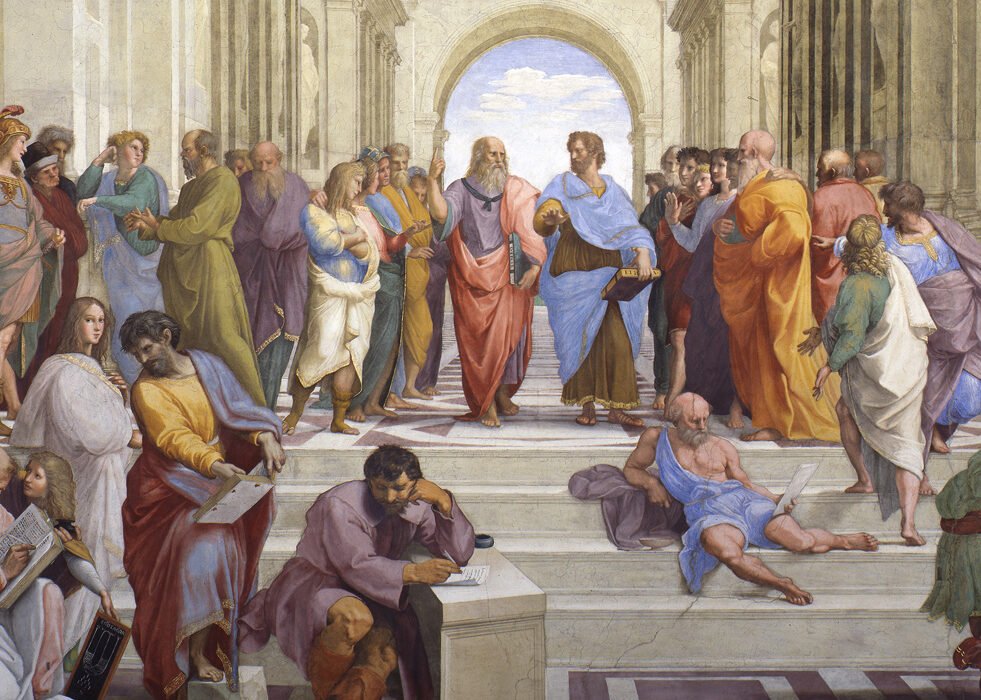
Dualist philosophies, from Plato to Descartes, proposed that mind and body are distinct substances—the body mortal, the mind eternal. Yet dualism faces its own challenge: how can an immaterial consciousness interact with physical matter? If the mind truly survives death, through what mechanism does it persist?
Modern panpsychism offers an alternative. It suggests that consciousness is not confined to brains but is a fundamental feature of the universe—present, in rudimentary form, in all matter. In this view, every particle has some degree of experience, however minimal, and human consciousness arises from the complex organization of these micro-experiences. If true, consciousness does not vanish at death; it merely disperses, like drops of water returning to the sea.
The Shadow of the Self
To understand where consciousness goes, we must also understand what self truly is. Neuroscience shows that the sense of self—our feeling of being a unified, continuous “I”—is an emergent construct. It arises from brain networks that integrate perception, memory, and bodily awareness. When these networks are disrupted, as in certain neurological or psychedelic states, the sense of self can dissolve entirely.
Experiments with psilocybin and other psychedelics reveal that when the brain’s default mode network—the system responsible for self-referential thought—quietens, individuals report feelings of unity, timelessness, and ego dissolution. They describe consciousness expanding beyond the boundaries of identity, merging with what feels like a universal awareness.
Though such experiences are subjective, they provide insight into how the mind constructs and deconstructs selfhood. If consciousness can exist without the ego, perhaps death represents a permanent form of this dissolution—the falling away of identity, not into nothingness, but into everything.
Echoes of the Infinite
Across cultures and ages, humanity has intuited that consciousness is not entirely confined to the body. Mystics and near-death experiencers speak of luminous realms, infinite love, or merging with a greater whole. While science cannot verify these accounts, their consistency across time and geography suggests a shared human intuition: that awareness may transcend physical boundaries.
Even within science, echoes of this idea persist. The conservation of energy implies that nothing in nature truly disappears—it transforms. The same may be true of consciousness, if it is in some way linked to fundamental fields or patterns of information that persist beyond the biological substrate.
Physicist Erwin Schrödinger once wrote that consciousness is singular—that there is no true plurality of minds. In this view, each of us is a temporary expression of one universal awareness, observing itself through countless forms. When an individual dies, the local perspective fades, but the underlying field remains—timeless, undivided, infinite.
The Limits of Knowing
Science is built on observation, but consciousness is both the observer and the observed. We cannot step outside of it to study it as an object. This paradox may mean that the ultimate nature of consciousness is beyond empirical reach—not because it is supernatural, but because it is the very foundation of knowing itself.
Perhaps the question “Where does consciousness go?” is misphrased. It presupposes that consciousness is a traveler that departs somewhere, when in fact it may be the ground upon which all journeys occur. Death may not be the end of consciousness, but the end of its particular configuration—the dissolution of the pattern that called itself me.
Just as a wave subsides into the ocean without truly disappearing, so too might consciousness return to the vast field from which it arose. The ocean remains; only the form changes.
The Legacy of Awareness
Regardless of what happens after death, consciousness leaves traces in the world. Our thoughts, words, and actions ripple outward, shaping the experiences of others. In that sense, awareness continues—not as a ghostly remnant, but as influence, memory, and shared understanding.
When a person dies, the patterns of meaning they created persist: in the minds of those they loved, in the art they made, in the knowledge they contributed, in the children they raised. Consciousness, then, may echo not only in metaphysical realms but in the neural and emotional networks of living beings. Life itself becomes a chain of consciousness—an unbroken thread of awareness passed from one generation to the next.
Even the atoms of our bodies, born in the hearts of ancient stars, will one day join new worlds and living forms. The matter that once formed our brains will one day think again, perhaps under different skies. In this cosmic recycling, death is not an erasure but a transformation.
The Horizon Beyond
To contemplate the fate of consciousness is to face the deepest mystery of existence. Science may one day uncover the mechanisms of awareness, yet its essence may remain forever beyond reach—like trying to see one’s own eyes without a mirror.
Perhaps consciousness does not go anywhere because it was never truly in us to begin with. Perhaps we are the fleeting expressions of an eternal awareness, temporarily localized in human form. Or perhaps consciousness is a fragile phenomenon, extinguished with the death of the brain, its beauty lying precisely in its impermanence.
Whichever truth prevails, the question itself has meaning. It drives us to look inward and outward, to connect science with philosophy, and to see life as something more than biological machinery. The search for where consciousness goes is, ultimately, the search for who we are.
The Light That Remains
When we stand at the bedside of someone taking their final breath, what we witness is not only the end of a body but the passing of a mystery. The person we knew—their laughter, memories, fears, and dreams—seems to vanish. And yet something remains: a silence filled with presence, an ineffable stillness that seems to whisper of continuation.
Perhaps consciousness is not extinguished but transformed, woven back into the fabric of the universe from which it arose. Perhaps every spark of awareness contributes to a greater light, one that never fades but changes form endlessly.
In the end, to ask where consciousness goes is to stand before the infinite and listen. It is to recognize that the very act of asking—the awareness that wonders—is itself the answer. Consciousness does not merely visit the world; it is the world, momentarily aware of itself through us. And when the flame of life goes out, the fire of being still burns on, unseen yet eternal, in the endless night from which all light was born.