Venus—the brilliant jewel that shines brightest in the dawn and dusk sky—has long enchanted humanity. To ancient eyes, it was the celestial twin of Earth, radiant and divine. The Greeks named it after Aphrodite, goddess of love and beauty; the Romans called it Venus, her counterpart. Yet behind that dazzling glow lies a world so infernal, so violent, that it defies every notion of habitability.
Venus is a planet of fire and acid, where temperatures can melt lead and the skies rain sulfuric acid. Its air is so dense that walking on its surface feels like moving through an ocean of hot poison. The serene brightness we see from Earth is an illusion—a mask of beauty hiding one of the most hostile environments in the solar system.
Still, Venus is more than a planet of destruction. It is a key to understanding the fine line between paradise and apocalypse. Once, it might have been Earth’s sister in truth—a world of oceans, clouds, and gentle winds. But something went terribly wrong. To study Venus is to explore not only another world’s fate but also a haunting reflection of our own planet’s future.
The Morning Star and the Evening Star
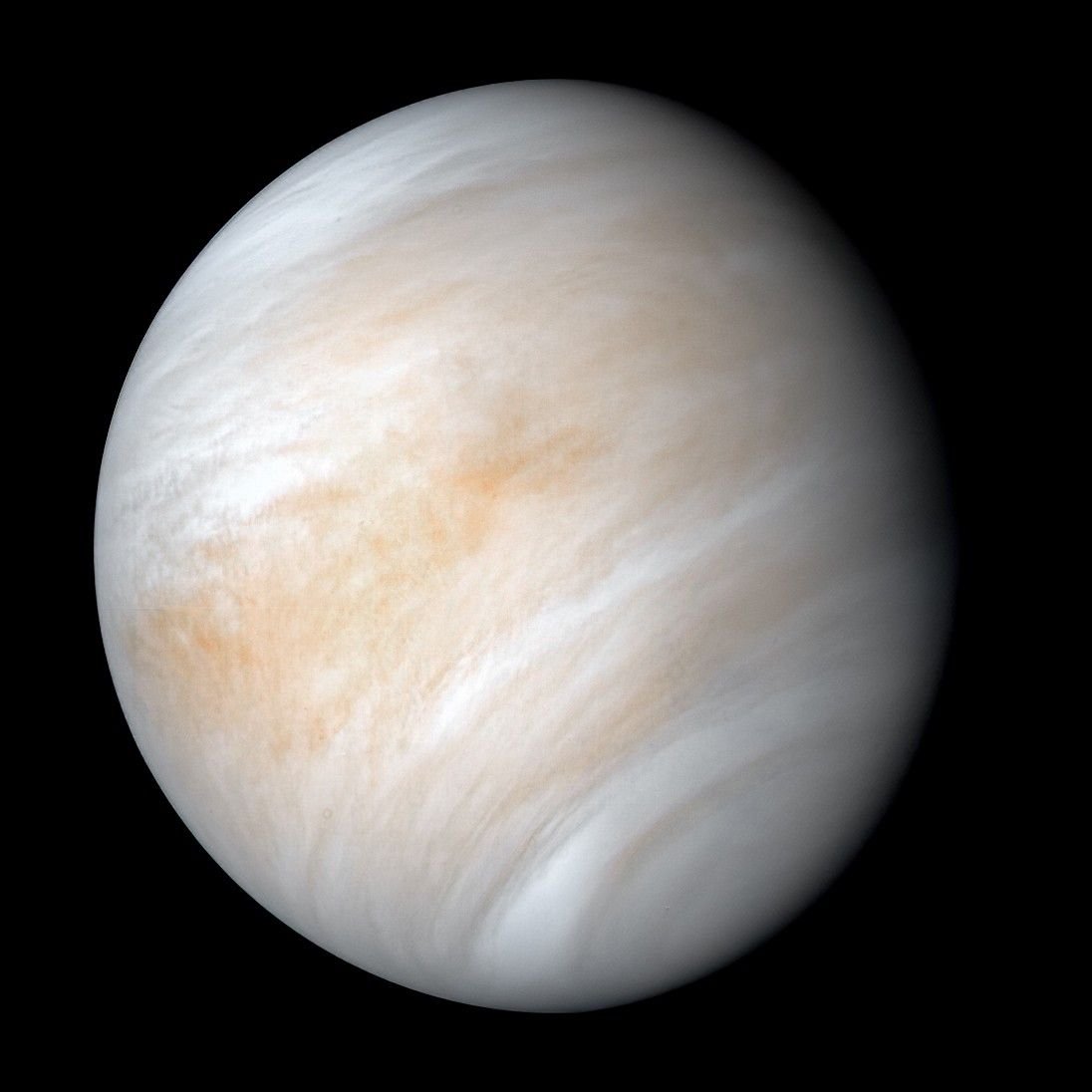
Long before telescopes, Venus fascinated every civilization that gazed at the heavens. It appeared as both the Morning Star and the Evening Star—two separate lights, as the ancients first believed, until astronomers realized they were one and the same. It shines so brilliantly because of its thick, reflective clouds that bounce sunlight back into space.
For millennia, Venus symbolized love, fertility, and femininity. Yet its true nature remained hidden beneath its blinding cloak of light. Even with early telescopes, Venus revealed no surface details—only a smooth, featureless disk of creamy brightness. Astronomers guessed that the planet was covered in clouds, but they could not imagine what horrors lurked below.
When the first space probes visited Venus, the illusion shattered. The “goddess of beauty” was revealed as a burning wasteland—hell made tangible.
The Twin That Went Astray
Venus and Earth are nearly identical in size and mass. Venus is about 12,104 kilometers across, only 5% smaller than Earth. Its gravity is about 90% of Earth’s, and it likely formed from the same materials in the same region of the early solar system. For this reason, scientists once called Venus Earth’s twin.
But where Earth became a cradle for life, Venus became a furnace. Its atmosphere, instead of nurturing oceans and life, transformed into a suffocating blanket of carbon dioxide. Its surface pressure is 92 times that of Earth’s—equivalent to being a kilometer deep under the ocean. And while Earth’s average temperature is a comfortable 15°C, Venus’s surface temperature stays around 465°C—hot enough to melt aluminum and zinc, even hotter than Mercury, which is closer to the Sun.
The irony is profound: the same physical resemblance that made Venus our twin also made it our mirror—a distorted reflection showing what happens when a planet spirals out of balance.
The Atmosphere of Hell
Venus’s atmosphere is its most defining—and terrifying—feature. It is composed of about 96.5% carbon dioxide and 3.5% nitrogen, with trace amounts of sulfur dioxide, water vapor, and other gases. Above the planet lies a dense veil of clouds made not of water, but of sulfuric acid droplets.
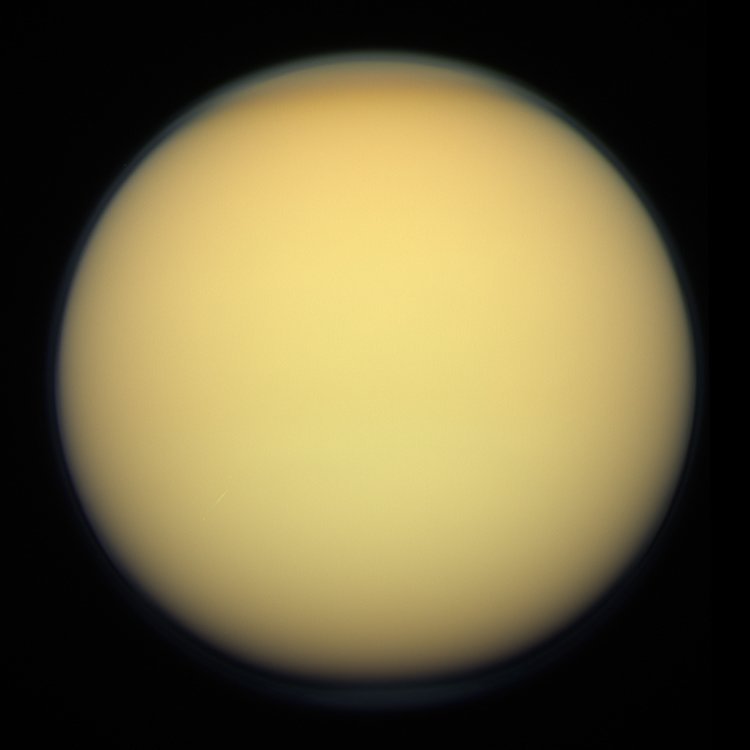
These clouds form layer upon layer, stretching from about 45 to 70 kilometers above the surface. They reflect nearly 75% of the sunlight that hits the planet, making Venus appear dazzlingly bright from Earth. Yet beneath that brightness lies perpetual gloom. No sunlight ever reaches the ground directly. The surface of Venus is shrouded in a dim orange haze, lit only by the faint diffusion of light filtered through the acidic clouds.
The air on Venus is a deadly cocktail. Breathing it would be impossible—not only because of the lack of oxygen, but because the pressure would crush your lungs, and the heat would incinerate you instantly. Even spacecraft built to withstand extremes have survived only a few hours before succumbing to the planet’s wrath.
And then there is the acid rain. Unlike Earth’s gentle showers, the rain on Venus is a storm of sulfuric acid that forms high in the clouds. But as the droplets fall, they evaporate in the searing heat before ever reaching the surface. It’s a rain that never touches the ground—a tragic dance of chemistry in a sky that weeps acid tears.
The Furnace Beneath the Clouds
If we could stand on Venus (protected by impossible technology), we would see a landscape both alien and familiar. The surface is a vast, volcanic plain scattered with mountains, canyons, and strange dome-shaped features. In many ways, Venus resembles Earth’s volcanic regions—except everything is larger, older, and more extreme.
Volcanoes dominate the planet’s face. Some are towering giants like Maat Mons, which rises 8 kilometers high and spans hundreds of kilometers across. Others are shield volcanoes, gentle slopes formed by repeated lava flows. Vast plains of hardened lava stretch between them, covering nearly 80% of the surface.
Radar mapping by missions like Magellan has revealed immense structures called coronae—circular formations hundreds of kilometers wide, created by the upwelling of molten rock from beneath the crust. These features suggest that Venus is geologically active, perhaps even today.
The surface itself is relatively young, estimated to be between 300 and 700 million years old. This means something catastrophic resurfaced the planet—possibly a global volcanic event that erased nearly all traces of older terrain. Venus may have once undergone a world-wide eruption, coating itself in lava and reshaping its entire face.
The Pressure of a Thousand Depths
One of the most mind-bending aspects of Venus is its atmospheric pressure. At the surface, the pressure is 92 bars—comparable to the force you would feel a kilometer underwater on Earth. This crushing weight of air makes it almost impossible for spacecraft to survive long.
The first landers to touch down—Soviet Venera missions in the 1970s and 1980s—were engineering miracles. Venera 13 survived for just 127 minutes before succumbing to the heat and pressure. In that brief time, it sent back the first color images from the surface of Venus: a barren, orange-hued landscape scattered with fractured rocks and no visible life or motion.
Those haunting photos remain some of the most powerful ever taken—windows into a world that humans could never stand upon. Every inch of that rocky terrain radiates heat and hostility. The surface is silent, not because there is peace, but because even sound itself struggles to travel in the thick, scorching air.
The Mysterious Winds of the Upper Atmosphere
While the surface of Venus is almost motionless, its upper atmosphere is in constant, furious motion. High above the ground, hurricane-force winds whip around the planet at speeds up to 360 kilometers per hour. These winds are part of a phenomenon called super-rotation—the entire atmosphere rotates around Venus much faster than the planet itself spins.
Venus’s rotation is already strange. It turns backward compared to most other planets, including Earth. This means the Sun rises in the west and sets in the east. And its rotation is incredibly slow—a single Venusian day lasts 243 Earth days, longer than its own year (which is about 225 Earth days).
Despite this sluggish rotation, the atmosphere completes a full circuit around the planet in just four Earth days. The contrast between the static surface and the raging winds above it is one of the great mysteries of Venus. Scientists still struggle to explain how such a dynamic atmosphere can exist above such a still, stagnant crust.
Lightning and the Chemistry of Fire
Venus’s clouds are not silent. Probes and orbiters have detected bursts of electromagnetic energy—evidence of lightning flashing through the thick clouds. These bolts of electricity ignite chemical reactions in the sulfur-rich air, creating a chaotic ballet of ions and compounds.
Some scientists believe this lightning plays a key role in maintaining the planet’s strange atmospheric chemistry. It may help generate the sulfuric acid and other compounds that dominate the clouds. But it also adds to the planet’s violent character—a world where even the sky burns with electricity.
The idea of lightning flickering through acid clouds above a molten landscape evokes an almost mythic image—a planet alive with storms of fire and poison, a place that seems to rage eternally.
The Greenhouse Runaway
The greatest mystery—and warning—of Venus is its climate. Scientists believe that long ago, Venus may have had oceans and a milder atmosphere. In its youth, it could have been a world not so different from early Earth, with liquid water and perhaps even conditions suitable for life.
But something triggered a catastrophic transformation. As the Sun grew slightly brighter over billions of years, Venus’s surface temperature rose. Water began to evaporate, and because water vapor is a powerful greenhouse gas, it trapped more heat. This led to more evaporation—a runaway feedback loop.
Eventually, the oceans boiled away entirely. Without water to dissolve carbon dioxide and store it in rocks, CO₂ built up in the atmosphere. The greenhouse effect intensified to unimaginable levels, raising the temperature until the surface became the inferno we know today.
This runaway greenhouse effect turned Venus into a furnace—a living example of what happens when a planet’s climate spins beyond control. Studying Venus is not just an academic pursuit; it is a warning about the fragility of planetary balance.
The Search for Signs of Life
Despite its hellish environment, Venus continues to provoke questions about life. Could it exist, even in such an alien world? On the surface, the answer seems impossible—no known organism could survive the pressure, heat, and acidity. But high in the clouds, conditions are different.
About 50 to 60 kilometers above the surface, the temperature and pressure become surprisingly Earth-like. Here, amid the sulfuric acid haze, some scientists speculate that microbial life could exist—perhaps in microscopic droplets, shielded from the Sun’s radiation.
In 2020, researchers detected traces of a gas called phosphine in the Venusian atmosphere—a chemical that, on Earth, is associated with biological processes. The discovery sparked global excitement, though later observations cast doubt on the detection. Still, the idea remains tantalizing. If life could survive on Venus, it would redefine our understanding of biology and resilience.
The notion that even the “planet of fire” might harbor life, however fragile or strange, is a reminder that the universe rarely conforms to our expectations.
Venus in the Eyes of Machines
Venus has been visited by more spacecraft than any planet except Mars. The Soviet Union’s Venera program was the first to pierce its thick atmosphere and land successfully. Venera 7 made history in 1970 as the first spacecraft to transmit data from the surface of another planet.
Later missions, like Venera 9, Venera 13, and Vega, provided images, chemical analyses, and atmospheric data that transformed our understanding of the planet. In the 1990s, NASA’s Magellan mission mapped 98% of the surface using radar, revealing the planet’s mountainous terrain and volcanic plains.
Today, new missions are being planned to return to Venus. NASA’s DAVINCI+ and VERITAS missions, along with the European Space Agency’s EnVision, aim to study its atmosphere, geology, and history in unprecedented detail. These missions will search for answers to the planet’s greatest mysteries: Was it once habitable? Is it still geologically active? And could it teach us how to save our own world?
The Sound of a Silent World
Venus’s surface is eerily quiet. There is no rain, no rivers, no rustling winds. The crushing atmosphere dampens all sound, and the intense heat stills motion. If you stood there—impossible as that would be—you might hear only the faint hum of your own machinery before it melted.
The landscape itself bears scars of ancient violence. Craters dot the plains, but far fewer than on Mercury or the Moon, suggesting a young and active surface. Lava channels wind for thousands of kilometers, frozen rivers of molten rock that once flowed like fire through the valleys.
It is a world of silence after storm—a planet that burned itself out and now lies beneath an eternal shroud. Yet even in that silence, Venus speaks volumes about the fate of worlds and the power of transformation.
The Mirror of Earth
To study Venus is to look into a cosmic mirror. The same processes that made Venus uninhabitable—greenhouse warming, atmospheric loss, and feedback loops—exist on Earth, though in gentler forms. Venus is a warning, a vision of what could happen if climate balance is lost.
When scientists model Venus’s history, they see a planet that may once have had shallow seas and a mild climate. But over time, a slight increase in solar energy tipped the balance. The greenhouse effect spiraled out of control, and Venus’s oceans vanished forever.
It is sobering to realize that the distance between paradise and inferno is not so great. Venus shows that climate stability is fragile, and that even a planet once similar to Earth can become unrecognizable if its equilibrium is disturbed.
The Mysteries Yet to Be Solved
For all we’ve learned, Venus remains a planet of unanswered questions. Why does it rotate backward? What caused its catastrophic resurfacing? Does it still have active volcanoes today? And what processes drive its super-rotating winds?
Even deeper mysteries lie in its origins. Did Venus once host oceans and perhaps microbial life? Could its early conditions have resembled those of primordial Earth? And if so, did it represent one of the galaxy’s countless failed Edens—worlds that began with promise but ended in fire?
Future missions may bring answers. Balloons floating in the Venusian clouds, drones mapping the terrain, or even robotic landers built to survive the crushing heat could finally reveal what lies beneath the shroud.
The Goddess of Fire and Memory
Venus, in the end, is both a nightmare and a muse. It embodies the paradox of beauty and destruction, of light and death. Its brilliance in the night sky continues to inspire poets, dreamers, and scientists alike, even as its surface reminds us of the consequences of imbalance.
The ancients saw Venus as a goddess of love, yet her true nature reveals a deeper lesson. She is not a goddess of tenderness, but of transformation—a symbol of what happens when creation turns upon itself.
Still, in every storm of acid, in every whisper of sulfur wind, there is a kind of poetry. Venus reminds us that the universe is both beautiful and brutal, that even destruction can be magnificent.
To look at Venus is to glimpse the fragility of worlds. It is to understand that the line between paradise and perdition is drawn not by distance or destiny, but by the delicate chemistry of air, water, and time.
The Eternal Light in the Darkness
As the Sun sets on Earth and Venus rises, glowing like a diamond on the horizon, we are reminded that even in the vastness of space, beauty and danger are intertwined. The Morning Star still shines, as it has for billions of years, unblinking and eternal.
Yet behind that glow lies a warning written in fire and acid—a message from our cosmic twin: balance is everything. Lose it, and even a world of promise can burn itself into oblivion.
Venus is a story of transformation, tragedy, and timeless wonder. It is the planet that shows us what happens when a world turns inward and consumes itself. But it also shows us the enduring power of curiosity—the human will to seek truth, even in the most unwelcoming corners of the cosmos.
For as long as we gaze up at that radiant point of light in the twilight sky, Venus will remind us of what it means to be alive, fragile, and endlessly searching.
The goddess still burns in the heavens, cloaked in clouds, radiant and terrible. And we, her distant children, continue to watch—learning, warning, and dreaming—under her eternal, fiery light.