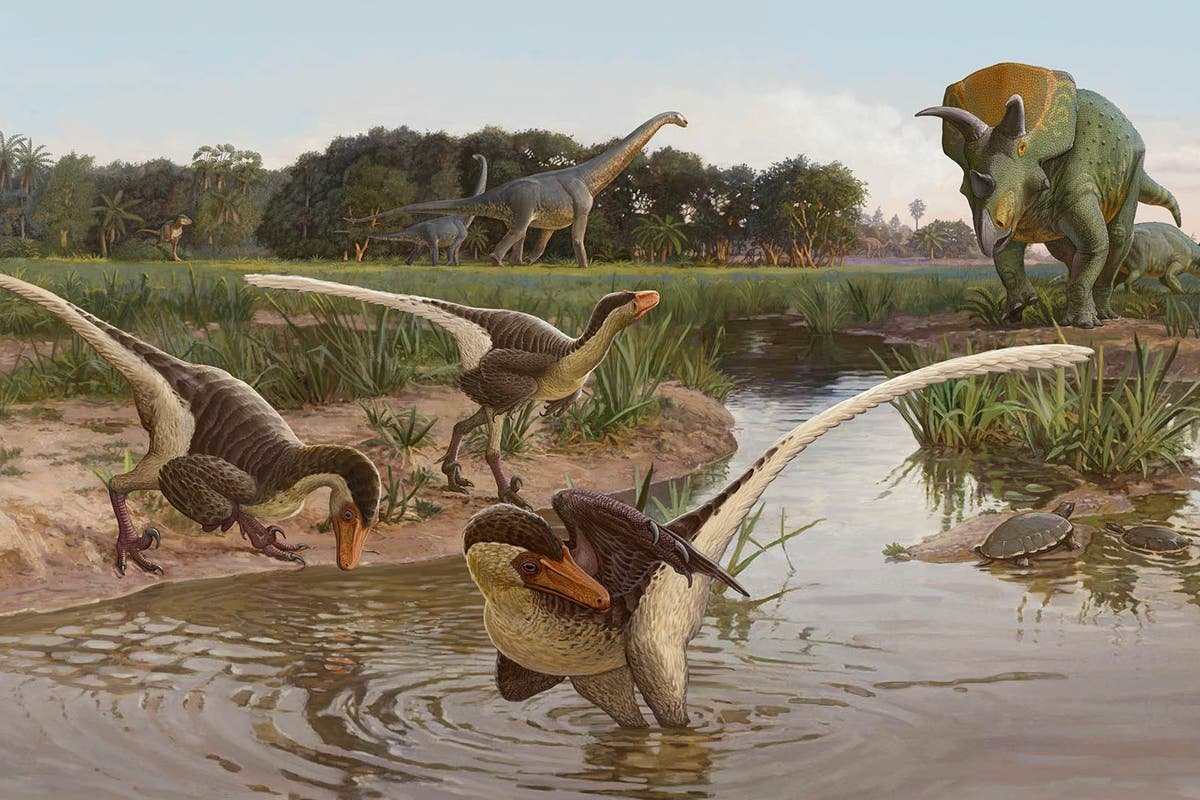
There was a time when the Earth belonged to giants. Not metaphorical giants, but real, breathing, walking, swimming, and flying creatures of astonishing size. Forests trembled beneath the footsteps of massive herbivores. Oceans were ruled by predators longer than buses. Skies were crossed by winged animals with wingspans rivaling small airplanes. These beings lived not in myth or imagination, but in deep time, long before humans existed. Their bones, preserved in stone, whisper stories of a planet that once looked, sounded, and felt profoundly different from the world we know today.
Prehistoric life is not merely a catalog of extinct animals. It is a grand narrative of survival, adaptation, dominance, and extinction played out over billions of years. To explore when giants ruled the planet is to confront both the power of life and its fragility, to realize that Earth has always been changing, and that no reign, no matter how mighty, lasts forever.
A World Before Humans
For most of Earth’s history, humans were not part of the story at all. The planet formed about 4.5 billion years ago, and for hundreds of millions of years it was shaped by fire, water, and relentless geological forces. Life emerged slowly, first as simple organisms in ancient seas. Over immense spans of time, these simple forms diversified, evolved, and occasionally exploded into extraordinary abundance.
Prehistory refers to all time before written records, but in the context of ancient life, it often points to eras so distant that even memory and legend cannot reach them. These were ages measured not in centuries or millennia, but in millions of years. Continents drifted, climates shifted, and entire ecosystems rose and vanished.
In these worlds, size became a powerful evolutionary strategy. Without humans, without cities or machines, nature itself set the rules. Oxygen levels, temperature, available food, and evolutionary arms races shaped creatures that grew to sizes rarely seen today. The giants of prehistory were not accidents; they were the result of long, complex interactions between biology and environment.
The Rise of Giant Life Forms
The appearance of giant animals did not happen all at once. It was a gradual process tied closely to changes in Earth’s atmosphere and ecosystems. One crucial factor was oxygen. At several points in Earth’s history, oxygen levels were significantly higher than they are today. This allowed animals, especially those with simpler respiratory systems, to grow much larger.
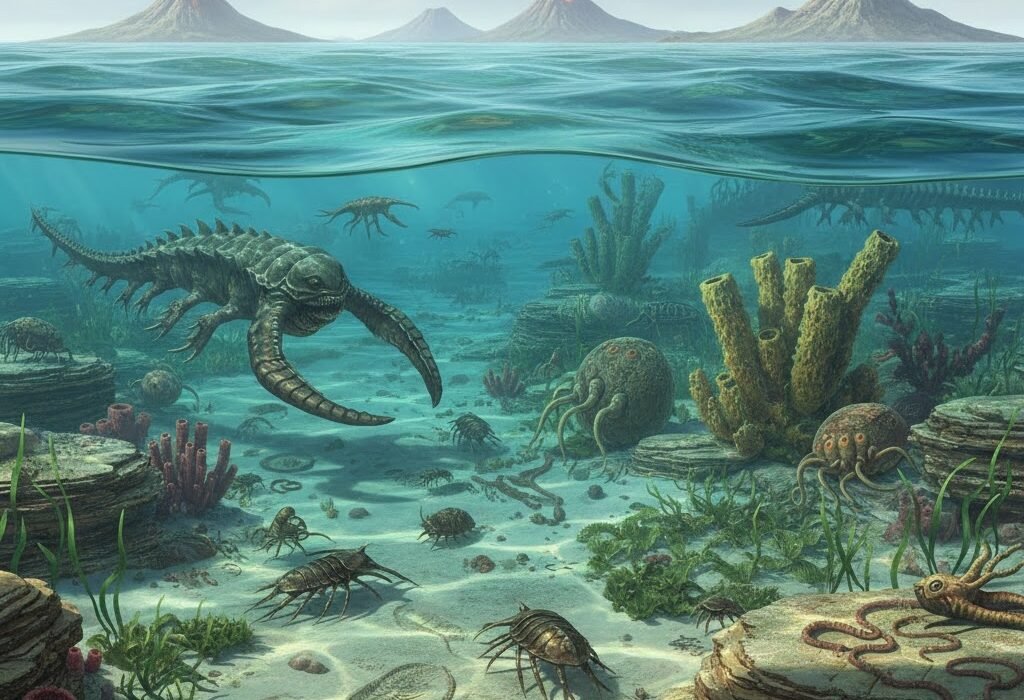
In the ancient oceans, early multicellular life experimented with form and size. As predators and prey evolved together, size became both a defense and a weapon. On land, plants grew taller, creating new niches and opportunities. Animals that could reach higher leaves or intimidate rivals gained an advantage.
Evolution does not aim for gigantism, but when conditions favor it, size can become a winning strategy. Larger bodies can deter predators, store energy more effectively, and dominate territory. Yet size also brings challenges, demanding more food, stronger structures, and stable environments. The giants of prehistory were perfectly balanced between these benefits and risks, until the balance tipped.
Dinosaurs and the Age of Reptilian Giants
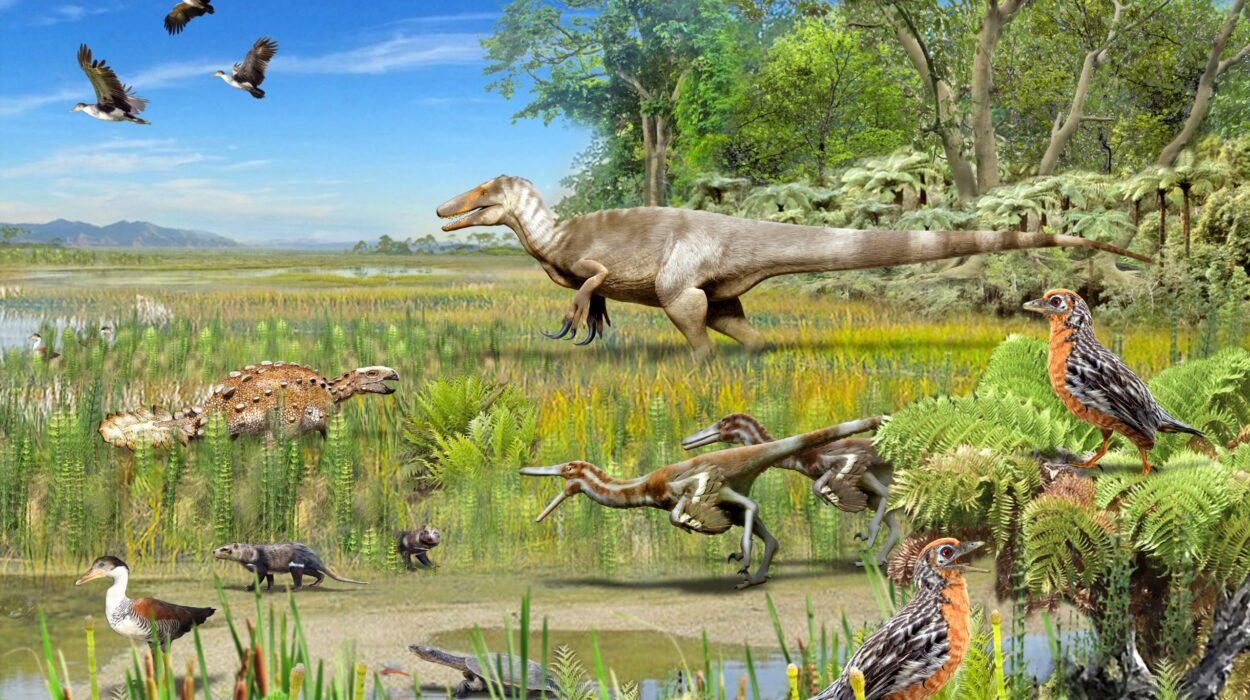
When people think of prehistoric giants, dinosaurs inevitably come to mind. For over 160 million years, dinosaurs dominated terrestrial ecosystems, evolving into an astonishing variety of forms. Some were swift and small, but others reached sizes that still defy intuition.
Massive long-necked herbivores browsed treetops, their bodies stretching longer than blue whales. Their bones were engineered for strength without unnecessary weight, filled with air spaces that made such size possible. These giants did not simply lumber aimlessly; evidence suggests they lived complex lives, possibly moving in groups, caring for their young, and navigating vast landscapes.
Predatory dinosaurs evolved alongside them, growing large enough to challenge these enormous herbivores. Their teeth, claws, and senses were finely tuned for hunting. Far from being slow or dim-witted, many dinosaurs were active, intelligent animals adapted to their environments.
Dinosaurs ruled because they were extraordinarily successful. They occupied nearly every land-based ecological role, from apex predators to gentle plant-eaters. Their reign was not static but dynamic, marked by continuous evolution and adaptation.
Giants of the Ancient Skies
The land was not the only realm of giants. The skies of the prehistoric world were also home to enormous creatures. Pterosaurs, the first vertebrates to achieve powered flight, included species with wingspans exceeding ten meters. These were not birds, but flying reptiles with lightweight bones and membranes stretched across elongated fingers.
Flying at such size required precise adaptations. Their skeletons were both strong and light, their muscles powerful, and their metabolism capable of sustaining flight. They likely soared on air currents, using energy efficiently to cover long distances.
The existence of these giants challenges modern assumptions about flight. It reveals that under the right conditions, even very large animals can take to the air. Their disappearance leaves behind a mystery: why does our modern world lack flying animals of comparable size? The answer lies in changing climates, ecosystems, and competition, reminding us that what seems impossible today may have been routine in another age.
The Oceans of Monsters
If the land and sky hosted giants, the oceans were truly colossal realms. Ancient seas teemed with enormous predators that dwarfed most modern marine animals. These were not dinosaurs, but marine reptiles and other creatures that evolved separately to dominate aquatic ecosystems.
Some grew longer than modern whales, with massive jaws filled with sharp teeth. They were apex predators, ruling the food chains of their time. Their bodies were streamlined for speed and power, adapted to hunting in open water.
The oceans allowed such size partly because water supports weight more easily than land. Large bodies could move without the structural limitations imposed by gravity. Food webs in ancient seas may also have been richer, supporting these massive animals.
The fossils of these marine giants often appear in places far from today’s coastlines, reminding us that continents have shifted dramatically. What is now dry land was once submerged beneath warm, shallow seas filled with life.
The Ice Age Titans
The age of giants did not end with dinosaurs. Long after their extinction, the Earth experienced periods when enormous mammals roamed vast landscapes. During the Ice Ages, woolly mammoths, giant ground sloths, saber-toothed predators, and other megafauna dominated many regions.
These animals evolved in response to colder climates and open environments. Thick fur, massive bodies, and specialized teeth helped them survive harsh conditions. Their size allowed them to conserve heat and travel long distances in search of food.
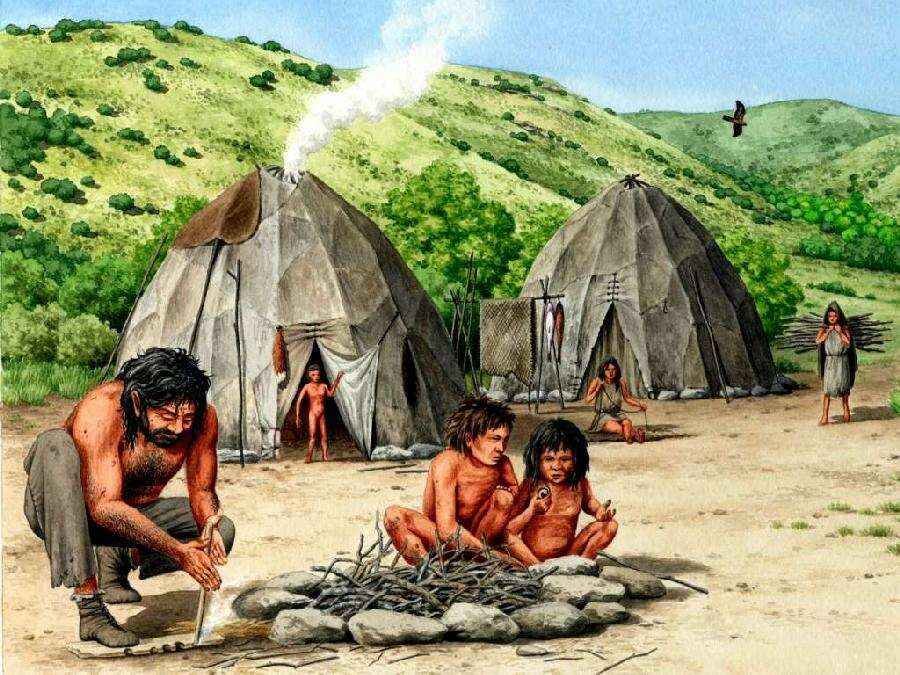
Unlike earlier giants, these creatures lived alongside early humans. This overlap has fueled intense scientific debate. Evidence suggests that climate change and human activity together contributed to their extinction. Hunting pressure, habitat changes, and shifting ecosystems may have pushed these giants beyond their limits.
Their disappearance feels closer to us, more personal. We can imagine encountering them, hearing their footsteps, seeing their silhouettes against icy horizons. Their loss marks one of the most recent chapters in the long story of prehistoric life.
How We Know About Prehistoric Giants
Our knowledge of prehistoric giants comes from fragments of deep time. Fossils are the primary evidence, preserved remains of bones, teeth, footprints, and sometimes even soft tissues. These are rare gifts from the past, formed under specific conditions and discovered by careful work.
Interpreting fossils is both science and art. Paleontologists must reconstruct entire organisms from incomplete remains, using comparative anatomy, biomechanics, and modern technology. Advances in imaging and analysis have transformed our understanding, revealing details about growth, movement, and even behavior.
Trackways show how animals walked or ran. Bone microstructure reveals growth rates and metabolism. Chemical signatures provide clues about diet and environment. Each discovery adds depth to the picture, yet also raises new questions.
Despite remarkable progress, much remains unknown. Fossils capture only a tiny fraction of past life. The prehistoric world was richer and more complex than the record can fully reveal, leaving room for mystery and wonder.
Why Giants Disappeared
One of the most haunting questions about prehistoric life is why so many giants vanished. Extinction is a natural part of evolution, but the loss of large animals often marks dramatic shifts in Earth’s history.
Environmental change is a recurring theme. Climate fluctuations, volcanic activity, and changes in sea level can rapidly alter habitats. Large animals, with their high energy demands, are especially vulnerable to such disruptions.
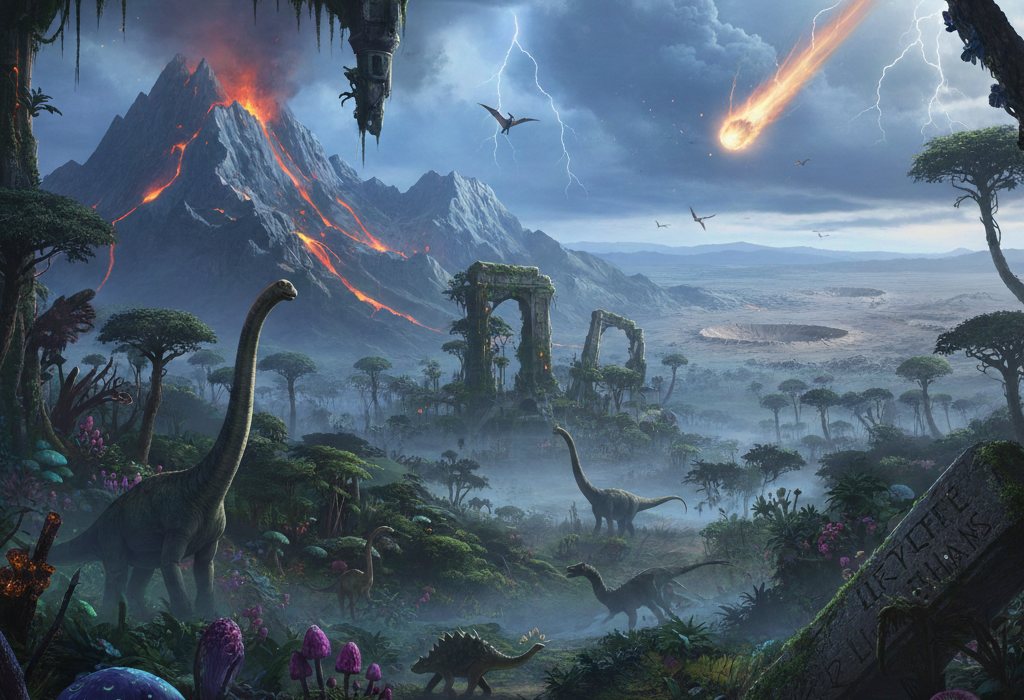
In some cases, sudden catastrophic events played a role. Asteroid impacts, for example, can trigger global changes, blocking sunlight and collapsing food chains. In other cases, slower pressures accumulated over time, gradually eroding the viability of giant species.
The extinction of giants serves as a reminder that dominance does not guarantee survival. Adaptation must be continuous, and even the most successful forms of life can be undone by changing conditions.
The Legacy of Prehistoric Giants
Though the giants are gone, their legacy remains everywhere. They shaped ecosystems, influenced the evolution of other species, and left behind landscapes altered by their presence. Their bones fuel scientific discovery and inspire imagination.
Prehistoric giants also influence how we see life today. They challenge assumptions about limits, showing that nature can produce forms far beyond modern experience. They invite humility, reminding us that our world is only one version of Earth among many.
In museums, fossils stand as silent ambassadors from lost worlds. They connect us emotionally to deep time, bridging the gap between present and past. Children stare at towering skeletons with awe, adults feel a quiet reverence, and scientists see puzzles waiting to be solved.
What Prehistoric Giants Teach Us About Life
The story of when giants ruled the planet is ultimately a story about life’s possibilities. It shows that evolution is not a straight line toward complexity or intelligence, but a branching exploration of form and function. Under the right conditions, life can become enormous, strange, and magnificent.
These giants teach us about balance. Size brings power, but also vulnerability. Success depends on harmony between organism and environment. When that harmony breaks, even the mightiest can fall.
They also teach us about time. Human history is brief compared to the ages ruled by giants. Our presence is recent, our impact profound. Understanding prehistoric life gives us perspective, reminding us that Earth does not belong to any one species forever.
The Enduring Mystery of Deep Time
Despite centuries of study, prehistoric life remains deeply mysterious. Each fossil discovery answers some questions and opens others. How did these animals behave socially? What colors did they display? How did they experience their world?
Science approaches these mysteries with evidence and reason, but imagination plays a role too. To study prehistoric giants is to stand at the edge of what can be known, peering into vast stretches of time where certainty fades into possibility.
This blend of knowledge and mystery is part of what makes prehistoric life so compelling. It invites us not only to learn, but to feel, to imagine, and to reflect.
When Giants Ruled, and Why It Matters Now
The age of giants is over, but its lessons are more relevant than ever. In a world facing rapid environmental change, the history of prehistoric life offers warnings and insights. It shows how sensitive ecosystems can be, and how quickly dominance can turn into extinction.
At the same time, it offers hope. Life has survived unimaginable upheavals. It has adapted, diversified, and flourished again and again. The giants may be gone, but life itself endures.
When giants ruled the planet, Earth was a different place, shaped by forces both familiar and alien. By studying their world, we better understand our own. We learn that we are part of a long, unfolding story, one written not just in words, but in stone, bone, and the silent memory of deep time.