You are walking through a street in a new city when suddenly, a strange sensation sweeps over you. The sound of footsteps, the pattern of sunlight, the murmur of distant voices—all of it feels uncannily familiar. You know you have never been here before, yet your mind insists that you have. The moment feels like a memory—an echo of something you can’t quite grasp. Then, as swiftly as it comes, the feeling fades, leaving you both unsettled and fascinated.
This fleeting, mysterious experience is called déjà vu—a French term meaning “already seen.” It is one of the most enigmatic sensations the human mind can produce, a phenomenon that seems to blur the boundary between present and past, between perception and memory.
For centuries, déjà vu has provoked wonder and speculation. Is it evidence of reincarnation? A glitch in the brain? A ripple in time? While poets and mystics have pondered its spiritual meaning, neuroscientists have begun to uncover the mechanisms behind this haunting illusion. Their findings reveal not only how déjà vu arises, but also what it tells us about the deep architecture of memory, consciousness, and the human experience of time itself.
The History of a Haunting Mystery
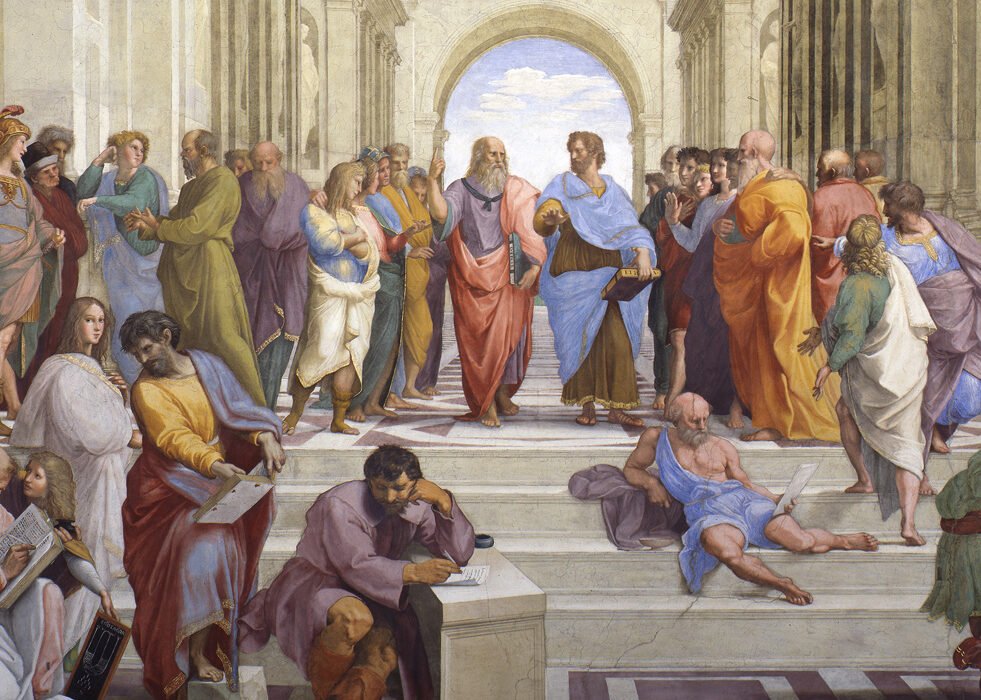
Though the term déjà vu was first coined in the late 19th century by the French philosopher and researcher Émile Boirac, the experience itself is ancient. Philosophers from Plato to Saint Augustine mused about the sensation of reliving the present. Plato saw it as evidence that knowledge was innate—an echo of truths known before birth. Augustine described time as a series of fleeting present moments connected only by the mysterious bridge of memory, a concept that eerily prefigures modern understandings of déjà vu.
In the 19th and early 20th centuries, psychologists began to approach déjà vu scientifically. Sigmund Freud interpreted it as a form of “repressed fantasy,” an unconscious wish emerging from forgotten memories. Others thought it might stem from dreams that mimic real experiences. But as neuroscience advanced, the focus shifted from the mystical to the mechanical—from the soul to the synapse.
Today, déjà vu is understood as a product of the brain’s complex memory system—a misfiring of recognition that tricks us into believing the present is a memory. Yet even with decades of study, the experience retains its mystery, because it touches on one of the most elusive aspects of human cognition: how we know what is familiar and what is new.
The Science of Recognition
To understand déjà vu, one must first understand memory itself. The brain does not record experiences like a camera capturing video. Instead, it stores fragments—sounds, sights, emotions, associations—and reconstructs them when needed. Memory is not static; it is dynamic, constantly rewritten with every recall.
The hippocampus, located deep in the brain’s temporal lobe, plays a central role in this process. It acts as a kind of librarian, organizing and indexing memories so that we can recognize familiar situations. Surrounding regions, like the parahippocampal cortex, evaluate whether something feels familiar or not. When these systems work harmoniously, we distinguish past from present with ease.
Déjà vu appears to arise when this harmony falters. For reasons not fully understood, the brain’s familiarity system fires incorrectly—signaling that something is known when it is not. The conscious mind, trying to make sense of this false signal, interprets it as a memory. Thus, we feel that the current experience has happened before, even though it hasn’t.
This fleeting error reveals how delicate the machinery of memory is. Recognition is not simply about recalling facts—it is about aligning perception, emotion, and context. A tiny misalignment between these components can create an illusion that bends time.
The Neural Spark Behind Déjà Vu
Modern neuroscience has offered fascinating insights into the biological roots of déjà vu. Using brain imaging and studies on patients with epilepsy, researchers have found that déjà vu often originates in the temporal lobes—the same region involved in memory formation and recognition.
In individuals with temporal lobe epilepsy, déjà vu can occur as part of an aura—a prelude to a seizure. Electrical disturbances in this region can trigger sensations of familiarity, suggesting that déjà vu may result from brief, benign surges of neural activity even in healthy brains.
Functional MRI studies support this view. When participants experience déjà vu in controlled experiments—by viewing slightly altered versions of familiar images—scientists observe increased activation in the frontal and temporal lobes. The brain seems to be “checking” the accuracy of its memory signals, detecting a mismatch between familiarity and actual recollection.
One influential theory, proposed by cognitive neuroscientist Chris Moulin, describes déjà vu as a “memory monitoring error.” The familiarity signal, usually generated when we recognize something from the past, is triggered by the present instead. The brain, unable to locate the source of familiarity, concludes that it must be a memory. This explains why déjà vu feels both real and unreal—an echo without an origin.
The Double Pathways of Memory
Memory operates through two complementary systems: recollection and familiarity. Recollection involves retrieving detailed information about a past event—the time, place, and context. Familiarity, by contrast, is a sense of knowing something without recalling why. For example, when you see a face you recognize but can’t place, that’s familiarity at work.
In déjà vu, the familiarity system fires inappropriately. The brain flags the current moment as familiar, but the recollection system cannot provide details to justify that feeling. The conflict between these systems produces the eerie sense of having lived the moment before.
This interplay also explains why déjà vu feels so fleeting. Once the conscious brain recognizes the mismatch—realizing there is no memory attached—the sensation dissipates. It is as if the brain corrects its own glitch in real time.
The Temporal Loop Illusion
Time and memory are deeply intertwined. Our brains build a continuous sense of “now” by stitching together sensory input and past experiences. Déjà vu represents a disruption in this temporal stitching—a brief loop in the fabric of consciousness.
Some scientists propose that déjà vu occurs when the brain’s processing of perception and memory becomes desynchronized by milliseconds. If the brain inadvertently processes an experience twice—once unconsciously and then consciously—the second perception may be tagged as familiar because it resembles the first. This “temporal lag” hypothesis could explain why déjà vu feels like a replay rather than a true recollection.
Experimental evidence supports this. In studies where participants are shown rapid sequences of images, those with minimal delays between exposures are more likely to report déjà vu-like sensations. The brain, it seems, mistakes closely spaced repetitions for genuine familiarity.
This temporal misfire highlights the fluid nature of consciousness. What we perceive as a continuous flow of experience is actually a series of moments woven together by memory and prediction. Déjà vu occurs when this seamless illusion falters—when the brain briefly remembers the present as though it were past.
The Role of the Hippocampus
The hippocampus is often called the brain’s “timekeeper of memory.” It not only stores information but also encodes the temporal and spatial context in which events occur. Without it, memories lose their sequence, and our perception of continuity collapses.
Studies using intracranial recordings have shown that bursts of electrical activity in the hippocampus can induce déjà vu sensations. These findings suggest that déjà vu is not simply psychological—it is a measurable, physiological event. The brain’s circuits responsible for familiarity and recollection can be momentarily activated in ways that mimic genuine recognition.
The hippocampus also interacts closely with the frontal lobes, which play a role in reality monitoring—the process of distinguishing internal thoughts from external experiences. During déjà vu, this system appears to engage in an internal dialogue, questioning whether the familiarity signal is legitimate. This neural “conversation” explains why déjà vu often feels like the mind catching itself in the act of deception.
Dreams and the Subconscious Memory Hypothesis
Another intriguing explanation for déjà vu involves dreams. Many people report that their déjà vu experiences resemble scenes from dreams they can’t quite remember. This has led researchers to propose that déjà vu may result from implicit memory—unconscious traces of experiences we have forgotten, including dreams.
When a current situation resembles one of these buried memories, the brain’s familiarity network is triggered. Because the source of the memory is inaccessible, the sensation manifests as déjà vu.
Experiments on implicit memory support this idea. Participants exposed to images subliminally—too briefly to consciously recognize—later report feelings of familiarity when shown the same images again. The brain can store impressions without conscious awareness, and when those impressions are reactivated, they produce the illusion of prior experience.
This suggests that déjà vu may be the conscious manifestation of an unconscious recognition—a whisper from forgotten dreams or unnoticed details.
Déjà Vu and the Brain’s Predictive Nature
The human brain is not a passive recorder of experience; it is a predictive machine. It constantly anticipates what will happen next, using past experience to shape perception. This predictive coding allows us to navigate the world efficiently, but it also opens the door to error.
Déjà vu may represent a prediction gone wrong—a moment when the brain’s model of reality gets ahead of itself. If the brain mistakenly predicts an event that matches the present moment, the overlap can create a sense of repetition. The brain, believing it has already processed the experience, interprets it as memory.
In this sense, déjà vu is a byproduct of the brain’s extraordinary ability to forecast. It reveals the creative, generative nature of consciousness—how our sense of the present is built not just from sensory input, but from expectation.
The Emotional Echo
Déjà vu is not merely a cognitive phenomenon; it is deeply emotional. The feeling it evokes—a mix of awe, confusion, and unease—reflects the brain’s struggle to reconcile two incompatible truths: “I have seen this before” and “I know this is new.”
Neuroimaging studies show that déjà vu activates not only memory regions but also emotional centers such as the amygdala and anterior cingulate cortex. These areas heighten attention and alertness, amplifying the uncanny feeling. It is as if the brain momentarily enters a state of existential uncertainty, searching for an anchor in a sea of paradox.
The emotional intensity of déjà vu may explain why it leaves such a lasting impression despite its brevity. It feels important, meaningful, almost supernatural. Our minds, wired to find patterns and purpose, struggle to accept that such a profound experience could arise from a neural glitch.
Déjà Vu Across the Lifespan
Déjà vu is surprisingly common—studies suggest that up to 70 percent of people experience it at least once in their lives. However, its frequency varies with age, personality, and even fatigue.
It is most common in young adults, particularly those between 15 and 30 years old. Researchers believe this is because younger brains are more active in memory formation and more sensitive to novelty. As we age and experiences become more repetitive, the threshold for familiarity shifts, making déjà vu rarer.
Stress, lack of sleep, and certain medications can also increase susceptibility. These conditions may momentarily disrupt the brain’s memory circuitry, creating fertile ground for the illusion of familiarity.
While usually benign, frequent or prolonged déjà vu can signal neurological conditions such as temporal lobe epilepsy or migraine aura. In such cases, the sensation may be accompanied by other symptoms like distortions of time, space, or emotion—reminding us that the boundaries of consciousness are as fragile as they are fascinating.
Cultural and Philosophical Reflections
Across cultures and eras, déjà vu has carried metaphysical significance. In Hindu and Buddhist traditions, it has been interpreted as a glimpse of past lives—a fleeting remembrance of reincarnation. In Western thought, it has been linked to fate, destiny, or the notion of time as cyclical rather than linear.
Philosophically, déjà vu challenges our understanding of time and identity. If the present can feel like the past, what distinguishes one from the other? Is time a continuous flow, or does consciousness recycle its own patterns, creating loops of awareness?
The philosopher Henri Bergson argued that perception and memory are inseparable—that every act of perception is tinged with traces of memory. In this light, déjà vu is not an error but a revelation: a reminder that we are always living in the overlap between now and then, between the world as it is and the world as we remember it.
The Physics of the Familiar?
While neuroscience provides compelling explanations, some theorists have explored more speculative ideas. Could déjà vu hint at deeper phenomena—parallel universes, time slips, or quantum effects in consciousness?
Although such notions remain in the realm of imagination, they speak to the profound mystery of the experience. Time itself, as physics tells us, is not absolute. Einstein’s relativity shows that simultaneity is relative, and quantum physics reveals that particles can exist in overlapping states. While there is no scientific evidence linking these phenomena to déjà vu, the parallels are evocative: both challenge our linear sense of time and suggest that reality is more fluid than it seems.
Ultimately, the fascination with these ideas reflects not a failure of science, but the enduring human impulse to find wonder in the unknown. Déjà vu, in this sense, stands at the crossroads of science and philosophy—a phenomenon that invites both explanation and awe.
What Déjà Vu Reveals About Memory
Déjà vu reminds us that memory is not a recording but a reconstruction. Every time we recall an event, we rebuild it from fragments, colored by emotion and expectation. The sensation of déjà vu exposes the fragility of this process, showing how easily the boundaries between perception and recollection can blur.
It also highlights how memory and imagination are intertwined. The brain does not distinguish sharply between what it remembers and what it imagines; both rely on the same neural circuits. Déjà vu may arise precisely because these circuits are so flexible—because the brain’s ability to simulate experience is nearly indistinguishable from its ability to remember it.
In a way, déjà vu is a side effect of consciousness itself. To be conscious is to constantly compare the present with the past, to look for meaning in patterns. When that comparison goes awry, we glimpse the machinery behind our sense of reality—a brief unveiling of the mind’s inner workings.
The Fragile Architecture of Time
Time, as we experience it, is a construction of the brain. It is built from sequences of events, organized by memory and prediction. Déjà vu disrupts this construction, creating a momentary overlap between “now” and “then.”
In these rare moments, we sense that time is not a straight line but a loop, a spiral where past and present briefly touch. This illusion reveals the brain’s extraordinary ability to create continuity out of fragments—to weave experience into narrative.
When déjà vu strikes, we are witnessing that narrative unravel for an instant. The machinery of time stutters, and we see, however briefly, the illusion for what it is: a cognitive artifice that holds our sense of reality together.
The Beauty of the Glitch
Though scientists often describe déjà vu as an error, it is, in its own way, a beautiful one. It reveals the brain’s deep coherence—the fact that it can find patterns even in randomness, familiarity even in novelty. It is a testament to the power of human memory, which constantly searches for connections between what is and what was.
To experience déjà vu is to feel, for a heartbeat, the mysterious unity of all moments—to sense that the present is stitched from the same fabric as the past. It reminds us that consciousness is not a static awareness but a living process of memory, anticipation, and meaning-making.
Perhaps this is why déjà vu feels profound even when it is fleeting. It hints that life itself is a pattern endlessly revisited, that every instant carries echoes of others. In the dance between perception and memory, between the known and the new, déjà vu is the brief shimmer where they meet.
The Echo of Eternity
So, have we lived this moment before? In the literal sense, no. Déjà vu does not prove reincarnation or time travel. But in another sense—one both poetic and scientific—we live every moment twice: once when we experience it, and again when we remember it. Memory is the echo that turns fleeting experience into lasting identity.
Déjà vu is that echo arriving too soon—a glimpse of memory before the memory exists. It is the mind catching sight of itself in the mirror of time.
When it happens, we are reminded that the boundaries between past and present, between perception and recollection, are not fixed but fluid. The feeling may be an illusion, but it is a meaningful one—a whisper from the depths of our neural architecture telling us that we are creatures built from time itself.
In the end, déjà vu is not just a curiosity of the brain; it is a profound reflection of what it means to be human. To live, to remember, to anticipate—to stand at the crossroads of what was and what will be—is to dwell perpetually in the delicate space where memory meets imagination.
And when déjà vu visits us, it is as if time folds inward, allowing us to touch, if only for a second, the eternal recurrence of being—the sense that every moment, no matter how ordinary, belongs to something infinite.