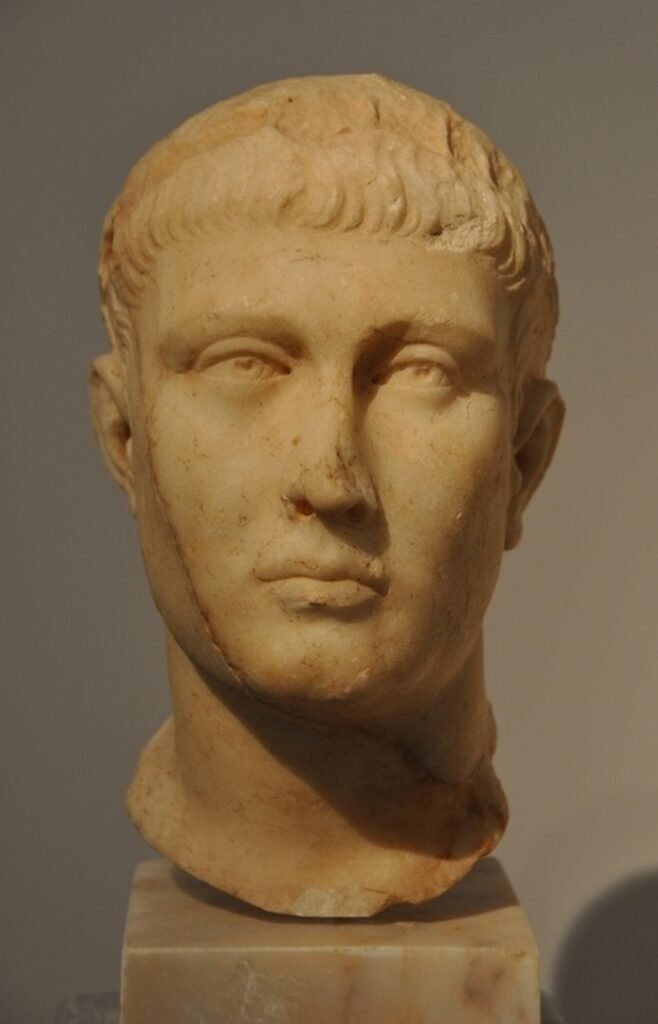
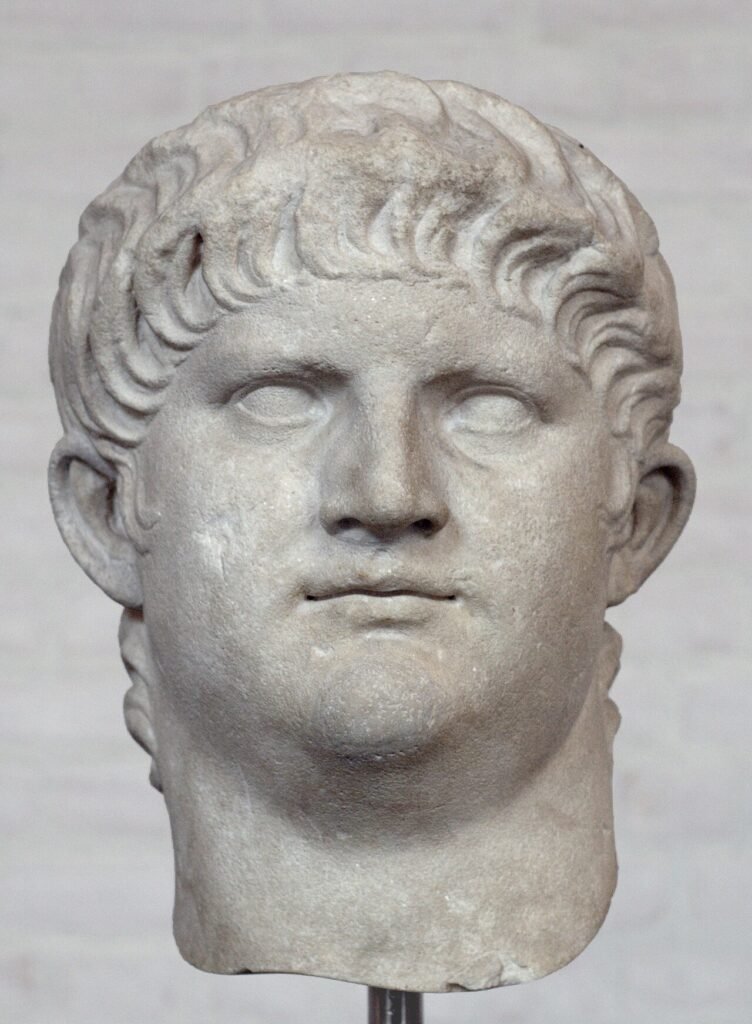
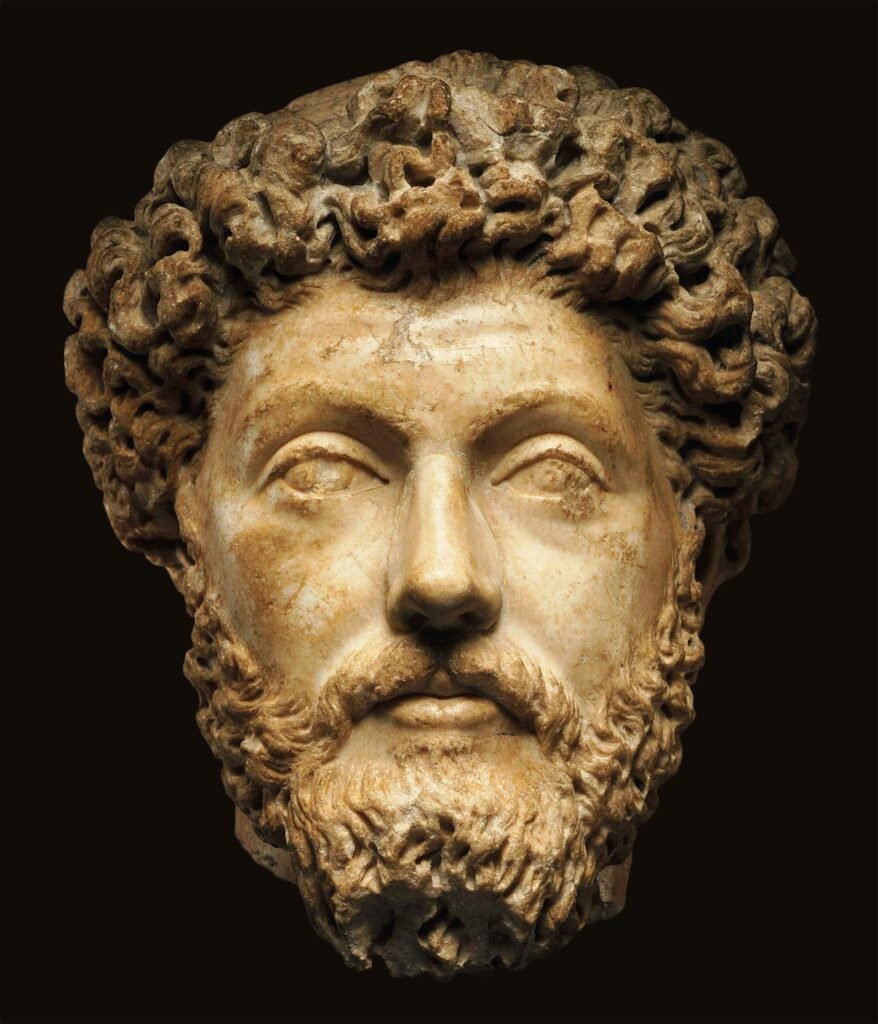
Diocletian (born around 244 CE in Dalmatia, in the Roman Empire—died around 311 or 312 CE, probably near Salona, in present-day Croatia) was a Roman emperor who ruled from 284 to 305 CE. Born Diocles, he rose through the Roman military ranks before becoming emperor and taking the name Gaius Aurelius Valerius Diocletianus. He is best known for reorganizing the Roman Empire through major political, military, economic, and administrative reforms. He also introduced the Tetrarchy, a system of government in which four rulers shared responsibility for governing the vast empire. Diocletian was the first Roman emperor to voluntarily retire from power.
Early Life and Background
Diocletian was born into a family of modest social standing in the Roman province of Dalmatia, along the eastern coast of the Adriatic Sea. His birthplace is traditionally associated with the area around Salona, an important Roman city near modern-day Split, Croatia. His original name was Diocles.
Little reliable information survives about his childhood and family life. Ancient accounts suggest that his father held a relatively low position in society, possibly working as a clerk or serving a wealthy family. Diocletian therefore did not come from one of Rome’s leading political families.
His early career developed during a period when the Roman Empire faced serious instability. The third century was marked by frequent civil wars, invasions, economic difficulties, and the rapid replacement of emperors. Many rulers gained power through military support, only to lose it through assassination or defeat.
Military service offered opportunities for ambitious men who lacked influential family connections. Diocletian entered the Roman army and gradually advanced through its ranks. His abilities as a soldier and commander helped him gain the attention of powerful military leaders.
He eventually became a senior officer and served in the imperial bodyguard. His military experience brought him into contact with the political struggles surrounding the imperial government and prepared him for the events that would change his life.
Rise to Power
During the late third century, the Roman Empire was struggling to maintain control over its enormous territory. The government faced pressure from Germanic groups along the northern frontiers and the Persian Empire in the east. Internal rebellions and disputes over imperial succession made the situation even more difficult.
In 284 CE, Emperor Carus died while campaigning against Persia. His son Numerian, who was returning west with the Roman army, also died under suspicious circumstances. The exact events surrounding his death remain uncertain.
Diocletian was serving with the eastern army when the troops gathered to determine who would lead them. On November 20, 284 CE, he was proclaimed emperor near Nicomedia in Asia Minor, in present-day Turkey.
He accused the commander of Numerian’s bodyguard, Aper, of murdering the young emperor. According to later accounts, Diocletian personally killed Aper in front of the assembled soldiers. Whether every detail of this story is accurate is uncertain, but the incident became an important part of the traditional account of his rise.
Diocletian then faced another claimant to the throne: Carinus, the surviving son of Carus, who controlled the western provinces. The two armies met at the Battle of the Margus River in 285 CE, in the region of modern Serbia.
Diocletian’s forces defeated Carinus, although the circumstances of the victory and Carinus’s subsequent death are not entirely clear. With his rival eliminated, Diocletian became the undisputed ruler of the Roman Empire.
He adopted the name Gaius Aurelius Valerius Diocletianus and began the difficult task of restoring imperial authority.
Appointment of Maximian as Co-Emperor
Diocletian soon recognized that one emperor could not effectively manage every military crisis across the Roman Empire. Its territory stretched from Britain and the Atlantic coast to the eastern Mediterranean, making communication and travel difficult.
In 285 CE, he appointed his trusted military associate Maximian as Caesar, a junior emperor. The following year, Maximian was elevated to Augustus, giving him equal imperial rank.
Diocletian retained control over the eastern provinces, while Maximian took responsibility for much of the western empire. This arrangement allowed both rulers to respond more quickly to military threats and political unrest.
The division did not mean that the Roman Empire had become two separate states. It remained a single empire, with two emperors cooperating under a shared political system.
Diocletian also strengthened the idea that imperial authority came from a higher, sacred source. He increasingly presented himself as a ruler protected by Jupiter, the chief god of Roman religion, while Maximian was associated with Hercules.
These religious associations helped distinguish the emperors from ordinary political leaders and encouraged respect for their authority. The imperial court also became more formal, with elaborate ceremonies and strict rules governing access to the emperor.
Creation of the Tetrarchy
By the early 290s, Diocletian had concluded that two emperors were still not enough to manage the empire’s military and administrative responsibilities.
In 293 CE, he introduced a new governing arrangement known as the Tetrarchy, meaning “rule of four.” It consisted of two senior emperors, called Augusti, and two junior emperors, called Caesars.
Diocletian remained the senior Augustus in the east, while Maximian served as Augustus in the west. Diocletian appointed Galerius as his Caesar, and Maximian appointed Constantius Chlorus as his Caesar.
Each ruler had responsibility for particular regions and military operations, but all four were expected to work together under a unified imperial government. The Caesars were also intended to succeed the Augusti, creating a more orderly system of imperial succession.
The arrangement helped reduce the need for a single emperor to travel constantly between distant frontiers. It also made it easier to respond to rebellions and invasions in different parts of the empire.
The Tetrarchy achieved several important military successes. Constantius recovered much of Britain after defeating the usurper Carausius and later his successor, Allectus. Maximian dealt with unrest in North Africa and threats in the western provinces. Diocletian and Galerius concentrated on the eastern territories and the Persian threat.
Although the system improved the empire’s ability to respond to immediate problems, it depended heavily on cooperation among the four rulers. Its long-term stability would eventually prove uncertain.
Military Campaigns and Defense of the Empire
Protecting the Roman frontiers was one of Diocletian’s main responsibilities. During his reign, he conducted or supervised military campaigns in several regions.
In North Africa, Maximian fought against groups that threatened Roman control and disrupted the provinces. In Britain, Constantius restored imperial authority after a period of rebellion. These operations helped strengthen the western empire.
Diocletian also focused on the eastern frontier, where the Roman Empire faced its powerful rival, the Sasanian Persian Empire.
The conflict intensified when the Persian king Narseh challenged Roman influence in Armenia and Mesopotamia. In 296 CE, Galerius led a Roman campaign against Persia but suffered a serious defeat.
Diocletian reportedly responded by reprimanding Galerius and requiring him to approach the emperor on foot while Diocletian remained in his imperial clothing. The story illustrates the strict hierarchy within the Tetrarchy, although its details come from later accounts.
Galerius reorganized his forces and launched another campaign in 298 CE. He achieved a major victory over Narseh, capturing the Persian royal camp and gaining valuable territory.
The resulting peace agreement, known as the Peace of Nisibis, was concluded in 299 CE. Persia accepted Roman control over several territories and recognized Rome’s influence in Armenia. The agreement established a more favorable eastern frontier for the Romans and helped secure the region for several decades.
Diocletian also strengthened the empire’s defensive system. He expanded military installations, improved frontier defenses, and increased the number of troops available to protect vulnerable regions.
His military policies reflected his belief that a stable empire required a strong army and a government capable of responding quickly to threats.
Administrative Reforms
Diocletian introduced extensive changes to the Roman system of government. His reforms aimed to make the empire easier to administer, strengthen local control, and improve the collection of taxes.
One important change involved reorganizing the provinces. Earlier Roman emperors had governed relatively large provinces, some of which were controlled by officials with considerable military power.
Diocletian divided many provinces into smaller administrative units. He also separated most civilian administration from military command. Civil officials were responsible for taxation, justice, and local government, while military commanders concentrated on defending the empire.
This arrangement reduced the ability of individual provincial governors to combine political and military authority against the emperor.
He also organized provinces into larger administrative groups called dioceses. These were supervised by officials known as vicars, who acted on behalf of the central government.
The empire was further organized into broad regional groupings under senior officials. These changes created a more developed administrative structure that continued to influence Roman government after his reign.
Diocletian also expanded the imperial bureaucracy. More officials were needed to manage taxation, military supplies, legal matters, and communication between the central government and provincial authorities.
The government became more organized, but it also became more expensive. Supporting a larger administration and a stronger army required substantial revenue.
Economic Reforms and the Edict on Prices
The Roman economy faced serious difficulties during the third century. Inflation, unstable currency, heavy taxation, and disruptions to trade had weakened economic confidence.
Diocletian attempted to address these problems through monetary and financial reforms.
He introduced new coinage and tried to improve the quality and reliability of Roman money. His government also reorganized the tax system to provide more dependable revenue for the army and administration.
One major reform involved establishing a more regular system of taxation based on land and population. The government assessed agricultural resources and the labor available in different regions, using these estimates to determine tax obligations.
The system helped the state collect resources more consistently, particularly in an economy where agricultural production was central to government revenue.
However, taxation could be demanding, especially for farmers and local communities already struggling with economic uncertainty.
In 301 CE, Diocletian issued the Edict on Maximum Prices, a law that established maximum legal prices for a wide range of goods and services. It also set limits on certain wages.
The government hoped that controlling prices would prevent merchants and producers from charging excessive amounts for essential products.
The edict covered everyday goods, including food, clothing, and other necessities, as well as services such as transportation and labor.
Its effectiveness was limited. Prices continued to rise in many places, and enforcement was difficult across such a large empire. Some merchants avoided selling goods at the official prices, while others may have turned to unofficial markets.
The law was eventually abandoned, but it remains one of the most extensive surviving examples of government price regulation in the ancient world.
Religious Policies and the Persecution of Christians
Diocletian believed that traditional Roman religious practices helped maintain the unity and stability of the empire. He supported the worship of the traditional Roman gods and expected public religious ceremonies to demonstrate loyalty to the state.
Christians presented a challenge to this religious system because many refused to participate in sacrifices to the Roman gods or recognize the traditional religious obligations of the emperor.
For much of the early part of his reign, Diocletian did not carry out a general persecution of Christians. However, tensions increased during the late 290s and early 300s.
In 297 CE, he ordered Christians serving in the Roman military to participate in traditional religious ceremonies. Some Christian soldiers who refused were dismissed or punished.
The situation became more serious in 303 CE, when Diocletian and his fellow rulers issued a series of laws against Christianity. These measures are commonly known as the Great Persecution.
The first edict ordered the destruction of Christian churches and the burning of religious texts. It also removed certain legal rights from Christians and exposed some to punishment or imprisonment.
Further orders required Christians to surrender their scriptures and perform sacrifices to the Roman gods. Those who refused could face imprisonment, torture, or execution.
The persecution varied across the empire. In some regions, officials enforced the laws harshly, while in others the measures were less severe. The eastern provinces generally experienced particularly intense persecution.
Diocletian’s reasons were connected to his religious beliefs and his desire to preserve imperial unity. He viewed traditional religious observances as part of the established order and considered refusal to participate a threat to public stability.
However, the persecution did not eliminate Christianity. Christian communities survived, and the religion continued to spread.
Diocletian’s religious policies became one of the most controversial parts of his reign, especially after Christianity gained imperial support under later emperors.
Abdication in 305 CE
After more than 20 years as emperor, Diocletian made an extraordinary decision. On May 1, 305 CE, he voluntarily abdicated.
The ceremony took place at Nicomedia, in present-day İzmit, Turkey. Maximian also stepped down from the imperial position on the same day.
The two senior emperors were replaced by their Caesars. Galerius became Augustus in the east, while Constantius Chlorus became Augustus in the west.
Two new Caesars were appointed: Maximinus Daia in the east and Severus in the west.
The arrangement followed Diocletian’s plan for an orderly transfer of power. By requiring senior emperors to retire and their junior partners to take over, he hoped to prevent the violent succession struggles that had damaged the empire during the third century.
Diocletian’s decision to leave power was unusual in Roman history. Most emperors ruled until their deaths, were overthrown, or were killed.
Ancient accounts suggest that he had experienced periods of illness and physical weakness, which may have influenced his decision. His retirement also reflected his belief that the Tetrarchic system should function independently of his continued personal rule.
After stepping down, he retired to a large palace near Salona, in the region of his birthplace. The palace was located along the Adriatic coast, in present-day Croatia.
Retirement and Later Years
Diocletian spent his final years living away from imperial politics. His residence, now known as Diocletian’s Palace, was a large fortified complex containing private living quarters, courtyards, temples, and spaces for official activities.
The building was designed to serve as both a residence and a secure retreat. Its location near the Adriatic coast allowed Diocletian to live comfortably while remaining within the Roman world.
Although he no longer held imperial authority, political developments eventually drew attention to his retirement.
The Tetrarchy began to break down after his abdication. When Constantius Chlorus died in 306 CE, his son Constantine was proclaimed emperor by the army in Britain. At the same time, Maxentius, the son of Maximian, claimed power in Rome.
Maximian returned to political life and attempted to regain his former position. Galerius also struggled to maintain the succession system established by Diocletian.
These events produced a series of civil wars involving several competing rulers.
Diocletian was reportedly asked to return to political leadership, but he refused. According to a famous account, he responded that if his successor could see the vegetables he had grown with his own hands, he would no longer ask him to take up the burdens of government.
The story reflects his determination to remain retired, although the exact wording cannot be confirmed.
He also became involved in disputes within the imperial family and among the remaining rulers. His wife, Prisca, and daughter, Valeria, were affected by the political struggles that followed his retirement.
Both women were connected to the imperial court through their relationships with Diocletian and Galerius. Their later lives were marked by political uncertainty, particularly after Galerius died in 311 CE.
Diocletian remained in retirement as the political system he had created gradually collapsed.
Death of Diocletian
Diocletian died around 311 or 312 CE at his palace near Salona, in the Roman province of Dalmatia, in present-day Croatia. The exact date and circumstances of his death are uncertain.
His final years had been spent away from the imperial court, amid the political conflicts that followed his abdication. He did not return to the throne or attempt to restore the Tetrarchy.
His retirement palace survived long after his death. As the ancient city of Salona declined, people gradually settled within the palace complex, adapting its buildings for homes, churches, and other purposes. Over time, the settlement developed into the modern city of Split.
Diocletian’s final years thus ended in the region where he had begun his life, after a career that had taken him from the Roman military ranks to the highest position in the empire.