Every night, as darkness folds around the Earth, a silver lantern rises. It drifts silently across the heavens—serene, familiar, eternal. To poets, the Moon has always been the emblem of love and longing. To dreamers, it is a symbol of mystery and destiny. Yet, behind its quiet beauty lies a truth that is far more profound: the Moon is the reason we exist.
If the Moon had not formed, our world might never have stabilized enough to nurture life. Without it, Earth’s tilt would have wobbled chaotically, climates would have swung between extremes, and tides would have been weak and lifeless. The Moon is not merely a companion—it is a guardian, a cosmic anchor that saved our planet from chaos and made life’s fragile flame possible.
To understand how the Moon saved Earth, we must journey back billions of years—to a time when our planet was still young, molten, and wild, and the solar system was a battlefield of worlds colliding.
The Birth of the Moon from Fire and Destruction
Four and a half billion years ago, the solar system was a violent nursery. Planets were still forming, clumping together from dust and rock that orbited the newborn Sun. Earth, newly born and still glowing with heat, was bombarded by countless asteroids. Then came the event that would change everything.
A Mars-sized protoplanet, which scientists call Theia, struck the young Earth in a catastrophic collision. The impact released an unimaginable amount of energy—enough to melt both bodies and vaporize part of Earth’s crust. The collision was not a glancing blow, but a merging of worlds.
For a brief moment, two planets became one fiery chaos. Mountains of molten rock exploded into space, and a ring of vaporized stone encircled the Earth. Over time, this ring began to cool and coalesce under gravity, gathering itself into a single sphere. That sphere became our Moon.
The Moon was born from destruction, forged in a crucible of fire. Its birth marked the end of Earth’s violent youth and the beginning of a new balance—a partnership that would shape the destiny of life.
A Stabilizing Hand on a Tilting World
After the impact, Earth was spinning faster and wobbling wildly. Its axis of rotation—the invisible line through its poles—was unstable, tilting at unpredictable angles over time. This tilt determines how sunlight reaches the planet, which in turn governs climate and seasons. Without stability, a planet’s climate can shift catastrophically, making it nearly impossible for life to develop or endure.
Today, Earth’s axis tilts at about 23.5 degrees, giving us our familiar rhythm of seasons. But without the Moon, that tilt might have varied by tens of degrees over millions of years. Sometimes the poles could have pointed almost directly at the Sun, baking them in perpetual daylight; at other times, the equator could have frozen under eternal night.
The Moon’s gravitational pull acts as a stabilizing force, keeping Earth’s tilt within a narrow range. It slows the chaotic precession of the axis—the slow wobble that would otherwise send climates spinning into chaos. In essence, the Moon acts like a cosmic gyroscope, preserving the delicate balance that makes our planet habitable.
Without this stabilizing influence, the story of Earth might have been one of extremes—swinging ice ages, blistering deserts, and a fragile biosphere unable to find long-term equilibrium. Life, if it ever arose, might have struggled to survive. The Moon’s steady hand prevented that fate.
The Dance of Tides and the Breath of Life
Every shoreline, every wave that rolls and retreats, carries the Moon’s invisible touch. The tides—those rhythmic rises and falls of the ocean—are one of the most tangible ways the Moon influences our world.
The Moon’s gravity pulls on Earth’s oceans, creating bulges in the water on the side facing the Moon and on the opposite side. As Earth rotates, these bulges move around the planet, producing the rhythmic breathing of the sea we call tides.
But tides are more than just a beautiful phenomenon. They were crucial in the early evolution of life. In Earth’s primordial oceans, billions of years ago, tides created vast tidal pools along the coasts—shallow, nutrient-rich environments where organic molecules could concentrate. Here, the chemistry of life may have begun.
As tides rose and fell, these pools would alternately flood and dry out, promoting complex chemical reactions. Some scientists believe this cycle of concentration and evaporation provided the perfect conditions for life’s first self-replicating molecules to form.
Even after life began, the tides continued to shape evolution. They influenced the migration of marine creatures, the formation of ecosystems, and even the timing of biological rhythms. Many organisms, from corals to crabs, still live by the Moon’s clock, synchronizing reproduction and behavior with the lunar cycle.
In this sense, the Moon’s pull extends beyond physics—it touches the very heartbeat of biology.
The Slow Dance of Time and Rotation
When the Moon first formed, it was much closer to Earth—perhaps only 25,000 kilometers away, compared to the 384,000 kilometers that separate us today. At that distance, it loomed enormous in the sky, more than ten times its current size. Its gravitational pull was far stronger, and tides were massive, washing hundreds of kilometers inland.
But over billions of years, the Earth and Moon have been locked in a slow, graceful dance of exchange. As Earth’s rotation creates tides, the gravitational interaction between planet and satellite transfers energy between them. This exchange has gradually slowed Earth’s rotation and pushed the Moon farther away.
In the distant past, a day on Earth lasted only about five hours. As time passed, tidal friction slowed Earth’s spin, lengthening the day to the 24-hour rhythm we know now. Meanwhile, the Moon drifted outward at a rate of about 3.8 centimeters per year.
This tidal relationship not only shaped the length of our days but also contributed to the stability of Earth’s rotation. Without the Moon, Earth’s spin might have remained faster, creating more violent weather systems and unstable climatic patterns. The Moon, by slowing our world’s heartbeat, brought calm to a once-turbulent planet.
The Sculptor of the Sky
The Moon’s influence on Earth is not confined to tides and tilt—it has shaped the way we experience the very sky itself. The Moon illuminates our nights, moderating the deep darkness between dusk and dawn. For early humans, this gentle light was crucial.
It extended the day, allowing time for travel, hunting, and storytelling. The full Moon became a celestial clock, marking the passage of time and the rhythm of months. Its phases inspired the earliest calendars and rituals, guiding agriculture, migration, and cultural memory.
Long before humans understood gravity or orbital mechanics, they recognized the Moon’s power. It became a symbol of cycles and rebirth, of change and constancy. Even in its absence—during eclipses or new moons—it taught us about shadow and reflection, light and time.
The Moon didn’t just save Earth from physical chaos; it saved human civilization from darkness, offering both light and meaning to our ancestors.
The Cosmic Anchor That Prevented Chaos
Imagine a world without the Moon. Earth’s axis, lacking the stabilizing tug of its satellite, would wobble like a spinning top on the verge of falling. The poles would sometimes face the Sun, melting the ice caps and flooding continents. At other times, they would freeze solid, plunging the world into ice ages.
Such chaos would devastate ecosystems. Seasons would lose their rhythm. Forests and deserts would shift unpredictably. The cycles upon which plants, animals, and climate depend would collapse.
Computer simulations confirm this grim picture. Without the Moon, Earth’s axial tilt could vary between 0 and 85 degrees over millions of years. A 0-degree tilt would mean no seasons at all—permanent twilight at the poles and eternal equatorial sun. An 85-degree tilt, on the other hand, would expose the poles to searing heat and leave the equator frozen in shadow.
Life, in such a world, might never have found a stable foothold. Venus and Mars, which both lack large moons, show us hints of that instability. Venus’s rotation is chaotic and slow, while Mars’s tilt varies dramatically over time, leading to extreme climate swings.
Our Moon, by contrast, keeps Earth’s axis steady within a narrow range of about two degrees. That small margin makes all the difference—it ensures that climates shift gently, not violently, giving evolution time to adapt and thrive.
A History Written in Craters
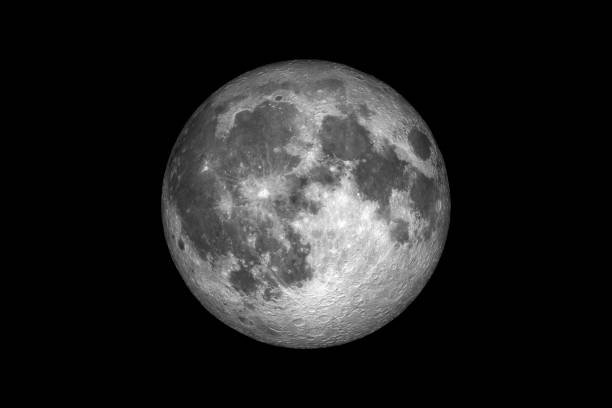
The Moon itself bears the scars of cosmic history. Its surface, pocked with craters and basins, is a record of the solar system’s violent past. Because the Moon has no atmosphere or liquid water to erode its features, these craters remain preserved for billions of years—a cosmic diary etched in stone.
By studying lunar rocks and craters, scientists have pieced together Earth’s own early history. Much of Earth’s original surface has been erased by plate tectonics and erosion, but the Moon holds the memory of that ancient time. It tells us about the period known as the Late Heavy Bombardment, when asteroids rained upon the inner planets, reshaping their surfaces and delivering vital materials.
Some of those impacts may have influenced life’s origin on Earth by bringing water and organic molecules. The Moon’s ancient face is therefore not just a record of its own story, but of ours.
In this way, the Moon serves as both guardian and historian—a witness to the birth pains of the Earth it protects.
The Moon and the Evolution of Life
From the first microbes to the rise of mammals, the Moon’s influence can be traced through the entire history of life. Its tidal rhythms guided the earliest biological clocks, which evolved into the circadian and lunar cycles that still govern animal behavior today.
Many marine creatures, from corals to sea turtles, still synchronize reproduction with the phases of the Moon. Even humans retain subtle traces of lunar influence in sleep patterns and hormonal cycles.
But beyond biology, the Moon’s role in stabilizing climate gave evolution the gift of time. It prevented catastrophic shifts that could have wiped out early ecosystems before they had the chance to adapt. The continuity of Earth’s climate—over billions of years—allowed complexity to flourish.
The Moon, then, is not just a satellite—it is a silent partner in the grand evolutionary story. It ensured that life had a stage stable enough to perform upon.
The Shield and the Shepherd
In the early solar system, the Moon may have served as a partial shield for Earth. During the period of heavy bombardment, large asteroids and comets frequently struck the inner planets. Some of these would have hit Earth directly, but the Moon intercepted a fraction of them.
Though small compared to Earth, the Moon’s gravitational presence slightly altered the trajectories of nearby bodies, shepherding debris and reducing the frequency of catastrophic impacts. It was not an impenetrable shield, but its existence lessened the chaos in Earth’s cosmic neighborhood.
Even today, the Moon’s gravitational influence continues to affect the distribution of near-Earth objects. It tugs on asteroids and dust, subtly shaping the region of space we inhabit.
While it cannot prevent all impacts, the Moon’s silent gravity adds one more layer of stability to our fragile world.
The Emotional Bond Between Worlds
The relationship between Earth and Moon is not purely mechanical—it has also shaped the human spirit. For countless generations, the Moon has been humanity’s companion, its reflection in the cosmos. Its phases have inspired myths, calendars, and faiths. It has watched over the rise of civilizations, the writing of poetry, the birth of science.
Every human who has ever lived has seen the same Moon. Its light has touched kings and shepherds alike. When humans first set foot upon it in 1969, it was not just a triumph of technology—it was a reunion with an ancient friend.
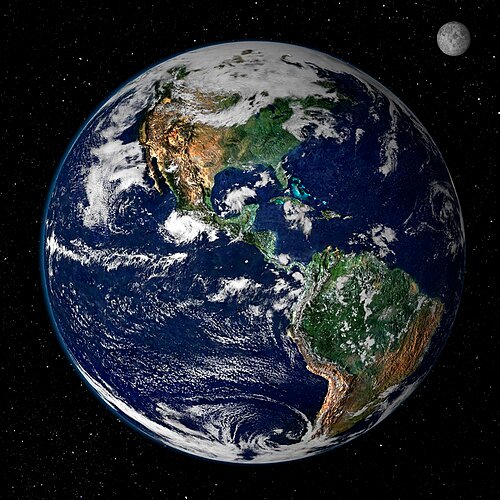
From that vantage point, looking back at Earth, astronauts saw something no one had ever seen before: a fragile blue sphere suspended in blackness, illuminated by sunlight and framed by the Moon’s silent surface. That moment transformed our understanding of home.
It reminded us that the Moon and Earth are bound together—not only by gravity, but by meaning.
The Moon and the Rhythm of Civilization
The Moon’s phases became the first calendar. Before there were clocks or written numbers, early humans tracked time by the waxing and waning of its light. A full Moon marked the midpoint of a cycle; a new Moon signaled renewal.
Lunar months shaped agriculture and ritual. Farmers sowed and harvested by moonlight; sailors navigated by its glow; storytellers and prophets wove its cycles into myth. Even today, the word “month” traces back to “Moon.”
The Moon gave structure to human life, just as it gave rhythm to the seas. It was both a measure of time and a symbol of eternity—its constant changes mirroring the cycles of birth, growth, and death.
In this way, the Moon did more than save Earth physically—it helped shape human consciousness, weaving itself into our languages, cultures, and hearts.
A Companion That Still Evolves
Though we think of the Moon as constant, its relationship with Earth continues to evolve. Every year, it drifts a few centimeters farther away. As it retreats, our days lengthen ever so slightly, and tides become weaker. In billions of years, Earth and Moon will reach a gravitational balance called tidal locking, where both will face each other permanently.
By that distant future, the Sun itself will have grown brighter, and the Earth may no longer be habitable. But even then, the Moon will continue to circle, a pale witness to our planet’s final days.
Its slow departure reminds us of time’s inexorable passage. The same celestial dance that once saved us also carries within it the inevitability of change.
Lessons from the Moon for the Future
The Moon is not just a relic of the past—it is a guide for the future. Understanding its influence helps us grasp how fragile planetary stability truly is. It shows how small changes—a tilt, a spin, a gravitational tug—can determine the fate of worlds.
As humanity looks beyond Earth, seeking to colonize other planets or moons, the lessons of our own satellite become vital. A planet without a large moon may struggle to maintain stable climates or reliable tides. Future explorers will need to consider how such worlds might differ in their potential to sustain life.
Moreover, the Moon itself may play a direct role in humanity’s future. It is the nearest stepping stone to the stars—a natural laboratory, a source of materials, and perhaps one day, a home. By returning to the Moon, we return to our origins and prepare to extend life’s reach beyond Earth.
The Poetry of Survival
When we look up at the Moon, we see not just a glowing sphere, but the memory of salvation. It is the quiet architect of our stability, the unseen hand that steadied Earth’s axis, moderated its climate, and gave time for life to bloom.
In every beam of moonlight that touches the ocean, in every gentle tide that breathes upon the shore, we feel its influence. The Moon’s existence reminds us that balance in the universe is never guaranteed—it is earned through the delicate interplay of forces, through the slow dance of gravity and time.
The Moon saved Earth not through intention, but through cosmic chance—a collision that could have destroyed instead gave birth to harmony. That irony lies at the heart of the human story itself: life born from chaos, meaning rising from destruction.
The Eternal Bond
The next time you stand beneath a full Moon, remember that it is more than a light in the sky—it is the echo of Earth’s survival. Without it, our world might have been an uninhabitable sphere, spinning drunkenly through space. The oceans might never have breathed; the climates might never have calmed; life might never have found its rhythm.
The Moon is our silent partner in existence. It has shaped our days, our tides, our myths, and our fate. It steadied our planet and illuminated our nights. It gave us time to evolve, to dream, and to wonder.
In a universe that often seems cold and indifferent, the Earth-Moon system stands as a reminder of cosmic grace—a rare harmony born from chaos.
The Moon saved Earth from madness. It steadied our axis, slowed our days, and gave us balance. And for billions of years, it has watched over us—unwavering, patient, and eternal.
Long after humanity is gone, the Moon will still shine, keeping silent vigil over the planet it once saved from chaos. It will drift through the dark, glowing softly, carrying the memory of a fragile blue world and the life it helped to protect.