Deep inside a 59,000-year-old Neanderthal molar, researchers discovered evidence of what appears to be intentional dental treatment. The findings suggest Neanderthals could identify the source of severe tooth pain, manually remove damaged tissue with stone tools, and continue using the treated tooth afterward—pushing the origins of dental care back by more than 40,000 years.
For decades, Neanderthals have often been portrayed as skilled hunters and toolmakers. Now, a remarkable tooth from a cave in Siberia is revealing another side of their abilities—one that looks surprisingly medical.
Researchers examining a single Neanderthal molar from Chagyrskaya Cave in Russia found evidence that the tooth had been deliberately modified to treat a painful infection. The study, published in PLOS One on May 13, 2026, suggests that Neanderthals were capable of diagnosing the source of dental pain and carrying out a procedure to remove damaged tissue.
If confirmed, the discovery represents the oldest known successful dental treatment ever documented.
An Unusual Hole Raises Questions
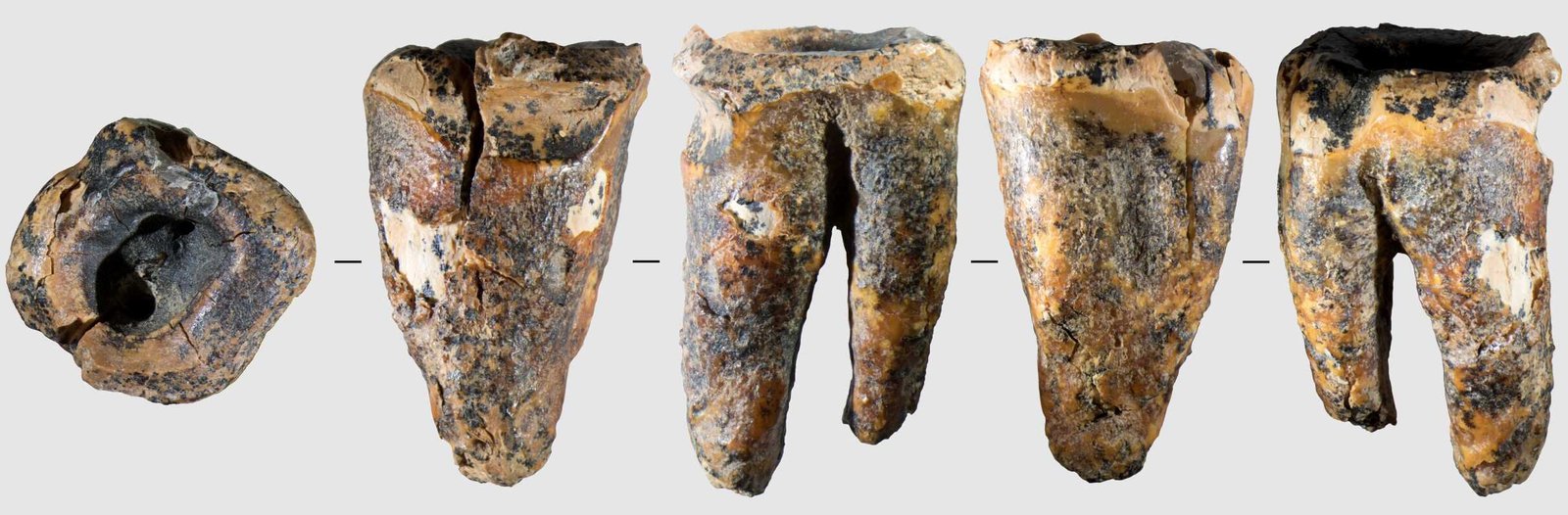
The story began with a damaged molar dating to approximately 59,000 years ago. At the center of the tooth was a deep concavity extending into the pulp cavity—the area containing nerves and blood vessels.
Researchers noticed that the shape of the hole did not resemble normal tooth anatomy. It also differed from the patterns typically produced by natural tooth decay.
According to lead researcher Alisa Zubova, the unusual form of the cavity immediately attracted attention. Visible scratches within the damaged area suggested that the structure was not created naturally but resulted from intentional actions.
Further investigation using computed microtomography revealed mineralization changes in the dentin consistent with severe dental decay. The evidence pointed toward a tooth that had suffered from significant caries and may have undergone deliberate intervention.
Recreating the Procedure With Stone Tools
To determine whether the cavity could have been intentionally created, the research team conducted a series of experiments using three human teeth.
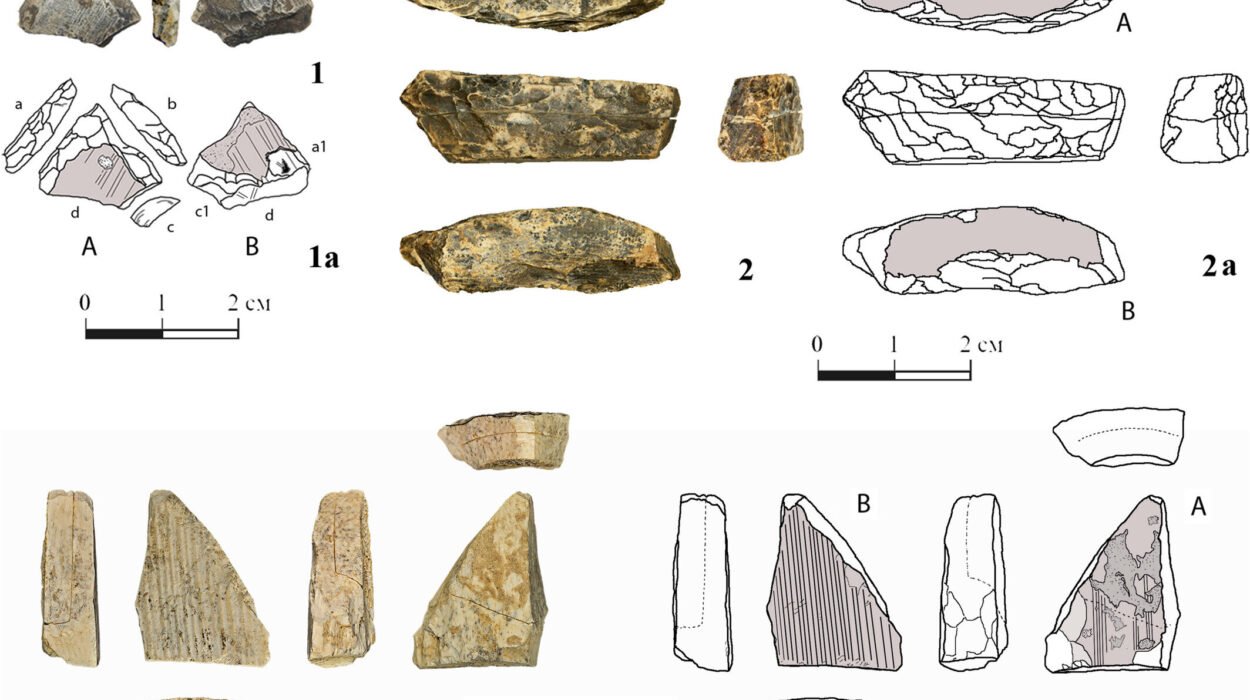
The scientists manually drilled into the teeth using a sharp stone point similar to tools recovered from Chagyrskaya Cave. Their goal was to see whether such tools could produce marks matching those found on the Neanderthal specimen.
The results were striking.
Microscopic analysis showed that the grooves and scratches created during the experimental drilling closely matched those present on the ancient molar. The experiments demonstrated that a thin stone tool could effectively and rapidly remove decayed dental tissue.
Researcher Lydia Zotkina explained that the comparison between the experimental specimens and the Neanderthal tooth revealed a clear correspondence in microscopic traces, supporting the interpretation that the cavity was intentionally drilled.
Evidence the Treatment Worked
One of the most important aspects of the discovery is that the tooth appears to have remained functional after the procedure.
Researchers identified signs of antemortem wear, meaning the tooth continued to be used while the individual was still alive. This detail is crucial because it indicates the treatment was not merely an unsuccessful attempt or accidental damage.
The team also detected areas of demineralization associated with preserved remnants of dental decay, further linking the cavity to a treatment of a carious lesion.
Although the procedure would almost certainly have been painful, removing damaged tissue from an infected tooth could have provided significant relief by reducing the source of discomfort.
The findings suggest that the individual survived long enough after the intervention for wear patterns to develop on the treated tooth.
More Than Simple Tool Use
The implications extend far beyond dentistry.
Researchers argue that the evidence demonstrates several sophisticated behaviors. The Neanderthal who performed—or received—the treatment appears to have recognized the source of pain, understood that intervention could help, possessed the manual skills necessary to carry out a delicate procedure, and tolerated immediate pain in pursuit of longer-term relief.
These are complex actions that require planning, knowledge, and fine motor control.
Archaeological evidence has previously shown that Neanderthals used toothpicks to clean their teeth and may have employed medicinal plants. However, direct evidence of a physical medical procedure aimed at treating a dental problem had remained elusive.
This discovery changes that picture.
According to the researchers, this is the first documented example of such behavior outside Homo sapiens.
A Rare Case of Dental Disease
The treated molar also stands out because dental caries appear to have been uncommon among Neanderthals.
The tooth contained evidence of a carious lesion, and researchers also observed grooves along the side of the tooth that likely resulted from toothpick use. Together, these features provide a rare glimpse into how Neanderthals may have responded when dental disease did occur.
Rather than simply enduring the pain, it appears they may have taken active steps to address the problem.
Neanderthals in Siberia
The tooth was recovered from Chagyrskaya Cave in the Altai region of Siberia, an area occupied by Neanderthals after their migration from Central and Eastern Europe roughly 70,000 to 60,000 years ago.
According to the researchers, the region offered favorable conditions, including biological diversity, abundant stone resources, and familiar prey such as wild bison and horses.
Previous analyses of stone-tool industries and genetic evidence have indicated close connections between the Chagyrskaya Neanderthals and populations associated with the Micoquian cultural tradition in regions including the Caucasus and Crimea.
The stone tools found at the site provided an important clue in understanding how the dental procedure may have been carried out.
Why This Matters
This discovery challenges long-standing assumptions about the limits of Neanderthal knowledge and medical behavior. Evidence from a single molar suggests that 59,000 years ago, Neanderthals may have been capable of identifying a painful tooth infection and intentionally treating it using stone tools.
The findings represent the oldest known evidence of successful dental treatment in the world, extending the timeline of such behavior by more than 40,000 years. More importantly, they reveal that Neanderthals were not merely surviving their environment—they were developing practical solutions to health problems, demonstrating a level of care, skill, and understanding that continues to reshape our view of these ancient humans.