A newly described dinosaur species, Dasosaurus tocantinensis, was uncovered during construction work in northeastern Brazil and is now the largest dinosaur known from the state of Maranhão. Researchers say the 20-meter-long sauropod lived about 120 million years ago and may help reveal how dinosaur lineages dispersed between continents. The discovery also suggests that key growth patterns linked to giant body size evolved earlier than previously believed.
The discovery began like many major fossil finds do—not in a planned excavation, but in the middle of modern development. At a construction site in Davinópolis, Brazil, workers digging deep into the ground exposed bones that would soon reshape what scientists know about the region’s prehistoric giants.
What first looked like something far more recent turned out to be something vastly older.
A Dinosaur Found Eight Meters Underground
The fossils were uncovered during the construction of a road-rail terminal in Davinópolis, a city in the state of Maranhão in northeastern Brazil. A team of archaeologists was monitoring the site as part of environmental licensing requirements when they encountered the bones.
At first, the archaeologists believed the remains belonged to megafauna mammals, possibly animals that might have lived alongside ancient humans. That assumption changed after Elver Luiz Mayer, a professor at the Federal University of the São Francisco Valley (UNIVASF), was contacted in 2021.
Mayer, whose expertise is actually in mammals from the much more recent Quaternary period, quickly noticed something important: the fossils were found at a depth of about eight meters.
That depth strongly suggested the remains were far older than any Quaternary megafauna.
Dating the Fossils to the Cretaceous
Mayer recognized that the geological formation was already known from earlier research. According to those studies, the layers belonged to the transition from the Lower to the Upper Cretaceous, dating to around 120 million years ago.
Once Mayer confirmed the likely age, he contacted specialists and helped assemble a multidisciplinary team to properly study the specimen. The work eventually led to the identification of an entirely new dinosaur species, described in the Journal of Systematic Palaeontology.
Introducing Dasosaurus tocantinensis
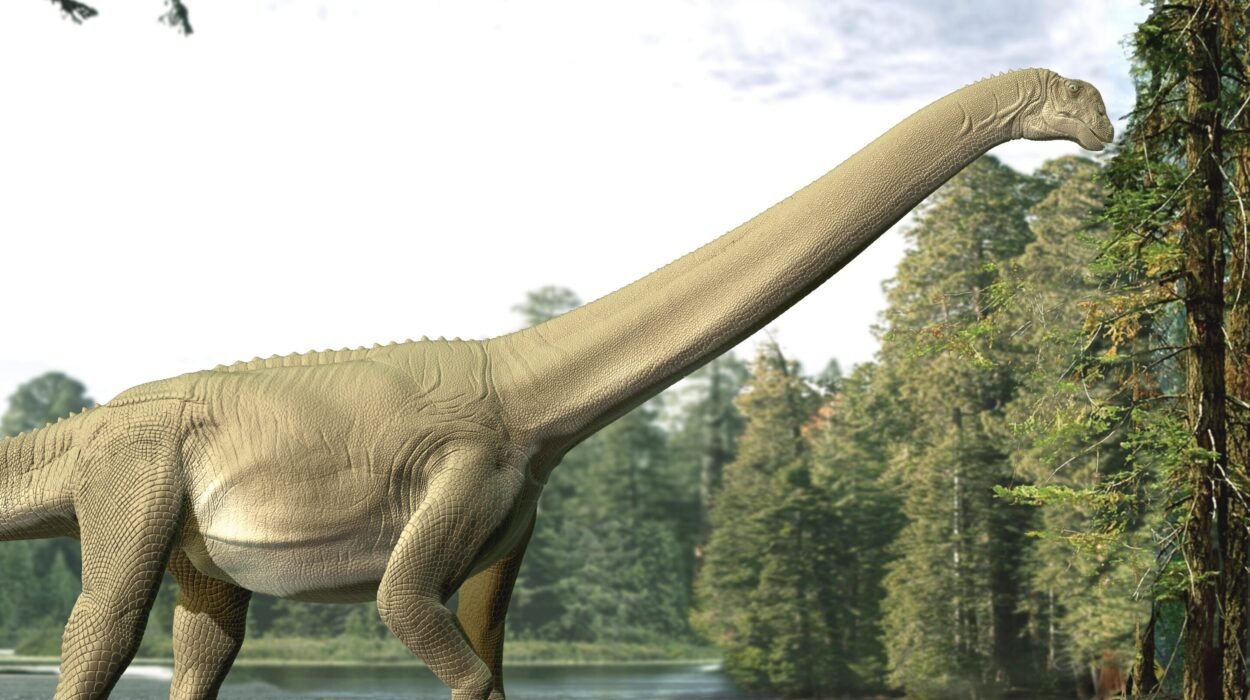
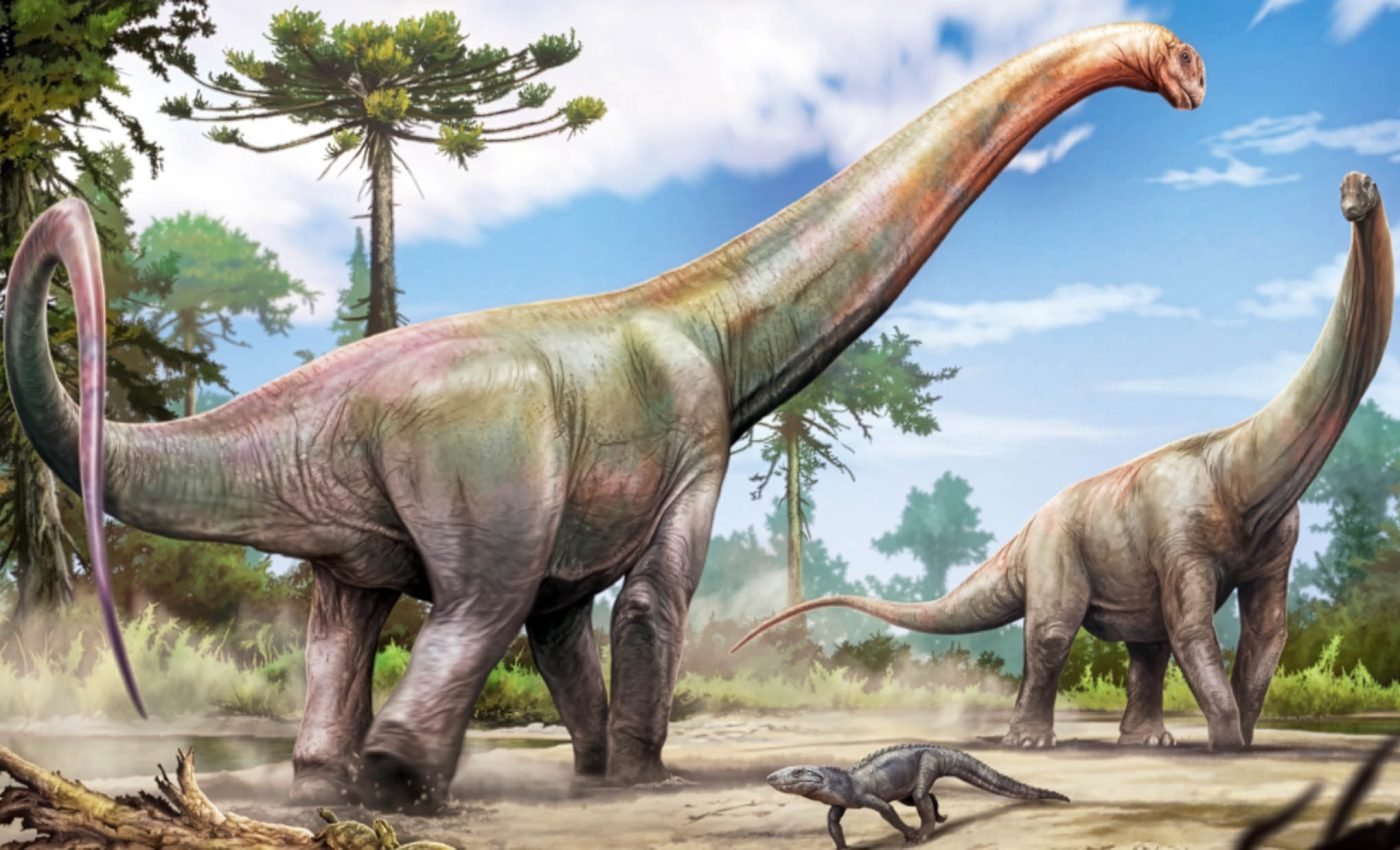
The newly named dinosaur is called Dasosaurus tocantinensis. Researchers estimate the animal measured around 20 meters long, placing it among the largest dinosaurs ever found in the region.
The species is now considered the largest known dinosaur from Maranhão, according to Mayer. While the state already had known dinosaur fossils, it had not produced sauropods of this size.
Mayer pointed to one example already known from Maranhão: the diplodocid Amazonsaurus maranhensis, which measured around 10 meters long—only about half the length of the newly described animal.
A Surprisingly Complete Skeleton
The fossil remains include multiple major bones, making it a relatively complete specimen by dinosaur standards.
According to Max Langer, a professor at the University of São Paulo (FFCLRP-USP) and a contributor to the study, the recovered material includes tail vertebrae, a 1.5-meter femur, ribs, foot bones, and arm and leg bones.
Langer noted that the team believes more fossils from the same individual may still be present at the site and remain unexcavated.
After extensive fossil preparation, the specimen was analyzed in Pará before being returned to Maranhão. It is now housed in São Luís at the State Center for Natural History and Archaeology Research, which also participated in the research.
A Name Rooted in Maranhão’s Landscape
The name Dasosaurus tocantinensis reflects both geography and history.
The term “Daso” means “forest,” referencing the woodlands of Maranhão, which early Portuguese colonizers described as a dense and tangled region—an idea linked to the origin of the name “Maranhão.”
The species name “tocantinensis” refers to the Tocantins River, since the discovery site lies near its eastern bank.
A Dinosaur With European Connections
From an evolutionary perspective, researchers say the closest known relative of Dasosaurus tocantinensis lived in what is now Spain. This surprising relationship suggests more than a shared ancestry—it points to ancient geographic connections that shaped dinosaur evolution.
The team argues that the discovery indicates the presence of a previously unrecognized dinosaur group in this part of Brazil, while also supporting the idea of an ancient connection between the European archipelago of the time and what is now South America.
Researchers propose that the ancestors of the Maranhão dinosaur likely dispersed to South America via North Africa between 140 and 120 million years ago, when landmasses were still connected under the broader structure of Gondwana.
Bone Microstructure Reveals Unexpected Growth Patterns
One of the most significant scientific findings came not just from the bones themselves, but from what was inside them.
Researchers Tito Aureliano and Aline Ghilardi of the Federal University of Rio Grande do Norte (UFRN) examined the fossil’s bone microstructure. Their analysis revealed a growth pattern that combined features seen in older sauropods with characteristics typical of titanosaurs, a group closely related to the new species.
This discovery suggests that certain growth and bone remodeling patterns evolved earlier than scientists previously believed.
The researchers argue this finding may help explain how some dinosaurs were able to reach such extreme sizes, showing that biological adaptations linked to gigantism may have appeared sooner in dinosaur evolution than expected.
Construction Sites: A Threat and a Gateway
The discovery of Dasosaurus tocantinensis also highlights a major challenge in paleontology—especially in countries with dense vegetation and limited natural rock exposure.
Langer explained that in Brazil, fossil discoveries often depend heavily on human activity. Dense tropical environments can hide important rock layers, meaning fossils may only be revealed when construction, highways, or quarries cut into the ground.
At the same time, these projects can also destroy fossils before they are identified.
Langer emphasized that while infrastructure projects are important for revealing fossils, they must be paired with specialized monitoring and recovery efforts—something that does not always happen.
Mayer echoed the concern, stating that stronger cooperation is urgently needed to balance construction development with federal fossil legislation and heritage preservation.
More Fossils May Still Be Waiting
The story may not be finished.
The research team is currently negotiating with the construction company to continue excavation efforts at the site. If additional fossils are recovered, they could offer new insight into the anatomy of Dasosaurus tocantinensis and the broader dinosaur group it represents.
With more remains potentially still buried underground, scientists may soon gain a clearer picture of how this giant lived—and how it fit into the evolutionary history of Cretaceous South America.
Why This Matters
The discovery of Dasosaurus tocantinensis is not just the identification of a new dinosaur—it’s evidence of how ancient ecosystems and continental connections shaped the movement and evolution of massive animals across the planet. With its estimated length of 20 meters and its ties to dinosaurs from what is now Spain, the fossil strengthens scientific understanding of prehistoric dispersal routes between continents.
Just as importantly, its bone microstructure provides clues about the evolution of growth patterns and bone remodeling, offering a deeper explanation for how some dinosaurs reached extreme body sizes. Combined with the circumstances of its discovery, the find also underscores a modern reality: protecting fossil heritage depends on careful collaboration between scientists, lawmakers, and developers before irreplaceable evidence is lost.