Human beings are storytellers by nature. Whenever we encounter something we do not understand, we search for explanations. Sometimes the answer comes quickly through science, archaeology, or historical research. At other times, however, the evidence remains incomplete. Fragments of stone, damaged manuscripts, abandoned structures, and unexplained artifacts leave behind questions that continue to challenge experts for generations.
Ancient mysteries are fascinating not because they prove supernatural ideas or hidden civilizations, but because they reveal the limits of current knowledge. Archaeologists, historians, geologists, linguists, and other researchers have solved countless puzzles of the past, yet some enigmas remain stubbornly resistant to explanation. In many cases, scientists possess strong theories but lack definitive proof. In others, the available evidence is so limited that competing interpretations remain equally plausible.
The following ten ancient mysteries are among the most intriguing unsolved questions in human history. Each has been studied extensively. Each has generated scientific investigation and scholarly debate. And each continues to remind us that the past is often more complex than we imagine.
1. The Purpose of Stonehenge
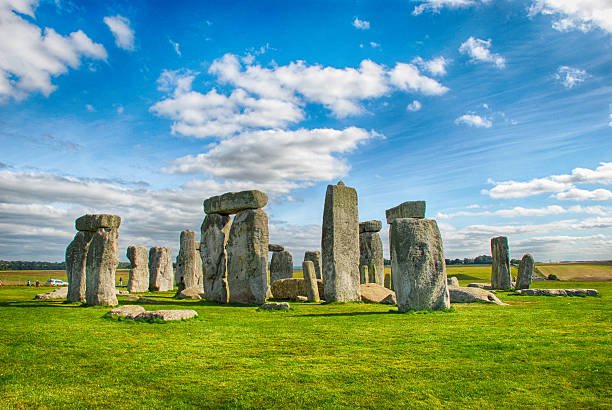
Among the most famous prehistoric monuments on Earth stands the remarkable stone circle known as Stonehenge. Located on a windswept plain in southern England, it has captivated visitors for centuries.
Construction of Stonehenge began roughly 5,000 years ago and continued through multiple phases over many centuries. Massive sandstone blocks, some weighing more than 20 tons, were transported considerable distances before being carefully arranged into circles and horseshoe-shaped formations. Even more astonishing, smaller “bluestones” were brought from western Wales, over 200 kilometers away.
Archaeologists have learned a great deal about how Stonehenge was built. Excavations have revealed nearby settlements, burial sites, and evidence of ceremonial activity. Scientific dating techniques have established a detailed timeline of construction. Yet the monument’s primary purpose remains uncertain.
Some researchers argue that it functioned as a ceremonial center connected to ancestor worship. Others suggest it served as a burial complex for elite individuals. Its alignment with the summer solstice sunrise and winter solstice sunset indicates astronomical significance, leading some scholars to propose that it acted as a prehistoric calendar.
The challenge is that these possibilities are not mutually exclusive. Stonehenge may have fulfilled several roles simultaneously. Without written records from its builders, certainty remains elusive.
Every year, thousands gather to watch the sun rise through its ancient stones. Yet despite centuries of study, the true intentions of those who constructed this monument remain hidden in the distant past.
2. The Disappearance of the Indus Valley Script
One of the world’s earliest urban civilizations flourished more than 4,000 years ago in what is now Pakistan and northwestern India. Known as the Indus Valley Civilization, it developed sophisticated cities, drainage systems, trade networks, and standardized weights.
Archaeological discoveries at sites such as Mohenjo-daro and Harappa reveal a remarkably organized society. Yet one of its greatest mysteries lies in a series of short inscriptions found on seals, pottery, and other objects.
These symbols form what appears to be a writing system. Hundreds of distinct signs have been identified. However, despite decades of research, no one has successfully deciphered the script.
The problem stems partly from the brevity of the inscriptions. Most contain only a handful of symbols. Unlike Egyptian hieroglyphs, there is no equivalent of the Rosetta Stone providing a bilingual translation. No lengthy texts have been discovered.
Researchers continue to debate whether the symbols represent a true language, an administrative notation system, religious symbols, or something else entirely.
Until the script is deciphered, the voices of the Indus people remain silent. Their cities speak through architecture and artifacts, but their thoughts, beliefs, and stories remain locked behind symbols no one can read.
3. The Construction Secrets of the Great Pyramid
The Great Pyramid of Giza is among the most studied structures in human history. Built during the reign of Pharaoh Khufu around 4,500 years ago, it originally stood approximately 146 meters tall and was constructed from millions of stone blocks.
Contrary to popular myths, scholars generally agree that the pyramid was built by skilled workers rather than enslaved laborers. Archaeological evidence has revealed worker settlements, tools, and organizational systems associated with construction.
Yet despite extensive research, significant questions remain about the exact methods used to move, position, and align such enormous stones with remarkable precision.
Numerous theories have been proposed. Some involve straight ramps. Others suggest spiral ramps, internal ramps, sled systems, or combinations of multiple techniques. Experimental archaeology has demonstrated that many proposed methods are physically possible.
The difficulty lies in determining which specific techniques were actually employed. Definitive evidence is lacking because temporary construction features largely disappeared long ago.
Modern engineering studies continue to investigate the pyramid’s design. Advanced scanning technologies have even identified previously unknown internal voids. Each discovery deepens understanding while simultaneously generating new questions.
The Great Pyramid stands as both a triumph of human ingenuity and a reminder that even the most famous monuments can retain profound secrets.
4. The Voynich Manuscript
Few ancient mysteries are as puzzling as the Voynich Manuscript.
Radiocarbon dating suggests that the manuscript was created in the early fifteenth century. It contains hundreds of pages filled with strange illustrations and text written in an unknown script.
The drawings depict unusual plants, astronomical diagrams, biological imagery, and enigmatic scenes involving human figures. Yet none of these illustrations provide a clear explanation of the text.
For more than a century, cryptographers, linguists, historians, and computer scientists have attempted to decipher the manuscript. Some experts believe it encodes a real language. Others argue it may be a sophisticated cipher. Still others suggest it could be an elaborate hoax.
Statistical analyses indicate that the text possesses characteristics similar to genuine languages rather than random nonsense. Patterns of word frequency and structure appear meaningful. Yet no translation has gained scholarly acceptance.
The manuscript remains one of the world’s most famous unsolved textual mysteries. It sits at the intersection of linguistics, cryptography, and medieval history, challenging every generation of researchers that encounters it.
5. The Collapse of the Maya Cities
The ancient Maya built one of the most sophisticated civilizations in the Americas. Across parts of modern Mexico, Guatemala, Belize, Honduras, and El Salvador, they constructed monumental cities, developed advanced mathematics, and created a complex writing system.
Many major Maya cities flourished during what scholars call the Classic Period. Then, beginning around the eighth and ninth centuries CE, numerous urban centers experienced dramatic decline.
The mystery is not that Maya civilization vanished. Maya people survived and continue to live throughout the region today. The puzzle concerns why many major cities were abandoned.
Scientific research has uncovered several possible contributing factors. Paleoclimate studies suggest periods of severe drought. Archaeological evidence points to warfare between competing city-states. Population growth may have strained environmental resources. Political instability could have weakened governing systems.
Most scholars now believe the collapse resulted from multiple interacting causes rather than a single catastrophic event.
Yet important questions remain unanswered. Why were some cities abandoned while others persisted? Why did neighboring regions experience different outcomes? How exactly did environmental and political factors influence one another?
The Maya collapse demonstrates that complex societies can face challenges from interconnected social and environmental pressures. It remains one of history’s most significant unsolved puzzles.
6. The Identity of the Sea Peoples
Toward the end of the Bronze Age, powerful civilizations across the eastern Mediterranean experienced upheaval. Empires weakened, cities burned, and long-standing trade networks collapsed.
Ancient Egyptian records describe attacks by mysterious groups collectively known today as the Sea Peoples.
These records provide images and names, but they offer frustratingly little information about who these people actually were. Were they migrants displaced by environmental changes? Coalitions of raiders? Refugees fleeing collapsing societies? Multiple unrelated groups operating under a single label?
Archaeologists continue to investigate evidence from across the Mediterranean. Pottery styles, settlement patterns, weapon types, and genetic data provide clues but no definitive answer.
The broader Bronze Age collapse remains one of the most complex periods in ancient history. Climate change, warfare, economic disruption, political instability, and migration likely interacted in complicated ways.
The Sea Peoples occupy the center of this historical mystery. They appear suddenly in records, influence major events, and then largely disappear from clear historical view.
Who they were and what role they truly played remains one of archaeology’s most enduring questions.
7. The Nazca Lines
Stretching across the arid deserts of southern Peru are enormous geometric shapes, animal figures, and straight lines etched into the landscape. Known as the Nazca Lines, these geoglyphs rank among the most extraordinary archaeological creations ever discovered.
Many of the designs can only be fully appreciated from the air. Birds, monkeys, spiders, and other figures span hundreds of meters.
Scientists understand how they were created. Ancient people removed darker surface stones to expose lighter soil beneath, producing visible patterns. The region’s dry climate helped preserve them for centuries.
What remains uncertain is why they were made.
Some researchers propose ceremonial functions linked to religious beliefs. Others connect the lines to water sources, pilgrimage routes, or astronomical observations. Recent studies suggest that different figures may have served different purposes.
Archaeologists have discovered offerings and ritual evidence near some geoglyphs, supporting ceremonial interpretations. Yet no single explanation fully accounts for the diversity and scale of the designs.
The Nazca Lines continue to inspire wonder because they represent a massive investment of labor for purposes that remain only partially understood.
8. The Fate of Atlantis
No ancient mystery has captured popular imagination more than Atlantis.
The story originates in writings by the Greek philosopher Plato. He described a powerful island civilization that supposedly existed long before his own time and was ultimately destroyed.
The central mystery is whether Atlantis was based on a real place, a distorted memory of historical events, or a philosophical allegory created to illustrate moral and political ideas.
Numerous locations have been proposed over the centuries. Some researchers have linked aspects of the story to the volcanic destruction of settlements associated with the Minoan Civilization. Others have suggested entirely different regions.
However, no archaeological evidence confirms the existence of Atlantis as described by Plato.
Most historians view the account primarily as a literary and philosophical narrative rather than a factual historical report. Yet the possibility that elements of real events influenced the story continues to fuel investigation.
The enduring fascination with Atlantis reveals something important about human nature. We are drawn to lost worlds because they symbolize both the fragility and the ambition of civilization itself.
9. The Rongorongo Script of Easter Island
The remote Pacific island known as Rapa Nui is famous for its monumental stone statues. Less widely known is another mystery hidden within a series of carved wooden tablets.
These inscriptions, called Rongorongo, appear to represent a unique system of symbols. If they constitute a true writing system, they would be among the very few independently developed writing traditions in human history.
Unfortunately, the script remains undeciphered.
European contact occurred before researchers documented the language thoroughly, and social disruption dramatically reduced opportunities to preserve traditional knowledge. As a result, no reliable explanation of the symbols survived.
Linguists have studied recurring patterns within the inscriptions. Some evidence suggests structured information rather than random decoration. Yet no translation has achieved consensus.
Without a bilingual text or clear cultural context, decipherment remains extraordinarily difficult.
The Rongorongo tablets stand as silent witnesses to knowledge that may have been lost forever.
10. The Antikythera Mechanism
In 1901, sponge divers exploring a shipwreck near the Greek island of Antikythera discovered corroded bronze fragments unlike anything archaeologists had seen before.
Detailed analysis eventually revealed an astonishing object: a complex mechanical device containing interlocking gears capable of modeling astronomical cycles.
Known today as the Antikythera Mechanism, it is often described as the world’s earliest known analog computer.
Scientists have reconstructed much of its functionality using X-ray imaging and advanced scanning techniques. The device could predict eclipses, track planetary motions, and represent astronomical cycles with remarkable sophistication.
Yet important mysteries remain.
Who designed it? How widespread was such technology? Were similar devices common in the ancient world, or was this an extraordinary exception? Why do no surviving written descriptions fully explain its construction?
The mechanism suggests that ancient Greek engineering may have been significantly more advanced than historians once believed.
Its existence forces scholars to reconsider assumptions about technological development in antiquity.
Why Ancient Mysteries Survive
The persistence of these mysteries is not a failure of science. In many ways, it is evidence of science working exactly as intended.
Researchers do not simply accept attractive explanations. They require evidence. When evidence is incomplete, uncertainty remains.
Ancient mysteries survive because time destroys information. Wood decays. Documents burn. Languages disappear. Earthquakes alter landscapes. Human activity erases traces of earlier societies.
Archaeology often resembles assembling a vast puzzle when most pieces are missing.
Each new excavation, dating technique, genetic analysis, or remote-sensing survey contributes another fragment of understanding. Sometimes a mystery is solved. Sometimes it becomes even more complicated.
The Future of Discovery
Technological advances are transforming the study of the ancient world. Satellite imagery can reveal hidden settlements beneath forests and deserts. Ancient DNA analysis provides insights into migration and ancestry. Artificial intelligence assists in recognizing patterns within undeciphered texts.
Methods unimaginable a century ago are now routine tools of archaeological investigation.
Future discoveries may solve some of the mysteries discussed here. A newly discovered inscription could unlock a forgotten language. A buried archive might explain an ancient collapse. A hidden structure could reveal the purpose of a monument that has puzzled humanity for centuries.
History still contains countless secrets waiting beneath soil, sand, and stone.
The Beauty of the Unanswered
There is something uniquely powerful about mysteries that endure. They remind us that knowledge is never complete and that certainty is often more fragile than it appears.
The ancient world was inhabited by people as intelligent, creative, and complex as ourselves. They built monuments, developed technologies, told stories, worshipped, traded, loved, and struggled. Yet many details of their lives have slipped beyond our reach.
These ten mysteries endure because they occupy the boundary between what is known and what remains hidden. They challenge assumptions, inspire research, and encourage curiosity.
Perhaps that is their greatest value. They remind us that the past is not a finished story. It is an ongoing investigation—one in which every generation inherits questions from those who came before and searches for answers among the surviving traces of human history.
Until those answers arrive, these ancient enigmas will continue to captivate the imagination, standing as monuments not only to forgotten civilizations but also to humanity’s endless desire to understand the world that came before us.