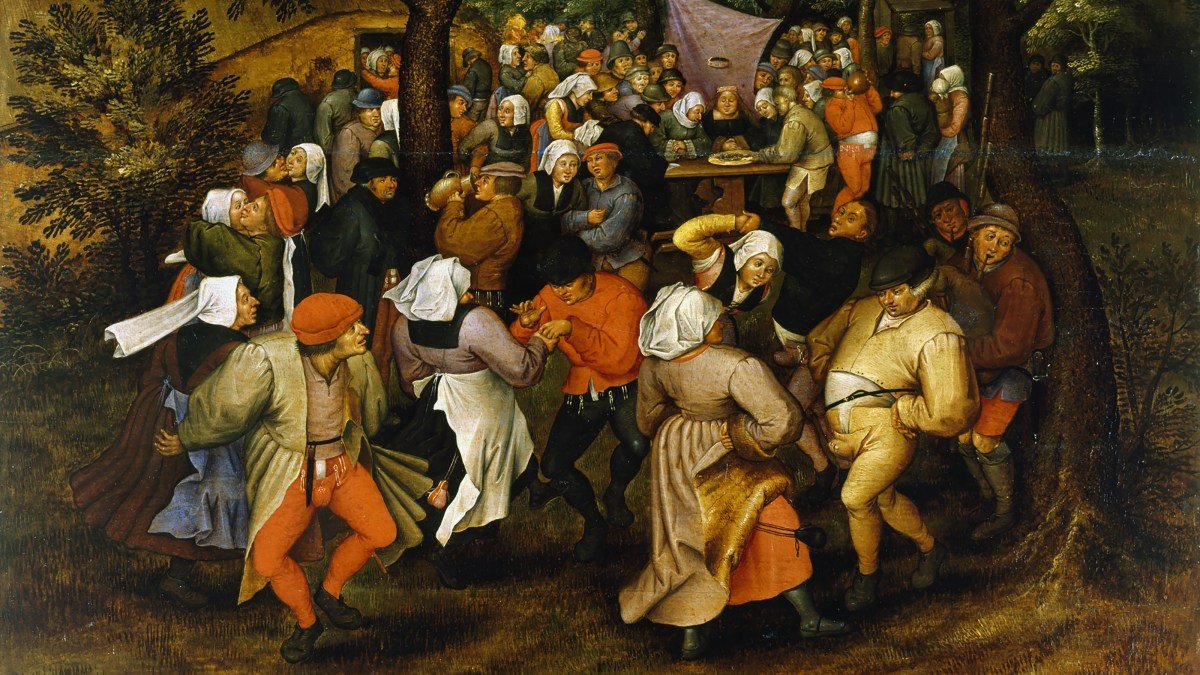
In the summer of 1518, something extraordinary and deeply unsettling happened in the city of Strasbourg, then part of the Holy Roman Empire and today located in modern-day France. A woman stepped into the street and began to dance. At first, it seemed unusual but harmless. Yet she did not stop. Hours passed. Then days. Soon, others joined her. Within weeks, hundreds of people were reportedly dancing uncontrollably through the streets.
Some collapsed from exhaustion. Some suffered injuries. According to later accounts, a number may even have died from heart attacks, strokes, or sheer physical exhaustion. The event became known as the Dancing Plague of 1518, one of the strangest episodes in recorded history.
More than five centuries later, the Dancing Plague continues to fascinate historians, psychologists, medical researchers, and curious readers. The mystery is not simply why people danced. The deeper question is how an entire community became caught in what appears to have been a collective outbreak of uncontrollable behavior.
Unlike many historical mysteries, the Dancing Plague left behind no treasure chest, no buried temple, and no spectacular archaeological discovery. There is no cursed artifact hidden in a cave. Yet traces of the event still survive.
Historical records, religious artworks, medical writings, city documents, church references, and cultural memories all serve as artifacts of this bizarre chapter in human history. Together, they provide clues to a mystery that has never been fully solved.
The question remains as compelling today as it was in 1518: What exactly happened in Strasbourg, and what evidence remains of the madness?
A Summer Unlike Any Other
To understand the surviving artifacts of the Dancing Plague, it is important to begin with the event itself.
The outbreak reportedly started in July 1518 when a woman known as Frau Troffea began dancing in the streets of Strasbourg. Contemporary accounts suggest that she continued dancing for days despite exhaustion.
At first, townspeople were confused.
Some believed she was suffering from a medical condition. Others suspected spiritual forces. Some may have viewed her behavior as a form of religious punishment.
What happened next transformed an unusual incident into one of history’s most famous mysteries.
Additional people began dancing.
Then more.
Within weeks, dozens and eventually hundreds were reportedly involved.
The dancers did not appear to be enjoying themselves. This was not a festival or celebration. Historical descriptions suggest many were distressed, exhausted, and unable to stop.
The city authorities became alarmed.
As the number of dancers grew, local leaders searched desperately for explanations and solutions.
The World of Strasbourg in 1518
The surviving records make more sense when viewed against the backdrop of life in sixteenth-century Europe.
Strasbourg was experiencing difficult times.
Famine had affected parts of the region.
Disease was common.
Economic hardships created uncertainty.
Religious beliefs shaped daily life.
People lived in a world where supernatural explanations for unusual events were widely accepted.
The modern distinction between medicine, psychology, and religion did not yet exist in the way it does today.
If something strange occurred, many people interpreted it through spiritual or religious frameworks.
Fear was an ordinary part of life.
Plague outbreaks, crop failures, and political instability constantly threatened communities.
In such an environment, anxiety could spread rapidly.
Understanding this context helps explain why the Dancing Plague unfolded the way it did and why the surviving artifacts often blend medical observations with religious interpretations.
The Most Important Artifact: The Written Record
The most valuable artifact connected to the Dancing Plague is not a physical object at all.
It is a collection of documents.
Without written records, historians would know almost nothing about the event.
Several contemporary and near-contemporary accounts describe the outbreak.
City records, medical reports, chronicles, and later historical summaries preserve details about what witnesses believed they saw.
These documents serve as windows into the minds of people living during the crisis.
They reveal confusion, fear, and attempts to understand something that appeared impossible.
The records do not provide all the answers.
In fact, they sometimes contradict one another.
Yet their existence allows historians to reconstruct the event with surprising detail.
Every surviving page is a precious artifact from one of history’s strangest moments.
The Chronicles That Preserved the Story
Many of the surviving references to the Dancing Plague come from chroniclers.
Before modern journalism, chroniclers documented important local events.
They recorded wars, famines, natural disasters, political changes, and unusual occurrences.
The Dancing Plague was certainly unusual enough to deserve attention.
Several chronicles describe people dancing for extended periods.
Some accounts mention physical suffering among participants.
Others describe growing public concern.
These texts are among the most important artifacts because they preserve firsthand or near-firsthand observations.
Although historians must evaluate them carefully, they provide invaluable evidence that something extraordinary genuinely occurred.
Without these chronicles, the Dancing Plague might have vanished entirely from history.
Medical Documents from a Different Era
Among the most fascinating surviving artifacts are medical writings related to the event.
Doctors in sixteenth-century Europe operated under theories very different from modern medicine.
Many believed health was governed by the balance of bodily humors.
When confronted with the dancing outbreak, physicians attempted to explain it using the medical knowledge available at the time.
Some concluded that the dancers suffered from overheated blood.
Others believed physical movement might actually cure the condition.
As a result, authorities reportedly encouraged dancing rather than stopping it.
Musicians were hired.
Special spaces were prepared.
The hope was that participants would dance until the illness exhausted itself.
Modern readers may find this shocking.
Yet these documents provide an extraordinary glimpse into how medicine functioned during the Renaissance.
They are artifacts not only of the Dancing Plague but also of humanity’s evolving understanding of health and disease.
Religious Artifacts and Saint Vitus
Many surviving clues point toward religion.
The Dancing Plague became closely associated with a Christian saint known as Saint Vitus.
Throughout parts of Europe, there existed a belief that Saint Vitus could either protect people from certain disorders or punish them with involuntary dancing.
This belief may seem strange today, but it was taken seriously by many communities.
When the outbreak intensified, authorities reportedly sent dancers to a shrine associated with Saint Vitus.
Religious rituals were performed.
Special footwear may have been provided.
Prayers were offered.
These practices reflected the belief that supernatural forces were involved.
Shrines, religious records, and devotional traditions connected to Saint Vitus serve as important cultural artifacts related to the Dancing Plague.
They reveal how people interpreted suffering through spiritual frameworks.
Artistic Depictions of Dancing Mania
One category of surviving artifact comes from art.
Although relatively few images were created specifically to document the Strasbourg outbreak, artists throughout Europe depicted episodes of dancing mania and related phenomena.
Paintings, illustrations, woodcuts, and engravings show groups of people dancing wildly, often in religious contexts.
These artworks are valuable because they reveal how society imagined and remembered such events.
The images are not photographs.
They cannot be treated as perfectly accurate records.
Yet they provide insight into public perceptions.
Art captures emotional truth as much as factual detail.
When artists depicted frantic dancers, they reflected fears, beliefs, and interpretations circulating within society.
These visual artifacts help modern researchers understand how the phenomenon was understood culturally.
The Shrine Connections
One of the most intriguing surviving traces of the Dancing Plague involves pilgrimage sites connected to Saint Vitus.
Historical records suggest that some afflicted individuals were taken to places associated with the saint.
There, religious ceremonies were performed in hopes of ending the dancing.
While many original structures have changed over the centuries, the locations themselves remain part of the historical landscape.
Churches, shrines, and pilgrimage traditions act as living artifacts.
They connect modern visitors with the beliefs that shaped the response to the outbreak.
Standing in such places today, it becomes easier to imagine the desperation of people seeking answers in a frightening and uncertain world.
The Mystery of Missing Physical Evidence
One challenge facing historians is the lack of direct physical artifacts from the dancers themselves.
No special costumes have survived.
No personal diaries from participants are known.
No preserved medical samples exist.
This absence creates difficulties.
Most famous historical mysteries leave behind physical evidence that can be analyzed.
The Dancing Plague leaves primarily documents and cultural traces.
As a result, researchers must reconstruct events indirectly.
The mystery survives partly because the physical evidence is so limited.
The lack of direct artifacts leaves room for debate and competing interpretations.
Was It Poisoning?
One of the most famous theories proposes that the dancers were affected by poisoning from ergot.
Ergot is a fungus that can grow on rye.
Certain compounds produced by the fungus can affect the nervous system.
Some researchers once suggested that contaminated food triggered hallucinations and uncontrollable movements.
At first glance, the theory seems appealing.
It offers a biological explanation.
Yet many historians and medical experts have expressed doubts.
Ergot poisoning can cause severe symptoms, but dancing continuously for days does not match typical cases particularly well.
The surviving records also describe patterns that appear difficult to explain through poisoning alone.
Nevertheless, discussions of ergot remain part of the historical artifact record.
They demonstrate how modern science attempts to interpret ancient mysteries.
The Psychological Explanation
Many contemporary scholars favor psychological explanations.
According to this view, the Dancing Plague may represent an example of mass psychogenic illness.
This occurs when psychological distress manifests through physical symptoms that spread within a group.
The people of Strasbourg faced enormous stress.
Famine, disease, economic hardship, and religious fear created a highly vulnerable environment.
Within such conditions, unusual behavior could potentially spread through social influence and collective belief.
The surviving records support this possibility in several ways.
Many participants appear to have shared cultural expectations regarding saints, curses, and supernatural punishment.
These shared beliefs may have shaped how distress was expressed.
If true, the most important artifact is not a physical object at all.
It is the cultural environment preserved in historical documents.
The City Records
Administrative records from Strasbourg provide some of the strongest evidence for the outbreak’s reality.
Officials documented their responses.
They discussed strategies.
They recorded expenses.
They attempted to manage the crisis.
These records matter because governments rarely spend resources addressing imaginary events.
The documents suggest authorities genuinely believed a serious problem existed.
Their actions reveal confusion and urgency.
Every preserved record is an artifact of decision-making under extraordinary circumstances.
They allow historians to see how leaders responded when confronted with something they could neither explain nor control.
The Human Stories Hidden in the Documents
One of the most emotional aspects of the surviving artifacts is what they reveal about ordinary people.
Historical records often focus on rulers, generals, and famous individuals.
The Dancing Plague is different.
Its story centers on common citizens.
Laborers.
Mothers.
Neighbors.
People whose names have mostly been lost.
Behind every mention of a dancer was a human being.
Someone experienced fear.
Someone collapsed from exhaustion.
Someone watched family members become caught in the outbreak.
The surviving documents preserve fragments of these forgotten lives.
Although centuries separate us from them, their experiences still feel remarkably human.
How the Event Spread Through Memory
The Dancing Plague did not survive solely because of written documents.
It also endured through memory.
Stories passed from generation to generation.
Communities remembered.
Writers retold the tale.
Artists reimagined it.
Historians revisited it.
This cultural transmission became an artifact in itself.
The memory of the event evolved over time.
Certain details grew more dramatic.
Others faded.
Each retelling added another layer to the legend.
Understanding these changes helps researchers distinguish between historical evidence and later embellishment.
The Role of Fear in the Outbreak
One lesson emerging from the surviving artifacts is the extraordinary power of fear.
Fear appears repeatedly throughout the records.
Fear of disease.
Fear of divine punishment.
Fear of uncertainty.
Fear can shape behavior in profound ways.
The documents reveal a community struggling to understand an event that defied normal expectations.
Their reactions remind us that human beings often seek explanations during times of crisis.
When clear answers are unavailable, belief systems become especially influential.
The artifacts preserve not only facts but emotions.
They capture fear frozen in time.
Why Historians Still Debate the Dancing Plague
The surviving evidence is substantial enough to confirm that something unusual happened.
Yet it is incomplete enough to prevent certainty.
This combination fuels endless debate.
Historians agree that an outbreak occurred.
They disagree about its causes.
Was it psychological?
Neurological?
Religious?
Social?
A combination of factors?
Each artifact provides clues.
None provide a definitive solution.
The mystery remains open because the evidence allows multiple interpretations.
That uncertainty keeps the Dancing Plague alive in historical discussions.
What Modern Science Can Learn
The Dancing Plague is more than a historical curiosity.
Its artifacts offer valuable lessons for modern science.
Researchers studying collective behavior, psychology, social contagion, and public health often examine the event.
The records demonstrate how human behavior can be influenced by culture, belief, stress, and community dynamics.
Modern outbreaks of mass psychogenic illness sometimes display surprising similarities.
The details differ.
The contexts differ.
Yet the underlying mechanisms may overlap.
The artifacts serve as reminders that human minds are deeply connected to social environments.
The Legacy of the Dancing Plague
Five centuries later, the Dancing Plague remains one of history’s most compelling mysteries.
Unlike lost cities or buried treasures, its legacy survives primarily through records, memories, and interpretations.
The surviving artifacts are humble.
Old manuscripts.
Administrative documents.
Medical writings.
Religious references.
Artistic depictions.
Yet together they create an extraordinarily vivid picture.
They allow modern readers to glimpse a moment when reality seemed to break apart.
A moment when hundreds of people danced for reasons no one fully understood.
A moment when fear, belief, culture, and human psychology collided in dramatic fashion.
What Remains of the Madness?
When people hear the word artifact, they often imagine gold, jewels, or ancient monuments.
The Dancing Plague leaves behind something different.
Its artifacts are stories preserved on fragile pages.
They are records written by worried officials.
They are religious traditions linked to Saint Vitus.
They are artistic representations shaped by memory.
They are clues scattered across centuries.
The most important thing that remains is evidence of human experience.
The documents reveal confusion, suffering, hope, faith, and resilience.
They show people confronting a crisis beyond their understanding.
In many ways, that is why the Dancing Plague continues to resonate today.
The mystery is not merely about dancing.
It is about what happens when entire communities face fear and uncertainty.
It is about the relationship between mind and body.
It is about the power of belief.
It is about the fragile boundary between the ordinary and the extraordinary.
More than five hundred years after the streets of Strasbourg filled with exhausted dancers, the physical traces may be scarce, but the questions remain alive. The surviving artifacts continue to whisper across the centuries, inviting us to look closer, think deeper, and wonder whether the true mystery was never the dancing itself, but the remarkable complexity of the human mind.