Few historical artifacts have inspired as much fascination, mystery, and legend as the Spear of Destiny. Also known as the Holy Lance or the Spear of Longinus, it has been described as an object capable of changing the fate of empires, granting victory in battle, and determining the destiny of kings. According to centuries of legend, whoever possessed the spear held the power to rule the world—but whoever lost it would also lose everything.
It is an extraordinary story.
For nearly two thousand years, emperors, kings, crusaders, religious leaders, collectors, and even dictators have been connected, in one way or another, to this famous relic. The spear has appeared in medieval chronicles, religious traditions, historical records, novels, films, and conspiracy theories. Some believe it was the very weapon that pierced the side of Jesus Christ during the crucifixion. Others see it as nothing more than a medieval artifact wrapped in myths created over centuries.
The truth is far more fascinating than the legends.
The Spear of Destiny is not simply one object with a perfectly documented history. Instead, several different lances throughout Europe have claimed to be the authentic Holy Lance. Their stories overlap, compete, and sometimes contradict one another. Historians continue debating which, if any, could genuinely trace its origins back to the first century.
Modern archaeology and historical research have answered many questions while leaving others unresolved. Scientific studies have examined surviving relics, medieval documents have been carefully analyzed, and ancient texts have been compared in detail. Although the legendary powers of the spear belong to folklore rather than historical fact, the artifact’s influence on politics, religion, and culture has been very real.
In many ways, the Spear of Destiny tells two different stories at once. One is the story of an ancient weapon that became one of Christianity’s most famous relics. The other is the story of humanity’s enduring desire to believe that certain objects possess extraordinary power.
Understanding the Spear of Destiny means separating history from legend while appreciating how both have shaped one of history’s greatest mysteries.
What Is the Spear of Destiny?
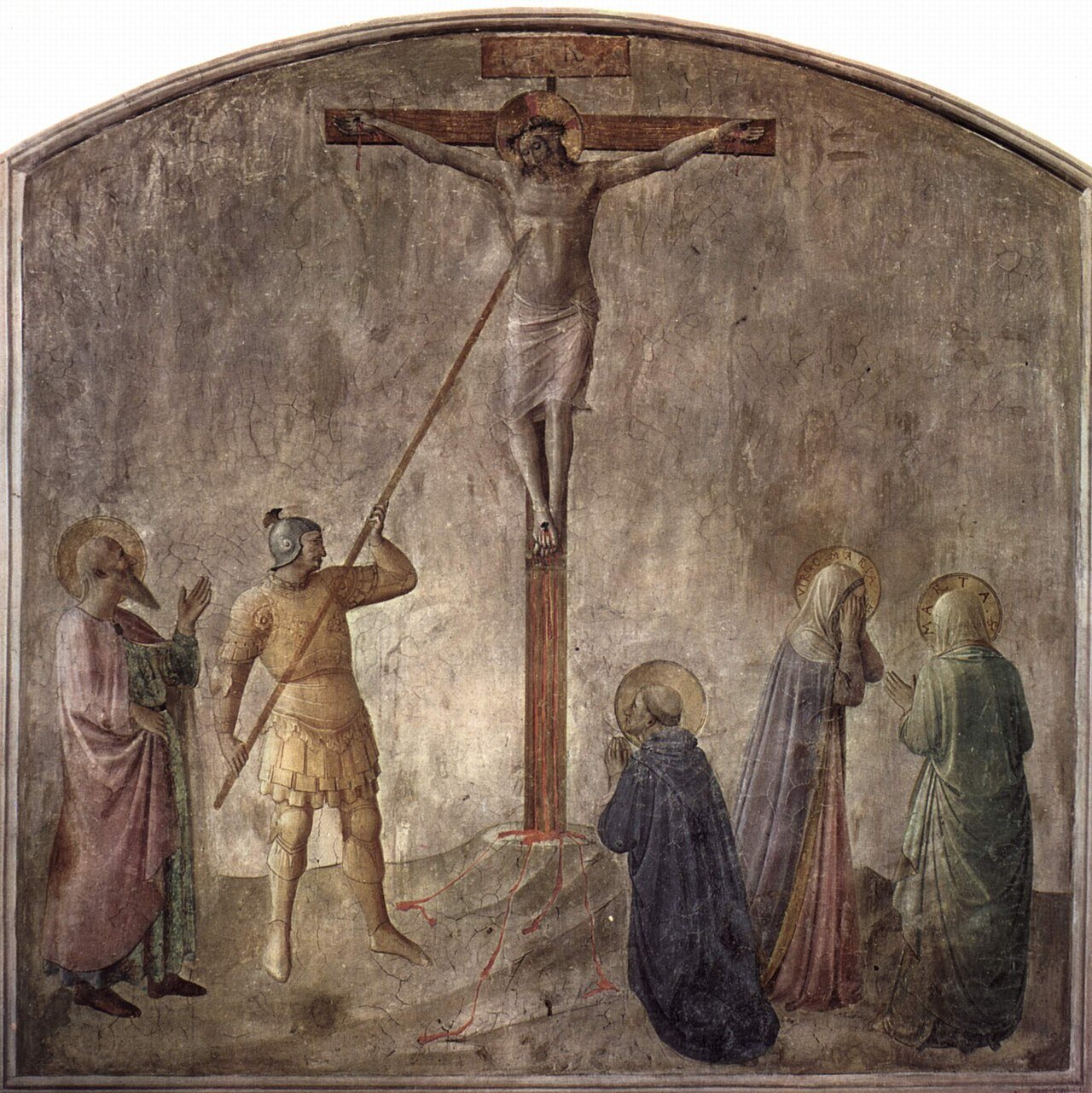
The Spear of Destiny, often called the Holy Lance, is traditionally believed to be the spear that pierced the side of Jesus Christ during his crucifixion.
According to the Gospel of John, after Jesus had died on the cross, a Roman soldier pierced his side with a spear. The account states that blood and water flowed from the wound.
The Gospel itself does not identify the soldier by name.
Centuries later, Christian tradition gave the soldier the name Longinus.
As Christianity spread throughout the Roman Empire, increasing importance was attached to objects believed to have been connected with the life, death, and resurrection of Jesus.
These objects became known as relics.
The lance eventually became one of the most revered among them.
The Biblical Account
The origin of the legend begins with the New Testament.
Only the Gospel of John specifically mentions the spear.
The Roman soldiers had intended to break the legs of those being crucified to hasten death.
When they reached Jesus, they saw he had already died.
Instead, one soldier pierced his side with a spear.
This fulfilled earlier scriptural themes emphasized by the Gospel writer.
The passage itself contains no suggestion that the spear possessed supernatural powers.
Those ideas developed much later through centuries of religious tradition and medieval storytelling.
Who Was Longinus?
The name Longinus does not appear in the Bible.
It emerged in later Christian traditions several centuries after the crucifixion.
According to these traditions, Longinus was the Roman centurion or soldier who pierced Jesus.
Some stories claim he later converted to Christianity after witnessing miraculous events surrounding the crucifixion.
Other traditions describe him as becoming a martyr.
Although these stories became popular in Christian literature and art, historians cannot confirm their historical accuracy.
Very little reliable information exists regarding the actual identity of the soldier.
The Rise of the Holy Lance Tradition
During the early centuries of Christianity, believers increasingly sought physical connections with biblical history.
Pilgrims traveled to Jerusalem.
Churches collected relics.
Objects associated with saints, apostles, and biblical events became deeply meaningful.
The Holy Lance gradually joined other famous relics such as fragments of the True Cross and the Holy Grail traditions.
Possessing an important relic enhanced both religious prestige and political authority.
Kings and emperors eagerly associated themselves with sacred objects that appeared to symbolize divine favor.
Over time, the lance became much more than a weapon.
It became a symbol of heavenly approval.
Several Spears Claim the Same Identity
One of the greatest historical challenges is that more than one spear has claimed to be the authentic Holy Lance.
Relics identified as the Holy Lance have appeared in several locations throughout history.
The most famous examples are associated with Vienna, Rome, Armenia, and Antioch.
Each possesses its own historical tradition.
Each has supporters.
Each raises difficult questions.
Because documentation from the earliest centuries is incomplete, historians cannot conclusively identify any surviving lance as the original spear from the crucifixion.
The Vienna Holy Lance
Perhaps the most famous claimant is the Holy Lance preserved in Vienna.
This spear has long been associated with the rulers of the Holy Roman Empire.
It formed part of the Imperial Regalia used during coronation ceremonies.
Generations of emperors regarded it as an important symbol of legitimate authority.
The spear visible today contains iron, later repairs, silver wire, and a decorative gold sleeve added centuries after its original manufacture.
Scientific analysis suggests portions of the spear date to the early medieval period rather than the first century.
This does not necessarily prove its traditions false, but it indicates that at least some components were modified long after the time of Jesus.
The Lance of Antioch
Another famous story emerged during the First Crusade.
In 1098, crusaders were trapped inside the city of Antioch.
Morale had collapsed.
A monk named Peter Bartholomew claimed to receive visions revealing the location of the Holy Lance.
After searching beneath a church floor, workers uncovered an iron spearhead.
Many crusaders believed they had found the authentic Holy Lance.
The discovery dramatically boosted confidence.
Shortly afterward, the crusaders achieved a surprising military victory.
Whether coincidence or inspiration, belief in the relic strengthened the army’s determination.
Modern historians generally regard the Antioch lance as a medieval discovery rather than the original biblical spear.
The Armenian Holy Lance
Armenia also preserves an ancient lance traditionally identified as the Holy Lance.
Today it is kept at the Treasury Museum of the Mother See of Holy Etchmiadzin.
Armenian tradition maintains that the relic arrived through early Christian missionaries.
Like the Vienna lance, its exact origin remains uncertain.
It represents another example of how different Christian communities developed their own traditions surrounding important relics.
Why Relics Became So Important
To understand the Spear of Destiny, it is important to understand medieval Christianity.
Relics were not simply museum objects.
They represented physical connections to sacred history.
Believers often viewed them as reminders of God’s presence.
Churches housing important relics attracted pilgrims from across Europe.
Pilgrimage supported local economies.
Relics strengthened political influence.
Kings who possessed famous sacred objects often appeared more legitimate in the eyes of their subjects.
Thus, religious devotion and political power frequently became intertwined.
The Spear and the Holy Roman Emperors
The Vienna lance eventually became closely associated with the Holy Roman Empire.
Emperors carried or displayed it during important ceremonies.
The spear symbolized divine approval of imperial authority.
Its importance lay less in military usefulness than in political symbolism.
Possessing the lance suggested continuity with earlier Christian rulers.
It connected medieval emperors with sacred history.
In an age when religion shaped nearly every aspect of public life, such symbolism carried tremendous weight.
Did the Spear Really Bring Victory?
One enduring legend claims that every ruler possessing the Spear of Destiny achieved military success.
Historical evidence does not support this claim.
Many rulers associated with the lance won victories.
Many also suffered defeats.
Empires rose and fell regardless of whether they possessed famous relics.
Military success depended upon leadership, logistics, resources, strategy, alliances, and countless other factors.
The spear itself demonstrated no measurable supernatural influence.
Its greatest power may have been psychological.
Believing one possessed divine favor could strengthen morale and confidence.
The Spear and Charlemagne
Later traditions connected the Holy Lance with Charlemagne, the great Frankish king crowned emperor in 800 CE.
Some legends claimed he carried the lance throughout his military campaigns.
However, surviving historical evidence linking Charlemagne directly to the current Vienna lance remains uncertain.
Like many famous rulers, Charlemagne became associated with prestigious relics through traditions that developed after his lifetime.
Separating historical documentation from later legend remains challenging.
The Spear and Frederick Barbarossa
Emperor Frederick Barbarossa also became associated with the Holy Lance.
During the twelfth century, imperial regalia, including the lance, reinforced his claim to authority.
Medieval chronicles frequently emphasized sacred objects to portray rulers as chosen by God.
Whether Barbarossa personally believed the lance possessed supernatural powers cannot be known.
Its political importance, however, is well documented.
Adolf Hitler and the Spear of Destiny
Perhaps the most famous modern legend involves Adolf Hitler.
According to popular stories, Hitler became obsessed with the Vienna Holy Lance after seeing it as a young man.
When Nazi Germany annexed Austria in 1938, the Imperial Regalia, including the lance, came under Nazi control.
After World War II, American forces recovered the regalia and eventually returned it to Austria.
The idea that Hitler believed the spear granted world-conquering power became especially popular after the publication of Trevor Ravenscroft’s 1973 book The Spear of Destiny.
However, historians consider many claims in that book unsupported by reliable evidence.
While Hitler showed interest in symbolism and historical artifacts, there is little convincing evidence that the spear significantly influenced his political decisions.
The dramatic legend has often overshadowed the historical record.
Scientific Examination of the Vienna Lance
Modern scientific analysis has provided valuable information.
Experts examined the metal, construction techniques, and decorative elements.
Results suggest different parts of the lance were created during different historical periods.
Some components likely date to the seventh or eighth century.
The decorative gold covering was added later.
The silver wire reinforcement also reflects medieval modifications.
No scientific evidence demonstrates that the spear originated in first-century Judea.
Nevertheless, its historical importance as a medieval imperial relic remains unquestioned.
Why Historians Remain Cautious
Historians rely on evidence.
The earliest reliable documentation connecting surviving lances with the crucifixion appears centuries after the event itself.
Documentation from the first century is absent.
This does not automatically disprove authenticity.
Many ancient objects lack complete historical records.
However, extraordinary claims require strong evidence.
At present, no surviving lance can be conclusively identified as the actual spear used during the crucifixion.
Most scholars therefore distinguish carefully between religious tradition and historical certainty.
The Spear in Art
The Holy Lance became a popular subject in Christian art.
Paintings, sculptures, illuminated manuscripts, stained glass windows, and church decorations frequently depict the crucifixion with the Roman soldier holding the spear.
Artists often portrayed Longinus as a witness transformed by faith.
These images helped spread the legend throughout medieval Europe.
Art preserved religious stories even among people unable to read.
The Spear in Literature
Writers have long found the Spear of Destiny irresistible.
Medieval legends expanded its history.
Modern novels transformed it into an object of supernatural power.
Adventure stories often portray villains seeking the spear to gain invincibility.
Historical fiction combines real events with imaginative storytelling.
These literary traditions have greatly influenced public perception, sometimes blurring the boundary between fact and fiction.
The Spear in Popular Culture
Films, television series, comic books, and video games frequently feature the Spear of Destiny.
Writers often present it as a magical weapon capable of granting immense power.
These fictional portrayals entertain audiences but should not be mistaken for historical evidence.
Popular culture has made the Spear of Destiny one of the world’s most recognizable legendary artifacts.
Its fame extends far beyond academic history.
Why the Legend Endured
Legends survive because they satisfy deep human desires.
People naturally seek symbols of destiny, justice, divine intervention, and hidden power.
The Spear of Destiny combines all these themes.
It links history with religion.
It connects emperors with biblical events.
It promises extraordinary power while warning of tragic consequences.
These elements create an unforgettable story.
Even when historical evidence remains uncertain, legends continue capturing imaginations.
Separating Myth from History
The true challenge is distinguishing legend from documented fact.
Certain facts are well established.
The Gospel of John describes a Roman soldier piercing Jesus’ side.
Ancient Christian traditions later named that soldier Longinus.
Several medieval relics claimed to be the Holy Lance.
The Vienna lance served as an important imperial symbol.
Scientific studies indicate surviving relics contain medieval components.
Other claims remain unproven.
No reliable evidence confirms supernatural powers.
No convincing documentation shows the lance determined military victories.
No surviving relic can currently be identified with certainty as the original spear from the crucifixion.
Recognizing this distinction allows appreciation of both historical evidence and cultural tradition.
The Religious Significance Today
For many Christians, the Holy Lance remains meaningful regardless of historical uncertainty.
Its importance lies less in proving physical authenticity than in remembering the events surrounding the crucifixion.
Religious relics often function primarily as symbols.
They encourage reflection upon faith, sacrifice, and history.
Different Christian traditions assign varying levels of importance to relics, but the Holy Lance continues holding spiritual significance for many believers.
What the Spear of Destiny Really Reveals
Perhaps the greatest lesson of the Spear of Destiny is not about supernatural power at all.
It reveals how objects can shape history through belief.
Whether or not any surviving lance is authentic, rulers genuinely valued these relics.
Pilgrims traveled great distances to see them.
Artists celebrated them.
Writers immortalized them.
Political leaders displayed them.
Entire generations believed these objects connected heaven and earth.
In that sense, the spear truly influenced history—not through magic, but through the immense power of human belief.
Conclusion
The Spear of Destiny remains one of history’s most fascinating and mysterious artifacts. Rooted in the Gospel account of a Roman soldier piercing the side of Jesus during the crucifixion, it evolved over centuries into one of Christianity’s most famous relics. Its story intertwines biblical tradition, medieval devotion, imperial politics, archaeological investigation, and enduring legend.
Historical research has revealed a far more nuanced picture than popular myths suggest. Rather than a single artifact with an unbroken chain of ownership, several different lances have claimed to be the authentic Holy Lance. Scientific examinations indicate that surviving relics contain medieval components, and no existing spear can currently be verified as the actual weapon used in first-century Judea. Likewise, the dramatic claim that the spear granted supernatural military power or world domination belongs to legend rather than documented history.
Yet dismissing the Spear of Destiny as “just a legend” would overlook its genuine historical importance. For centuries it shaped political symbolism, inspired religious devotion, influenced works of art and literature, and became associated with emperors, crusaders, and kingdoms. Its true power lay not in magical abilities but in what people believed it represented—divine authority, sacred history, and the hope that heaven itself might guide earthly rulers.
The enduring fascination with the Spear of Destiny reminds us that history is often shaped not only by facts but also by the stories people choose to believe. Whether viewed as a sacred relic, a medieval symbol of power, or one of the world’s greatest historical mysteries, the Holy Lance continues to capture imaginations nearly two thousand years after its story first began. It stands as a remarkable example of how a single object, surrounded by faith and legend, can leave an unforgettable mark on human civilization.