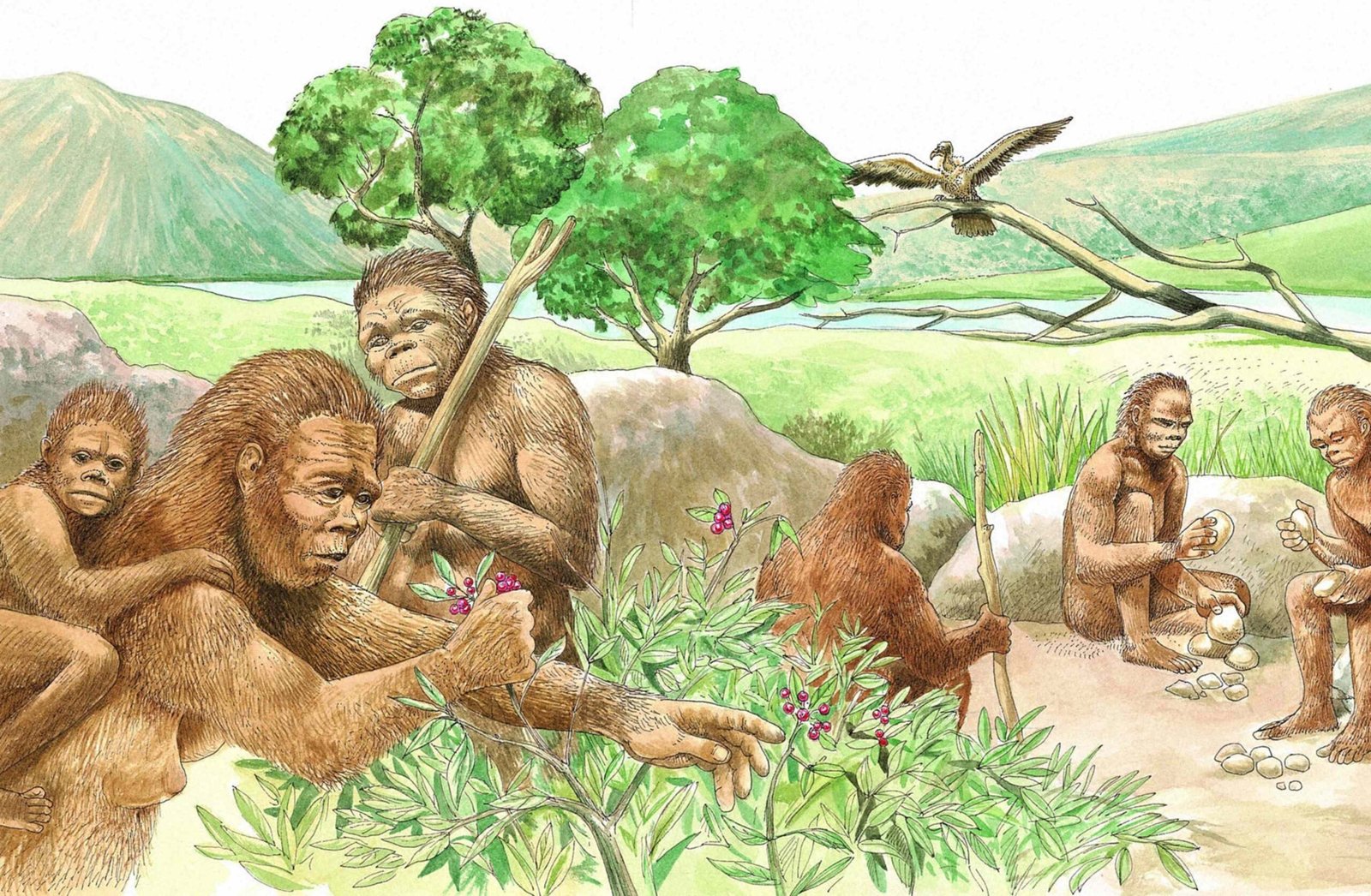
When most people hear the word “evolution,” they picture dinosaurs, ancient fossils, or our distant ancestors walking across the African savanna millions of years ago. Evolution often feels like something locked away in the deep past—a slow process that shaped life long before modern civilization existed.
But what if evolution never stopped?
What if, at this very moment, the human species is still changing?
The answer, according to modern science, is yes.
Human evolution did not end when our ancestors invented agriculture, built cities, or landed on the Moon. It did not stop with the rise of medicine, technology, or modern society. Evolution continues today, although it often works in ways that are much more subtle than many people imagine.
Instead of dramatic transformations happening within a single lifetime, evolution unfolds across many generations. Tiny genetic changes accumulate over centuries and thousands of years. Some become more common because they help people survive or reproduce under particular environmental conditions. Others spread through chance or population movement. New mutations constantly appear, while older genetic variations sometimes disappear.
Today’s humans are living through one of the most fascinating periods in evolutionary history. Never before has a single species spread across nearly every environment on Earth. We live in deserts, rainforests, mountains, frozen Arctic regions, crowded cities, and even temporary habitats in space. We have transformed our environment more than any species before us, yet our environment continues to shape us in return.
At the same time, advances in genetics have given scientists an unprecedented ability to observe evolution in action. By comparing DNA from ancient skeletons with the genomes of living people, researchers can actually measure evolutionary changes that occurred within the past few thousand years.
The result is both surprising and inspiring.
Far from standing still, humanity remains part of an ongoing evolutionary story—one that continues to unfold every generation.
What Is Evolution?
Evolution is the process through which populations of living organisms change over time.
It does not mean that an individual changes into another species during its lifetime.
Instead, evolution occurs when genetic characteristics become more or less common across many generations.
Every child inherits DNA from their parents.
During reproduction, small genetic changes called mutations occasionally occur.
Most mutations have little or no effect.
Some are harmful.
A few may provide advantages under certain environmental conditions.
If individuals carrying beneficial genetic variations tend to have more surviving children, those variations become increasingly common.
This process is known as natural selection.
Evolution also occurs through other mechanisms, including genetic drift, gene flow between populations, and sexual selection.
Together, these processes continually shape the genetic makeup of every species—including humans.
Why Some People Think Human Evolution Has Stopped
It is easy to understand why many people believe human evolution ended long ago.
Modern medicine allows people with many inherited conditions to survive and have children.
Technology protects us from harsh climates.
Agriculture provides reliable food supplies.
Vaccines reduce infectious diseases.
Clothing, housing, transportation, and healthcare seem to shield us from many environmental pressures.
Because of these advances, some assume natural selection no longer operates.
However, this conclusion is incorrect.
Natural selection has changed—not disappeared.
Today’s environments differ dramatically from those faced by our ancient ancestors.
New diseases emerge.
Diets change.
Cities create unique challenges.
Pollution affects health.
Climate shifts alter ecosystems.
Human behavior influences reproduction.
All of these factors can influence evolution.
How Scientists Know Humans Are Still Evolving
Modern genetics provides powerful evidence.
Researchers compare DNA from ancient human remains with DNA from living populations.
If certain genetic variants become significantly more or less common over time, evolution has occurred.
Scientists have documented numerous examples.
Genes associated with digesting milk changed dramatically in some populations over only a few thousand years.
Genes affecting adaptation to high altitudes spread rapidly among mountain populations.
Genes providing resistance to infectious diseases increased after deadly epidemics.
These measurable genetic shifts demonstrate that human evolution continues today.
Natural Selection Never Went Away
Natural selection simply means that some inherited characteristics become more common because they influence survival or reproduction.
The specific traits under selection change as environments change.
For early humans, escaping predators and finding food were critical.
Today, survival challenges may involve infectious diseases, reproductive health, nutrition, or adaptation to urban environments.
Natural selection remains active whenever inherited differences influence reproductive success.
Although modern medicine changes many selective pressures, it also creates entirely new environments in which evolution continues.
Mutations: The Source of New Variation
Every generation introduces new genetic mutations.
Most occur naturally during DNA replication.
An average person carries dozens of new mutations not present in either parent.
Nearly all are harmless.
Some have no noticeable effects whatsoever.
Occasionally, however, a mutation influences health, development, or physiology.
Without mutations, evolution could not occur because populations would lack new genetic variation.
Mutation continually supplies the raw material upon which natural selection acts.
Lactose Tolerance: Evolution in Action
One of the clearest examples of recent human evolution involves lactose tolerance.
Most mammals lose the ability to digest lactose—the primary sugar in milk—after infancy.
Many humans still do.
However, in certain populations, particularly those with long histories of cattle herding, genetic mutations allowed adults to continue producing lactase, the enzyme needed to digest lactose.
Individuals who could safely drink milk gained valuable nutrition.
Over generations, these mutations spread rapidly.
Today, lactose tolerance varies greatly among populations around the world.
This adaptation evolved surprisingly recently within the past several thousand years.
Living at High Altitudes
High mountains contain much less oxygen than sea level.
For many people, prolonged exposure causes altitude sickness.
Yet populations living for thousands of years in places such as the Tibetan Plateau, the Andes, and the Ethiopian Highlands possess remarkable adaptations.
Different populations evolved different genetic solutions.
Some maintain lower hemoglobin levels while using oxygen more efficiently.
Others produce more red blood cells.
Still others rely on unique physiological mechanisms.
These adaptations demonstrate that evolution can produce multiple solutions to similar environmental challenges.
Fighting Infectious Diseases
Throughout history, infectious diseases have been among humanity’s greatest evolutionary forces.
Plagues, malaria, smallpox, tuberculosis, and many other illnesses killed millions.
Individuals carrying certain protective genetic variants sometimes survived at higher rates.
Those variants became more common over time.
One well-known example involves malaria.
Certain inherited blood cell traits reduce the severity of malaria infection, although some also carry medical risks.
This illustrates an important point.
Evolution does not produce perfect solutions.
Instead, it favors traits that improve reproductive success within specific environments.
Skin Color and Sunlight
Human skin color represents one of evolution’s most visible examples.
Our distant African ancestors possessed darker skin that protected against intense ultraviolet radiation.
As some populations migrated into regions receiving less sunlight, lighter skin evolved independently several times.
Lighter skin allows more efficient vitamin D production under low ultraviolet conditions.
Meanwhile, darker skin provides greater protection in regions with intense sunlight.
Neither skin color is inherently better.
Each represents adaptation to different environmental conditions.
Wisdom Teeth and Modern Diets
Many people today experience problems with wisdom teeth.
Some require surgical removal because there is insufficient room in the jaw.
Researchers have observed that certain populations show increasing frequencies of individuals born without one or more wisdom teeth.
Although multiple factors influence jaw size and dental development, including diet during childhood, inherited genetic variation also contributes.
Whether this represents ongoing evolutionary change remains an active area of research.
Are Human Brains Still Evolving?
The human brain remains one of evolution’s greatest achievements.
Scientists continue investigating whether brain-related genes remain under selection.
Some genetic changes affecting brain development have occurred during relatively recent human history.
However, intelligence involves thousands of genes interacting with environment, nutrition, education, and culture.
Simple explanations should therefore be avoided.
Modern neuroscience and genetics suggest that brain evolution is extraordinarily complex.
Researchers continue exploring this fascinating field.
The Role of Culture
Humans possess something unique among animals.
Culture.
Unlike genetic evolution, culture can change within days or years.
Language, technology, education, traditions, and social behavior spread rapidly through learning rather than DNA.
Interestingly, culture often influences biological evolution.
Agriculture changed diets.
Dairy farming favored lactose tolerance.
Cooking altered food preparation.
Urbanization created new disease environments.
Thus, human cultural evolution and biological evolution frequently interact.
Scientists sometimes call this process gene-culture coevolution.
Modern Medicine and Evolution
Medicine has transformed human survival.
Conditions once fatal are now treatable.
Premature infants survive.
Organ transplants save lives.
Antibiotics combat bacterial infections.
Some people assume this completely stops natural selection.
Reality is more complicated.
Medicine reduces certain selective pressures while creating others.
For example, surviving previously deadly diseases changes reproductive opportunities.
At the same time, antibiotic-resistant bacteria evolve rapidly in response to medical treatments.
Evolution remains active throughout biological systems.
Urban Evolution
Today, more than half of humanity lives in cities.
Urban environments differ dramatically from ancient landscapes.
Air pollution, artificial lighting, altered diets, crowded living conditions, reduced physical activity, and new disease patterns all create novel environmental pressures.
Scientists are beginning to study whether long-term urban living influences human evolution.
Although research remains ongoing, cities represent one of the newest environments our species has encountered.
Climate Change and Future Evolution
Earth’s climate has always influenced evolution.
As temperatures change, rainfall patterns shift, sea levels rise, and ecosystems transform.
Human populations adapt behaviorally through technology.
Nevertheless, climate may also influence long-term biological evolution.
Predicting future evolutionary changes remains difficult because cultural adaptation often occurs much faster than genetic adaptation.
Still, climate will likely remain an important evolutionary force.
Global Migration and Genetic Diversity
Modern transportation allows unprecedented movement of people.
Populations that remained geographically separated for thousands of years increasingly interact.
This mixing increases genetic diversity.
Greater diversity often reduces the likelihood of harmful inherited conditions becoming concentrated within isolated populations.
Gene flow has always influenced evolution.
Today, globalization accelerates this process on an unprecedented scale.
Technology and Human Evolution
Technology increasingly shapes our relationship with biology.
Eyeglasses improve vision.
Artificial joints restore mobility.
Pacemakers regulate heart rhythms.
Hearing implants restore hearing.
Advanced reproductive technologies assist families.
Future developments may influence evolutionary processes in ways previous generations could never imagine.
Researchers are carefully studying these possibilities.
Gene Editing and Evolution
Modern genetic technologies, including CRISPR-based gene editing, have opened remarkable scientific possibilities.
In principle, some inherited diseases might one day be corrected before birth.
However, using gene editing in future generations raises profound ethical, social, and scientific questions.
Most countries regulate or restrict heritable human genome editing.
At present, natural evolutionary processes remain overwhelmingly more significant than intentional genetic modification.
Evolution Does Not Have a Goal
One common misunderstanding is that evolution works toward perfection.
It does not.
Evolution has no predetermined direction.
There is no ultimate “more evolved” form.
Organisms simply become better adapted—or sometimes less well adapted—to particular environments.
If environments change, previously beneficial traits may become disadvantageous.
Evolution continually responds to changing conditions rather than pursuing a final destination.
Humans Are Not the Final Product
Modern humans often view themselves as finished.
Evolutionary biology suggests otherwise.
Our species represents one moment within a much longer evolutionary journey.
Just as Homo sapiens evolved from earlier human species, future human populations will almost certainly differ genetically from people alive today.
Whether these changes become noticeable depends on timescales measured in thousands or millions of years.
Evolution never truly stops while reproduction, mutation, and genetic variation continue.
What About Space?
One fascinating question concerns humanity’s future beyond Earth.
If people eventually establish permanent settlements on the Moon or Mars, entirely new environments could influence evolution.
Reduced gravity, different radiation levels, altered diets, and isolated populations might gradually shape future generations.
Such possibilities remain speculative.
However, they demonstrate how closely evolution depends upon environment.
As humanity explores new worlds, evolution may accompany us.
Misconceptions About Human Evolution
Many myths surround evolution.
Some believe individuals evolve during their lifetimes.
In reality, populations evolve across generations.
Others think evolution always produces improvement.
Actually, evolution produces adaptation to particular environments, not perfection.
Some imagine humans evolved directly from modern apes.
Instead, humans and modern apes share common ancestors that lived millions of years ago.
Another misconception is that evolution has stopped.
Modern genetics overwhelmingly demonstrates otherwise.
The Speed of Evolution
Evolution usually appears slow because noticeable changes often require many generations.
However, under strong selective pressures, evolution can proceed surprisingly quickly.
The spread of lactose tolerance illustrates this.
So do adaptations to infectious diseases and high-altitude living.
Rapid evolution does not occur within individual lifetimes.
Instead, it reflects significant genetic changes across relatively short evolutionary timescales.
The Human Story Is Still Being Written
Perhaps the most beautiful aspect of evolution is that it reminds us we belong to nature.
Our story did not begin or end with any single generation.
Every human alive today inherited countless genetic changes accumulated over millions of years.
Future generations will inherit new variations from us.
The evolutionary journey continues.
Each child born today carries a slightly different genetic combination than anyone who has ever lived before.
Within those tiny differences lies the potential for future evolution.
Why Understanding Evolution Matters
Studying human evolution is about much more than understanding ancient history.
It improves medicine by revealing why certain diseases affect populations differently.
It helps scientists understand genetic disorders.
It explains adaptation to changing environments.
It deepens appreciation for biodiversity.
Most importantly, it reminds us that all humans share remarkably recent common ancestry.
Despite visible differences among populations, modern humans are genetically extraordinarily similar.
Our shared evolutionary history unites us far more than it separates us.
Conclusion
Human evolution is not a chapter that ended thousands of years ago—it is an ongoing process that continues to shape our species today. Modern genetics, archaeology, anthropology, and evolutionary biology all provide compelling evidence that human populations are still changing. New genetic mutations arise in every generation, natural selection continues to act in changing environments, and migration constantly reshapes the genetic diversity of people around the world.
Examples such as lactose tolerance, high-altitude adaptation, resistance to infectious diseases, and changes related to diet and environment demonstrate that evolution is not merely a phenomenon of the distant past. It is something scientists can observe, measure, and study using advanced DNA technology. While modern medicine, technology, and culture have altered many of the selective pressures faced by our ancestors, they have not brought evolution to an end. Instead, they have created entirely new conditions in which human biology continues to interact with an ever-changing world.
At the same time, human evolution is unlike that of any other species because culture plays such a powerful role. Our inventions, education, healthcare, agriculture, and global societies allow us to adapt through knowledge as well as genetics. This unique partnership between biological evolution and cultural evolution has become one of the defining characteristics of Homo sapiens.
The future of human evolution remains impossible to predict with certainty. Climate change, global migration, emerging diseases, advances in biotechnology, and perhaps even life beyond Earth may all influence the generations yet to come. What is certain, however, is that evolution has not stopped. Every generation adds another page to humanity’s remarkable story.
Far from being the final version of ourselves, we are simply the latest chapter in a journey that began millions of years ago. Understanding that journey not only helps us appreciate where we came from but also reminds us that the story of human evolution is still being written—one generation, one mutation, and one discovery at a time.


