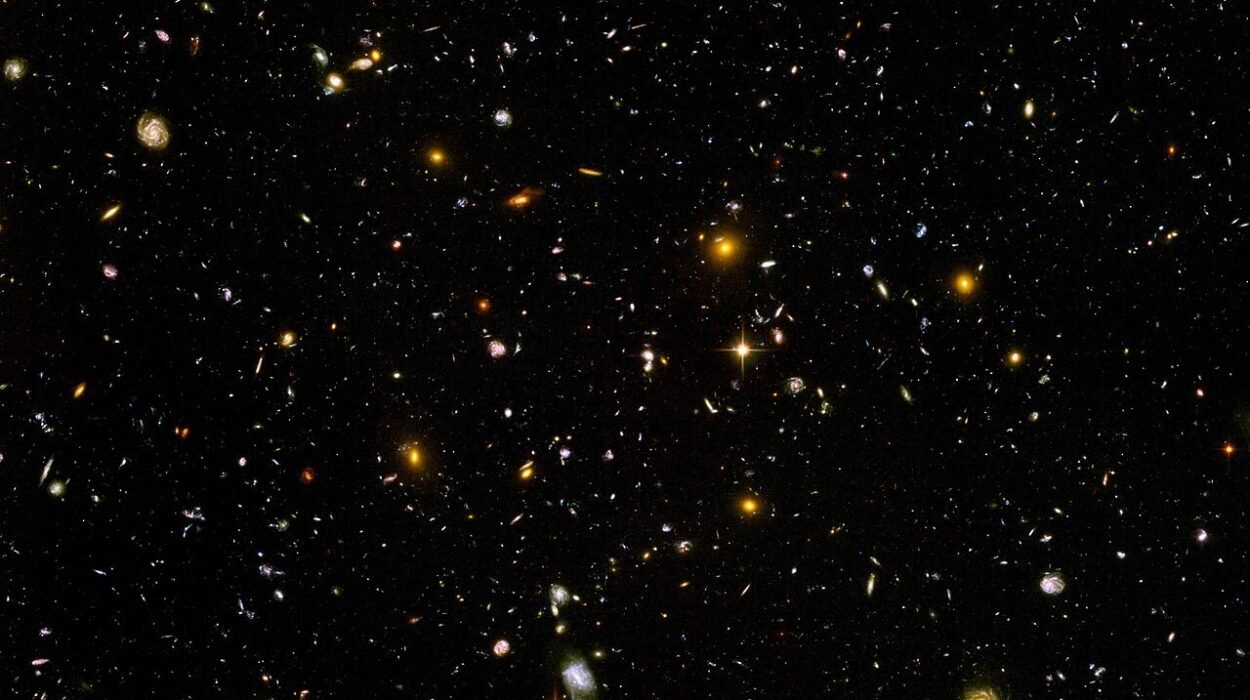
The universe is not still—it is alive with motion. Every star, planet, and galaxy is on a journey, gliding through the vast cosmic sea under the invisible hand of gravity. Space may look silent, but it is anything but peaceful. Over billions of years, entire galaxies—each containing hundreds of billions of stars—drift, dance, and sometimes collide in cataclysmic encounters that reshape the fabric of the cosmos.
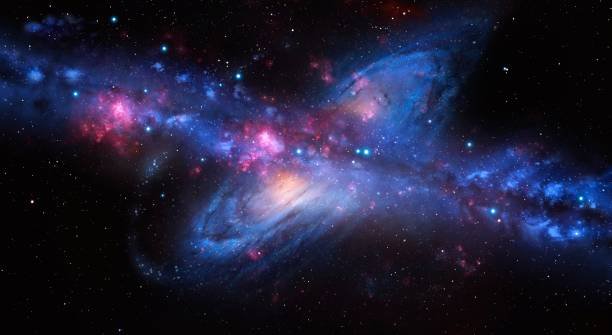
These are not gentle meetings. When galaxies collide, titanic forces unfold across millions of light-years. Stars are flung into new orbits, gas clouds ignite with new bursts of star formation, and supermassive black holes spiral toward each other in a slow, inevitable waltz that ends in a violent merger.
Yet, despite their dramatic name, galaxy collisions are not chaotic destructions—they are acts of cosmic creation. The universe builds through these encounters, forging new structures, new stars, and sometimes even entirely new galaxies.
Cosmic collisions are the heartbeat of the evolving universe, the celestial equivalent of death and rebirth played out on the grandest scale imaginable.
The Anatomy of a Galaxy
To understand what happens when galaxies crash, we must first understand what a galaxy is. A galaxy is a vast, gravitationally bound system of stars, gas, dust, dark matter, and sometimes a supermassive black hole at its center. Galaxies come in many shapes and sizes—spirals with elegant arms of stars, ellipticals that resemble glowing orbs, and irregular galaxies that look like scattered cosmic debris.
Our own Milky Way is a barred spiral galaxy, a shimmering disk of stars rotating around a dense core. Roughly 100,000 light-years across and home to about 400 billion stars, it is itself moving through space at hundreds of kilometers per second, pulled by the gravity of its neighbors.
Galaxies do not sit still because space itself is expanding, carrying them apart. Yet, within galaxy clusters and groups, gravity binds them together, setting them on intersecting paths that make collisions inevitable. The universe, in its restless expansion, still finds time for intimacy.
The Slow Dance of Giants
When we imagine a galactic collision, we might think of an explosive crash—a sudden impact with unimaginable violence. But the truth is more graceful, more drawn out, and strangely beautiful.
Galaxies are mostly empty space. The stars within them are separated by such vast distances that when two galaxies collide, the stars rarely, if ever, hit each other directly. Instead, their mutual gravity tugs and twists their shapes, distorting their arms into long, luminous tails and bridges of light. The interstellar gas and dust, however, do collide, compressing into dense regions that trigger the birth of new stars.
These cosmic encounters unfold over hundreds of millions, even billions of years. From our limited human perspective, they happen in slow motion, like two ghostly dancers intertwining across the eons.
When galaxies meet, their fates are sealed by gravity. They pass through each other once, twice, sometimes several times, before finally merging into a single, larger system. The resulting galaxy may look completely different from either of its parents—often transforming from a graceful spiral into a rounder, smoother elliptical galaxy.
In this way, the universe evolves through its collisions. Each one is both an ending and a beginning.
The Role of Gravity: The Universal Sculptor
Gravity is the invisible sculptor of the universe. It is the force that draws stars together into galaxies and galaxies into clusters. When two galaxies approach, their mutual gravity begins to distort each other long before they physically overlap.
As they draw closer, tidal forces—the same kind of stretching that Earth experiences from the Moon—tear at their structures. These tides pull stars and gas into vast arcs that can stretch hundreds of thousands of light-years into space. Some of this material is lost to the void, while the rest falls back toward the merging cores.
During this slow cosmic embrace, gravity redistributes energy and momentum. Stars that were once calmly orbiting their galactic centers find themselves flung into new trajectories, some cast out into intergalactic space, others pulled into tighter orbits around the new galactic nucleus.
The final act of the collision is a merger—a coalescence of two gravitational wells into one. What was once two distinct galaxies becomes a single, larger, more complex structure.
When Stars Are Born from Chaos
One of the most spectacular consequences of a galactic collision is the birth of new stars. When gas clouds from different galaxies collide and compress, they trigger intense bursts of star formation known as starbursts.
A single galactic merger can ignite the creation of billions of new stars in a relatively short cosmic time—perhaps a few tens of millions of years. These stars often form in clusters, shining brightly and burning hot before fading away into stellar remnants.
Some of the most breathtaking galaxies observed by telescopes like Hubble owe their brilliance to these starburst events. The Antennae Galaxies, for example, are two colliding spirals about 60 million light-years away in the constellation Corvus. Their long tidal tails and glowing knots of blue light are regions where new stars are being born from the chaos of collision.
Through these acts of creation, galactic mergers help to recycle and rejuvenate the universe. They transform cold gas into luminous stars, breathing new energy into the cosmic tapestry.
The Fate of Supermassive Black Holes
At the heart of nearly every large galaxy lies a supermassive black hole—an object millions or billions of times the mass of the Sun. When galaxies collide, these titans are drawn together by gravity into a slow but inevitable dance of their own.
As the galaxies merge, their central black holes sink toward the center of the new galaxy, losing energy through gravitational interactions with surrounding stars and gas. Eventually, they form a binary system—a pair of black holes orbiting one another at tremendous speeds.
Over time, they spiral closer and closer, emitting gravitational waves—ripples in spacetime predicted by Einstein and detected by observatories like LIGO and Virgo. When they finally collide, the merger releases more energy in a fraction of a second than all the stars in the universe combined radiate in that same instant.
Such events are not only awe-inspiring—they are also a key to understanding cosmic evolution. The merging of black holes may help explain how galaxies grow and how supermassive black holes reach their enormous masses.
These cataclysmic unions are, quite literally, the echoes of the universe reshaping itself.
The Collision of the Milky Way and Andromeda
Perhaps the most emotionally stirring example of a future galactic collision is the one destined for our own galaxy. About 2.5 million light-years away, the Andromeda Galaxy—our nearest spiral neighbor—is hurtling toward us at about 110 kilometers per second.
In roughly 4 to 5 billion years, Andromeda and the Milky Way will collide. This grand event, sometimes called “Milkomeda,” will transform the night sky and the very structure of both galaxies.
At first, Andromeda will grow larger and brighter in our sky as it approaches. Its spiral arms will become visible even in daylight. Then, over hundreds of millions of years, the two galaxies will begin to merge—ripping through each other, forming tidal tails and starburst regions, and eventually settling into a massive elliptical galaxy.
Fortunately, individual stars—including our Sun—are unlikely to collide, since the distances between them are vast. However, the gravitational chaos may alter the orbits of some stars, flinging them into deep space or pulling them closer to the galactic center.
By that time, the Sun will be nearing the end of its life, swelling into a red giant. Whether Earth survives or not, this cosmic collision will mark the next great transformation in our corner of the universe—a poetic reminder that even galaxies, like living beings, are born, grow, and merge into new forms.
The Beauty of Galactic Transformation
To watch galaxies collide through the eyes of a telescope is to witness cosmic art in motion. Astronomers have cataloged dozens of interacting galaxies that showcase different stages of this transformation. Some, like the Whirlpool Galaxy (M51), are locked in early interaction with a smaller companion, their spiral arms stretched and distorted by gravitational tides. Others, like the Tadpole Galaxy, display immense tails of stars trailing behind them—a record of their tumultuous past.
Each collision paints a new masterpiece on the canvas of the cosmos. The colors we see—brilliant blues, fiery reds, and ghostly whites—reflect the physical processes at work: the birth of hot young stars, the glow of hydrogen gas, and the lingering light of ancient suns.
In these galactic portraits, chaos and beauty coexist. The collisions that might seem violent and destructive to us are, on cosmic timescales, acts of renewal and balance. The universe does not waste—it transforms.
Galactic Cannibalism: The Hungry Universe
Not all cosmic collisions are between equals. Often, a large galaxy consumes smaller companions in a process known as galactic cannibalism. The Milky Way itself has done this many times, devouring smaller galaxies that wander too close.
Astronomers have found the remnants of these past meals—streams of stars stretching across the sky, the ghostly remains of dwarf galaxies pulled apart and absorbed. The Sagittarius Dwarf Galaxy, for instance, is currently being torn apart by the Milky Way’s gravity.
This process may sound grim, but it’s a natural part of galactic evolution. Large galaxies grow by merging with smaller ones, building their mass and enriching their star populations. Without these encounters, galaxies like our own would be smaller, dimmer, and less dynamic.
In the grand narrative of the cosmos, survival and growth are written in the language of gravity and motion.
Collisions and the Shape of the Universe
Every galactic collision contributes to the grand architecture of the cosmos. Over billions of years, these mergers have transformed the distribution of galaxies, shaping clusters, superclusters, and the immense cosmic web that stretches across the universe.
Early in cosmic history, small protogalaxies formed first, merging to create larger and more complex systems. This process, known as hierarchical clustering, is the foundation of modern cosmology.
When we look at the large-scale structure of the universe, we see filaments of galaxies woven together by gravity, with vast voids in between. These filaments are the result of countless collisions and mergers—a record of the universe’s relentless drive toward complexity.
Even today, collisions continue to shape galaxy clusters, triggering bursts of new star formation and heating the intergalactic gas to millions of degrees. The universe, though ancient, remains a place of constant motion and change.
The Silent Witness: Dark Matter
While stars and gas play the visible roles in galactic collisions, the real puppeteer is something unseen—dark matter. This mysterious substance makes up about 85% of the total mass of the universe, yet it does not emit or absorb light.
In a galactic collision, dark matter halos—the invisible envelopes surrounding galaxies—pass through one another largely unaffected. These halos dictate how the galaxies move and eventually merge.
By studying galactic collisions, astronomers can infer the properties of dark matter. One famous example is the Bullet Cluster, where two galaxy clusters collided. The stars and dark matter passed through each other, but the hot gas slowed down, separating the visible and invisible components. This separation provided one of the strongest pieces of evidence for the existence of dark matter.
In this way, collisions serve as cosmic laboratories, revealing secrets about the invisible scaffolding of the universe.
Gravitational Waves: The Music of the Cosmos
When massive black holes collide during a galactic merger, they create ripples in the fabric of spacetime known as gravitational waves. These waves travel across the universe, carrying information about their violent origins.
For centuries, such waves were only theoretical—predicted by Einstein’s general relativity. But in 2015, the Laser Interferometer Gravitational-Wave Observatory (LIGO) made the first direct detection, confirming one of the most profound predictions of modern physics.
Each gravitational wave detection is like hearing the faint hum of the universe’s most powerful symphonies—black holes merging, neutron stars colliding, galaxies reshaping themselves. Future observatories, like LISA (the Laser Interferometer Space Antenna), will listen for the deep, slow notes of supermassive black hole mergers caused by galactic collisions billions of light-years away.
Through these waves, we can literally hear the universe evolving.
The Aftermath: A New Beginning
When the dust settles—sometimes billions of years after the initial collision—a new galaxy emerges. Its stars orbit within a restructured gravitational field, its gas either consumed by star formation or blown away by supernovae and black hole winds.
The resulting galaxy often bears little resemblance to its progenitors. Many elliptical galaxies, smooth and lacking in the graceful arms of spirals, are thought to be the products of ancient mergers. Over time, they grow calm and luminous, their violent histories hidden beneath layers of starlight.
Yet even in apparent calm, the memory of collision remains. The motions of stars, the distribution of elements, and the presence of multiple black holes all tell a story written in gravity’s ink.
In this sense, no galaxy is ever truly new—it carries within it the ghosts of its ancestors.
The Emotional Geometry of Collisions
There is a strange poetry in these cosmic encounters. They remind us that destruction and creation are inseparable—that even in apparent chaos, there is purpose. When galaxies collide, they mirror the cycles of life itself: birth, growth, decay, and transformation.
To gaze upon a colliding galaxy through the lens of a telescope is to see the universe’s own heartbeat. It is to witness time stretched into art, violence turned into beauty, and physics transformed into poetry.
Even the smallest human heart, beating beneath a sky filled with stars, is part of this same cosmic story. The atoms in our blood were forged in stars born from galactic collisions long before Earth existed. We are, quite literally, the offspring of cosmic encounters.
Humanity and the Cosmic Perspective
Galactic collisions may seem distant and irrelevant to our daily lives, but they remind us of something profound: we are connected to everything. The forces that shape galaxies also shape us. The gravity that pulls galaxies together is the same force that keeps our feet on the ground.
Through the study of cosmic collisions, humanity glimpses its origins and destiny. We see that creation often requires destruction, that beauty can emerge from turmoil, and that even the grandest catastrophes can give rise to new forms of existence.
In a universe filled with such wonder, our smallness becomes sacred. We are witnesses to the grandest story ever told—a story still unfolding among the stars.
The Endless Symphony
The universe is a symphony without end. Galaxies will continue to collide and merge for as long as the cosmos endures. Over trillions of years, star formation will slow, light will fade, and the universe will grow quieter—but for now, it is alive with energy, motion, and transformation.
Each galactic collision is a note in that eternal music, a chord struck between matter and gravity, creation and dissolution. It is the rhythm by which the universe breathes.
When we look up at the night sky, we see not just stars, but history in motion. Every faint smear of light may be a galaxy in collision, a spark of creation in progress. To understand these events is to touch the infinite—to feel, for a fleeting moment, the pulse of the cosmos within ourselves.
For in the grand collisions of galaxies, in their slow dances and fiery rebirths, lies the story of everything—the story of light emerging from darkness, of order from chaos, and of life itself born from the heart of the stars.
And so the universe continues its eternal dance, a cosmic ballet of fire and silence, where every crash is a beginning, every merger a masterpiece, and every heartbeat of gravity a reminder that we, too, are part of the endless collision of existence.