How did everything begin? This is not just a scientific question—it is the oldest question humanity has ever asked. Every culture, every civilization, every mind that ever looked up at the night sky has wondered: where did it all come from? The stars, the galaxies, the vastness of space, the fabric of time itself—did they have a beginning, or have they always been?
Today, modern science gives us an answer—one that is both breathtaking and humbling. According to the Big Bang Theory, the universe as we know it began about 13.8 billion years ago in a moment of unimaginable energy and density. From a state smaller than an atom, the cosmos expanded, cooled, and evolved into everything we see today: stars, planets, galaxies, and life itself.
But the Big Bang is more than just a theory about origins. It is the story of existence—the moment the universe became real. It tells us not only where we came from but also why the universe looks the way it does, and perhaps even hints at where it is going.
The Dawn of Discovery
In the early twentieth century, most scientists believed the universe was eternal and unchanging. The cosmos was thought to be static—a vast, fixed framework where stars drifted endlessly in an infinite void. This view felt safe, eternal, and logical. After all, what could possibly change something as immense as the universe?
Then, in 1915, Albert Einstein revolutionized physics with his general theory of relativity, which described gravity not as a force but as the curvature of space and time. When he applied his equations to the cosmos, something astonishing emerged: the universe could not be static. According to his math, space itself must be either expanding or contracting.
Einstein was unsettled. To preserve the idea of a steady universe, he introduced a “cosmological constant,” an artificial term to hold everything in balance. But soon, observations would show that the universe did not care for human comfort—it was moving.
The Expanding Universe
In the 1920s, a Belgian priest and physicist named Georges Lemaître proposed a radical idea. Using Einstein’s equations, he suggested that the universe was expanding, and that if you reversed time, all galaxies and matter would trace back to a single origin—a “primeval atom,” a moment when everything was compressed into one point.
His idea was bold, poetic, and deeply unsettling. Many scientists, including Einstein himself, initially dismissed it. But evidence was on Lemaître’s side.
Around the same time, Edwin Hubble, an American astronomer observing from Mount Wilson Observatory, made a discovery that changed everything. He found that galaxies were not static—they were moving away from us. And not just that: the farther away a galaxy was, the faster it seemed to recede.
This relationship, now known as Hubble’s Law, revealed that the universe itself was expanding. Space was stretching like a balloon being inflated. If it was expanding now, then it must have once been much smaller.
The implications were staggering. The universe had not always existed. It had a beginning.
The Moment Everything Began
The Big Bang is not an explosion in space—it is the expansion of space itself. Imagine the entire universe compressed into a single, infinitely dense and hot point. This point is not “in” space—it is space. Then, in an instant, something happened: expansion. Time began. Space unfolded. Energy burst forth and transformed into matter.
In the first trillionth of a second, temperatures soared to levels beyond imagination—over 10³² degrees Kelvin. The universe was a storm of energy, quantum fields, and particles forming and annihilating in a cosmic dance.
There was no “before” the Big Bang, at least not in the traditional sense, because time itself began in that moment. Asking what happened before the Big Bang is like asking what lies north of the North Pole—it’s a question that dissolves under its own logic.
As the universe expanded, it cooled. In the first seconds, energy condensed into the basic building blocks of matter: protons, neutrons, and electrons. Within minutes, these combined to form the first atomic nuclei—mostly hydrogen and helium. The universe was still opaque, filled with blinding radiation, but the stage was set for everything that would come after.
The Birth of Light
For hundreds of thousands of years, the universe remained a dense fog of charged particles and radiation. Light could not travel freely; photons scattered endlessly, bouncing off electrons in an opaque plasma. But as the universe cooled further—around 380,000 years after the Big Bang—something miraculous happened.
Electrons began to bind with nuclei, forming the first neutral atoms. This process, called recombination, allowed light to travel freely for the first time. The fog lifted, and the universe became transparent. The photons released in that ancient moment still travel through space today, stretching and cooling as the universe expands.
We can still detect that ancient light—it is the Cosmic Microwave Background (CMB), the afterglow of creation. Discovered by Arno Penzias and Robert Wilson in 1965, the CMB provided stunning confirmation of the Big Bang Theory. When they first detected it, they thought it was static noise or pigeon droppings in their radio antenna. But what they found was the oldest light in the universe—a whisper from the dawn of time.
That faint glow fills the entire sky, uniform in every direction but with tiny fluctuations—ripples that would later grow into galaxies, stars, and planets. It is, quite literally, a photograph of the universe as an infant.
The Cosmic Blueprint
Those tiny fluctuations in the CMB are not random—they are the fingerprints of the universe’s structure. Slight variations in density allowed gravity to pull matter together in some regions more than others. Over millions of years, these denser pockets became the seeds of galaxies and clusters of galaxies.
The beauty of the Big Bang Theory is that it doesn’t just explain the origin of the universe—it explains the pattern of everything we see today. The cosmic web of galaxies stretching across the sky, the abundance of hydrogen and helium, the distribution of background radiation—all of it matches what the theory predicts.
In this sense, the Big Bang was not a chaotic explosion, but a precise unfolding, guided by physical laws that have remained constant for nearly 14 billion years. From chaos emerged order. From simplicity, complexity arose.
The First Stars and Galaxies
After the universe became transparent, it entered what astronomers call the Cosmic Dark Ages. For millions of years, there were no stars, no light—only cooling gas and the faint echo of the Big Bang. Gravity, however, never slept.
Slowly, hydrogen and helium atoms began to clump together under their own gravity. As these clouds grew denser, their centers heated up until nuclear fusion ignited. The first stars were born—massive, luminous giants that burned with blinding intensity.
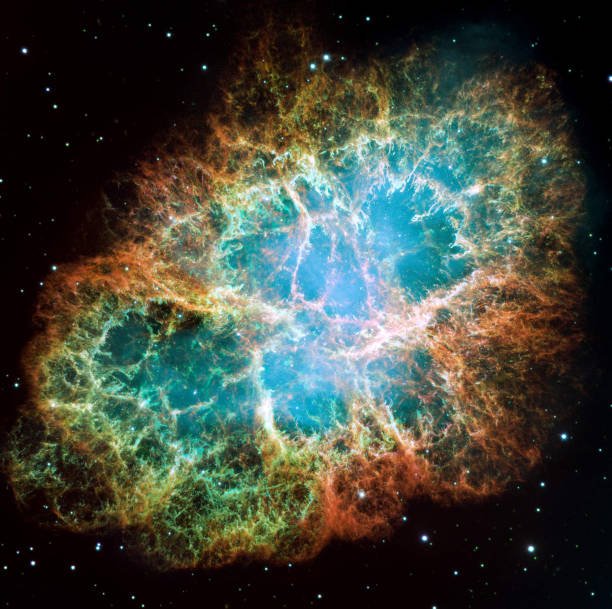
These first-generation stars, known as Population III stars, were short-lived but crucial. In their fiery cores, hydrogen fused into heavier elements like carbon, oxygen, and iron—the ingredients of life. When they exploded as supernovae, they scattered these elements into space, enriching the cosmos.
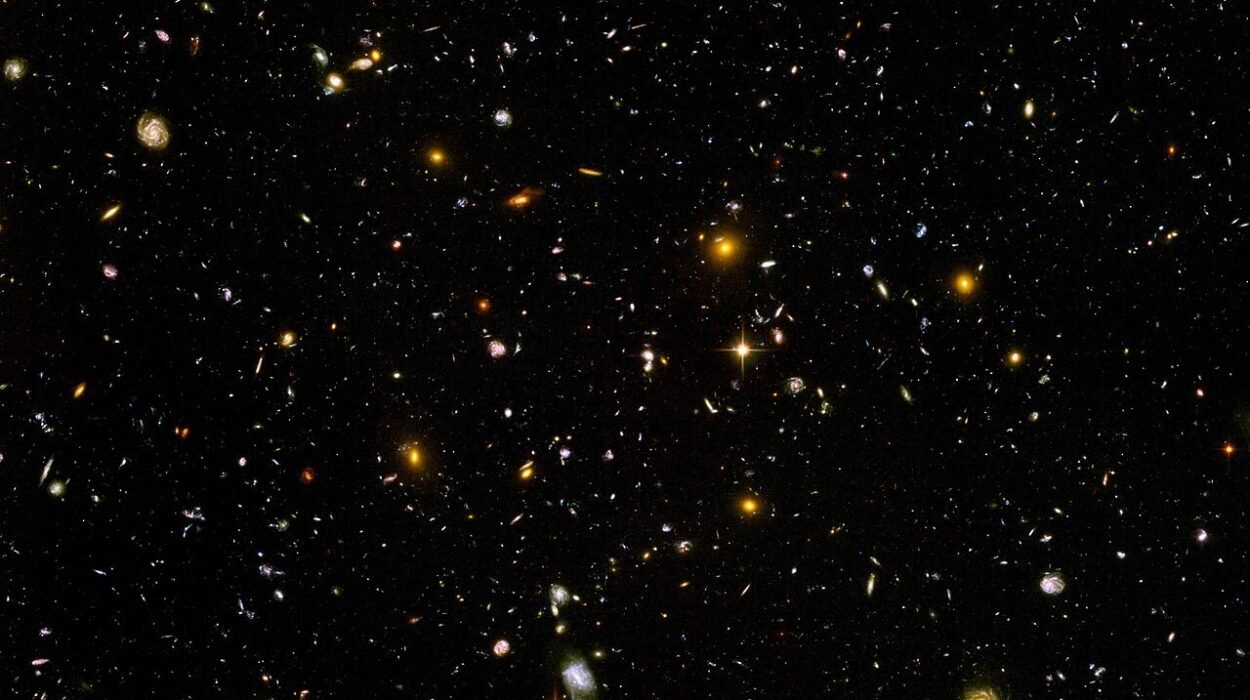
Galaxies formed as gravity drew stars together, swirling into vast islands of light. Within these galaxies, new generations of stars formed from the recycled material of their ancestors. Eventually, among these stars, planets formed—and on one small, rocky world, life began to look back at the cosmos that birthed it.
The Evidence Written in the Stars
The Big Bang Theory is not just an idea—it’s supported by an overwhelming body of evidence. The first clue comes from the expansion of the universe. Observations by Hubble and later astronomers show that galaxies are receding from one another, consistent with an expanding cosmos. The further away they are, the faster they move—a direct signature of an expanding spacetime.
The second line of evidence comes from the abundance of light elements. The Big Bang model predicts precise amounts of hydrogen, helium, and trace elements like lithium produced in the first few minutes after the Big Bang. When astronomers measure the composition of the oldest stars, they find exactly those ratios.
And the third, perhaps most beautiful evidence, is the Cosmic Microwave Background itself—the faint afterglow that bathes all of space in a nearly uniform warmth of 2.7 Kelvin. Its discovery transformed the Big Bang from a theory to a triumph.
Every observation we make, from galaxy formation to the curvature of spacetime, fits within this elegant framework. The Big Bang Theory stands as one of humanity’s greatest achievements—a model that unites physics, astronomy, and cosmology into a single narrative of existence.
The Echo of Inflation
But what caused the Big Bang? And why does the universe look so uniform, yet contain intricate structures on every scale?
In the 1980s, physicists proposed an elegant solution called cosmic inflation. According to this idea, in the first fraction of a second after the Big Bang—specifically between 10⁻³⁶ and 10⁻³² seconds—the universe expanded exponentially, growing from subatomic size to astronomical scale in an instant.
This rapid inflation smoothed out the universe, explaining why it appears so uniform across vast distances, while quantum fluctuations during that period became the seeds of galaxies and cosmic structure.
Inflation doesn’t replace the Big Bang—it refines it. It describes what happened immediately after the universe began to expand. Though still a theoretical concept, inflation elegantly explains many puzzles that once troubled cosmologists. And evidence from the CMB—particularly its subtle polarization patterns—strongly supports the inflationary model.
The Geometry of the Cosmos
The universe is not just expanding—it has shape. According to Einstein’s relativity, the geometry of space depends on the amount of matter and energy it contains. If the density of the universe is high, space curves inward like a sphere. If it’s low, space curves outward like a saddle. If it’s just right, the universe is flat.
Measurements from satellites like WMAP and Planck show that the universe is astonishingly flat, with a precision better than one percent. This means that space neither curves significantly inward nor outward—it extends smoothly and evenly on cosmic scales.
This flatness supports the idea of inflation, which would have stretched any initial curvature to near zero, leaving a universe that appears geometrically flat even today.
The Invisible Universe
As our instruments improved, astronomers made a startling discovery: most of the universe is invisible. The matter that makes up stars, planets, and humans accounts for less than 5% of the cosmos.
The rest is something else entirely—dark matter and dark energy.
Dark matter, making up about 27% of the universe, does not emit or absorb light. We know it exists because of its gravitational effects—galaxies rotate faster than visible matter alone can explain. This unseen mass acts like scaffolding, holding galaxies together and shaping the cosmic web.
Even more mysterious is dark energy, which comprises about 68% of the cosmos. In the late 1990s, astronomers discovered that the expansion of the universe is not slowing down as expected—it’s accelerating. Some unknown force is driving galaxies apart faster and faster. This discovery shook cosmology to its core.
No one knows exactly what dark energy is. It might be a property of space itself, or it might signal new physics beyond our understanding. But whatever it is, it dominates the fate of the universe.
The Arrow of Time
The Big Bang not only created space and matter—it also set time in motion. Time, as we experience it, flows in one direction—from past to future. This arrow of time is tied to the second law of thermodynamics: entropy, the measure of disorder, always increases.
At the Big Bang, entropy was incredibly low. The universe began in a state of remarkable order, allowing complexity and life to emerge as it evolved. Over billions of years, entropy has increased—stars burn out, galaxies drift apart, and energy spreads thinner and thinner.
Eventually, if the expansion continues indefinitely, the universe may face a “heat death,” a cold, dark, and empty expanse where no usable energy remains. In that distant future, even atoms may decay, and time itself may lose meaning.
But in the meantime, within this brief cosmic window, stars shine, planets form, and consciousness awakens to wonder about it all.
The Edge of Understanding
Despite its success, the Big Bang Theory leaves profound questions unanswered. What caused the Big Bang? Did time truly begin, or was there something before?
Some physicists propose that the Big Bang was not the beginning, but a transition—a “bounce” from a previous collapsing universe. Others imagine our universe as one bubble in a vast multiverse, where countless universes pop into existence like foam on a cosmic sea.
Quantum cosmology seeks to merge relativity and quantum mechanics to describe the earliest moments of creation. In this realm, time may lose its meaning entirely, replaced by a timeless quantum state from which our universe emerged spontaneously.
These ideas are speculative, yet they reflect a deep truth: the closer we approach the beginning, the more our current understanding falters. The Big Bang is not just the origin of matter—it is the edge of knowledge itself.
The Universe That Became Aware
Perhaps the most astonishing aspect of the Big Bang story is not the physics, but the poetry. From an explosion of pure energy came atoms, stars, galaxies—and eventually, life. From lifeless matter emerged minds capable of reflecting on their own origin.
Every human being is, in a literal sense, made of the universe’s first breath. The hydrogen in your cells was born in the Big Bang. The carbon in your body was forged in ancient stars. The calcium in your bones was scattered by supernovae billions of years ago.
You are the Big Bang, thinking about itself. The cosmos gave birth to the conditions for consciousness, and through us, it now looks back upon its own creation.
The Expanding Future
The universe continues to expand, driven by dark energy. Galaxies are drifting farther apart, and in billions of years, distant galaxies will vanish beyond our cosmic horizon, their light forever out of reach.
In about 5 billion years, our Sun will exhaust its fuel, swell into a red giant, and eventually fade. The Milky Way will merge with the Andromeda galaxy, forming a vast elliptical system. Yet even as stars die and galaxies drift into the darkness, the universe itself will go on expanding.
What began as the Big Bang will end in quiet stillness. But even then, the story will not truly end, because the atoms that once formed stars and minds will continue to move, to scatter, to exist. The universe never wastes anything—it simply changes form.
The Mystery That Endures
The Big Bang Theory gives us the most profound story ever told—a story not of gods or myths, but of reality itself. It is the tale of how nothing became everything, how chaos became structure, and how the void gave birth to light.
Yet it is also a story of humility. The deeper we explore, the more we realize how much we do not know. The Big Bang is both a beginning and a mystery, an event that defies the limits of human comprehension.
Still, we keep asking, keep searching, because to seek the origin of the universe is to seek the origin of ourselves. The Big Bang is not just a scientific theory—it is a reflection of the eternal human desire to understand why there is something rather than nothing.
The Symphony of Creation
In the end, the universe is a symphony of light and time. Its melody began 13.8 billion years ago with the first vibration of energy, and it still plays through every atom, every heartbeat, every distant star.
The Big Bang was not a singular explosion, but the birth of everything—the moment space began to stretch, the moment time began to flow, the moment potential became reality. It is the first note in the grand composition of existence.
And as we gaze into the night sky, seeing the faint glow of galaxies billions of light-years away, we are not looking into space—we are looking back in time, toward the moment we began.
Everything we are, everything we know, everything we will ever become—was born in that fire.
The Big Bang was not just the beginning of the universe. It was the beginning of the story that would one day give rise to us—the children of stars, the thinkers of the cosmos, the dreamers who dare to ask how it all began.