Long before written history, when the gods of Olympus ruled the heavens and the underworld whispered secrets to mortal souls, there lived a man whose cunning rivaled the immortals themselves. His name was Sisyphus, king of Ephyra—what we now call Corinth—a man of brilliant intellect, dazzling charm, and boundless arrogance.
Sisyphus was not like other kings. He believed that wisdom and wit were greater weapons than armies, that power was not granted by gods but earned through intellect. He ruled his city with sharp intelligence, building Corinth into a place of prosperity and order. But his brilliance came with a shadow: he had no reverence for the divine.
To him, the gods were fallible—vain, jealous, and easily deceived. And in that belief, he found his fatal flaw.
The story of Sisyphus is more than a myth about punishment; it is a mirror reflecting the human condition—our defiance, our pride, and our eternal struggle against the inevitable.
The Mortal Who Tricked Death
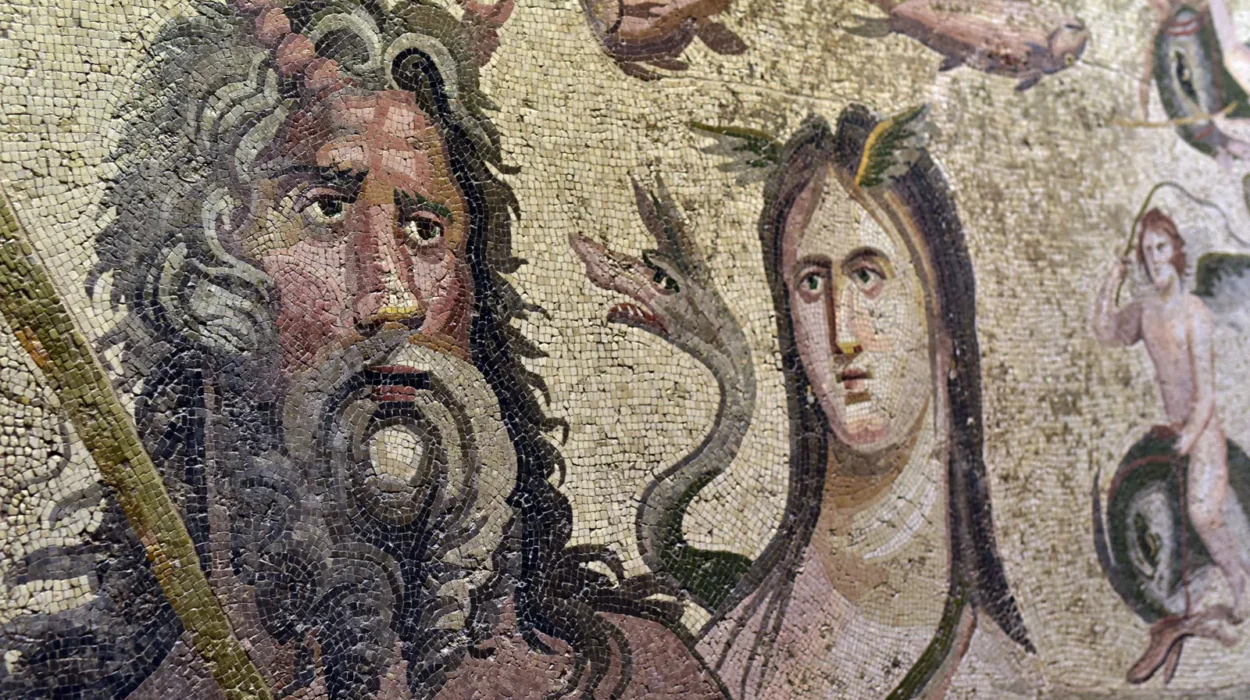
The legend begins with an act of audacity that would shock even the boldest of mortals. One day, Sisyphus discovered a secret he was never meant to know. The river god Asopus searched frantically for his missing daughter, Aegina, who had been abducted by Zeus himself. Sisyphus saw an opportunity for advantage. He promised to tell Asopus where his daughter was—if the god would grant Corinth a fresh spring of water.
The bargain was struck. Asopus gave Corinth its water, and Sisyphus betrayed Zeus by revealing the secret of Aegina’s abduction.
It was a clever move, perhaps even noble from a mortal perspective, but in the divine order it was a crime of hubris—an act of defiance against the supreme ruler of Olympus. Zeus, enraged, ordered Thanatos, the spirit of death, to chain Sisyphus and drag him to the underworld.
But Sisyphus, ever cunning, greeted Thanatos not with fear but with hospitality and deceit. He invited Death into his palace, examined the chains meant for his own binding, and with a feigned curiosity said, “Show me how they work.” When Thanatos demonstrated, Sisyphus snapped the chains shut—on Death himself.
The World Without Death
For a time, death vanished from the world. No one died. Soldiers pierced each other with swords, and yet no blood was fatal. The old grew weak but lingered on, unable to rest. The balance of nature shattered. Even the gods began to despair, for without death, the order of existence dissolved into chaos.
Ares, the god of war, was furious. His battles had become meaningless; his purpose, lost. In anger, he sought out Sisyphus, freed Thanatos, and delivered the defiant king to his rightful fate—the dark realm of Hades.
But even death could not contain the mind that refused submission. Before his descent, Sisyphus had devised one last trick. He instructed his wife, Merope, not to bury his body, to leave it exposed and dishonored in the city square. When he reached the underworld, he used the oversight as a plea.
He approached Persephone, queen of the dead, with sorrow and eloquence. “Great queen,” he said, “I have been wronged. My wife has defied the sacred rites and left my body unburied. Allow me to return to the world of the living, just long enough to correct this insult to your laws.”
Persephone, moved by his words—or deceived by his charm—granted his wish.
The Great Escape
And so, Sisyphus returned to the sunlight. But once free, he laughed. He embraced the warmth of life, the breath of wind, the color of the sky. He had no intention of ever going back. He lived as though he had conquered death itself.
Years passed. He grew older, richer, prouder. He ruled Corinth with the wisdom of a man who believed himself untouchable. But the gods do not forget. When his time came again, Hermes himself descended to drag Sisyphus back to Hades—this time with no mercy and no chance of escape.
The Eternal Punishment
In the underworld, Sisyphus stood before the judges of the dead. His crimes were not merely against Zeus, or Persephone, or Death itself—they were against the order of the cosmos. He had mocked mortality, defied the natural laws, and dared to think himself cleverer than fate.
And so, the gods pronounced his punishment: he would spend eternity pushing a massive boulder up a steep mountain. When he neared the summit, when hope gleamed brightest, the stone would slip from his grasp and roll back down to the base.
Then he would begin again. Forever.
This was no ordinary torment. It was the perfect symbol of futility—a task without end, a cycle without meaning. The gods, in their cruel wisdom, chose a punishment that mirrored the defiance of the man himself. Sisyphus, who had sought to master fate, would now be mastered by it endlessly.
The Mountain of the Soul
Picture him now, in the endless twilight of Hades, muscles straining, sweat glistening, hands raw and bleeding as they grip the cold, unyielding stone. His body bends beneath its weight, but his eyes still burn with fire.
He heaves, he pushes, he climbs. The slope rises endlessly before him, sharp and merciless. With every step, the boulder threatens to slip. And just as he reaches the edge of triumph—when the peak seems within reach—it happens again. The stone trembles, slips, and thunders back down the mountain.
The sound echoes through eternity.
And Sisyphus, exhausted and defeated, walks back down. Slowly. Silently. But not broken. He begins again.
In that image, the myth transforms from punishment to poetry. The story of Sisyphus becomes not a tale of despair, but a reflection of the human spirit—its resilience, its rebellion, its refusal to surrender meaning even in meaninglessness.
The Myth as Mirror
Every person, in some way, carries a stone. We push through our own mountains—through struggles that seem endless, through dreams that crumble just as they near fulfillment. We strive, fail, and start again.
That is why the story of Sisyphus endures. It is not about the gods or ancient kings—it is about us. About the daily act of living in a world that often seems indifferent to our efforts. It is about finding dignity in persistence, purpose in struggle, and identity in defiance.
Albert Camus, the French philosopher, would later take this myth and give it new life. In his essay The Myth of Sisyphus, he wrote that the absurdity of life mirrors the futility of Sisyphus’s labor. Yet Camus concluded not with despair, but with liberation.
He imagined Sisyphus at the foot of the mountain, turning once more to face his burden—and smiling. Because, in that moment, Sisyphus owns his fate. The gods can condemn him to labor, but they cannot touch his mind, his awareness, or his choice to continue.
“The struggle itself,” Camus wrote, “is enough to fill a man’s heart. One must imagine Sisyphus happy.”
The Defiance of the Human Heart
Sisyphus’s story is not just about punishment—it’s about rebellion. His crime was hubris, but his essence was defiance. He refused to be ruled by fear, refused to bow to the inevitability of death. In that defiance lies something deeply human.
We, too, rebel against the absurd. We build lives knowing they are temporary. We create art knowing it will fade. We love even though we will lose. We reach for meaning in a universe that offers none freely.
And like Sisyphus, we push forward—not because we believe the mountain will vanish, but because the act of pushing defines us.
The Psychology of the Endless Climb
If we look at Sisyphus through the lens of psychology, we find a profound metaphor for the human condition. Life is filled with repetition—work, struggle, failure, renewal. The routines of daily existence can often feel cyclical and meaningless. Yet within that repetition lies transformation.
Sisyphus’s eternal punishment becomes a meditation on perseverance. Each push, each ascent, each failure teaches something new. He cannot change his fate, but he can change his response. In that way, he becomes free—not through escape, but through acceptance.
Modern thinkers often see Sisyphus as the archetype of resilience. His punishment, though endless, becomes a space for self-discovery. He learns that meaning is not something given—it is something created.
The Stone and the Modern World
In today’s world, the myth of Sisyphus feels strikingly relevant. The endless climb mirrors the cycles of modern existence—ambition, effort, exhaustion, renewal. People push their own metaphorical stones every day: careers, responsibilities, grief, survival.
But unlike the Sisyphus of myth, we are not bound to one mountain. We can choose new goals, redefine success, reshape our struggles. The lesson of Sisyphus, therefore, is not to despair in futility but to embrace the act of striving itself.
To live is to push—to engage in the act of becoming.
The Moral Order of the Gods
Yet beneath its human message, the myth also warns of the limits of arrogance. Sisyphus believed he could outwit the gods, that intelligence could surpass divine order. His punishment was a reminder that even brilliance cannot rewrite the laws of nature.
In ancient Greek culture, this was the essence of hubris—the sin of believing oneself greater than the gods. The Greeks did not see the gods as perfect beings but as embodiments of universal laws. To defy them was to disrupt the harmony of the cosmos.
Sisyphus’s punishment, therefore, was not vengeance but restoration—a way of rebalancing the moral and cosmic order he had tried to manipulate.
Yet even as the gods reasserted their power, they inadvertently revealed a paradox. By forcing Sisyphus to endlessly resist futility, they immortalized his defiance. In trying to crush his will, they made him eternal.
Between Fate and Freedom
At its deepest level, the story of Sisyphus is about the tension between destiny and choice. The gods dictate his punishment, but they cannot dictate how he feels about it. That inner freedom becomes his triumph.
Every ascent is a declaration of selfhood. Every descent, a quiet renewal of will. He cannot change the nature of his task, but he can choose his attitude toward it.
And in that choice, he becomes something the gods can never be—free in the face of fate.
The Eternal Return
The myth also echoes through philosophy as a metaphor for the “eternal return”—the idea that existence itself might be cyclical, repeating infinitely. If one were to live the same life again and again, endlessly pushing the same stone, would one despair—or embrace it?
This question haunted thinkers from Nietzsche to Camus. It challenges us to live as if every action might be repeated forever. To find meaning not in destination, but in the integrity of each moment.
Sisyphus, condemned to eternal repetition, becomes the ultimate test of that idea. If he can find peace—or even joy—in his ceaseless struggle, then perhaps the human spirit can find meaning anywhere.
The Stone as Symbol
The stone Sisyphus pushes is more than a physical object—it is the weight of existence itself. It represents effort, failure, persistence, the burden of consciousness. It is the sum of every obstacle we face in life, from grief to ambition to the search for purpose.
Each of us has our own stone. It may take the form of a dream we cannot reach, a wound we cannot heal, or a truth we cannot escape. But like Sisyphus, we push it anyway.
And perhaps that is the essence of being alive—to shoulder the weight of existence and move forward, not because success is guaranteed, but because the act of striving gives life its shape.
The Myth’s Modern Echo
Artists, writers, and thinkers across centuries have found themselves haunted by Sisyphus’s image. Painters capture him mid-strain, frozen in an eternal moment of effort. Poets invoke his name as a symbol of endurance. Philosophers see in him the ultimate metaphor for consciousness itself—the awareness of struggle without escape.
In a world that often feels chaotic and indifferent, Sisyphus becomes a companion to all who labor against uncertainty. He reminds us that even in endless repetition, there can be dignity. That even in futility, there can be meaning.
The Tragic Beauty of the Climb
To imagine Sisyphus happy is not to deny his suffering. It is to recognize the beauty within it—the courage of a being who continues, who refuses to yield. His struggle becomes art, his punishment becomes expression.
There is something profoundly moving in that image: a man condemned to fail, yet never giving up. Each push is an act of rebellion, each step a declaration that life, even when meaningless, is worth living.
He becomes the artist of his own torment, sculpting meaning out of futility.
The Lesson That Endures
What, then, is the lesson of Sisyphus?
It is not merely a warning against pride, nor a celebration of endurance. It is a reflection of life itself—a story that captures the paradox of existence: that our efforts may be fleeting, yet they are all we have.
We are born, we strive, we fail, and we try again. The stone rolls back, and we push again. But in that motion—in that rhythm of struggle and persistence—there lies the essence of what it means to be human.
Sisyphus’s punishment may be eternal, but so is his will. The gods could bind his body, but not his spirit.
And so, each time he walks down the mountain to face his stone again, he is not defeated. He is alive.
The Man Who Became a Symbol
In the end, Sisyphus transcends his myth. He ceases to be a figure of punishment and becomes a symbol of existence itself. He is not merely a sinner, but a mirror held up to the human condition—reflecting our defiance, our exhaustion, and our hope.
His climb is the climb of civilization, of progress, of love, of art, of thought. Every generation pushes the stone higher, knowing it may fall, but pushing anyway.
Because meaning is not found at the top of the mountain. It is found in the climb itself.
The Eternal Echo
As the ages pass and human lives come and go, the story of Sisyphus endures. He is there in every effort to overcome the impossible, in every struggle against despair, in every soul who keeps moving forward despite the odds.
The gods may have written his fate, but humanity has rewritten his meaning. Sisyphus no longer stands for punishment—he stands for perseverance.
And somewhere, in the depths of the underworld, as the stone rolls once more and his muscles tighten against its weight, the king who once defied the gods might just be smiling.
For though the mountain is endless and the boulder unyielding, Sisyphus has learned the greatest secret of all: that freedom is not the absence of struggle, but the courage to continue within it.
And so he climbs. Forever.