Throughout human history, stories have been the bridge between mystery and meaning. Long before science or philosophy sought rational explanations for existence, people used stories to describe the world, the gods, and their place within it. These stories, which we call myths, are among humanity’s oldest attempts to understand life, death, creation, morality, and the cosmos. Religion, on the other hand, grew as a system of faith — a way to institutionalize those beliefs, to give them structure, ritual, and authority. Yet, the line dividing mythology from religion has always been blurred. Both are born from the same human impulse: to find order in chaos, to make sense of the unseen, and to connect with something greater than ourselves.
The relationship between mythology and religion is intricate and evolving. In the modern world, we often treat mythology as fiction and religion as faith — one belonging to the past, the other to the present. But in ancient societies, there was no such distinction. Myths were living truths; the gods were real; rituals were acts of divine participation. To explore where mythology ends and religion begins, we must trace their origins, understand their purposes, and confront the cultural shifts that changed how humanity views the sacred and the symbolic.
The Origins of Myth and the Birth of Belief
The roots of mythology stretch deep into prehistory. Before the written word, humans used oral traditions to pass down stories that explained natural phenomena, the cycle of seasons, the origin of humanity, and the mysteries of death. In caves, on stones, and around firelit gatherings, early humans imagined spirits in storms, deities in rivers, and life beyond death. These early myths were not mere entertainment; they were acts of interpretation.
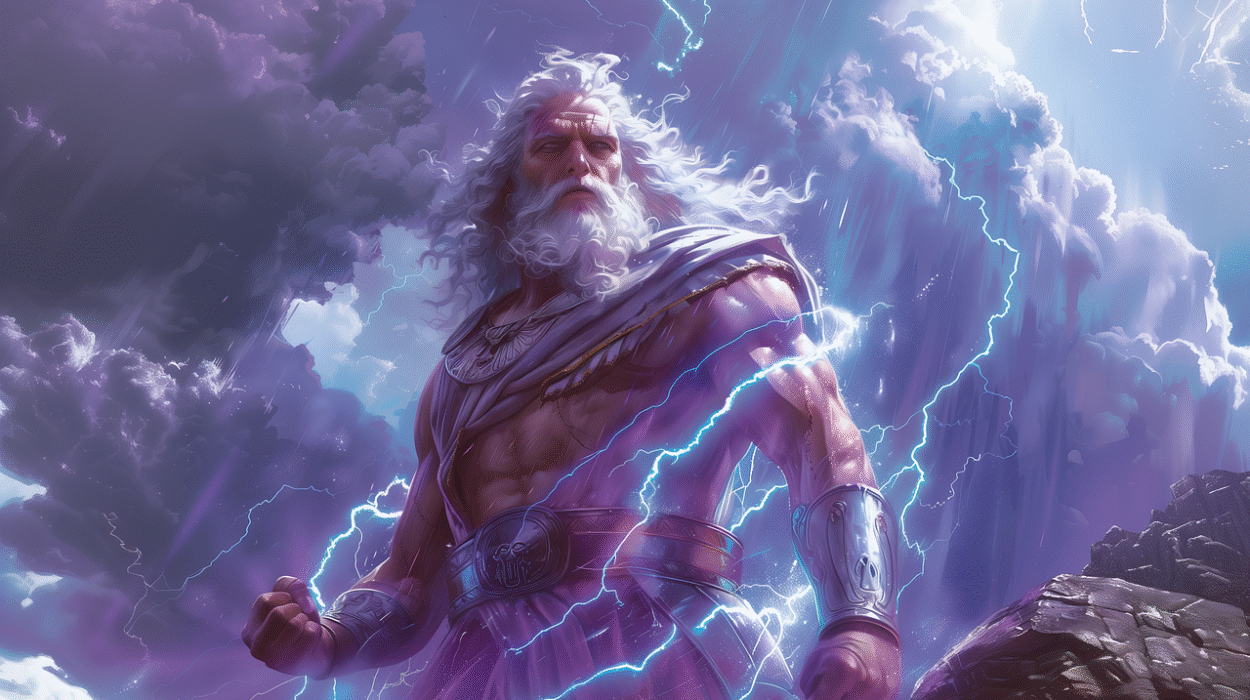
Myth emerged as a reflection of awe — a way for humans to translate the incomprehensible into narrative form. When lightning struck, it wasn’t seen as an electrical discharge but as the weapon of a god. When crops flourished or failed, divine favor or wrath was assumed. Through storytelling, people gave personality and purpose to the forces that governed their lives.
As societies grew more complex, these myths evolved into more structured systems of belief. The gods of the sky, earth, and underworld gained names, stories, and relationships. Rituals were developed to honor them. Over time, communities began to depend on priests, shamans, or kings to mediate between the human and divine realms. This gradual institutionalization of myth marked the birth of religion.
Myth as the Foundation of Culture
Every civilization’s mythology reflects its worldview. In Mesopotamia, myths revolved around order and chaos, as seen in the Enuma Elish, where the god Marduk slays the primordial sea goddess Tiamat to create the world. In ancient Egypt, the myth of Osiris and Isis expressed themes of death, resurrection, and divine kingship. In Greece, myths explored the flaws and passions of gods and humans alike, revealing a deeply humanized divine world.
These myths were not static tales; they shaped moral values, political systems, and social structures. In ancient China, the Mandate of Heaven justified the rule of emperors, while in India, the Vedic hymns and later Hindu epics like the Mahabharata and Ramayana defined dharma, or righteous duty. Myths were the architecture of civilization’s identity — providing meaning, coherence, and continuity.
Religion, in turn, emerged from this mythic foundation. The stories became sacred texts, the rituals codified into doctrines, and the priests became interpreters of divine law. What began as oral storytelling became scripture. The sacred narratives that once existed in many variations were now formalized, fixed, and guarded.
When Myths Became Faith
To understand how myth became religion, it helps to look at the transition from ancient polytheism to organized monotheism. Polytheistic cultures like those of Greece, Egypt, and Rome saw the world as inhabited by many gods, each embodying aspects of nature and human experience. These gods were anthropomorphic — they loved, fought, deceived, and suffered.
But as societies grew larger and more centralized, the need for unifying belief systems increased. In the Near East, Zoroastrianism introduced a cosmic dualism between good and evil, influencing later Abrahamic religions. Judaism crystallized the idea of one supreme, moral God — invisible and omnipotent — whose will governed all creation. Christianity and Islam expanded this monotheistic vision, transforming religious identity into a global, organized faith.
This transition changed the meaning of myth. What had once been sacred story became, in the eyes of later religions, superstition or falsehood. The gods of old were reinterpreted as symbols, demons, or mere allegories. Yet, ironically, the new faiths built upon mythic structures themselves — creation stories, divine interventions, floods, revelations, and apocalypses — motifs as old as humanity.
The distinction between mythology and religion, therefore, lies not in their content but in their perception. A “myth” is often someone else’s religion seen from the outside. To believers, their sacred stories are divine truth; to others, they are mythic metaphor.
The Power of Symbol and Story
Both mythology and religion rely on the power of symbol. A symbol condenses complex ideas into an image or act that carries emotional and spiritual weight. The serpent in Eden, the lotus in Hinduism, the phoenix in Chinese mythology, or the cross in Christianity — all convey profound truths about life, transformation, and eternity.
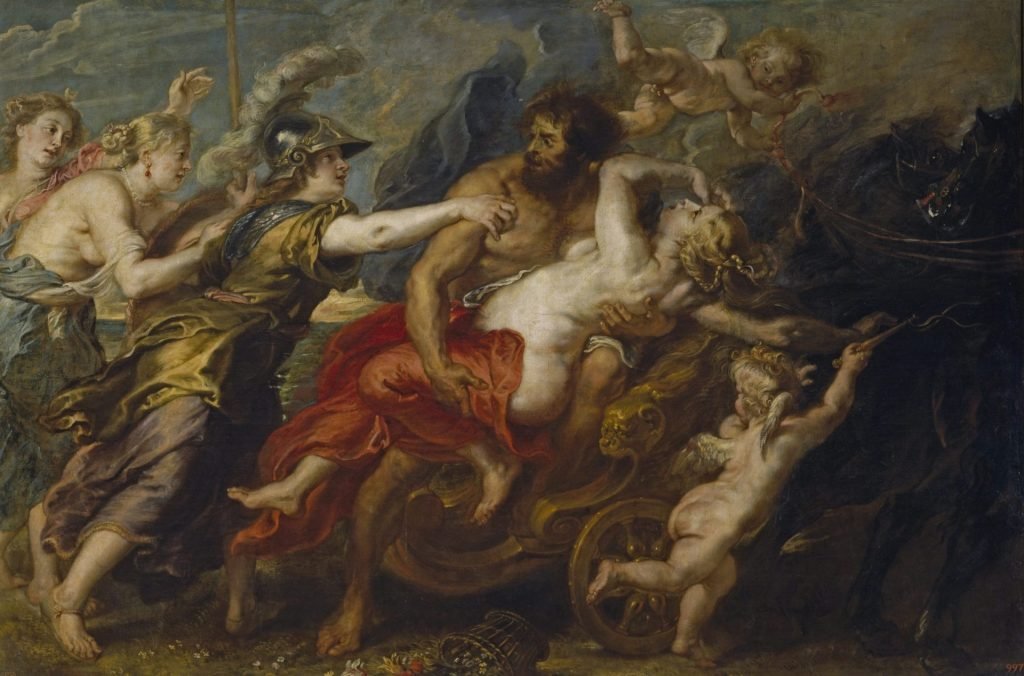
Myths operate through metaphor. The Greek story of Persephone’s descent into the underworld and return each year is not just about a goddess; it is a poetic explanation for the changing seasons and the cycle of life and death. Similarly, the story of Noah’s flood or the Mesopotamian flood in the Epic of Gilgamesh speaks to both historical memory and moral meaning — the cleansing and renewal of humanity.
Religion inherits this symbolic depth but often adds moral and institutional frameworks. Where mythology offers metaphor, religion prescribes doctrine. Myth invites interpretation; religion demands belief. Yet both use the same language — narrative, symbol, and ritual — to bridge the finite human experience with the infinite divine.
The Psychological Dimension of Myth and Religion
The psychologist Carl Jung saw myths as expressions of the collective unconscious — archetypes that appear across cultures because they reflect shared structures of the human psyche. Myths, in this view, are not lies or primitive stories but psychological truths. They give shape to our inner world, to the eternal struggles between light and darkness, hero and shadow, creation and destruction.
Religion, by contrast, provides a framework for living out these inner truths in community. It channels psychological impulses — fear, hope, guilt, love — into moral and ritual systems. The story of the hero’s journey, found in myths from Gilgamesh to Christ to the Buddha, mirrors the human path of growth, suffering, and transcendence.
Myths heal by giving meaning to suffering; religion heals by offering faith, forgiveness, and belonging. Both respond to the same existential need: to find purpose in a world that can seem arbitrary and cruel.
Myth and Religion in the Ancient World
In ancient societies, mythology and religion were inseparable. In Egypt, the myths of Ra, Isis, and Osiris were reenacted through daily temple rituals and royal ceremonies. In Greece, festivals like the Eleusinian Mysteries dramatized mythic stories of death and rebirth. In Mesopotamia, priests recited creation hymns that reaffirmed the divine order of the king and city.
The myths provided the script; religion provided the stage. Every aspect of life — from agriculture to warfare — was intertwined with divine symbolism. Sacrifices, prayers, and ceremonies were acts of cosmic harmony. Humans maintained balance with the gods through ritual, ensuring the stability of the world.
In these cultures, myth was not separate from reality. To call a story “myth” would not have implied falsehood. It was the truth — a truth expressed through sacred drama rather than scientific explanation.
The Shift in Meaning: From Sacred Story to Allegory
The modern meaning of “myth” as something false or imaginary is a relatively recent development. In the classical world, the Greek term mythos simply meant “story” or “speech.” It referred to traditional tales that explained the origins of the gods, the nature of the world, and the destiny of humanity.
However, with the rise of rational philosophy in ancient Greece, especially through thinkers like Plato and Aristotle, myths began to be interpreted allegorically — as symbolic truths rather than literal events. Later, during the Enlightenment, European scholars viewed myth as primitive superstition, contrasting it with the “rational” truths of science and monotheism.
This intellectual shift created a hierarchy: religion was respected as moral truth, while mythology was dismissed as fantasy. Yet, in essence, both convey similar functions. Myths are the imaginative roots of the tree that later grows into organized religion. To dismiss mythology as falsehood is to forget that all faith begins as story — a narrative powerful enough to inspire devotion and meaning.
The Interplay of Myth and Religion in Modern Faiths
Even in today’s major religions, mythological elements persist, though often under different names. The creation accounts in Genesis, the story of the great flood, the miracles of prophets, the descent of divine beings — all mirror ancient mythic patterns. The difference lies in the claim of historical truth and divine revelation.
Christianity, for instance, incorporates mythic motifs of sacrifice, death, and rebirth — themes shared with older mystery religions of the Mediterranean. The story of Christ’s resurrection resonates with myths of Osiris, Dionysus, and Mithras. Similarly, Islam’s heavenly ascent of the Prophet Muhammad echoes the ancient Mesopotamian and Jewish motifs of divine journeys.
Hinduism, uniquely, preserves its mythic heritage within a living religious framework. Its deities, epics, and cosmic cycles are still worshiped and believed in, blending myth and faith seamlessly. Buddhism, though non-theistic, reinterprets mythic symbols as metaphors for enlightenment and the inner transformation of the mind.
This coexistence of myth and religion reminds us that faith is not static. It evolves by reimagining old symbols to express new spiritual insights.
Myth, Religion, and the Human Need for Meaning
Why do humans create myths and religions at all? The answer lies in our need for meaning. We are conscious beings in a vast, indifferent universe. Myths and religions both answer questions that reason alone cannot: Why are we here? What happens after death? Is there justice beyond life?
Mythology gives symbolic answers, painting the human experience in metaphorical colors. Religion gives structured answers, offering moral laws, rituals, and communities of faith. Both reflect our longing to transcend the limits of mortality.
In times of uncertainty, humans turn to stories for stability. The myth of the hero conquering chaos reassures us that courage and virtue matter. Religious faith comforts us that there is divine purpose behind suffering. Whether symbolic or literal, these narratives provide psychological grounding in an unpredictable world.
The Conflict and Continuity Between Myth and Religion
In the modern era, especially after the rise of scientific thought, the relationship between mythology and religion has become contentious. Science explains the world through evidence and logic, challenging the literal truth of sacred stories. As a result, many people now view myths as outdated or irrelevant.
Yet, the essence of myth has not disappeared — it has transformed. Even secular societies create new myths: of progress, of freedom, of the hero who defies the system. Modern media, literature, and film retell ancient archetypes in contemporary form. The mythic imagination still shapes our values and dreams, just under new guises.
Religion, too, continues to evolve. Some believers interpret their sacred texts metaphorically rather than literally, seeing them as timeless truths expressed through ancient cultural language. Others hold firmly to traditional interpretations. The dialogue between faith and reason, myth and fact, continues to define the spiritual landscape of the modern world.
Myths as Carriers of Timeless Wisdom
Though ancient, myths still carry wisdom relevant to modern life. They speak of universal experiences — love, betrayal, loss, renewal. They remind us of humility before nature and the dangers of hubris. The Greek myth of Icarus, who flew too close to the sun, warns against overreaching ambition. The tale of Pandora’s box speaks of curiosity and hope amid suffering.
Religion translates these lessons into moral codes and communal practices. It seeks to turn mythic wisdom into ethical action. Where myth tells us what is, religion tells us what ought to be. The interplay between the two ensures that humanity’s search for meaning remains both imaginative and moral.
The Modern Rediscovery of Myth
In recent decades, scholars, artists, and psychologists have reexamined mythology not as superstition but as symbolic truth. Thinkers like Joseph Campbell, author of The Hero with a Thousand Faces, demonstrated that myths across cultures share common structures — the hero’s journey from separation to initiation to return. These patterns, Campbell argued, express the universal process of human growth and transformation.
This modern rediscovery of myth highlights its continuing power. Even in a scientific age, myths endure because they speak to the soul, not just the intellect. Religion may institutionalize belief, but myth animates it — giving it story, passion, and depth.
The Future of Faith and the Return of Myth
In a rapidly changing world, traditional religions face new challenges — globalization, secularism, and scientific skepticism. Yet, the human hunger for meaning persists. As traditional faiths adapt, many turn once again to mythic imagination to express timeless spiritual truths in new ways.
We see this in art, cinema, and literature — modern myths like Star Wars, The Lord of the Rings, and Avatar retell ancient themes of good versus evil, the fall and redemption of the hero, and the quest for harmony with nature. These are not religions, but they evoke religious emotion and moral reflection. They remind us that mythic storytelling remains essential to the human condition.
The future may not be one of declining faith, but of evolving spirituality — a synthesis of mythic imagination and personal belief. People may move away from rigid dogma, yet they will continue to seek transcendent meaning through story, symbol, and shared vision.
Conclusion
The question of where mythology ends and religion begins cannot be answered with a single line. Mythology and religion are not opposites but stages in humanity’s ongoing dialogue with the sacred. Myth is the seed, religion the tree; myth is imagination, religion the institution; myth is symbolic truth, religion lived faith.
To call one “myth” and the other “religion” often reflects perspective, not reality. What one age calls myth, another may call divine revelation. The gods of yesterday become the metaphors of today, and perhaps the wisdom of tomorrow.
Both mythology and religion express the same eternal impulse — to understand, to revere, and to belong. Myths give the universe a face; religion gives it a voice. Together, they form the spiritual heritage of humankind — a testament to our never-ending search for meaning in a mysterious cosmos.
And so, mythology never truly ends, and religion never fully begins. They are two currents in the same river of human experience, flowing endlessly between wonder and faith, between the stories we tell and the truths we seek.