In the spring of 1947, a young Bedouin shepherd wandered through the rocky cliffs overlooking the northwestern shore of the Dead Sea. Like many shepherds before him, he was searching for a lost goat. As he explored the barren landscape, he threw a stone into the opening of a dark cave. Instead of hearing the sound of the rock striking the ground, he heard something unexpected—the sharp crack of breaking pottery.
Curious, he climbed inside.
What he discovered would become one of the greatest archaeological finds of the twentieth century.
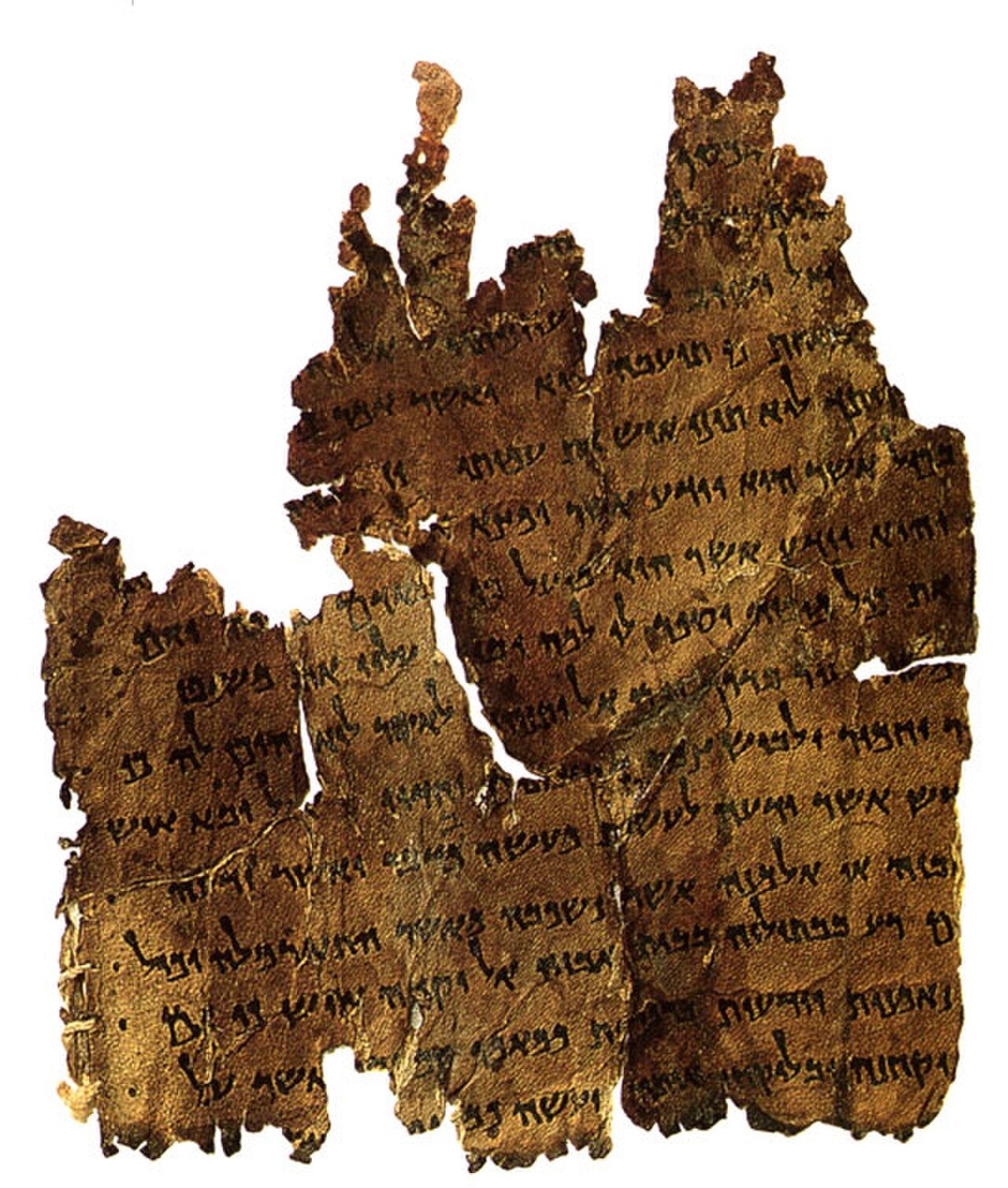
Hidden inside tall clay jars were ancient scrolls wrapped in linen. These fragile manuscripts had remained untouched for nearly two thousand years. At first, no one realized their extraordinary importance. But as scholars began examining them, it became clear that these were among the oldest surviving biblical manuscripts ever discovered, along with hundreds of other ancient Jewish religious writings.
Today, these remarkable documents are known as the Dead Sea Scrolls.
The discovery transformed our understanding of the ancient world. It opened an unprecedented window into Jewish life during the centuries before and during the lifetime of Jesus of Nazareth. The scrolls revealed forgotten religious communities, preserved ancient versions of biblical books, and offered valuable insights into the beliefs, traditions, and daily lives of people living more than two thousand years ago.
At the same time, the Dead Sea Scrolls became surrounded by myths and conspiracy theories. Some claimed the scrolls contained secret histories of Jesus. Others suggested they proved hidden religious conspiracies or revealed mysterious prophecies deliberately concealed from the public.
Modern scholarship tells a very different story.
The Dead Sea Scrolls are fascinating not because they overturn history, but because they illuminate it. They help historians understand how Judaism developed during a crucial period and provide invaluable evidence for the history of the Hebrew Bible and the diverse religious ideas circulating in ancient Judea.
The real story of the Dead Sea Scrolls is every bit as captivating as the legends—but it is grounded in archaeology, history, and careful scientific research.
What Are the Dead Sea Scrolls?
The Dead Sea Scrolls are a collection of ancient Jewish manuscripts discovered in caves near the Dead Sea between 1947 and 1956.
More than 900 manuscripts, represented by tens of thousands of fragments, have been identified.
Most were written between approximately the third century BCE and the first century CE.
The manuscripts include copies of books that later became part of the Hebrew Bible, religious commentaries, legal texts, prayers, hymns, calendars, community rules, wisdom literature, and other writings.
Some scrolls survive almost intact.
Others exist only as tiny fragments that scholars have painstakingly reconstructed over decades.
Together, these manuscripts represent one of the richest collections of ancient Jewish literature ever discovered.
Where Were the Scrolls Found?
The scrolls were discovered near the archaeological site of Qumran on the northwestern shore of the Dead Sea.
This region is extremely dry.
The hot desert climate helped preserve delicate parchment and papyrus that would normally decay much more quickly in wetter environments.
Eleven caves eventually yielded manuscripts.
Some caves contained only a few fragments.
Others held hundreds of manuscripts stored inside pottery jars.
The caves overlooked the settlement of Qumran, leading many scholars to investigate whether the people living there had some connection with the scrolls.
Although debate continues regarding certain details, Qumran remains central to understanding the collection.
The Discovery That Changed Archaeology
The initial discovery attracted little attention.
Ancient manuscripts occasionally appeared on the antiquities market, and no one immediately recognized the significance of these particular documents.
As experts examined the scrolls, excitement grew rapidly.
Their handwriting, language, and materials indicated remarkable antiquity.
Soon archaeologists began systematic excavations around Qumran.
Additional caves revealed hundreds of previously unknown manuscripts.
Each new discovery expanded the historical picture.
Rather than uncovering a single document, researchers had found an entire ancient library.
Few archaeological discoveries have had such a profound impact on biblical studies and ancient history.
How Old Are the Dead Sea Scrolls?
Scientific dating confirms that most scrolls were copied between approximately 250 BCE and 68 CE.
Several methods support these dates.
Radiocarbon dating analyzes the age of organic materials.
Paleography studies the evolution of handwriting styles.
Archaeology examines pottery, coins, and other artifacts found alongside the manuscripts.
Together, these methods provide strong evidence for the scrolls’ age.
Importantly, the newest manuscripts appear to have been hidden shortly before Roman forces destroyed nearby settlements during the First Jewish Revolt against Rome, which began in 66 CE.
Who Wrote the Dead Sea Scrolls?
One of the most debated questions concerns the identity of the people responsible for the scrolls.
The traditional view connects many of the manuscripts with a Jewish religious group commonly identified as the Essenes.
Ancient writers such as Josephus, Philo, and Pliny the Elder described the Essenes as a disciplined Jewish community emphasizing purity, communal living, and strict religious observance.
Many characteristics described by these ancient authors resemble ideas expressed in several scrolls.
However, not all scholars agree.
Some argue that the collection represents manuscripts gathered from multiple Jewish communities rather than belonging exclusively to one group.
Others suggest the scrolls were hidden near Qumran by people fleeing Jerusalem during the Roman invasion.
Current evidence supports several possibilities, and researchers continue studying the question.
While the precise identity of every manuscript’s owner remains uncertain, the scrolls unquestionably reflect diverse forms of Jewish religious life during the late Second Temple period.
What Materials Were the Scrolls Made From?
Most Dead Sea Scrolls were written on parchment prepared from animal skins.
Some were copied onto papyrus, an ancient writing material made from reeds.
One extraordinary document, known as the Copper Scroll, was engraved onto thin sheets of copper rather than written with ink.
The Copper Scroll differs from nearly every other manuscript.
Instead of religious teachings, it appears to list locations where valuable treasures were supposedly hidden.
Whether these treasures actually existed remains unknown.
The parchment manuscripts were carefully prepared by skilled scribes using black and occasionally red ink.
Their remarkable preservation reflects both careful craftsmanship and the dry desert climate.
What Languages Do the Scrolls Use?
Most Dead Sea Scrolls are written in Hebrew.
Many appear in Aramaic, another widely spoken language of the region.
A smaller number are written in Greek.
This linguistic diversity reflects the multicultural world of ancient Judea.
Hebrew remained important for religious literature.
Aramaic served as a common spoken language for many Jewish communities.
Greek functioned as an international language across much of the eastern Mediterranean following the conquests of Alexander the Great.
Together, these languages illustrate the rich cultural environment in which the scrolls were produced.
Copies of the Hebrew Bible
Perhaps the most famous aspect of the Dead Sea Scrolls is their preservation of biblical manuscripts.
Fragments from nearly every book of the Hebrew Bible have been discovered.
The only biblical book not represented among the currently identified scrolls is Esther.
One of the greatest discoveries was the nearly complete Great Isaiah Scroll.
Before the Dead Sea Scrolls, the oldest complete Hebrew manuscripts of Isaiah dated to approximately one thousand years after the scroll’s creation.
This enormous time gap had long concerned scholars.
The Dead Sea Scrolls dramatically narrowed that gap.
Comparisons showed that the biblical text had been transmitted with remarkable accuracy across centuries.
Although differences exist, most involve spelling, grammar, word order, or minor textual variations rather than major changes in meaning.
Why the Biblical Scrolls Matter
The biblical manuscripts provide invaluable evidence for understanding how sacred texts developed.
Before the discovery, scholars relied mainly on medieval Hebrew manuscripts copied many centuries after the original compositions.
The Dead Sea Scrolls demonstrated that many biblical books remained remarkably stable over time.
They also revealed that multiple textual traditions sometimes existed simultaneously.
This finding helps scholars understand the process through which biblical texts were copied, preserved, and eventually standardized.
Rather than undermining the Bible, the scrolls greatly improved historical knowledge of its transmission.
Religious Writings Beyond the Bible
The Dead Sea Scrolls contain far more than biblical books.
Many manuscripts were previously unknown.
Some explain religious laws.
Others contain prayers, hymns, blessings, wisdom teachings, or biblical commentaries.
Several describe expectations regarding the coming of God’s kingdom.
Others discuss ritual purity, community discipline, and proper worship.
These texts reveal the rich diversity of Jewish thought during the centuries before rabbinic Judaism became dominant.
They demonstrate that ancient Judaism was not a single unified system but included numerous groups with differing interpretations.
The Community Rule
One famous manuscript, often called the Community Rule, outlines regulations for members of a religious community.
It describes initiation ceremonies, shared property, leadership responsibilities, discipline, and moral expectations.
The document emphasizes humility, obedience, study, purity, and communal cooperation.
It also portrays history as a struggle between forces of light and darkness.
The Community Rule offers historians a rare glimpse into how one ancient Jewish group organized daily life.
The War Scroll
Another remarkable document is the War Scroll.
This manuscript presents a dramatic vision of a future battle between the “Sons of Light” and the “Sons of Darkness.”
Although highly symbolic, the text reflects apocalyptic expectations common among certain Jewish groups during this period.
Many people believed God would soon intervene decisively in history.
Understanding these beliefs helps explain the religious atmosphere of the late Second Temple era.
The Thanksgiving Hymns
Among the most beautiful scrolls are collections of hymns and prayers.
Often called the Thanksgiving Hymns, these writings express gratitude, humility, repentance, and trust in God.
Their emotional language reveals deeply personal religious devotion.
Reading these ancient prayers reminds modern readers that people living two thousand years ago wrestled with hope, fear, suffering, and faith much as we do today.
The Copper Scroll
Unlike every other Dead Sea Scroll, the Copper Scroll is engraved rather than written.
Its contents remain mysterious.
The text lists dozens of locations where gold, silver, and sacred objects were supposedly hidden.
Some researchers believe it describes actual temple treasures concealed before the Roman invasion.
Others think it represents symbolic or legendary information.
No confirmed treasure matching the scroll’s descriptions has ever been discovered.
Its true purpose remains uncertain.
Daily Life Around Qumran
Archaeological excavations at Qumran reveal a surprisingly organized settlement.
Researchers uncovered living quarters, workshops, storage rooms, ritual baths, pottery kilns, water channels, and what may have served as communal gathering spaces.
Numerous inkwells suggest that writing played an important role.
The community appears to have invested considerable effort in copying manuscripts.
Nearby cemeteries also provide clues about those who lived there.
Together, these discoveries help reconstruct everyday life among the people connected with the site.
The Importance of Ritual Purity
Many scrolls emphasize ritual cleanliness.
Ancient Jewish law included detailed regulations concerning purity.
Some communities followed these practices with exceptional strictness.
Archaeologists discovered numerous ritual baths near Qumran.
These installations support the idea that purification formed an important part of daily religious life.
Modern readers should distinguish ritual purity from physical cleanliness.
These concepts reflected religious rather than medical concerns.
What the Scrolls Reveal About Ancient Judaism
Perhaps the greatest contribution of the Dead Sea Scrolls is their insight into ancient Judaism.
They demonstrate remarkable diversity.
Different groups interpreted scripture differently.
Some emphasized priestly authority.
Others focused on prophecy, wisdom, law, or apocalyptic expectations.
The scrolls reveal debates over calendars, religious leadership, temple practices, and biblical interpretation.
Understanding this diversity helps historians appreciate the complex world from which both rabbinic Judaism and Christianity eventually emerged.
The Scrolls and Early Christianity
Because the Dead Sea Scrolls date to roughly the same period as the beginnings of Christianity, comparisons naturally attract attention.
The scrolls never mention Jesus of Nazareth.
They do not describe his life, ministry, crucifixion, or resurrection.
Nevertheless, they illuminate the religious environment in which Christianity emerged.
Ideas such as repentance, baptism-like purification rituals, messianic expectations, scriptural interpretation, and hope for God’s coming kingdom already existed within parts of ancient Judaism.
The scrolls therefore provide historical context rather than direct evidence about Jesus himself.
Common Misconceptions
The Dead Sea Scrolls have inspired countless sensational claims.
Some books and documentaries suggest they reveal secret histories deliberately hidden from the public.
Others claim they expose suppressed Christian teachings.
These assertions are not supported by mainstream scholarship.
The scrolls do not contain lost gospels about Jesus.
They do not rewrite the history of Christianity.
They do not reveal hidden conspiracies maintained for centuries.
Their real significance lies in their historical value.
They deepen understanding rather than overturn established history.
Scientific Techniques Used Today
Modern technology continues transforming Dead Sea Scroll research.
Multispectral imaging reveals faded writing invisible to the naked eye.
Artificial intelligence assists in reconstructing fragmented manuscripts.
DNA analysis of parchment helps determine which fragments originally belonged together.
Advanced digital photography preserves fragile texts without repeated handling.
These technologies allow scholars to recover information once thought permanently lost.
Each advance expands our understanding of the collection.
Preserving the Scrolls
Preservation remains an enormous challenge.
The scrolls are extremely fragile.
Exposure to humidity, light, temperature changes, and handling can damage them.
Conservation experts carefully control environmental conditions.
Many original manuscripts spend most of their time in secure storage.
High-resolution digital images now allow researchers worldwide to study the texts while minimizing physical handling.
This careful preservation ensures future generations can continue learning from these remarkable documents.
The Dead Sea Scrolls and Modern Scholarship
Few archaeological discoveries have generated more academic research.
Thousands of books, articles, conferences, and research projects focus on the scrolls.
Scholars from numerous disciplines contribute.
Archaeologists study excavation sites.
Historians reconstruct ancient societies.
Linguists analyze language.
Biblical scholars compare manuscripts.
Chemists investigate inks.
Conservation scientists develop preservation methods.
The Dead Sea Scrolls illustrate how modern science and the humanities work together to illuminate the past.
What the Scrolls Really Reveal
The greatest lesson of the Dead Sea Scrolls is surprisingly simple.
They reveal ordinary people striving to understand God, preserve sacred traditions, and remain faithful during uncertain times.
They show communities wrestling with questions about justice, morality, leadership, worship, hope, and the future.
They preserve voices that would otherwise have disappeared forever.
Far from containing hidden secrets capable of overturning history, the scrolls reveal something even more valuable.
They reveal continuity.
They show how religious traditions developed gradually across generations.
They demonstrate the remarkable care ancient scribes devoted to preserving sacred writings.
They illustrate the diversity of beliefs within ancient Judaism.
Above all, they remind us that history is often richer, more complex, and more fascinating than sensational myths suggest.
Why the Dead Sea Scrolls Still Matter
More than seventy years after their discovery, the Dead Sea Scrolls continue to inspire both scholars and the public.
Their importance extends beyond archaeology.
They connect modern readers with real people who lived more than two thousand years ago.
The scrolls preserve their hopes, fears, prayers, laws, poetry, and dreams.
They bridge the gap between ancient civilizations and today’s world.
Every newly reconstructed fragment contributes another sentence, another paragraph, or another clue to humanity’s shared story.
Conclusion
The Dead Sea Scrolls are among the most extraordinary archaeological discoveries ever made. Hidden for nearly two millennia in caves overlooking the Dead Sea, these ancient manuscripts survived to provide an unparalleled window into the religious, cultural, and intellectual world of ancient Judea. Written between the third century BCE and the first century CE, they include some of the oldest known copies of books from the Hebrew Bible, as well as hundreds of other texts that reveal the diversity of Jewish belief and practice during a pivotal period in history.
Rather than exposing secret conspiracies or rewriting the story of Christianity, the scrolls reveal something far more significant. They demonstrate the remarkable care with which ancient scribes preserved sacred writings, illuminate the complex religious landscape from which both rabbinic Judaism and Christianity emerged, and provide invaluable evidence for understanding the development of biblical texts. Their pages preserve prayers, laws, hymns, commentaries, visions, and community rules that bring ancient voices back to life.
The mystery surrounding the Dead Sea Scrolls has not disappeared completely. Scholars continue debating who collected them, why they were hidden, and how individual manuscripts were used. New technologies are still uncovering faded words and reconstructing damaged fragments, ensuring that research remains active and exciting.
Ultimately, the Dead Sea Scrolls remind us that history is not merely a collection of dates and events. It is the story of real people searching for meaning, preserving knowledge, and passing their beliefs to future generations. More than two thousand years after they were carefully placed inside desert caves, these fragile manuscripts continue to speak across time, enriching our understanding of one of the most important periods in human history and revealing not hidden secrets, but the enduring power of memory, faith, and written words.