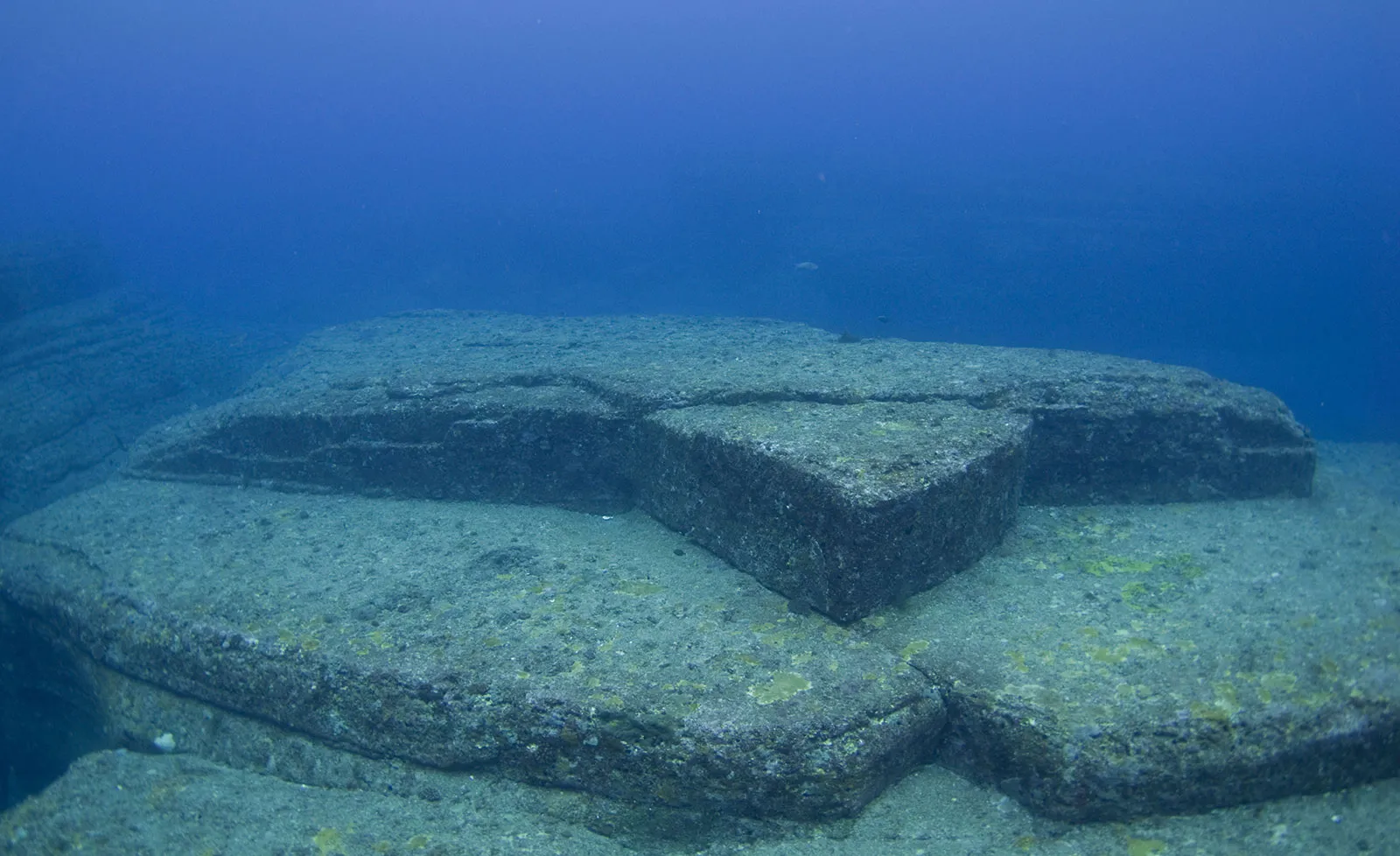
Beneath the crystal-clear waters off Japan’s westernmost island lies one of the world’s most fascinating underwater mysteries. Divers descending into the deep blue sea suddenly encounter something that seems almost impossible. Massive stone terraces stretch across the ocean floor. Giant staircases appear to climb toward nowhere. Flat platforms resemble ancient plazas, while sharp corners and straight walls look surprisingly similar to structures built by human hands.
The scene is so extraordinary that many first-time visitors struggle to believe it is real.
Some see the remains of a forgotten civilization swallowed by the sea thousands of years ago. Others believe the site is evidence of an advanced prehistoric culture that disappeared before recorded history. The most sensational claims go even further, suggesting that the mysterious monument was created by extraterrestrials who visited Earth in the distant past.
Scientists, however, offer a different explanation.
Many geologists argue that the remarkable shapes are entirely natural, formed over millions of years through tectonic forces, fractures in sandstone, and relentless erosion by waves and ocean currents.
The debate has continued for decades, making the Yonaguni Monument one of archaeology’s most controversial mysteries.
Unlike many legendary lost cities that exist only in ancient texts, Yonaguni is real. Anyone with diving experience can visit the site and see its enormous stone formations firsthand. Yet what those formations truly represent remains an open question.
Are they the ruins of an ancient city?
Are they simply one of nature’s most astonishing geological creations?
Or have popular imagination and modern mythology transformed unusual rocks into something far more mysterious?
The search for answers takes us into a fascinating world where geology, archaeology, oceanography, history, and human curiosity all meet beneath the waves.
A Discovery Beneath the Sea
The mystery began unexpectedly in 1986.
Local diver Kihachiro Aratake was searching the waters near Yonaguni Island, hoping to observe schools of hammerhead sharks that migrate through the region.
Instead, he found something completely unexpected.
Beneath the surface stood enormous stone formations unlike anything he had ever seen.
Huge flat platforms rose from the seabed.
Broad terraces stepped downward like giant staircases.
Sharp edges met at nearly right angles.
Massive walls seemed to form geometric patterns.
To Aratake, the underwater landscape resembled the ruins of an enormous ancient structure.
News of the discovery spread rapidly.
Divers, photographers, scientists, and explorers soon traveled to Yonaguni to witness the mysterious formations for themselves.
The underwater monument quickly became one of Japan’s most famous diving destinations and one of the world’s most debated archaeological sites.
Where Is Yonaguni?
Yonaguni is Japan’s westernmost inhabited island.
It belongs to Okinawa Prefecture and lies only about one hundred kilometers east of Taiwan.
The island occupies an important location where the East China Sea meets the Pacific Ocean.
Strong ocean currents sweep around the coastline throughout the year.
These powerful currents create excellent conditions for marine life but also shape the underwater landscape through continuous erosion.
The surrounding waters are exceptionally clear, allowing divers to observe the monument in remarkable detail.
Most of the formations lie between five and thirty meters below the ocean surface, making them accessible to experienced recreational divers.
First Impressions
Almost everyone who dives at Yonaguni experiences the same reaction.
The formations look artificial.
Large flat surfaces resemble carefully cut floors.
Long stair-like steps descend toward the seabed.
Straight walls appear almost too perfect to be natural.
Sharp corners create the impression of deliberate engineering.
Some areas even resemble roads, plazas, gateways, and pyramids.
Human brains naturally search for familiar patterns.
When people encounter geometric shapes, they instinctively associate them with architecture.
This psychological tendency helps explain why Yonaguni has inspired so much speculation.
At first glance, it truly looks like an underwater city.
The Main Monument
The largest feature at Yonaguni is often called the Main Monument.
It measures roughly one hundred and fifty meters long and about forty meters wide.
The structure rises approximately twenty-five meters from its base.
Broad terraces dominate the formation.
Some steps appear nearly one meter high.
Large flat platforms connect different levels.
The entire monument possesses an imposing, almost pyramid-like appearance.
Swimming alongside these massive stone surfaces can feel like exploring the remains of an ancient temple.
Yet appearances alone cannot determine whether a structure is natural or artificial.
Scientists must examine how the rocks formed, their geological history, and whether evidence of human construction exists.
Why the Shapes Look So Perfect
One reason Yonaguni has generated such intense debate is that nature sometimes produces surprisingly geometric forms.
Many rocks contain natural fracture systems.
When tectonic forces place stress upon sedimentary rocks, they often crack along predictable directions.
These fractures create straight lines.
Later, waves and erosion widen the cracks.
Over thousands or millions of years, entire blocks become separated.
The result can resemble giant staircases, walls, or platforms.
Similar formations occur elsewhere around the world.
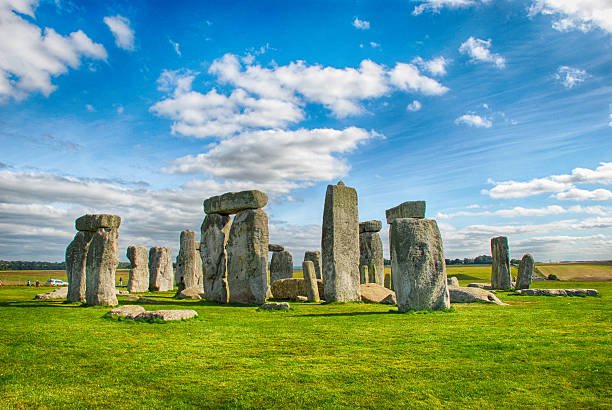
Columnar basalt forms remarkably regular hexagonal columns.
Certain sandstone cliffs develop rectangular blocks.
Limestone landscapes produce geometric terraces.
Nature often creates shapes that seem almost engineered.
The Geological Setting
Understanding Yonaguni requires understanding its geology.
The monument consists primarily of sandstone and mudstone deposited millions of years ago beneath ancient seas.
These sedimentary rocks formed in horizontal layers.
Later tectonic movements uplifted the region.
Japan sits near the boundaries of several tectonic plates, making earthquakes and geological activity common.
Compression fractured the rock.
Natural joints developed.
Ocean waves exploited these weaknesses.
Over enormous spans of time, erosion sculpted the fractured rocks into the dramatic shapes visible today.
From a geological perspective, this process is entirely plausible.
The Case for a Natural Formation
Most geologists who have studied Yonaguni conclude that the monument is primarily natural.
Their arguments rely on several observations.
The sandstone naturally breaks along flat planes.
Many fractures occur at nearly right angles because of regional stress patterns.
Ocean erosion removes weaker material while leaving stronger sections intact.
Similar geological structures appear on nearby coastlines above sea level.
Researchers also point out that no convincing evidence of stone carving has been identified across most of the monument.
There are no clear tool marks, mortar, masonry, or artificial stone blocks.
Instead, the surfaces generally display characteristics expected from natural weathering.
According to this interpretation, Yonaguni represents an extraordinary geological formation rather than an archaeological site.
The Archaeological Perspective
Archaeologists approach the monument differently.
If Yonaguni were truly an ancient city, researchers would expect to find unmistakable signs of human activity.
These might include pottery.
Stone tools.
Metal objects.
Human remains.
Building materials.
Carved inscriptions.
Evidence of organized construction.
Despite decades of exploration, no such evidence has been discovered directly associated with the main monument.
This absence significantly weakens the argument for a lost city.
Archaeology depends upon material evidence rather than appearance alone.
Without artifacts demonstrating human occupation, most archaeologists remain skeptical.
The Human-Made Theory
Not everyone agrees with the geological explanation.
Some researchers argue that the monument contains features difficult to explain naturally.
Japanese marine geologist Masaaki Kimura has spent decades studying Yonaguni.
He proposes that at least portions of the monument were modified by ancient humans.
According to this view, natural rock formations may have been reshaped into ceremonial structures, platforms, or monuments.
Kimura has identified what he interprets as roads, plazas, staircases, drainage channels, and carved faces.
He believes these features indicate human involvement.
However, many other scientists disagree with these interpretations.
The debate continues because several features remain open to different explanations.
Could an Ancient Civilization Have Lived There?
If Yonaguni once stood above sea level, humans certainly could have visited the area.
Sea levels were much lower during the last Ice Age.
Around twenty thousand years ago, global sea level stood more than one hundred meters below today’s level because vast quantities of water remained locked within continental ice sheets.
As the climate warmed, glaciers melted.
Sea levels gradually rose.
Large coastal regions around the world disappeared beneath the oceans.
Therefore, land now underwater near Yonaguni was once exposed.
This fact fuels speculation.
If people occupied the area before rising seas submerged it, could they have built something there?
The possibility cannot be completely dismissed.
However, extraordinary claims require strong archaeological evidence.
So far, that evidence has not appeared.
Ancient Japan During the Ice Age
Understanding prehistoric Japan helps evaluate these ideas.
Humans lived in the Japanese islands during the Late Paleolithic period.
They hunted animals, gathered plants, and manufactured sophisticated stone tools.
However, there is no evidence that these societies built massive stone monuments comparable to Yonaguni.
Known archaeological sites from this period consist mainly of campsites, stone tools, and modest settlements.
Nothing suggests construction projects involving enormous underwater terraces.
This does not make such construction impossible.
But current archaeological evidence provides no support for it.
The Lost Civilization Hypothesis
Some writers suggest Yonaguni belonged to a forgotten civilization predating all known ancient societies.
According to this hypothesis, advanced builders flourished before the end of the Ice Age.
Their cities later disappeared beneath rising seas.
Yonaguni supposedly represents one surviving example.
This idea appeals to many people because it promises hidden chapters of human history waiting to be rediscovered.
Yet historians emphasize an important point.
Civilizations leave evidence.
Large populations create tools, pottery, food remains, buildings, cemeteries, and countless everyday objects.
No comparable evidence has been found around Yonaguni.
Without such evidence, the lost civilization hypothesis remains speculative.
Ancient Alien Claims
Among the most sensational explanations is the ancient alien theory.
Supporters argue that the monument demonstrates engineering beyond prehistoric human abilities.
Some suggest extraterrestrial visitors constructed the monument.
Others propose aliens helped ancient civilizations build it.
These claims attract attention through books, documentaries, and television programs.
However, they face serious scientific problems.
No physical evidence connects extraterrestrials with Yonaguni.
There are no alien artifacts.
No unusual materials.
No technological remains.
No verified observations.
The theory relies almost entirely upon the monument’s appearance.
Scientific explanations require evidence that can be tested and independently verified.
Ancient alien claims do not currently meet that standard.
Why Ancient Alien Theories Become Popular
Understanding the popularity of ancient alien theories reveals much about human psychology.
People naturally enjoy mysteries.
Extraordinary explanations often feel more exciting than ordinary ones.
A mysterious underwater monument seems to invite equally mysterious answers.
Popular culture reinforces these ideas through films, novels, documentaries, and internet discussions.
Sometimes complex scientific processes appear less dramatic than stories involving vanished civilizations or visitors from space.
Yet history repeatedly shows that careful scientific investigation often reveals equally fascinating truths.
Nature itself is capable of producing astonishing landscapes.
Evidence Beneath the Water
Marine researchers continue surveying Yonaguni using modern technology.
High-resolution sonar maps reveal the monument’s overall structure.
Three-dimensional imaging helps scientists examine its geometry.
Divers photograph every accessible surface.
Geologists analyze rock composition.
These studies consistently support the conclusion that the monument consists of naturally fractured sedimentary rock.
Some features remain unusual.
Some continue generating debate.
But no investigation has uncovered definitive evidence of large-scale human construction.
The monument remains mysterious largely because of its appearance rather than because of archaeological discoveries.
Rising Seas and Lost Landscapes
Although Yonaguni itself may be natural, rising sea levels unquestionably submerged countless prehistoric landscapes around the world.
During the last Ice Age, coastlines extended far beyond their present positions.
As glaciers melted, rivers flooded ancient valleys.
Coastal plains disappeared beneath expanding oceans.
Many early human settlements now lie underwater.
Marine archaeology has discovered submerged sites in Europe, Asia, Australia, and the Americas.
These discoveries demonstrate that underwater archaeology is a real scientific field.
Some prehistoric settlements undoubtedly await discovery.
This reality helps keep public interest in Yonaguni alive.
Perhaps somewhere beneath the world’s oceans genuine lost cities still exist.
Nature’s Talent for Geometry
One lesson from Yonaguni is that nature often surprises us.
Geological processes can produce remarkably regular shapes.
The Giant’s Causeway in Northern Ireland displays nearly perfect hexagonal basalt columns.
Certain deserts contain enormous polygonal ground patterns.
Crystal caves produce astonishing symmetry.
Rock formations worldwide create arches, towers, bridges, and terraces.
These landscapes remind us that geometry does not belong exclusively to human architects.
Natural forces operating over immense periods can produce structures of breathtaking precision.
Diving the Monument Today
Today, Yonaguni attracts divers from across the globe.
Swimming along the giant terraces creates an unforgettable experience.
Schools of tropical fish weave through narrow passages.
Sunlight filters down onto broad stone platforms.
Occasionally, hammerhead sharks cruise nearby.
The combination of dramatic geology and abundant marine life makes Yonaguni one of Japan’s premier diving destinations.
Whether natural or artificial, the monument possesses undeniable beauty.
Visitors often leave with more questions than answers.
Why Scientists Continue Studying Yonaguni
Scientific debates rarely end with a single discovery.
Researchers continue investigating Yonaguni because every unusual geological formation improves our understanding of Earth’s history.
The monument offers opportunities to study erosion, tectonics, sea-level change, and underwater mapping.
Even if future evidence confirms that every feature is entirely natural, Yonaguni will remain scientifically valuable.
Understanding how nature produces seemingly artificial structures has implications far beyond this single site.
It helps scientists interpret landscapes elsewhere on Earth—and perhaps someday on other planets.
What Would Settle the Debate?
Most scientists agree that certain discoveries could dramatically change the discussion.
Finding unmistakable carved inscriptions would strongly support human involvement.
Discovering pottery embedded within construction layers would be compelling evidence.
Identifying stone blocks deliberately shaped and assembled into walls would alter current interpretations.
Conversely, continued geological studies demonstrating entirely natural fracture patterns strengthen the natural formation hypothesis.
Science welcomes new evidence.
If convincing archaeological discoveries emerge, interpretations will change.
Until then, conclusions must rest upon existing data.
The Enduring Mystery
Perhaps Yonaguni’s greatest power lies not in providing answers but in encouraging questions.
The monument challenges observers to think critically.
It reminds us how easily appearances can mislead.
It demonstrates the importance of distinguishing speculation from evidence.
At the same time, it celebrates curiosity.
Without curiosity, divers would never have explored the site.
Scientists would never have studied it.
Public fascination would never have inspired decades of investigation.
Mysteries often drive scientific progress.
Conclusion
The Yonaguni Monument remains one of the most intriguing underwater formations on Earth. Hidden beneath the waters surrounding Japan’s westernmost island, its giant terraces, stair-like platforms, sharp corners, and towering walls create the powerful illusion of an ancient city resting silently beneath the sea. Since its discovery in 1986, the site has inspired countless debates involving geology, archaeology, history, and even extraterrestrial speculation.
Current scientific evidence strongly favors the conclusion that the monument is primarily a natural geological formation. The sandstone layers, tectonic fractures, and long history of coastal erosion provide convincing explanations for most of its remarkable features. At the same time, researchers acknowledge that some details remain open to interpretation, ensuring that scientific discussion continues.
Claims that Yonaguni represents an advanced Ice Age civilization or an ancient alien monument have captured public imagination but remain unsupported by archaeological evidence. No confirmed artifacts, inscriptions, tools, or construction materials demonstrate large-scale human building activity at the site. While prehistoric people certainly lived in nearby regions when sea levels were lower, there is currently no evidence linking them to the creation of the monument.
Yet Yonaguni’s greatest significance may lie beyond the debate itself. It reminds us that Earth is capable of producing landscapes so extraordinary they challenge our assumptions about what nature can create. It also reminds us that science does not dismiss mysteries—it investigates them patiently, follows the evidence wherever it leads, and remains willing to revise conclusions when new discoveries emerge.
Whether viewed as a masterpiece of geology or as one of the world’s most captivating unsolved puzzles, the Yonaguni Monument continues to inspire wonder. Resting quietly beneath the waves, it invites every diver, scientist, and curious traveler to look closer, ask deeper questions, and appreciate the extraordinary complexity of the natural world.