Few places in history have captured the human imagination quite like the Library of Alexandria. It has become a symbol of lost wisdom, forgotten discoveries, and humanity’s endless struggle to preserve knowledge. For centuries, stories about the library have inspired historians, writers, scientists, and dreamers. Many people have wondered what treasures once filled its shelves. Others have asked a more haunting question: if the library had survived, how different would our world be today?
The story of the Library of Alexandria is often told as one of history’s greatest tragedies. According to popular belief, it was the largest collection of knowledge in the ancient world, a place where the wisdom of entire civilizations was gathered under one roof. Then, through fire, war, neglect, or religious conflict, it disappeared. Along with it, countless books vanished forever.
Yet the real story is more complicated than the legend.
The Library of Alexandria was indeed one of the greatest intellectual institutions of antiquity. It attracted brilliant scholars, preserved important texts, and helped shape the development of science, mathematics, literature, and philosophy. However, many popular beliefs about the library are exaggerated or misunderstood.
The most fascinating mystery is not simply how the library was lost. It is what was actually lost.
Did the destruction of the library erase scientific discoveries centuries ahead of their time? Did it contain secrets about ancient civilizations that are now gone forever? Were revolutionary inventions hidden within its scrolls? Or has history transformed the library into a symbol larger than reality?
To answer these questions, we must travel back more than two thousand years to the bustling city of Alexandria and explore one of humanity’s greatest centers of learning.
The Birth of Alexandria
The story begins with one of history’s most famous conquerors.
In 331 BCE, Alexander the Great founded the city of Alexandria on the Mediterranean coast of Egypt. Alexander envisioned the city as a center of trade, culture, and power connecting Africa, Asia, and Europe.
Although Alexander died only a few years later, his successors transformed Alexandria into one of the most important cities in the ancient world.
Under the rule of the Ptolemaic dynasty, the city flourished. Merchants arrived from distant lands. Ships crowded its harbors. Philosophers, mathematicians, astronomers, and poets traveled there in search of opportunity.
Alexandria became a meeting place of civilizations.
Greek culture blended with Egyptian traditions. Ideas from Persia, India, and beyond flowed through the city. Knowledge from different parts of the world converged in a way rarely seen before.
It was within this remarkable environment that the Library of Alexandria was born.
The Vision Behind the Library
The library was more than a building filled with books.
Its creators had an extraordinary ambition. They wanted to collect all human knowledge.
Today that goal sounds impossible. Yet for the rulers of Alexandria, it was a serious project.
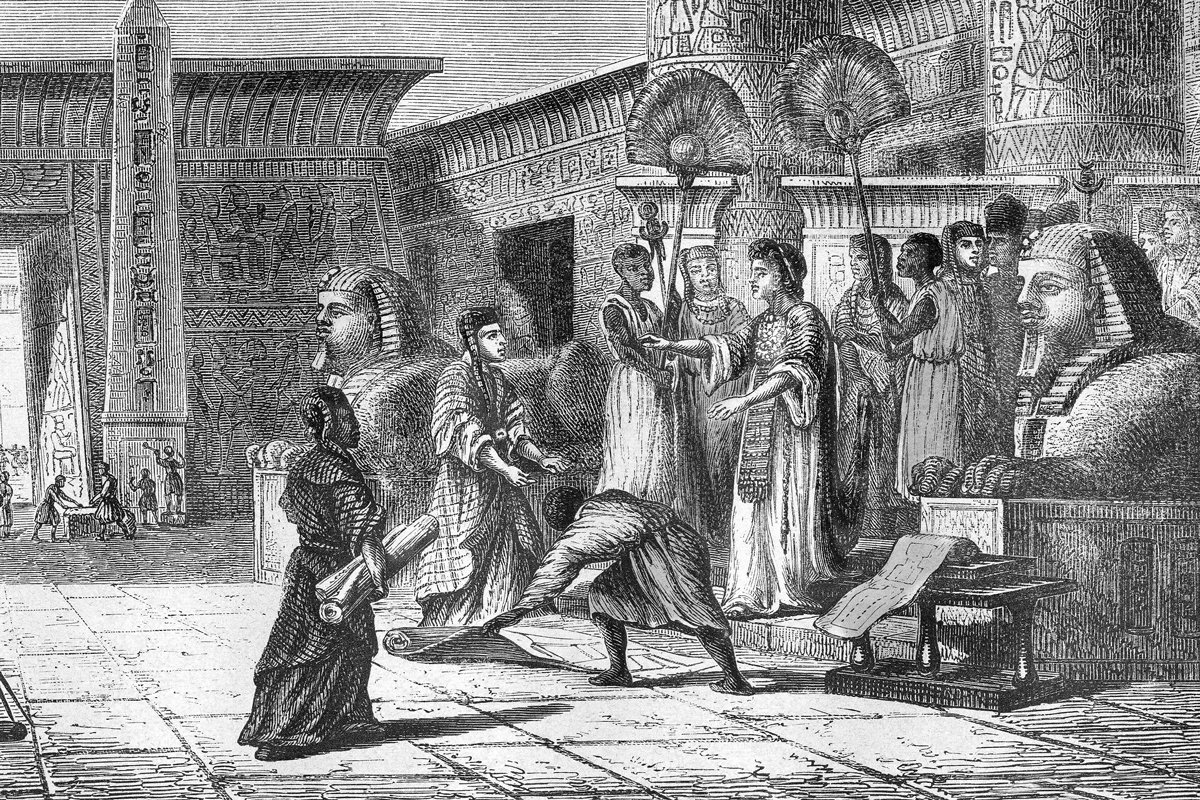
The library was closely connected to an institution known as the Mouseion, or “Temple of the Muses.” This was not merely a religious center. It functioned as a research institute where scholars could live, study, teach, and collaborate.
The rulers of Alexandria invested enormous resources into this intellectual community.
Scholars received financial support, housing, meals, and access to manuscripts. Their task was simple but profound: pursue knowledge.
The library became the heart of this mission.
Its shelves were intended to hold the accumulated wisdom of the known world.
How the Library Collected Books
Building such a collection required extraordinary effort.
Ancient books were not printed. They existed as handwritten scrolls, copied laboriously by scribes.
Acquiring texts was therefore expensive and difficult.
The rulers of Alexandria pursued manuscripts aggressively.
Ships arriving in Alexandria’s harbor were reportedly searched for books. Any manuscripts discovered were taken to the library, copied, and cataloged. In some accounts, the originals were kept while copies were returned to their owners.
Envoys traveled abroad seeking rare works.
Texts were purchased from foreign cities.
Libraries across the Mediterranean became sources of acquisition.
The goal was nothing less than creating the greatest collection of knowledge ever assembled.
Whether every story about these efforts is true remains uncertain, but historical evidence suggests that the Ptolemies were indeed extraordinarily committed to expanding the library’s holdings.
How Large Was the Library?
One of the biggest mysteries surrounding the Library of Alexandria concerns its size.
Ancient sources provide varying estimates.
Some suggest the collection contained hundreds of thousands of scrolls. Others claim even larger numbers.
Modern historians remain cautious.
The exact figure is impossible to verify.
Part of the difficulty comes from understanding what a scroll represented. A single work could occupy multiple scrolls. Conversely, several shorter texts might be contained within one scroll.
Regardless of the precise number, there is little doubt that the library was enormous by ancient standards.
It almost certainly housed one of the largest collections of written material in the ancient world.
Its shelves contained works from many different cultures and disciplines.
The Scholars of Alexandria
The true greatness of the library was not simply its collection.
It was the people who used it.
Alexandria attracted some of the brightest minds of the ancient world.
Mathematicians developed groundbreaking theories.
Astronomers studied the heavens.
Geographers mapped distant lands.
Physicians investigated the human body.
Poets refined literary traditions.
Philosophers debated profound questions about existence.
The library served as a meeting place where ideas could be exchanged, challenged, and improved.
Knowledge does not grow merely because information exists.
It grows because people engage with it.
Alexandria provided an environment where intellectual creativity could flourish.
The Birthplace of Scientific Thinking
One of the library’s most important contributions was its role in the development of scientific inquiry.
Ancient scholars did not simply preserve knowledge.
Many actively expanded it.
Observation, measurement, and reasoning became increasingly important tools.
The city became a center for mathematics, astronomy, and natural philosophy.
Researchers sought explanations based on evidence rather than tradition alone.
This intellectual culture helped lay foundations that would influence later scientific development.
Although modern science would emerge much later, some of its roots can be traced to the scholarly environment fostered in Alexandria.
Eratosthenes and the Size of the Earth
Among the remarkable scholars associated with Alexandria was Eratosthenes.
Eratosthenes achieved something extraordinary more than two thousand years ago.
Using observations of shadows and geometry, he calculated the circumference of the Earth.
His estimate was remarkably close to the modern value.
At a time when many people imagine ancient knowledge as primitive, Eratosthenes demonstrated the power of careful observation and mathematical reasoning.
His achievement reminds us that ancient scholars were often far more sophisticated than modern stereotypes suggest.
The Library of Alexandria provided an environment where such work could thrive.
Euclid and the Language of Geometry
Another giant of ancient learning was Euclid.
Although details of his life remain uncertain, his work became one of the most influential texts in history.
His book Elements organized geometric knowledge into a logical system based on definitions, axioms, and proofs.
For centuries, students around the world studied Euclidean geometry.
The methods developed in this tradition shaped mathematics, engineering, architecture, and scientific reasoning.
Alexandria played a crucial role in preserving and transmitting these ideas.
The Library and Astronomy
The ancient world looked to the skies with fascination.
Astronomy flourished in Alexandria.
Scholars observed celestial movements and sought to understand the structure of the cosmos.
Some developed sophisticated mathematical models to predict planetary motions.
Others improved star catalogs and observational techniques.
While many ancient astronomical theories were eventually replaced, they represented important steps in humanity’s effort to understand the universe.
The library served as a repository for astronomical knowledge accumulated across generations.
Medicine and Human Anatomy
Alexandria also became a center for medical study.
Some scholars conducted investigations into human anatomy that were unusual for their time.
Historical accounts suggest that physicians associated with Alexandria studied the structure of the body in ways that expanded medical understanding.
Although much of their work survives only through later references, their efforts contributed to the development of ancient medicine.
The library likely preserved numerous medical texts containing observations, treatments, and theories gathered from different cultures.
Many of these works have not survived.
Their disappearance represents one of the most significant intellectual losses associated with the ancient world.
Literature Preserved Against Time
The library did not focus solely on science.
Literature formed a major part of its mission.
Ancient poems, dramas, histories, and philosophical works were collected, studied, and copied.
Without such efforts, many important texts might have vanished far earlier.
Scholars compared different versions of works and attempted to establish accurate copies.
This process helped preserve literary traditions that might otherwise have been corrupted through repeated copying.
In a world before printing presses, preservation required constant effort.
The Library of Alexandria played a vital role in that process.
The Myth of a Single Catastrophic Fire
One of the most widespread beliefs about the Library of Alexandria is that it was destroyed in a single dramatic event.
The reality appears more complicated.
Historical evidence suggests that the library’s decline occurred over centuries.
Several incidents may have contributed to the loss of its collections.
One frequently cited event occurred during the campaign of Julius Caesar in Alexandria in 48 BCE.
Ancient sources mention fires associated with military operations.
Some historians believe these fires damaged parts of the library or nearby storage facilities.
However, evidence does not support the idea that the entire institution was instantly destroyed at that time.
The library appears to have continued existing afterward in some form.
The legend of one catastrophic blaze oversimplifies a far more complex history.
A Slow Decline
Institutions are often vulnerable not only to destruction but also to neglect.
The Library of Alexandria depended on political support, funding, and stability.
As centuries passed, Alexandria experienced wars, economic challenges, and changes in leadership.
The intellectual priorities of rulers shifted.
Resources became strained.
Buildings deteriorated.
Collections may have suffered from inadequate maintenance.
Knowledge can disappear gradually.
A damaged scroll left uncopied eventually decays.
A neglected manuscript may vanish without attracting attention.
The loss of a library is often a process rather than a single event.
Religious Conflict and Cultural Change
Another factor frequently discussed is the role of religious and political transformations.
The ancient Mediterranean underwent profound changes during late antiquity.
New religious movements emerged.
Old institutions declined.
Power structures shifted.
Some scholars believe these changes contributed to the disappearance of remaining library collections.
Yet historians continue to debate the details.
The evidence is incomplete, and many traditional stories were written centuries after the events they describe.
Separating fact from legend remains challenging.
What is clear is that the intellectual world that created the Library of Alexandria eventually changed dramatically.
The institution could not survive those transformations indefinitely.
What Was Actually Lost?
This question lies at the heart of the Alexandria mystery.
What knowledge truly disappeared?
The honest answer is that we do not know.
Many works known to have existed in antiquity are now lost.
Some survive only through brief quotations.
Others are known solely from references in later texts.
Entire histories vanished.
Scientific treatises disappeared.
Philosophical writings faded from existence.
Poems and dramas that once entertained audiences are gone forever.
Because we do not possess these works, assessing their contents is often impossible.
The loss is not merely the disappearance of information.
It is the disappearance of possibilities.
We cannot learn from books that no longer exist.
Were Revolutionary Discoveries Lost?
Popular imagination often portrays the library as containing technologies centuries ahead of its time.
Stories claim that ancient scientists discovered steam engines, electricity, advanced medicine, or even knowledge comparable to modern science.
The evidence for such claims is weak.
Ancient scholars were remarkably intelligent and accomplished, but there is little reason to believe the library contained hidden technologies that would have instantly transformed civilization.
Knowledge develops within broader social, economic, and technological contexts.
Even brilliant discoveries require infrastructure, resources, and practical application.
Still, valuable insights were undoubtedly lost.
Ancient researchers may have made observations and advances that could have enriched later generations.
The tragedy is real, even if the more sensational claims are not.
Lost Histories of Ancient Civilizations
Perhaps one of the greatest losses involved historical records.
Ancient historians documented events, cultures, traditions, and political developments.
Many of these accounts disappeared.
Imagine possessing firsthand descriptions of civilizations that are now poorly understood.
Imagine reading detailed histories written by people who witnessed ancient events directly.
Such works once existed.
Some likely passed through Alexandria’s collections.
Their disappearance leaves gaps that historians continue to struggle with today.
Entire chapters of human history may have vanished alongside those texts.
Lost Voices
One of the saddest aspects of the library’s destruction is the loss of individual voices.
Every manuscript represented a human mind reaching across time.
A philosopher sharing ideas.
A poet expressing emotions.
A scientist recording observations.
A historian preserving memories.
When a text disappears, a unique perspective disappears with it.
The loss becomes personal.
We are not merely losing information.
We are losing conversations with people who can no longer speak for themselves.
Could Copies Have Survived Elsewhere?
Fortunately, not everything stored in Alexandria vanished forever.
Ancient books were often copied and distributed.
Texts traveled across the Mediterranean world.
Many works associated with Alexandria survived because copies existed elsewhere.
This is one reason modern historians caution against exaggerating the library’s destruction.
The loss was significant, but it did not erase all ancient knowledge.
Important works by philosophers, mathematicians, and historians survived through complex chains of copying.
Monasteries, private collections, and other libraries played crucial roles in preservation.
Human knowledge proved more resilient than legend sometimes suggests.
Why the Library Became a Symbol
The Library of Alexandria has achieved a status far beyond its historical reality.
It symbolizes humanity’s collective memory.
It represents our desire to understand the world.
It embodies the fragility of knowledge.
Every generation faces the challenge of preserving information.
Books can burn.
Archives can decay.
Digital files can disappear.
Knowledge survives only when people actively protect it.
The story of Alexandria reminds us how vulnerable human achievements can be.
That lesson remains relevant today.
Modern Efforts to Recreate the Dream
The vision that inspired the Library of Alexandria never truly died.
Modern libraries, universities, archives, and research institutions continue pursuing similar goals.
They seek to collect, preserve, and share knowledge.
In 2002, a new institution known as the Bibliotheca Alexandrina opened near the site of the ancient city.
Although it is not a direct continuation of the original library, it serves as a symbolic tribute to its legacy.
The modern library reflects humanity’s ongoing commitment to learning and cultural preservation.
In many ways, it represents the rebirth of an ancient dream.
The Digital Age and a New Alexandria
Today, humanity possesses tools that ancient scholars could never have imagined.
Millions of books can be stored digitally.
Information can be shared instantly across continents.
Libraries no longer depend solely on physical scrolls and manuscripts.
Yet new challenges have emerged.
Digital information can become inaccessible through technological change.
Data can be lost through corruption or neglect.
Preservation remains a constant responsibility.
The lessons of Alexandria are therefore more relevant than ever.
Technology changes, but the need to protect knowledge remains the same.
What the Library Teaches Us
The true significance of the Library of Alexandria extends beyond its buildings and scrolls.
It demonstrates the power of intellectual curiosity.
It shows what can happen when societies invest in learning.
It reminds us that knowledge grows through collaboration across cultures.
The library brought together ideas from many different traditions.
Its success depended on openness, exchange, and exploration.
These values continue driving human progress today.
The greatest legacy of Alexandria may not be the books it held but the spirit it represented.
Conclusion
The Lost Library of Alexandria occupies a unique place in human history. It was a remarkable institution that sought to gather the knowledge of the known world and provide a home for scholars dedicated to understanding reality. Within its walls, mathematics advanced, literature was preserved, scientific inquiry flourished, and ideas crossed cultural boundaries.
Yet the library’s destruction remains surrounded by myth. It was not likely erased in a single dramatic moment, nor is there evidence that it contained secret technologies capable of transforming civilization overnight. The truth is both more complex and more meaningful. Over centuries, countless texts disappeared through war, neglect, political change, and the natural fragility of written materials.
What knowledge was truly stolen?
Some of it was scientific. Some of it was historical. Some of it was literary. Much of it consisted of unique human voices that can never be recovered. Entire works vanished, leaving gaps in our understanding of the ancient world.
But the greatest loss may have been the opportunity to learn from minds whose thoughts are now silent.
Even so, the Library of Alexandria was not defeated entirely. Its spirit survived. Every library, archive, university, and research institution carries forward the same mission: preserving humanity’s collective memory and expanding the boundaries of knowledge.
The ancient scrolls may be gone, but the dream that created them endures. And as long as people continue seeking understanding, asking questions, and protecting knowledge for future generations, the Library of Alexandria is not truly lost. It lives on in every attempt to ensure that wisdom is never forgotten again.