Deep beneath a forested hill in central China lies one of the world’s greatest archaeological mysteries. For more than 2,200 years, the burial chamber of Qin Shi Huang, the first emperor to unify China, has remained sealed. Countless empires have risen and fallen since his death. Entire civilizations have disappeared. Humanity has landed on the Moon, explored Mars with robotic spacecraft, and peered into the distant universe with powerful telescopes.
Yet the emperor’s actual tomb has never been opened.
This is not because archaeologists do not know where it is. Quite the opposite—they know exactly where it is located.
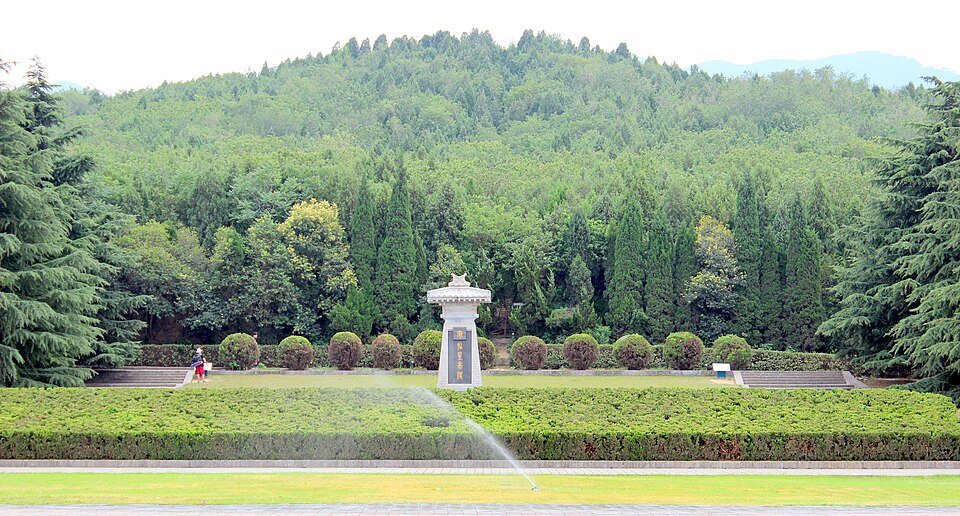
The tomb lies beneath a large burial mound near the city of Xi’an in Shaanxi Province, China. Surrounding it is one of the most astonishing archaeological discoveries ever made: the famous Terracotta Army, thousands of life-sized clay soldiers, horses, chariots, musicians, officials, and acrobats created to protect the emperor in the afterlife.
But the army is only the outer guard.
The real treasure—and perhaps the greatest archaeological time capsule on Earth—still rests beneath the mound.
What lies inside?
No one knows for certain.
And that mystery has fascinated historians, archaeologists, scientists, and travelers for generations.
Who Was Qin Shi Huang?
To understand why his tomb is so extraordinary, we first need to understand the man buried inside.
Before Qin Shi Huang, China was divided into rival kingdoms that fought one another during a period known as the Warring States.
Born in 259 BCE, Ying Zheng became king of the state of Qin while still a young boy.
Over the following decades, his armies conquered every rival kingdom.
By 221 BCE, he had unified China for the first time in history.
He adopted a new title that no ruler had used before:
Qin Shi Huang, meaning “First Emperor of Qin.”
His reign transformed China forever.
He standardized written Chinese.
He introduced common weights and measures.
He unified currency.
He expanded roads and canals.
He strengthened defenses that later became part of the Great Wall.
Although remembered as a brilliant ruler, he was also feared for his harsh rule. Books were burned. Scholars who opposed him were severely punished. Massive construction projects demanded enormous labor, and countless workers lost their lives.
He dreamed not only of ruling China—but of achieving immortality.
Ironically, while searching for eternal life, he died in 210 BCE during a journey across his empire, probably after consuming mercury-containing elixirs that were believed to grant immortality.
Building a Tomb Fit for an Emperor
Construction of Qin Shi Huang’s mausoleum reportedly began shortly after he became king, when he was only around thirteen years old.
Ancient historian Sima Qian wrote that approximately 700,000 workers participated in building the enormous complex.
Modern historians debate the exact number, but everyone agrees the project was immense.
The tomb was not simply a burial chamber.
It was an underground empire.
The emperor expected to continue ruling after death just as he had in life.
Everything needed for the afterlife had to accompany him.
Engineers created an enormous necropolis—a city for the dead.
The burial mound visible today is only one part of a much larger complex that covers dozens of square kilometers.
Over the years, archaeologists have uncovered administrative buildings, stables, bronze chariots, armor, entertainers, officials, weapons, and the famous Terracotta Army.
Yet these discoveries are believed to represent only a fraction of the entire site.
The central burial chamber itself remains untouched.
The Discovery of the Terracotta Army
For centuries, local legends spoke of an emperor buried beneath the hill.
But the modern world rediscovered the site almost by accident.
In 1974, several farmers digging a well uncovered fragments of clay figures.
Archaeologists soon realized they had stumbled upon one of history’s greatest discoveries.
Excavations revealed thousands of life-sized terracotta warriors arranged in military formation.
Each soldier appeared unique.
Their hairstyles differed.
Their facial expressions varied.
Their armor showed remarkable detail.
Some carried swords.
Others held spears or crossbows.
Generals stood taller than ordinary soldiers.
Horses appeared ready for battle.
Even today, thousands of figures remain buried because excavation continues carefully.
The Terracotta Army immediately became one of the world’s most famous archaeological sites.
Yet it also raised an even bigger question.
If these incredible sculptures guarded only the outside…
What incredible wonders remained inside the unopened tomb?
The Tomb Beneath the Burial Mound
The burial mound rises roughly 50 meters (about 164 feet) above the surrounding landscape today, although it was likely taller in ancient times.
Ground-penetrating radar, soil studies, and other non-invasive techniques have allowed scientists to investigate parts of the interior without digging directly into the chamber.
These studies suggest that a large underground structure still exists beneath the mound.
The central chamber appears largely intact.
Unlike many royal tombs throughout history, Qin Shi Huang’s burial chamber has never been looted.
That alone makes it exceptionally valuable.
Most ancient royal tombs were robbed centuries ago.
Gold, jewelry, weapons, artwork, and historical records often disappeared forever.
Qin Shi Huang’s tomb may represent one of the few untouched imperial burials remaining from the ancient world.
Ancient Descriptions of the Tomb
Much of what people imagine inside the tomb comes from Sima Qian, who wrote about the emperor roughly a century after his death.
Although he never entered the tomb himself, he recorded accounts that may have come from people familiar with its construction.
According to his description, the burial chamber represented the emperor’s entire empire in miniature.
Palaces stood underground.
Government buildings were recreated.
Precious treasures filled the chambers.
Most astonishingly, rivers and seas were said to have been created using flowing mercury.
The Yellow River.
The Yangtze River.
Even the oceans.
Above them, the ceiling supposedly displayed the stars and constellations.
The floor represented the land of China.
The emperor rested at the center of his eternal kingdom.
It sounds almost mythical.
Yet surprisingly, some parts of Sima Qian’s account have gained scientific support.
The Mystery of the Mercury Rivers
Among the most intriguing claims is the presence of mercury inside the tomb.
For centuries, many historians doubted this story.
Mercury was expensive and dangerous.
Could ancient builders truly have filled underground rivers with liquid mercury?
Modern scientific studies have produced remarkable evidence.
Researchers measuring soil around the burial mound have detected unusually high concentrations of mercury compared with surrounding areas.
This does not prove that flowing mercury rivers still exist inside.
However, it strongly suggests that substantial amounts of mercury may indeed be sealed beneath the mound.
Scientists believe mercury vapor escaping slowly over thousands of years could explain these elevated levels.
If true, Sima Qian’s account may have been surprisingly accurate.
Mercury may also be one reason Chinese authorities have chosen not to excavate the burial chamber until better preservation methods are available.
Why Hasn’t the Tomb Been Opened?
This question surprises many people.
If archaeologists know where the tomb is, why not simply open it?
The answer reflects modern archaeology’s commitment to preservation rather than treasure hunting.
Opening an ancient tomb is irreversible.
Once exposed to air, humidity, bacteria, and changing temperatures, delicate artifacts begin deteriorating immediately.
The Terracotta Army itself offers an important lesson.
When the first warriors were excavated, many still retained brilliantly painted surfaces.
Within minutes of exposure to air, much of the colorful lacquer curled, cracked, and flaked away.
Colors that had survived more than two thousand years disappeared before conservators could save them.
This heartbreaking experience changed archaeological thinking.
Scientists realized that some discoveries are safer left underground until better conservation technology exists.
If the emperor’s burial chamber contains wooden objects, silk, painted decorations, manuscripts, textiles, or organic materials, opening it too soon could destroy priceless historical evidence forever.
Patience may preserve history far better than haste.
The Possibility of Ancient Traps
Ancient texts also describe elaborate defensive mechanisms protecting the tomb.
Sima Qian wrote that crossbows were installed to automatically fire at intruders.
Whether these weapons still function after more than two millennia is uncertain.
Most experts consider it unlikely that mechanical traps would remain operational after such a long period.
However, archaeologists cannot dismiss the possibility entirely.
The tomb may also contain unstable structures, toxic gases, mercury contamination, or other hazards.
Careful planning would be essential before any future excavation.
Could the Emperor’s Body Still Exist?
No one knows.
Many ancient royal burials have suffered severe decay because of moisture, bacteria, and changing environmental conditions.
However, sealed chambers sometimes preserve human remains remarkably well.
The emperor’s coffin has never been examined.
Whether his body survives as skeletal remains, a partially preserved body, or has completely decomposed remains unknown.
Until the chamber is opened, this question cannot be answered.
What Treasures Might Be Inside?
Speculation about the tomb has inspired countless books, documentaries, and films.
Because the chamber remains unopened, no one can state with certainty what objects survive.
However, archaeologists can make educated guesses based on historical records and discoveries elsewhere in the mausoleum.
The emperor was likely buried with magnificent ceremonial objects.
Bronze vessels.
Gold ornaments.
Jade carvings.
Weapons.
Luxury goods.
Musical instruments.
Official seals.
Imperial robes.
Perhaps even written documents that could transform our understanding of early Chinese history.
Some scholars wonder whether ancient scrolls or bamboo manuscripts remain preserved inside sealed containers.
If such texts survived, they could reveal details of Qin administration, politics, science, religion, or daily life never recorded elsewhere.
Even a single preserved library could become one of archaeology’s greatest discoveries.
The Underground Palace
Historical descriptions repeatedly refer to an underground palace rather than a simple tomb.
If accurate, this suggests remarkable architectural complexity.
Instead of one burial room, there may be numerous interconnected chambers.
Corridors.
Storerooms.
Audience halls.
Decorated walls.
Mechanical systems.
Miniature landscapes.
Water features.
The emperor intended his afterlife to resemble his earthly rule.
His underground world may therefore mirror the imperial capital above ground.
Modern scanning technologies continue investigating the mound without disturbing its contents, gradually revealing hints of this hidden architecture.
More Than Just Soldiers
The Terracotta Army often captures public attention, but it represents only one portion of the enormous mausoleum complex.
Archaeologists have discovered terracotta officials rather than soldiers.
Musicians appear ready to entertain.
Acrobats seem frozen mid-performance.
Stable workers care for horses.
Bird sculptures decorate underground parks.
Bronze cranes, ducks, and swans suggest carefully designed royal gardens.
These discoveries paint a fascinating picture.
The emperor did not simply want military protection after death.
He wanted an entire functioning empire.
Government.
Entertainment.
Nature.
Transportation.
Everything necessary for eternal rule.
The unopened tomb likely forms the center of this extraordinary underground world.
The Incredible Craftsmanship
The level of craftsmanship already uncovered is astonishing.
Bronze swords remain sharp after more than two thousand years.
Some researchers believe chromium-containing surface treatments may have contributed to their remarkable resistance to corrosion, although ongoing research suggests the surrounding burial environment also played an important role.
The terracotta warriors display realistic anatomy.
Individual facial features.
Detailed armor.
Complex hairstyles.
Natural postures.
Ancient artisans demonstrated extraordinary technical skill.
If such masterpieces existed outside the burial chamber, many wonder whether even greater artistic achievements remain hidden inside.
Could There Be Lost Technologies?
Some sensational claims suggest the tomb contains forgotten technologies far beyond ancient capabilities.
There is no reliable evidence supporting such ideas.
The remarkable achievements of Qin craftsmen resulted from advanced engineering, metallurgy, organization, and craftsmanship—not mysterious lost civilizations or supernatural knowledge.
Ancient China possessed highly sophisticated bronze casting, ceramic production, engineering, and construction techniques.
These achievements alone are impressive enough.
The true wonder lies not in fantasy but in genuine human creativity.
The Emperor’s Obsession with Immortality
One of the most fascinating aspects of Qin Shi Huang’s life was his relentless search for eternal life.
He sent expeditions searching for mythical islands said to contain immortals.
Court alchemists prepared special elixirs.
Ironically, many of these potions contained mercury.
Modern historians believe repeated mercury consumption may have contributed to his death.
His tomb reflects this obsession.
If eternal life proved impossible, perhaps an eternal kingdom beneath the earth could preserve his power forever.
Every soldier.
Every palace.
Every treasure.
Every river.
Everything served the emperor’s dream of everlasting rule.
Modern Science Protects the Past
Today’s archaeologists face a difficult balance.
The public naturally wants answers.
Opening the tomb would generate worldwide excitement.
But scientific responsibility demands caution.
Future technologies may preserve artifacts far better than methods available today.
Improved robotic systems.
Advanced environmental control.
High-resolution imaging.
Chemical stabilization techniques.
Artificial intelligence.
Three-dimensional mapping.
All may eventually allow safer exploration.
Waiting may seem frustrating.
Yet preserving history for future generations is often more important than satisfying immediate curiosity.
What We Already Know Without Opening It
Remarkably, scientists have learned much about the tomb without disturbing it.
Ground-penetrating radar reveals underground structures.
Magnetic surveys detect buried architecture.
Chemical analysis identifies unusual mercury concentrations.
Satellite imaging maps the enormous mausoleum complex.
Computer models reconstruct ancient layouts.
Each new technique provides another clue.
Piece by piece, researchers build a picture of the hidden world beneath the mound while leaving it protected.
The World’s Greatest Archaeological Time Capsule
Many archaeologists describe Qin Shi Huang’s tomb as perhaps the greatest untouched archaeological time capsule on Earth.
Unlike sites damaged by war, looting, weather, or repeated occupation, the emperor’s burial chamber appears to have remained sealed since 210 BCE.
Imagine entering a room closed before the Roman Empire reached its height.
Before Christianity spread across Europe.
Before the invention of paper in many parts of the world.
Before the Vikings sailed.
Before the Middle Ages.
Before the Renaissance.
Before modern science.
That extraordinary span of untouched history is almost impossible to comprehend.
Legends and Reality
Because the tomb remains unopened, legends naturally flourish.
Stories speak of unimaginable riches.
Hidden weapons.
Secret chambers.
Curses.
Supernatural guardians.
Ancient magic.
Most of these tales belong to folklore rather than history.
The real mystery is already remarkable enough.
An intact imperial tomb from one of history’s most influential rulers.
Thousands of life-sized sculptures.
Possible mercury rivers.
A vast underground city.
Advanced engineering.
These are genuine archaeological facts or well-supported historical possibilities.
They require no exaggeration.
Reality is extraordinary.
Will the Tomb Ever Be Opened?
No one can answer this question with certainty.
Chinese authorities have repeatedly stated that preserving the site remains the highest priority.
Many archaeologists support this cautious approach.
Others hope that future technology will eventually make excavation possible without damaging irreplaceable artifacts.
Perhaps decades from now.
Perhaps a century from now.
Or perhaps much longer.
History has waited more than 2,200 years.
A little more patience may be worthwhile if it protects one of humanity’s greatest cultural treasures.
Why the Tomb Continues to Fascinate the World
People are naturally drawn to mysteries.
An unopened door invites imagination.
A sealed chamber inspires questions.
Qin Shi Huang’s tomb combines mystery with genuine historical importance.
It belongs to the ruler who united China.
It stands beside one of the greatest archaeological discoveries ever made.
Scientific evidence supports parts of ancient historical descriptions once considered unbelievable.
Yet the central question remains unanswered.
What lies inside?
That unanswered question keeps the tomb alive in the world’s imagination.
Conclusion
The unopened tomb of Qin Shi Huang is far more than a hidden burial chamber. It is a bridge connecting the modern world with one of history’s most transformative civilizations. Beneath its quiet earthen mound may rest priceless works of art, ancient manuscripts, imperial treasures, remarkable engineering, and perhaps even features that historians have only read about in ancient texts.
At the same time, the decision not to open the tomb reflects an important evolution in archaeology. Modern scientists recognize that discovery is meaningful only if it is accompanied by preservation. The goal is no longer simply to uncover history but to protect it.
Until the day technology can safely reveal its secrets, the tomb will continue to stand in silence—guarded by thousands of terracotta warriors, wrapped in mystery, and watched by a world that remains endlessly curious. Whether it is opened in our lifetime or centuries from now, the burial chamber of Qin Shi Huang remains one of humanity’s greatest unsolved archaeological mysteries, reminding us that even in an age of satellites, supercomputers, and space exploration, the Earth still holds remarkable secrets beneath our feet.